returns in
212
days
Bloom calendar
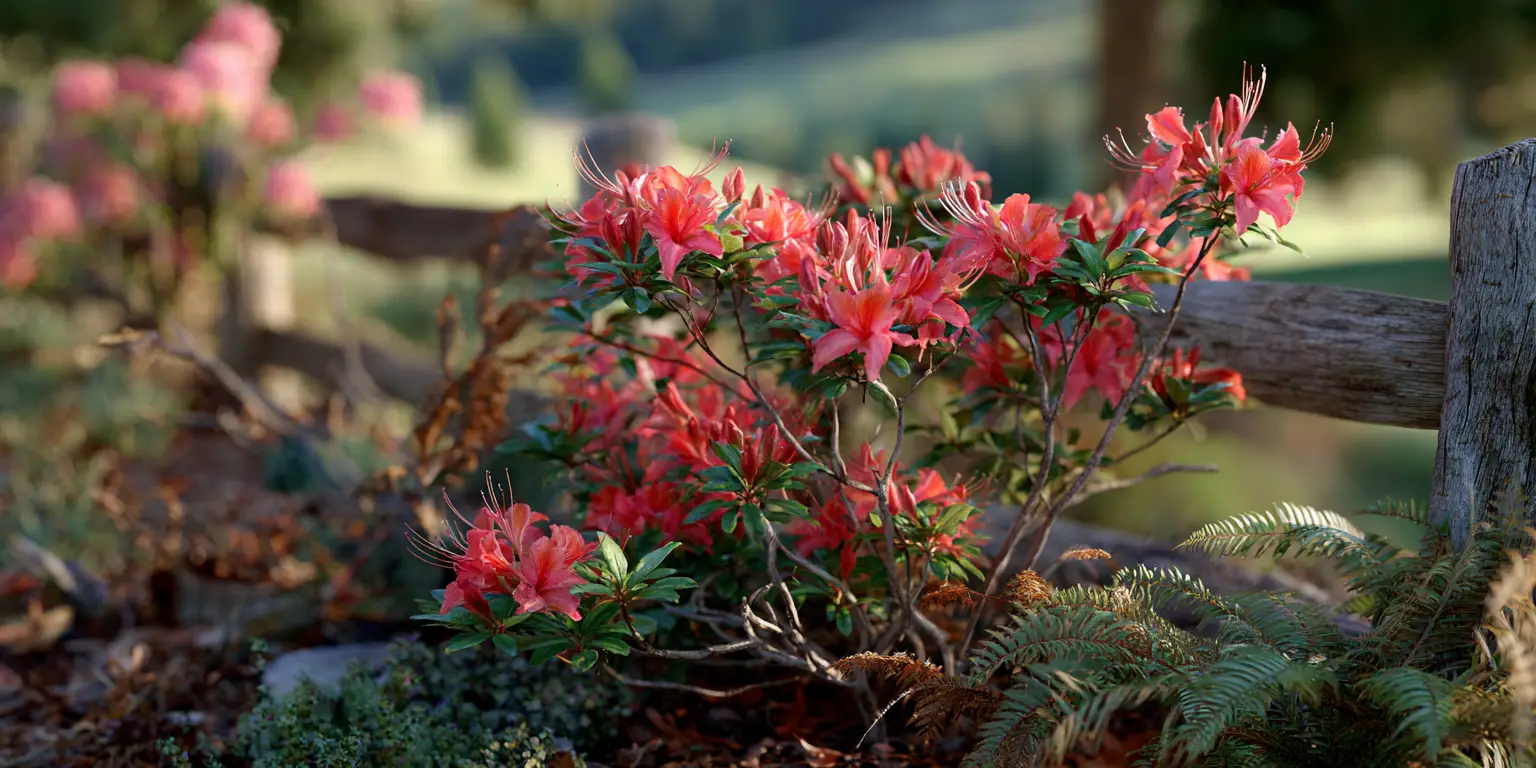
Flame Azalea
species (deciduous) · wild species; native to eastern USA
At‑a‑glance
- Group/Class: species (deciduous)
- Height × spread: 4-8 ft × 8-10 ft (1.2-2.4 m × 2.4-3.0 m); occasionally taller
- Bloom window: late spring to early summer
- Color & flower form: funnel‑shaped flowers; yellow to orange to red; non‑fragrant
- Fragrance: 0 none
- USDA hardiness: USDA zones 5 to 7
- Breeder / Year / Origin: wild species; native to eastern USA
- Pet safety: avoid
How it differs
- Native, deciduous species with later bloom than many evergreen azaleas.
- Non‑fragrant flowers contrasted with scented native relatives.
- Taller, upright habit compared with compact evergreen groups.
- Naturally suited to cool, upland woodland conditions.
Strengths
- Cold hardy into Zone 5 where soils are acidic and drained.
- Attracts pollinators including butterflies and hummingbirds.
- Striking warm colors and good fall foliage.
- Adapted to naturalized woodland plantings.
Care in one minute
Site in sun to light shade in cooler regions; provide afternoon shade where summers are hot.
Soil: acidic and well drained; amend clay with organic matter; plant slightly high and mulch.
Keep evenly moist during establishment; avoid standing water.
Fertilize sparingly after bloom if growth is weak.
Prune lightly right after flowering as needed.
Watch‑outs
- Poor performance on heavy or alkaline soils; chlorosis is common at high pH.
- Not recommended for the Coastal Plain in the Deep South.
- Slow to establish; protect from drought during the first years.
Best uses (tags)
Provenance note
A southeastern U.S. native, R. calendulaceum is a key parent of many deciduous hybrid azaleas and is valued for late spring to early summer bloom in upland woodlands.
References
- NC State Extension – Flame azalea species profile
- Lady Bird Johnson Wildflower Center – Flame azalea
- Clemson HGIC – Azalea Planting (regional notes)
- ASPCA – Azalea (Rhododendron spp.) toxicity
Similar Flowers
Enjoying our flower guides? Add YourFlowersGuide as a preferred source on Google. It helps more readers find us.
Add to Preferred Sources