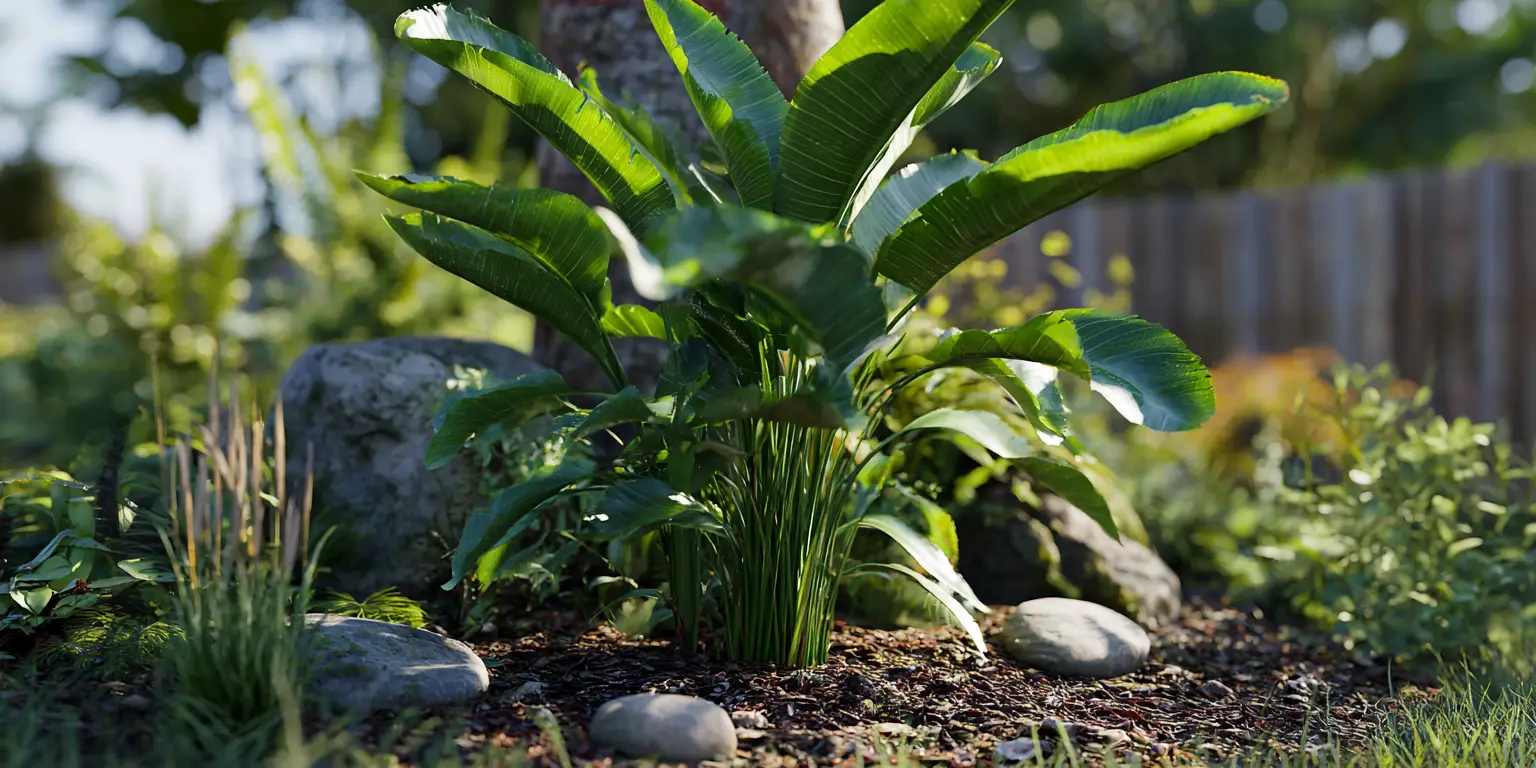
How to Grow and Care for Bird of Paradise
Contents
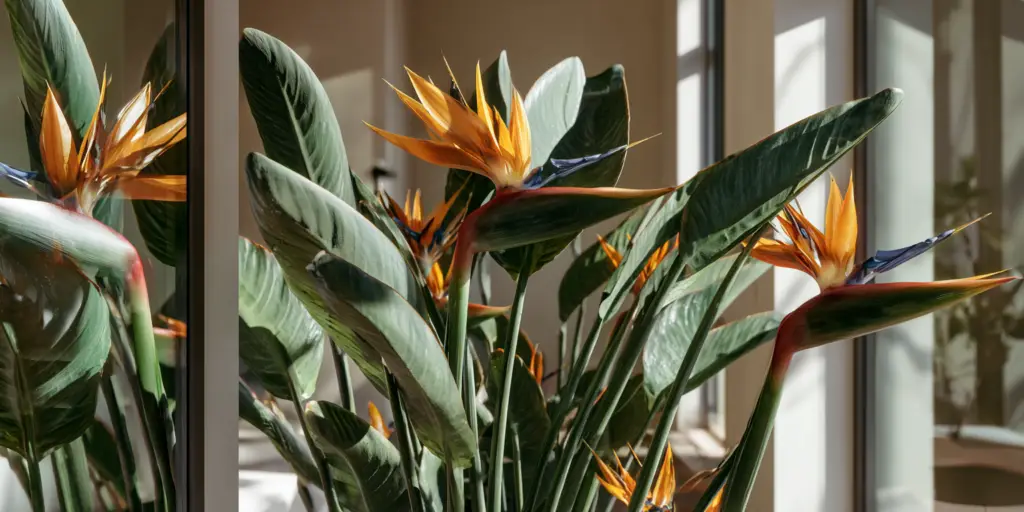
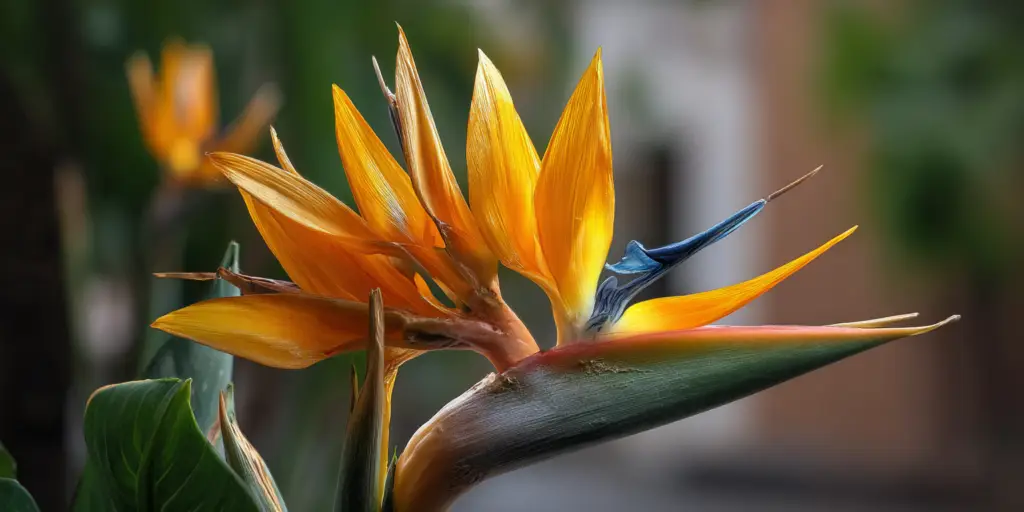
Bird of Paradise care is straightforward once you understand how this striking plant grows. The classic orange and blue species is Strelitzia reginae, often called crane flower. A larger relative with white flowers and banana‑like leaves is Strelitzia nicolai, known as giant or white bird of paradise. Both are evergreen perennials that grow from thick rhizomes and form clumps of upright leaf fans. Outdoors they succeed in warm regions, yet they also adapt to containers that can be moved indoors for winter in cooler parts of the United States. Strelitzia reginae is typically hardy outdoors in USDA Zones 9 to 11. Gardeners in Zones 8 and colder treat it as a container plant that summers outside and winters inside in bright light. Strelitzia nicolai is also warm‑zone hardy but grows much larger and is best suited to frost‑free coastal and southern landscapes or very large containers. Outdoors in mild coastal climates, aim for full sun for the best flowering. In hot inland or desert areas, give morning sun with light afternoon shade to prevent leaf scorch. Indoors, place near the brightest window available with several hours of direct sun through glass if possible. A greenhouse or sunroom with excellent light produces the most reliable blooms. Use a well‑drained soil or potting mix that holds moisture without staying soggy. Water deeply, then allow the top inch or two to dry before watering again. Feed modestly during the warm growing season and reduce water and fertilizer in winter. Keep the crown at soil level and give the plant time. Bird of paradise often needs three to five years to reach flowering size, and clumps that are slightly root bound bloom best.
Soil & Bed Preparation
Plant bird of paradise in a loose, well‑aerated soil. A sandy loam or loam with generous organic matter works well for in‑ground beds. For containers, use a high‑quality potting mix and add extra coarse perlite or fine pine bark to improve drainage. Avoid compacted clay that stays wet after rain. This plant resents sitting in water. If you garden on heavy soil, build a raised bed 8 to 12 inches high and mix in coarse amendments that do not collapse quickly. Use compost that is fully mature and well sifted. Avoid fine peat alone in outdoor beds because it can hold too much water. Aim for slightly acidic to neutral soil, roughly pH 6.0 to 7.5. Bird of paradise tolerates a bit outside that span, but growth and nutrient uptake are most efficient within it. A steady 3 to 5 percent organic matter supports moisture retention and soil biology without causing waterlogging. Work in two to three inches of compost across the bed before planting, then mulch the surface after planting rather than over‑amending the entire backfill hole. Strelitzia forms rhizomes. These thick root structures need air at the crown. Do not bury the crown under heavy mulch or soil. Keeping the crown at the finished grade reduces the risk of rot. In frost‑free areas with fast‑draining native soils, in‑ground planting is simple and long lived. Where soils are dense or where summer rainfall is high, raised beds offer more control over drainage. In containers, choose pots with generous drainage holes and do not stand pots in saucers of water.
Planting Calendar by USDA Zone
Zones 9 to 11. Plant container‑grown bird of paradise in spring after the heaviest winter rains. In coastal California and similar mild climates, fall planting also works and lets roots establish during cool months. In hot desert regions, fall is preferred so the root system is stronger before summer heat arrives. Avoid planting during a heatwave.
Zones 8 and colder. Grow in containers. Move plants outside after your local last frost date in spring. Acclimate them to sun over 7 to 10 days. Bring them back indoors before the first fall frost. If days are still warm but nights trend below 50°F, begin the move indoors. This plant is tender and can be damaged by a light freeze.
High‑elevation and windy sites. Use a sheltered microclimate such as an eastern wall where mornings are bright and afternoons are shaded. Wind can shred leaves, so provide a windbreak or group with taller evergreens.
Coastal conditions. Sea breezes are usually fine, and the plants often thrive near the ocean where winters are mild. Salt spray tolerance is moderate. Good drainage is still essential.
Planting: Depth & Spacing
Container‑grown plants.
- Depth. Set the plant so the crown sits level with the surrounding soil. Do not bury the rhizome. In containers, keep the top of the root ball even with the potting mix surface.
- Spacing. For Strelitzia reginae, space 3 to 5 feet apart in landscape beds. For Strelitzia nicolai, space 6 to 10 feet apart due to its larger size. In a mixed border, allow at least 3 feet of open air around the foliage for airflow and display.
- Root room. Start a young plant in a pot about 12 to 14 inches wide. Step up gradually as roots fill the pot. Mature indoor specimens often settle well in 15 to 25 gallon containers. Avoid oversizing the pot, since plants that are slightly root bound tend to bloom better.
Bare‑root or divisions.
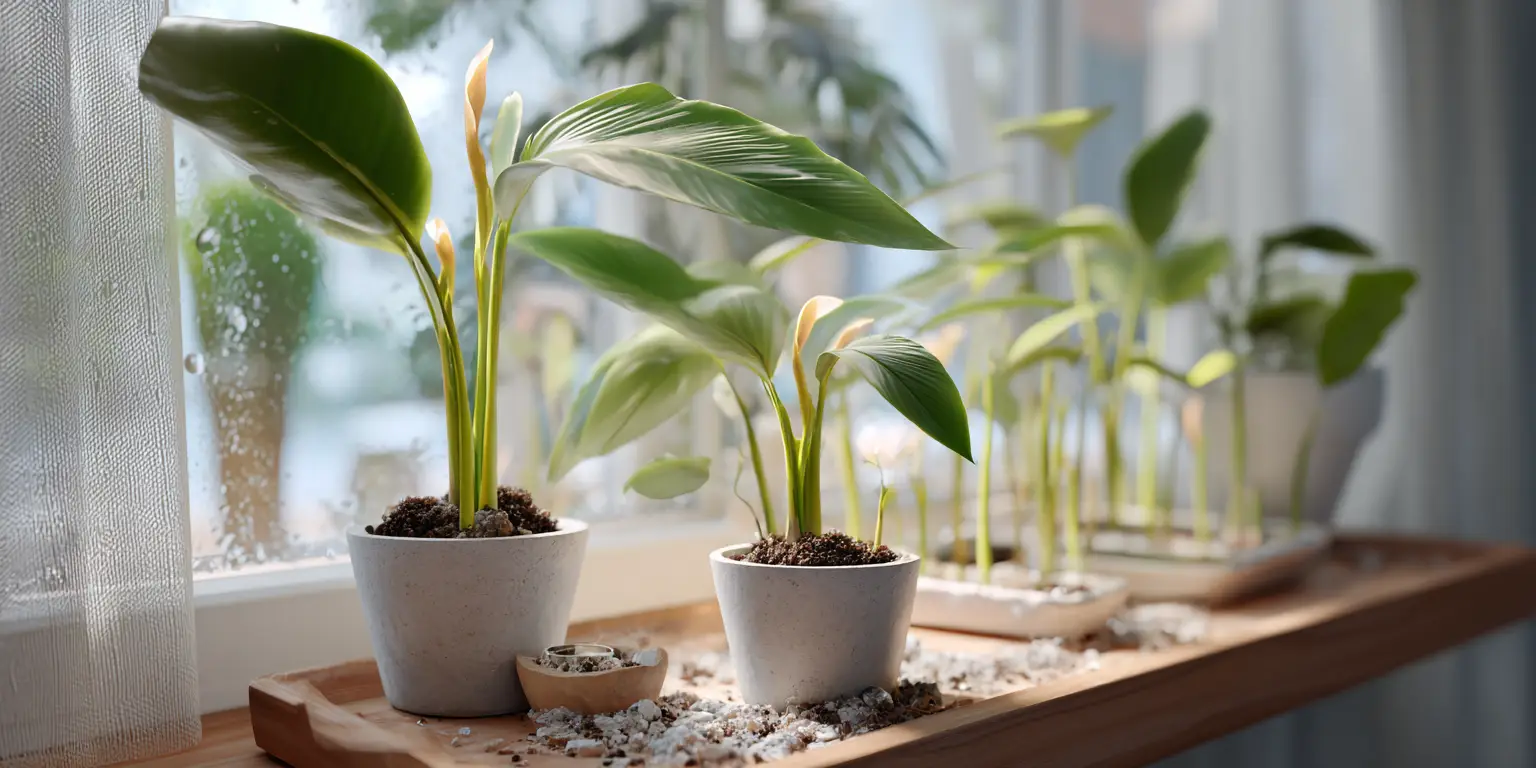
Bird of paradise is commonly propagated by division rather than bare‑root sale. Divide large clumps in late spring when new growth begins. Each division should have at least one fan with several healthy roots.
- Depth. Replant divisions with the crown at grade and with rhizomes just at the soil surface.
- Spacing. Place divisions 3 to 4 feet apart for Strelitzia reginae and 6 feet or more for Strelitzia nicolai.
- Transplant shock minimization. Trim away damaged roots, set divisions into pre‑watered soil, and water to settle. Keep the soil evenly moist for several weeks. Expect flowering to pause for one to two seasons after division while the plant rebuilds its root system.
Seed.
Seed propagation is slow and variable. Fresh seed may take weeks to months to germinate and several years to flower. For most home gardeners, container plants or divisions are the practical route.
Acclimation steps.
When moving a greenhouse‑grown or indoor plant outside, increase light gradually. Start in bright shade for three days, then move to light morning sun, then to your final location. Reverse the process when bringing plants back indoors in fall.

Watering & Mulching
For newly planted bird of paradise, water deeply after planting and again when the top 1 to 2 inches of soil are dry. During the first 6 to 8 weeks, check soil moisture often. The goal is consistent moisture without saturation. Once established, water when the top 2 inches of soil are dry. In warm weather this may be once each week outdoors. In containers, frequency varies with pot size, light, and temperature. Always water thoroughly until moisture exits the drain holes. Allow excess to drain and empty any saucer. In triple‑digit heat, water early in the morning so foliage dries quickly and roots have moisture before the hottest hours. Temporary light shade cloth during an extreme heatwave can prevent leaf scorch. Do not keep the soil continually wet, since roots need air. Apply a 2 to 3 inch layer of coarse organic mulch such as shredded bark or pine needles to reduce evaporation and moderate soil temperature. Keep mulch pulled back 3 inches from the crown to discourage rot and pests. Plant at grade, irrigate deeply but infrequently, and let the surface dry between waterings. In containers, use a chunky mix and never let the pot sit in standing water. If your tap water is very hard, occasional flushing helps prevent mineral buildup in containers. Every month, water heavily until several volumes flush through the pot. If brown tips appear mainly on older leaves and your watering practices are sound, try one or two rainwater irrigations and monitor improvement.
Feeding
Bird of paradise grows most in spring through early fall. Feed during this active period and pause in winter when growth slows, especially indoors. Use a balanced slow‑release fertilizer in the general range of 10‑10‑10 to 14‑14‑14 for in‑ground plantings, following label rates based on plant size. Two light applications, one in spring and one in midsummer, are usually sufficient outdoors. For container plants, a balanced water‑soluble fertilizer at half strength every 4 to 6 weeks in spring and summer is adequate. Always water before applying fertilizer to avoid root burn. If the plant is recently repotted into a fresh, nutrient‑charged potting mix, wait 6 to 8 weeks before feeding. Skip fertilizer when plants are stressed by heat, cold, or drought until they recover. Well‑finished compost, fish emulsion, and seaweed extracts can supply nutrients and micronutrients. Lightly top‑dress in spring with compost and refresh mulch. Organic matter also supports soil biology that improves nutrient availability. In garden beds, aim to maintain moderate organic matter and retest pH and nutrient levels every two to three years if growth is off or leaves show chlorosis. Adjust inputs based on test results rather than routine heavy feeding.
Pruning & Support
Remove old or damaged leaves at their base with clean, sharp pruners. After a bloom finishes, cut the flower stalk near its origin at the crown. This tidies the plant and directs energy to new growth. Bird of paradise does not rebloom on the same stalk. Once a stalk has finished producing flowers, remove it. Leave healthy green leaves in place for photosynthesis. Strelitzia reginae is usually self‑supporting. Very tall Strelitzia nicolai in windy sites may lean. Stake only if necessary and use soft ties that do not cut into the petioles. Better yet, site large plants with some wind protection. To limit disease spread, disinfect cutting tools between plants or when removing diseased tissue. Wipe blades with 70 percent isopropyl alcohol and let them air dry, or use a 10 percent bleach solution and rinse, then dry to prevent corrosion.
Overwintering
Protect during rare cold snaps. Before a forecast freeze, water the soil, add frost cloth in the evening, and remove covers in the morning when temperatures rise. Mulch the root zone 3 inches deep, but keep mulch off the crown. Light leaf damage often recovers in spring. Bring plants indoors before nights drop below about 50°F. Place in the brightest location available, such as a south or west window. A supplemental grow light can help maintain vigor. Reduce watering in winter. Allow the top few inches of potting mix to dry between waterings, and do not fertilize until days lengthen in spring. Short exposures to near‑freezing temperatures can damage leaves. If foliage is injured, wait until late winter or early spring to remove it. Damaged leaves still shade and protect the crown during the coldest months. In some regions, rodents may nest in thick mulch in winter. Keep mulch moderate and avoid piling it against the plant. Indoors, inspect for mealybugs or scale during winter and treat early.
Growing Environments
Bird of paradise is well suited to pots. Young plants do well in 12 to 14 inch containers. Mature indoor specimens often need 15 to 25 gallon containers to balance top growth and root volume. Larger outdoor clumps can eventually outgrow any container, at which point division or in‑ground planting is the answer. Choose a sturdy container with several large drainage holes. Consider pot feet to keep water from pooling beneath. For mix, combine two parts high‑quality potting soil with one part fine bark and one part coarse perlite. This recipe drains well while holding enough moisture for steady growth. Target pH 6.0 to 7.5. Never add gravel layers that can create a perched water table. Instead, rely on a well‑structured mix and open drain holes. If a decorative cachepot is used, keep a spacer beneath the grower pot so water does not collect around the base. Indoors, give as much light as possible. Outdoors, choose a site with bright exposure and shelter from strong wind. Avoid reflected afternoon heat off south‑facing walls in very hot inland areas unless you can provide some filtered shade. Blooming indoors depends on sufficient age, light, and seasonal cues. Mature plants that receive several hours of direct sun through a window and cooler nights in winter around 50 to 55°F often set buds in late winter to spring. Do not overpot, since slightly tight roots favor flowering.
Companion Planting & Design
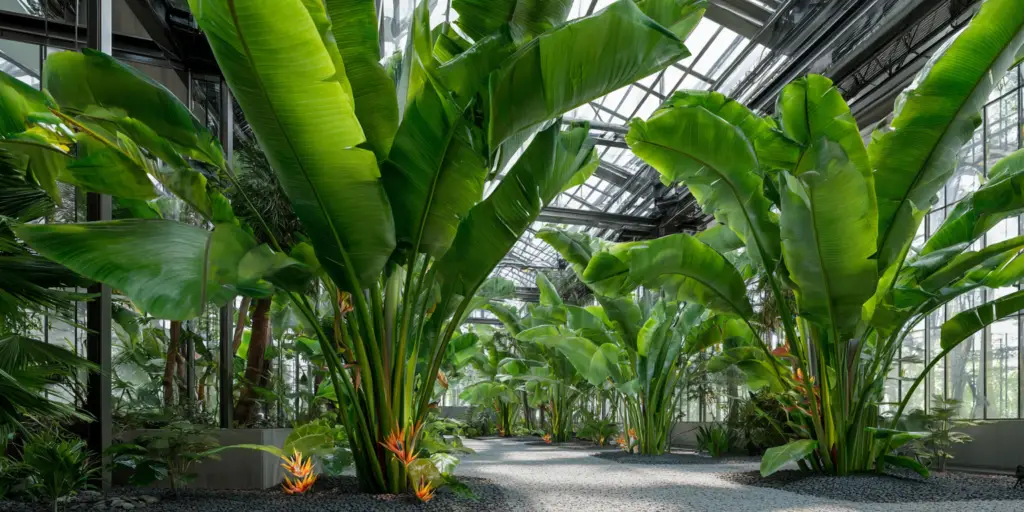
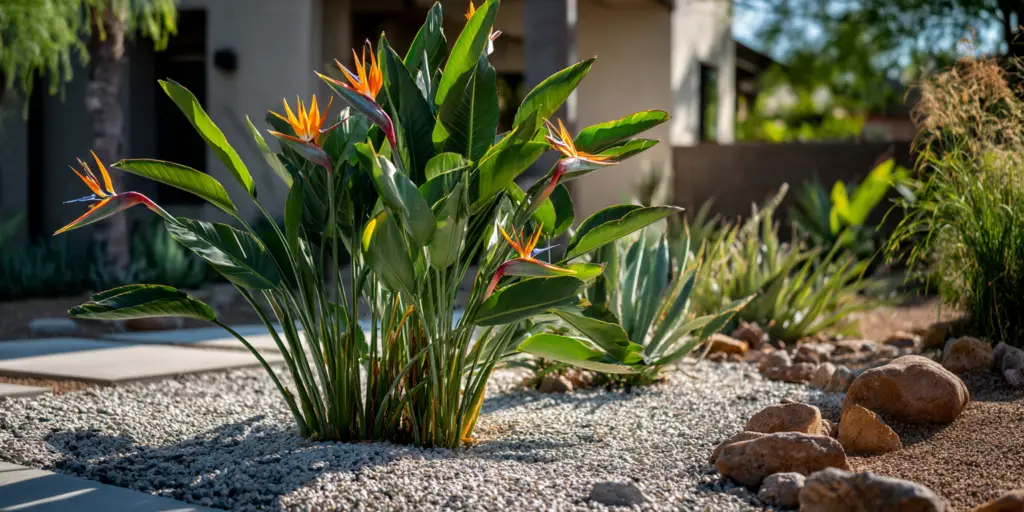
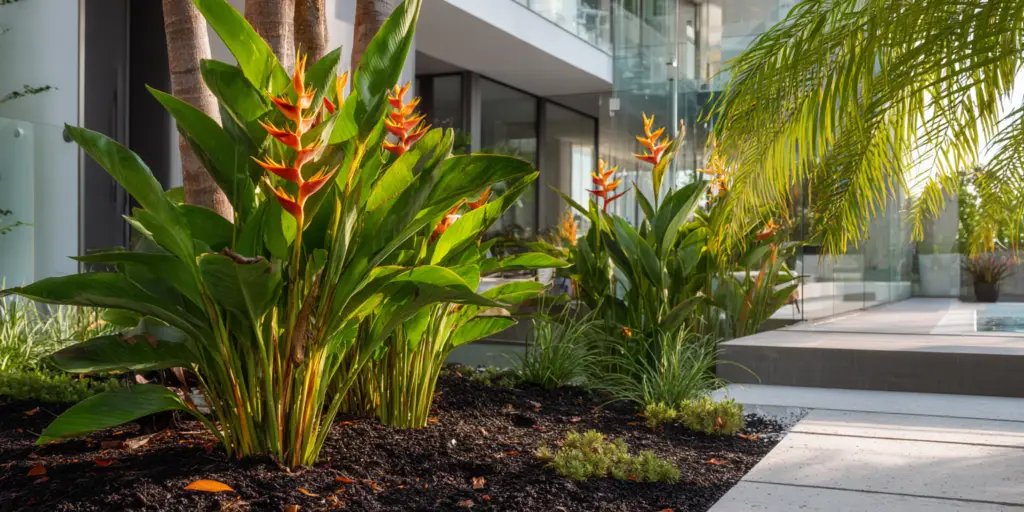
Bird of paradise provides architectural foliage and vivid color. Use it as a focal point in a courtyard, at an entry, or in a tropical border. Its upright fans contrast well with fine textures and mounding forms. Warm‑climate companions include agapanthus, society garlic, lomandra, and dwarf fountain grass. In coastal California and the Gulf states, understory plantings of clumping aloes or low succulents keep the base tidy and dry. In mixed borders, broadleaf evergreens or compact shrubs help screen older leaves while new fans rise above. In frost‑free gardens, surrounding flowers that bloom at different times can keep color going when bird of paradise is between flushes. Consider salvias and pentas in warm regions and moveable container color in cooler zones. Space companions for airflow to dry leaves after irrigation.
References
- University of Florida IFAS Extension – Gardening Solutions. Bird of Paradise.
- Royal Horticultural Society. Strelitzia reginae bird of paradise care profile.
- ASPCA Animal Poison Control Center. Bird of Paradise.
Written by: Your Flowers Guide editorial team
We are a small independent group of flower lovers who research and review each guide using trusted horticultural and educational sources. Learn more about us