in bloom
now
through Nov
Bloom calendar
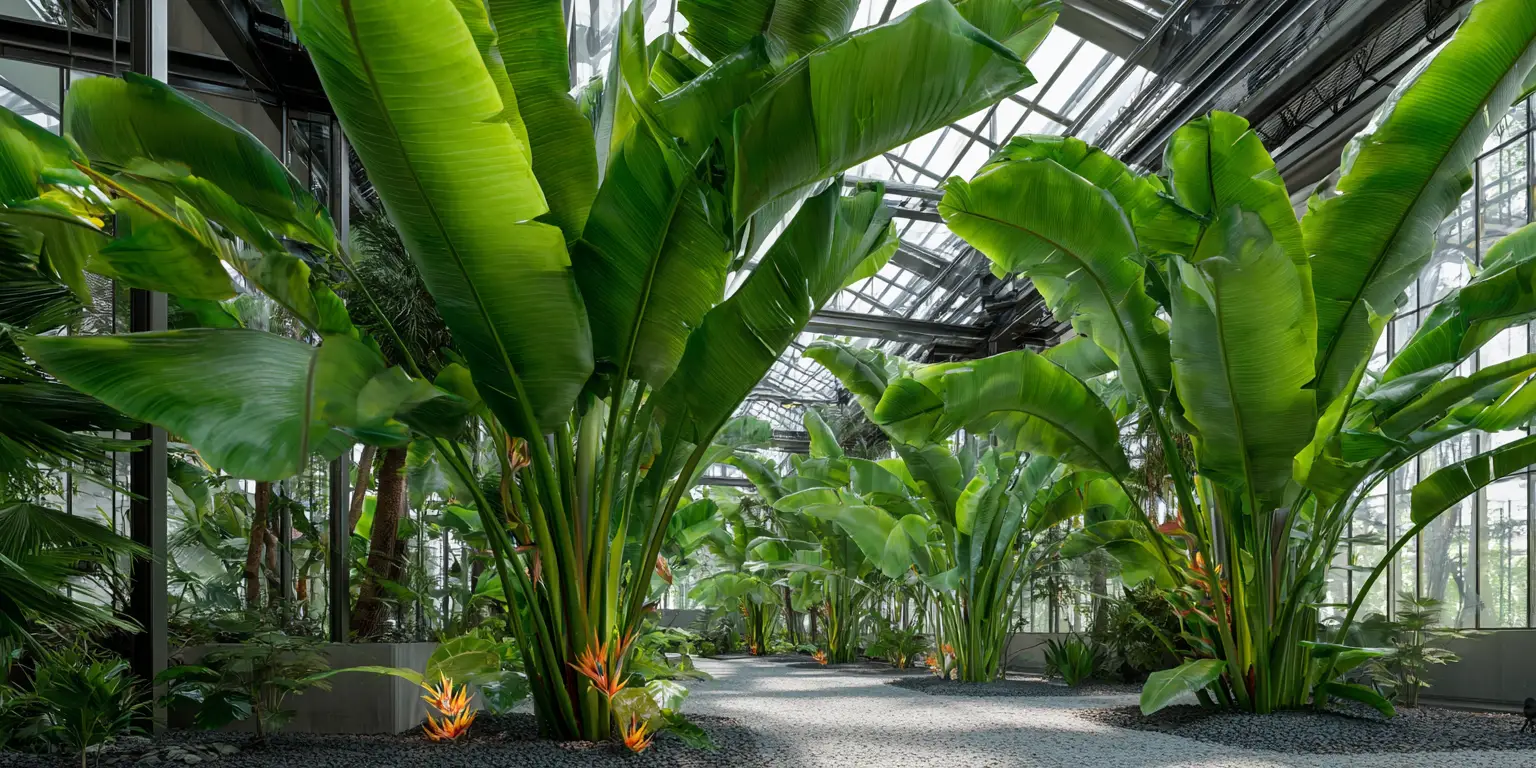
Strelitzia nicolai
Strelitzia (white/giant bird of paradise)
At‑a‑glance
- Group/Class: Strelitzia (white/giant bird of paradise)
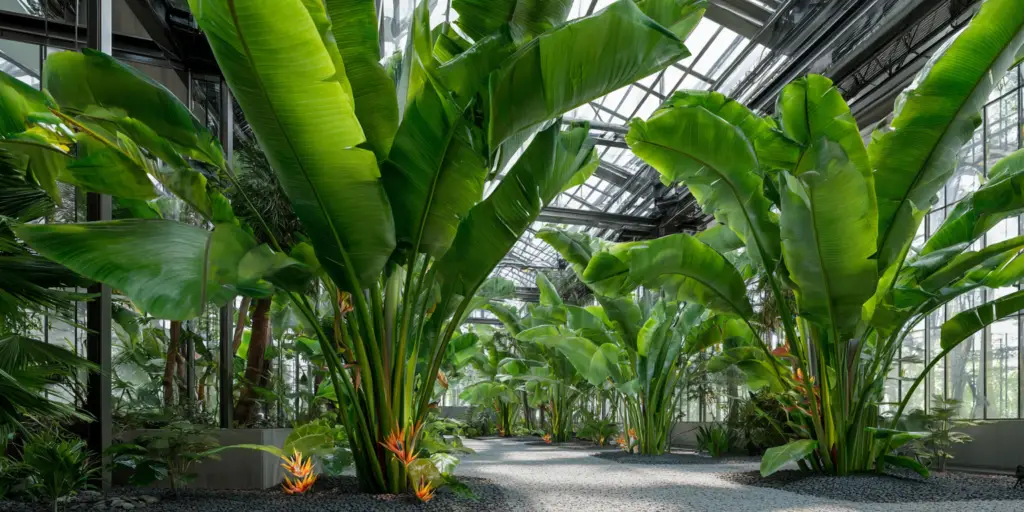
- Height × spread: 20 to 30 ft × 6 to 10 ft (6 to 9 m × 1.8 to 3 m)
- Bloom window: spring; varies by climate and plant maturity
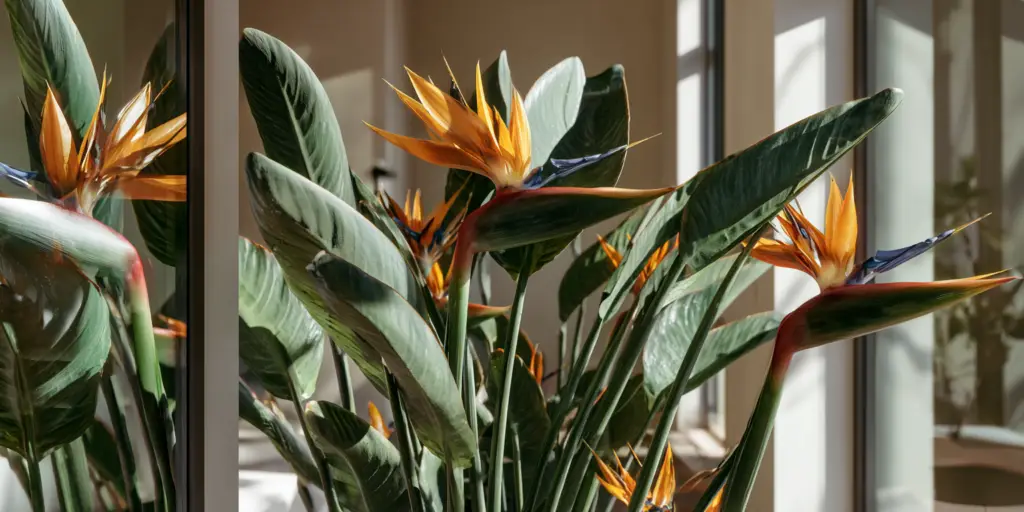
- Color & flower form: white and blue flowers from dark, boat-shaped spathes; large paddle leaves
- Fragrance: 0 none
- USDA hardiness: 10 to 11; container elsewhere
- Breeder / Year / Origin: unknown, unknown, Southern Africa
- Pet safety: avoid (toxic to pets reported)
How it differs
- Much taller and broader than the typical bird of paradise.
- Flowers are white and blue, not orange and blue.
- Woody, clump-forming stems give a tree-like presence.
- Leaves are large and easily tear in wind; site needs shelter.
Strengths
- Striking architectural foliage
- Tolerates coastal conditions and brief dry periods once established
- Performs as a bold indoor container plant
Care in one minute
Site: full sun to bright light; shelter from strong winds.
Soil: fertile, well-drained loam; pH acidic to neutral.
Water: keep evenly moist; allow top inch to dry indoors between waterings.
Feeding: balanced liquid feed monthly in spring and summer.
Grooming: remove torn leaves; divide or repot as clumps enlarge.
Overwinter: protect from cold; move containers indoors before frost.
Watch‑outs
- Needs high light and space to avoid lank growth indoors
- Cold sensitive; damage likely below 50°F
- Aggressive roots can heave paving if planted too close
Best uses (tags)
Provenance note
Native to coastal southern Africa; commonly grown as a foliage specimen in warm climates and indoors in cooler regions.
References
- NC State Extension – Strelitzia nicolai
- Royal Horticultural Society – Strelitzia nicolai
Similar Flowers
Enjoying our flower guides? Add YourFlowersGuide as a preferred source on Google. It helps more readers find us.
Add to Preferred Sources