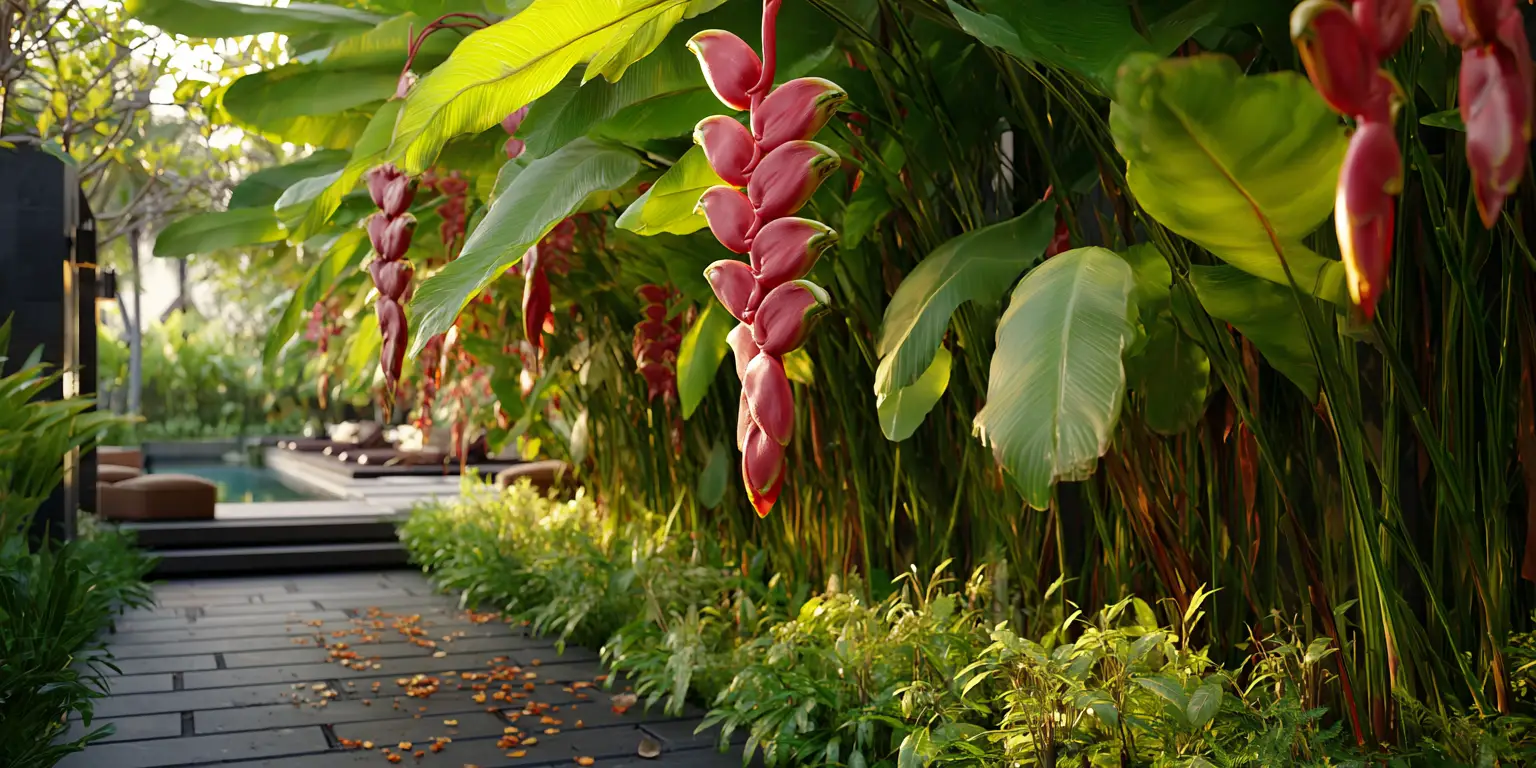
in bloom
now
through Nov
Bloom calendar
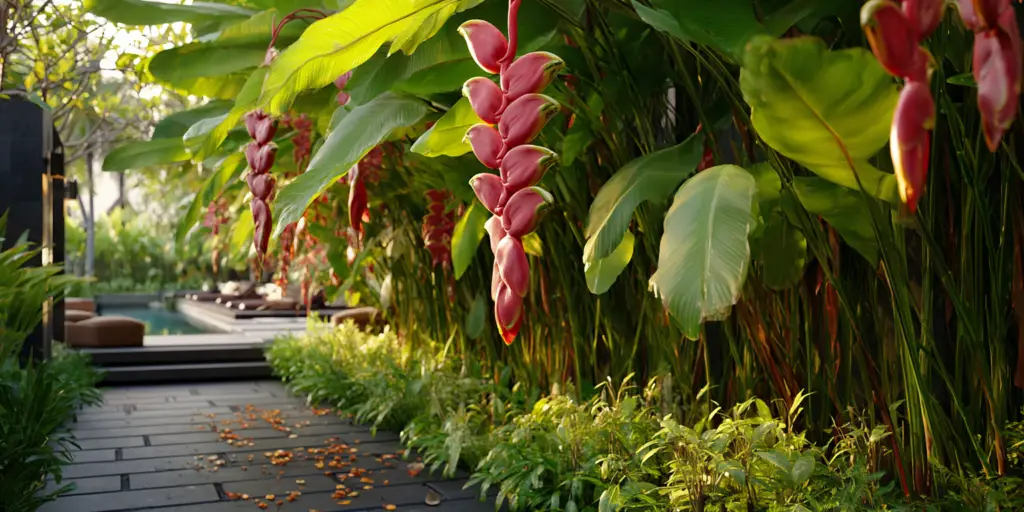
Heliconia rostrata
Heliconia (false bird of paradise)
At‑a‑glance
- Group/Class: Heliconia (false bird of paradise)
- Height × spread: 6 to 15 ft × 3 to 5 ft (1.8 to 4.6 m × 0.9 to 1.5 m)
- Bloom window: spring to summer in warm climates
- Color & flower form: pendant scarlet and yellow bracts with small hidden flowers
- Fragrance: 0 none
- USDA hardiness: 10b to 11; container elsewhere
- Breeder / Year / Origin: unknown, unknown, Western South America
- Cut-flower notes: Waxy, long-lasting bracts; widely used as tropical cut stems
- Pet safety: unknown / not listed by ASPCA; use caution
How it differs
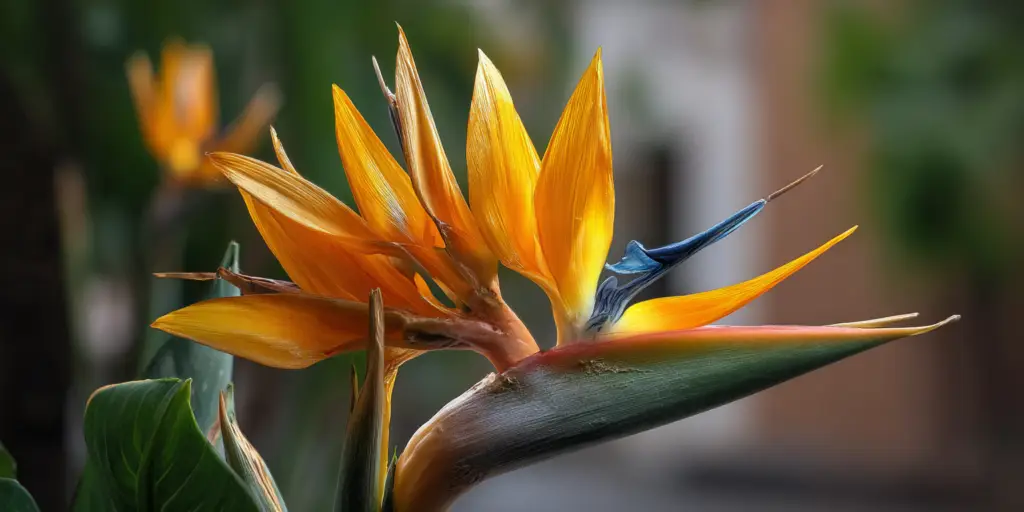
- Not a Strelitzia; bracts are the show rather than the petals.
- Bloom mainly in the warm season, not winter to spring.
- Taller canes and pendant inflorescences create a different silhouette.
Strengths
- Spectacular, long-lasting bracted stems
- Thrives in heat and humidity
- Good for bold screens in frost-free zones
Care in one minute
Site: full sun to partial shade in hot climates.
Soil: organic-rich, well-drained; pH slightly acidic to neutral; mulch to conserve moisture.
Water: keep evenly moist; do not allow prolonged drought.
Feeding: monthly balanced fertilizer in the growing season.
Grooming: remove spent canes after flowering; divide rhizomes to manage size.
Overwinter: protect from temperatures below 50°F; move containers to warm shelter.
Watch‑outs
- Frost and cold quickly damage foliage
- Needs rich soil and regular moisture; dries out fast in containers
- Large clumps require space and periodic division
Best uses (tags)
Provenance note
A Neotropical species native to western South America; widely cultivated in tropical gardens and as a cut flower.
References
- UF/IFAS EDIS – Heliconia rostrata (FP248)
- UF/IFAS Gardening Solutions – Heliconia
Similar Flowers
Enjoying our flower guides? Add YourFlowersGuide as a preferred source on Google. It helps more readers find us.
Add to Preferred Sources