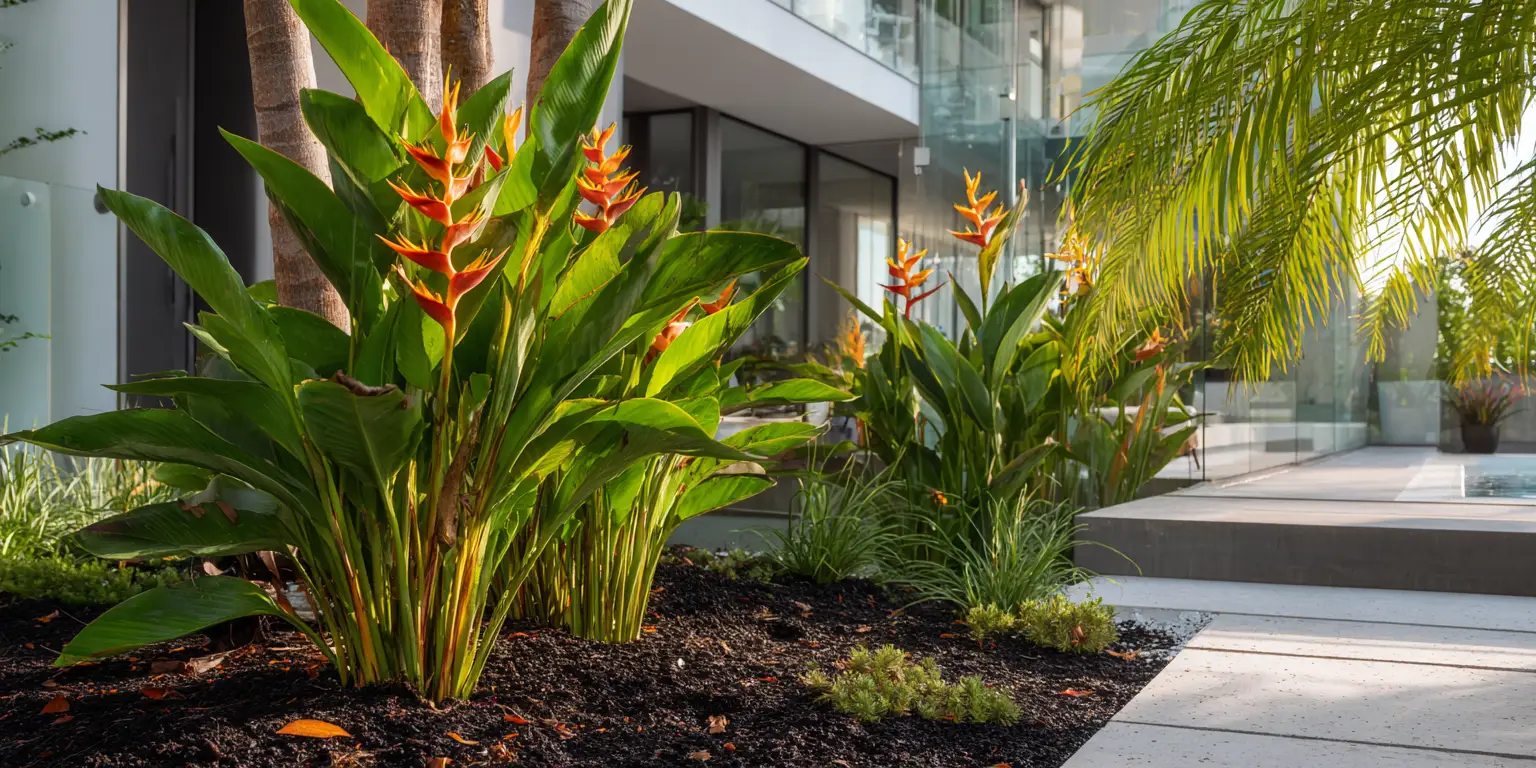
in bloom
now
through Nov
Bloom calendar
Heliconia psittacorum
Heliconia (false bird of paradise)
At‑a‑glance
- Group/Class: Heliconia (false bird of paradise)
- Height × spread: 2 to 5 ft × 2 to 3 ft (0.6 to 1.5 m × 0.6 to 0.9 m)
- Bloom window: late spring to fall outdoors; year-round under heat
- Color & flower form: upright narrow bracts in orange, red, or yellow; small tubular flowers
- Fragrance: 0 none
- USDA hardiness: 10b to 11; container elsewhere
- Breeder / Year / Origin: unknown, unknown, Tropical Americas
- Cut-flower notes: Common tropical cut stem; bracts are waxy and long-lasting; production runs April to November in unheated beds in South Florida
- Pet safety: unknown / not listed by ASPCA; use caution
How it differs
- Smaller and more upright than lobster-claw types.
- Shows color through much of the warm season; can produce indoors under heat.
- Bracts are narrow and slender rather than broad and pendant.
Strengths
- Compact size for massing and containers
- Long display period in heat
- Suited to tropical cut-flower use
Care in one minute
Site: full sun to light shade with heat and humidity.
Soil: fertile, well-drained; pH slightly acidic to neutral; mulch to keep roots cool.
Water: keep evenly moist; do not let dry out during growth.
Feeding: regular balanced fertilizer during warm months.
Grooming: remove spent stems after bloom; divide rhizomes to maintain vigor.
Overwinter: move containers to heated greenhouse or indoors before 50°F.
Watch‑outs
- Very cold sensitive; frost kills top growth
- Requires consistent moisture and feeding for best color
- Needs high light to avoid lank, floppy stems
Best uses (tags)
Provenance note
Native to the tropical Americas; widely cultivated in South Florida and greenhouse production for cut flowers.
References
- UF/IFAS EDIS – Heliconia spp. overview (FP249)
- Chicago Botanic Garden – Heliconia psittacorum ‘Lady Di’ profile
- ASHS HortScience – Heliconias: a promising new cut flower crop
Similar Flowers
Enjoying our flower guides? Add YourFlowersGuide as a preferred source on Google. It helps more readers find us.
Add to Preferred Sources