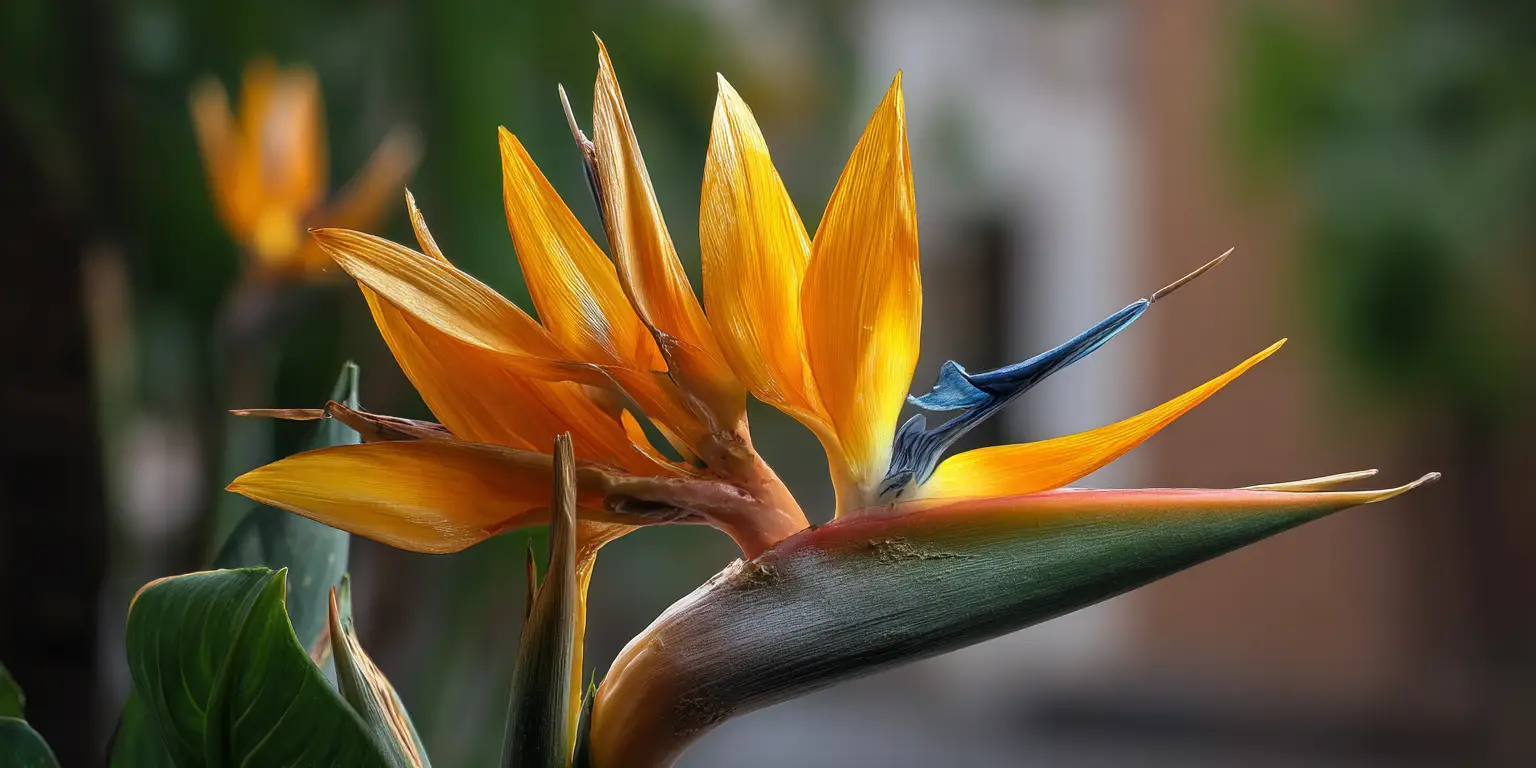
Mandela
Strelitzia (bird of paradise cultivar) · Kirstenbosch National Botanical Garden, 1996, South Africa
At‑a‑glance
- Group/Class: Strelitzia (bird of paradise cultivar)
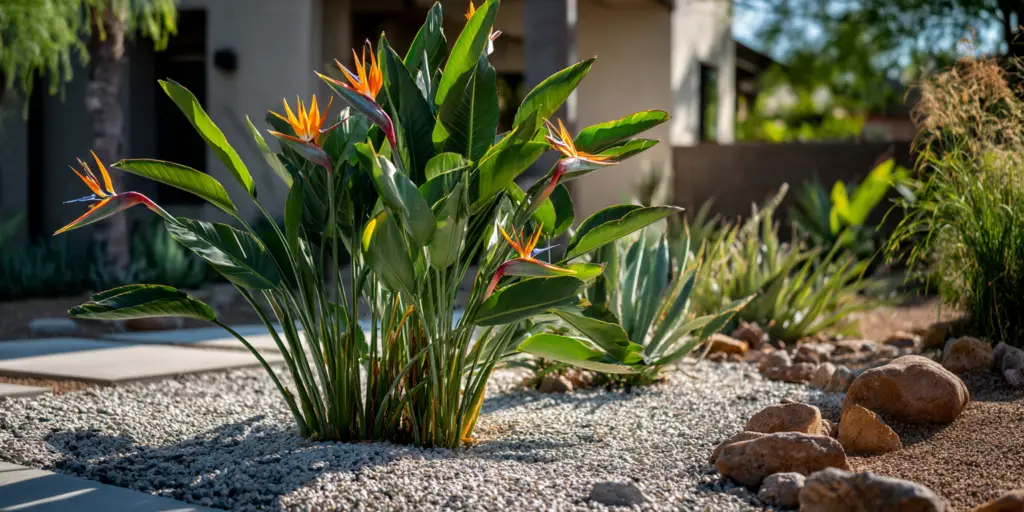
- Height × spread: 4 to 5 ft × 3 to 4 ft (1.2 to 1.5 m × 0.9 to 1.2 m)
- Bloom window: winter to spring
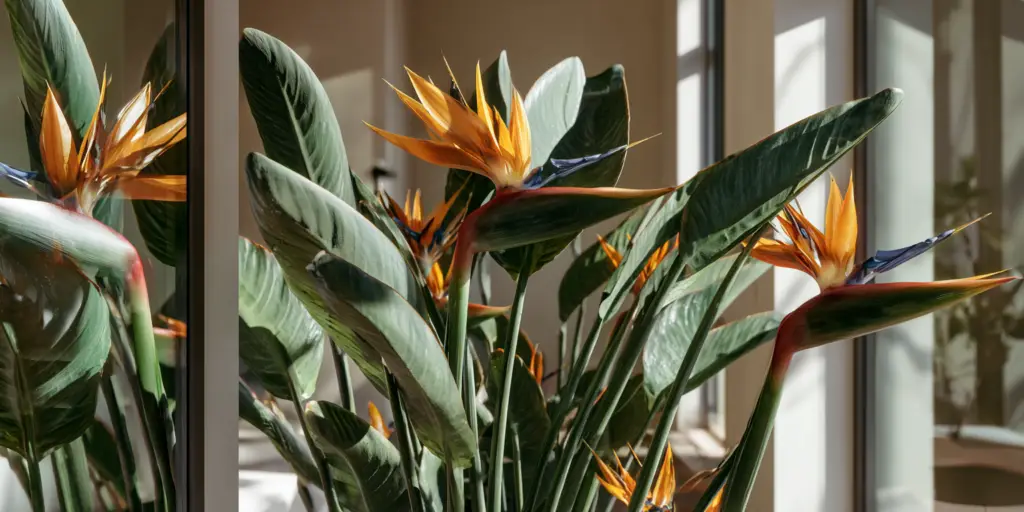
- Color & flower form: yellow sepals with blue to purple petals; classic bird-like form
- Fragrance: 0 none
- USDA hardiness: 10 to 12; container elsewhere
- Breeder / Year / Origin: Kirstenbosch National Botanical Garden, 1996, South Africa
- Cut-flower notes: Same handling as species; multiple florets emerge from each spathe
- Pet safety: avoid (cultivar of toxic S. reginae)
How it differs
- Flower sepals are yellow rather than orange.
- Similar size and clump habit to reginae.
- Color reads softer in bouquets and plantings while keeping the iconic form.
Strengths
- Distinct color within a familiar, reliable species
- Performs in containers and warm landscapes
- Suited to winter to spring bloom windows under bright light
Care in one minute
Site: full sun to bright light; shelter from strong wind.
Soil: well-drained, organic-rich loam; pH slightly acidic to neutral.
Water: even moisture in growing season; reduce in winter indoors.
Feeding: balanced liquid feed monthly in growth; keep slightly root-bound.
Grooming: remove spent florets; divide clumps only when crowded.
Overwinter: move containers indoors before frost; target 50°F minimum.
Watch‑outs
- Limited availability; growth is slow from division
- Cold sensitive; protect from frost and freezing
Best uses (tags)
Provenance note
Selected and distributed by Kirstenbosch National Botanical Garden; formerly sold as ‘Kirstenbosch Gold’ and renamed to honor Nelson Mandela in 1996.
References
- Wisconsin Horticulture – Strelitzia reginae (notes on ‘Mandela’s Gold’)
- RHS – Strelitzia reginae ‘Kirstenbosch Gold’
- SANBI – PlantZAfrica: ‘Mandela’s Gold’ (cultivar page)
Similar Flowers

Enjoying our flower guides? Add YourFlowersGuide as a preferred source on Google. It helps more readers find us.
Add to Preferred Sources