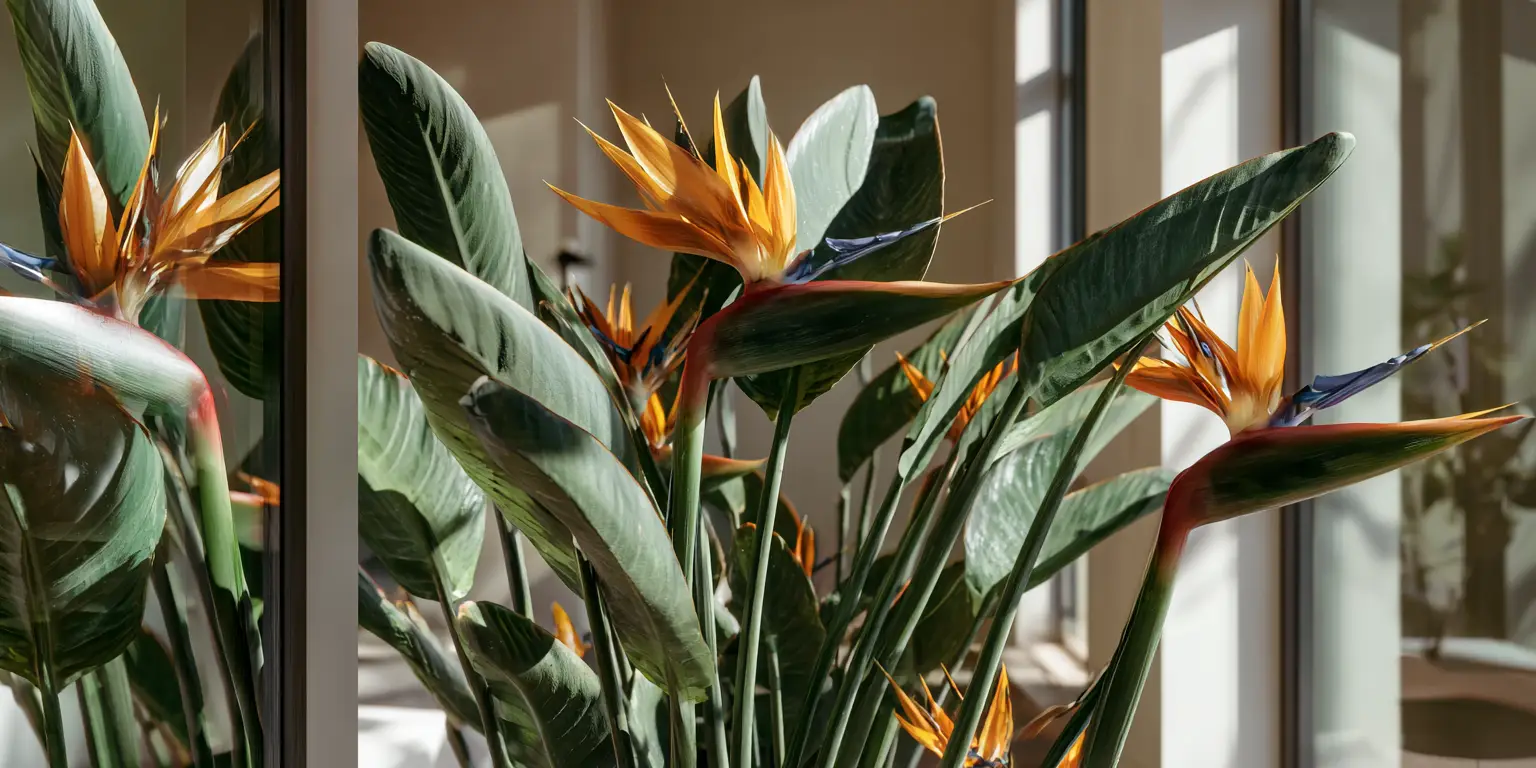
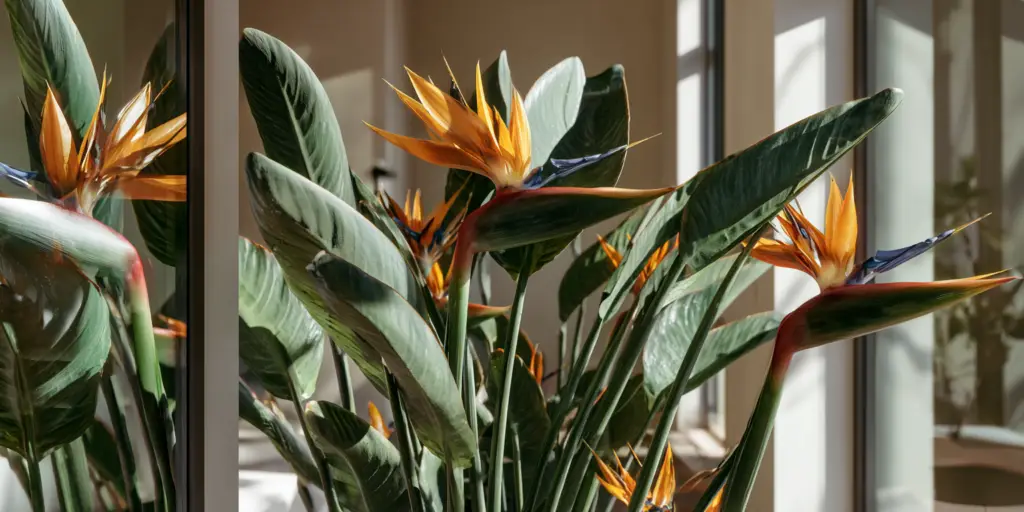
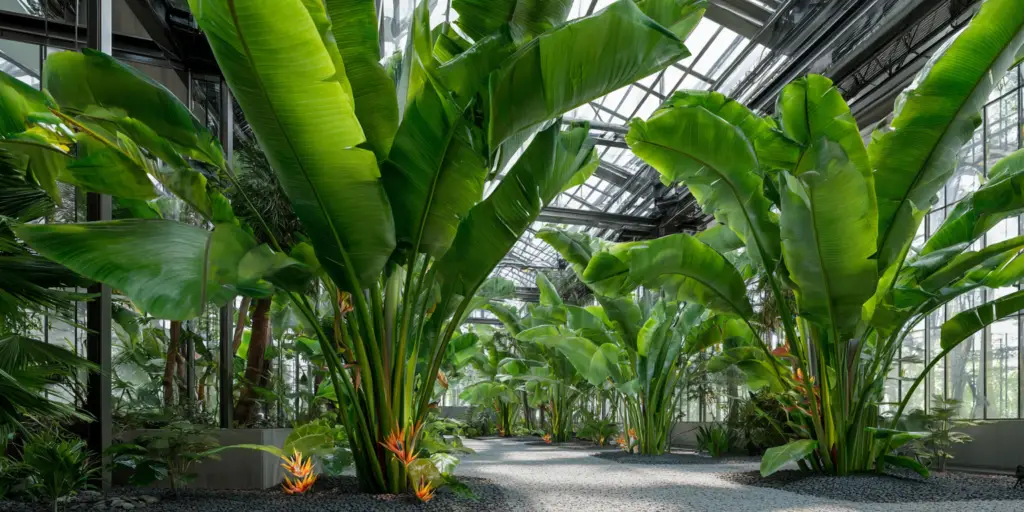
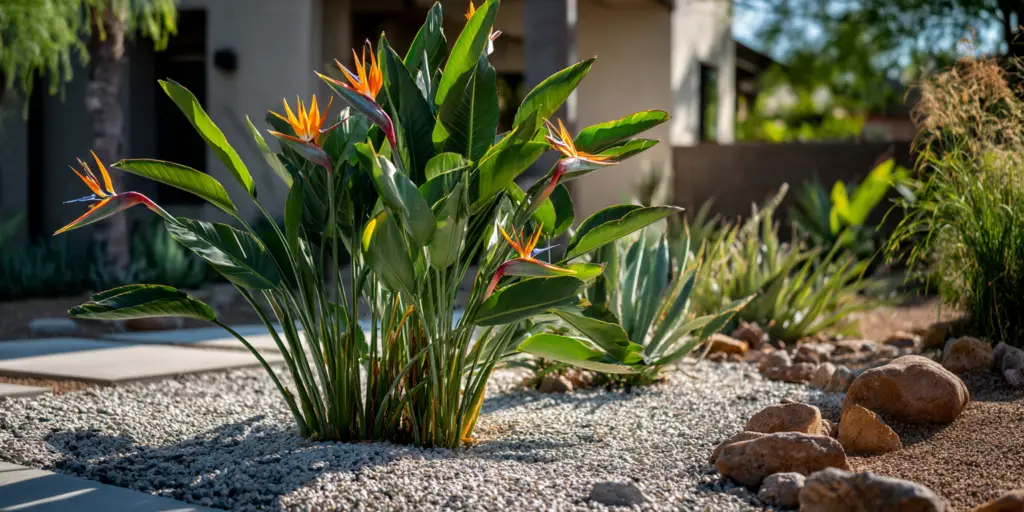
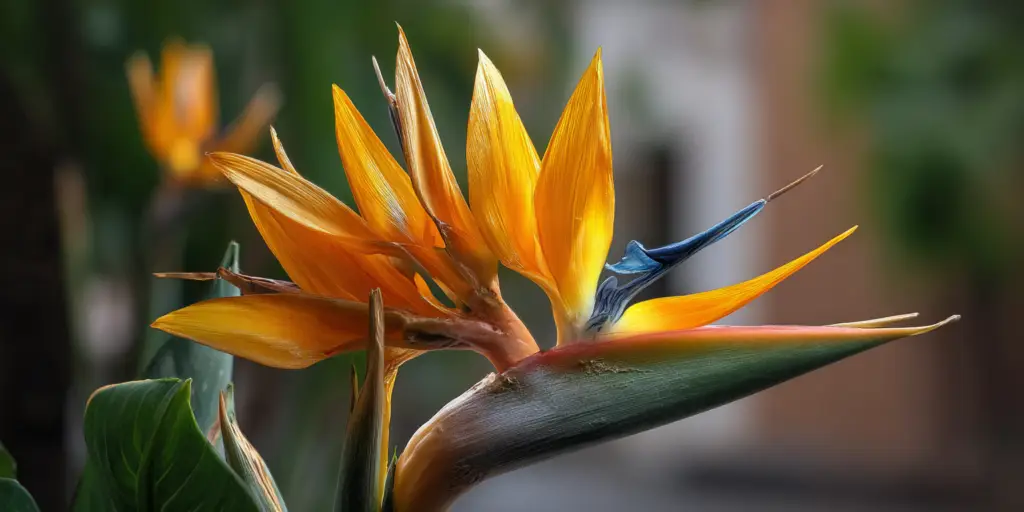
Strelitzia reginae is the classic bird of paradise grown for bold orange and blue flowers that resemble a crested bird. Plants form dense clumps and reach medium size, making them workable for patios and bright interiors in much of North America. Bloom is most reliable in winter to spring with strong light. In frost-free zones the plant can live outdoors year-round; elsewhere it is best in containers that move indoors before cold. Give bright light, warmth, and well-drained soil for steady growth. Keep slightly root-bound to encourage flowering.
At‑a‑glance
Group/Class: Strelitzia (bird of paradise)
Height × spread: 3 to 4 ft × 3 to 4 ft (0.9 to 1.2 m × 0.9 to 1.2 m)
Bloom window: winter to spring
Color & flower form: orange sepals with blue petals; crested bird-like flowers from a beak-like spathe
Fragrance: 0 none
USDA hardiness: 10 to 12; container elsewhere
Breeder / Year / Origin: unknown, unknown, South Africa
Awards/registration: RHS Award of Garden Merit
Cut-flower notes: Multiple florets per spathe; can be stored up to 45°F (7°C) for about 4 weeks after proper pretreatment; harvest at tight-bud stage
Pet safety: avoid (toxic to pets: primarily fruit and seeds)
How it differs
Medium stature compared with the much taller white bird of paradise.
Flowers in winter to spring; many types bloom mainly in warm seasons.
Classic orange and blue color; some cultivars shift to yellow (‘Mandela’s Gold’).
Widely used as a cut flower with multiple florets per stem.
Strengths
Long-lasting, architectural blooms
Performs in containers and bright interiors
Handles brief dry spells once established
Clump-forming habit fits modest spaces
Care in one minute
Site: full sun to bright light; sheltered from strong wind.
Written by: Your Flowers Guide editorial team We are a small independent group of flower lovers who research and review each guide using trusted horticultural and educational sources. Learn more about us