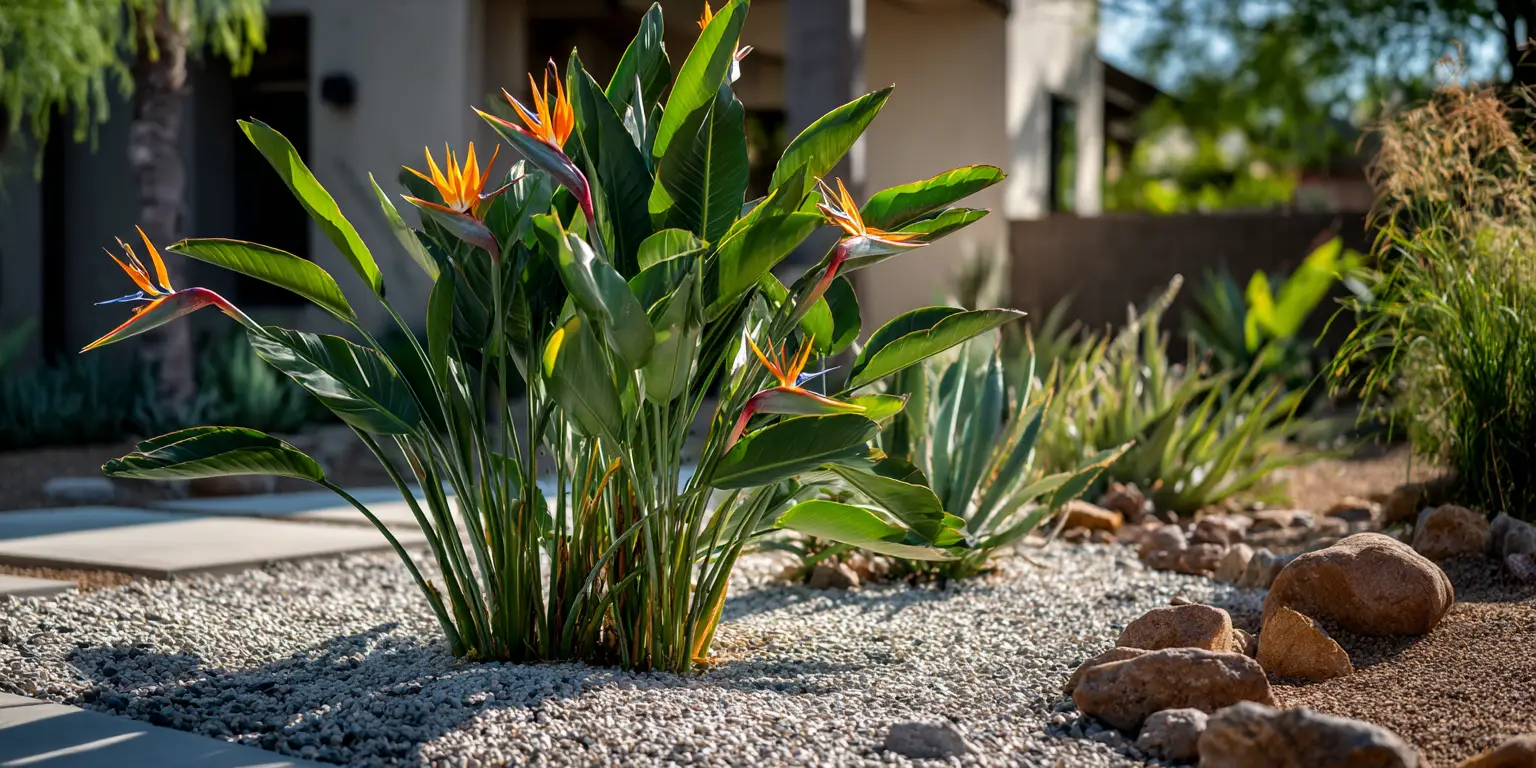
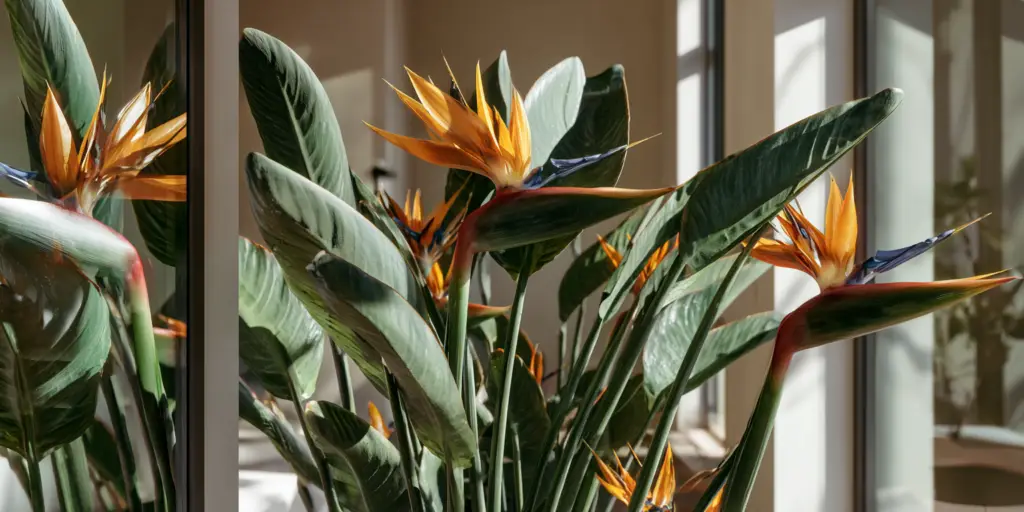
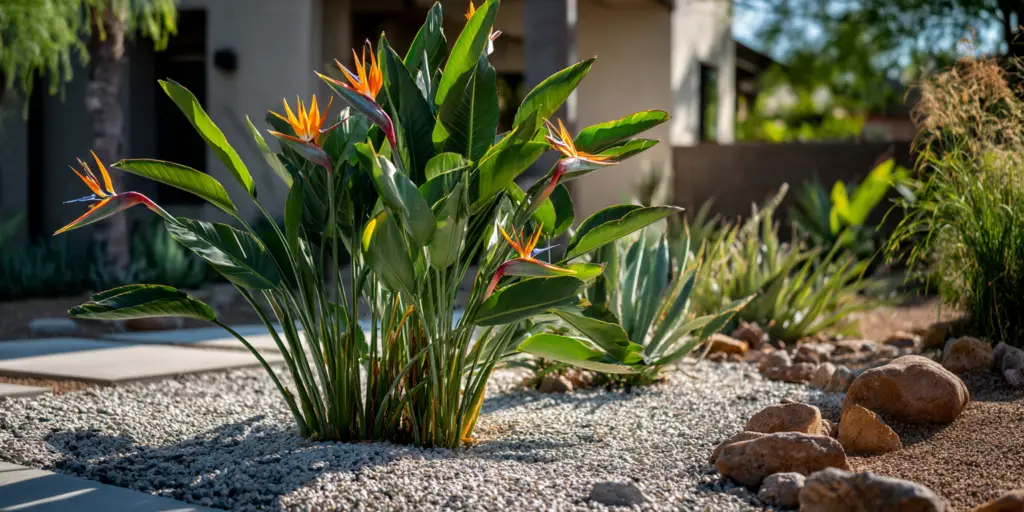
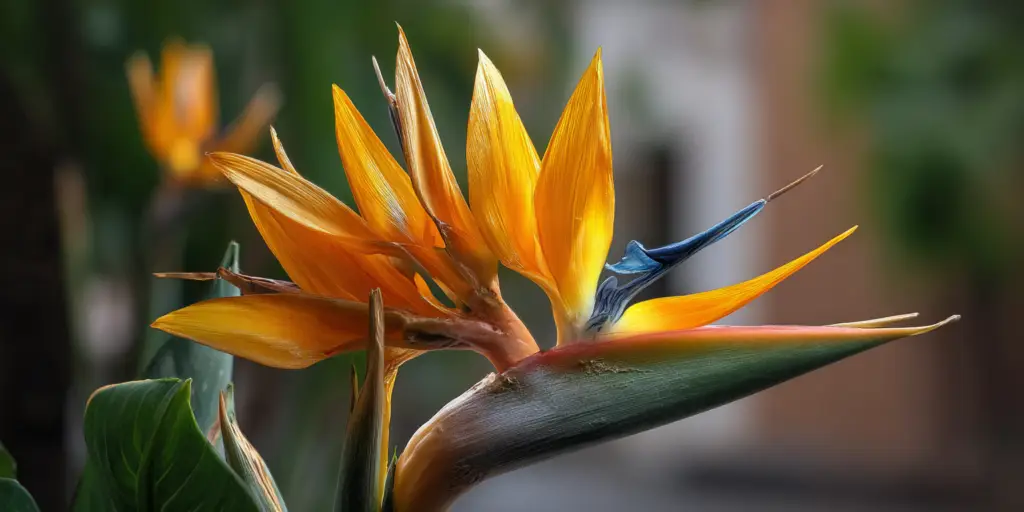
Strelitzia juncea is the rush-leaved or leafless bird of paradise. Its leaves are narrow, cylindrical petioles with little to no blade, giving a sculptural, upright clump. Flowers are similar to S. reginae in orange and blue tones. The compact habit suits hot, sunny sites that would shred broad leaves, and it also works in large containers. Growth is slow. Plant in frost-free areas outdoors; otherwise overwinter indoors in bright light. Bloom timing varies by climate and plant maturity.
At‑a‑glance
Group/Class: Strelitzia (rush-leaved bird of paradise)
Height × spread: 3 to 6 ft × 2 to 4 ft (0.9 to 1.8 m × 0.6 to 1.2 m)
Bloom window: unknown / varies by climate
Color & flower form: orange sepals and blue petals; inflorescences slightly shorter than foliage
Fragrance: 0 none
USDA hardiness: often listed 10 to 11; container elsewhere (sources differ)
Breeder / Year / Origin: unknown, unknown, South Africa
Pet safety: avoid (same genus as toxic S. reginae)
How it differs
Rush-like cylindrical foliage with little to no leaf blade.
Smaller, denser clump than most bird of paradise types.
Flowers resemble reginae but scapes are often shorter than the leaves.
Strengths
Clean, architectural form for modern landscapes
Tolerates sun and wind better than broad-leaved types
Fits large containers and narrow beds
Care in one minute
Site: full sun to bright light; shelter from hard freezes.
Soil: sharply drained sandy or loamy soil; pH slightly acidic to neutral.
Water: moderate; allow topsoil to dry slightly between waterings in containers.
Feeding: light, regular feeding during warm growth; avoid heavy salts.
Grooming: remove any split or damaged shoots; divide clumps sparingly.
Overwinter: container culture indoors where frost occurs.
Written by: Your Flowers Guide editorial team We are a small independent group of flower lovers who research and review each guide using trusted horticultural and educational sources. Learn more about us