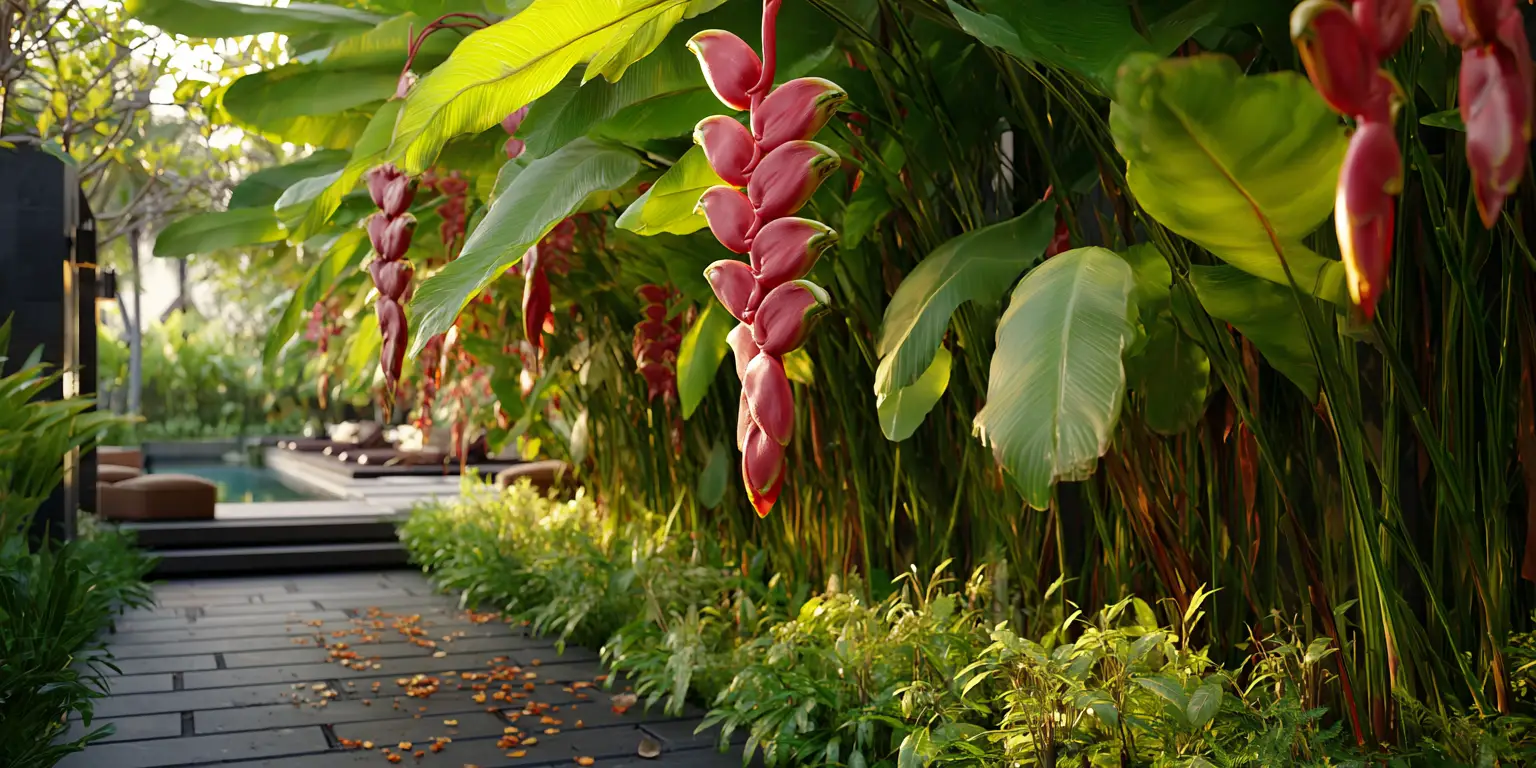
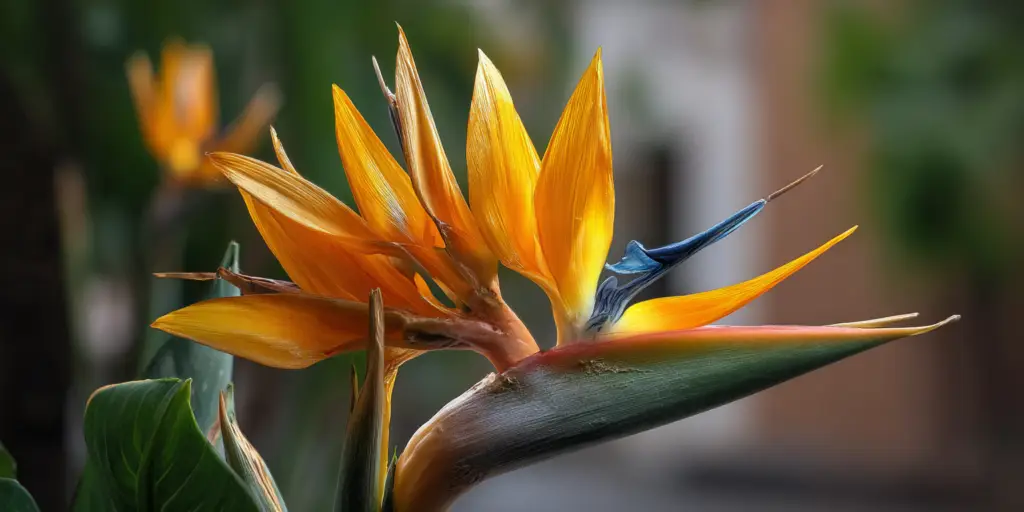
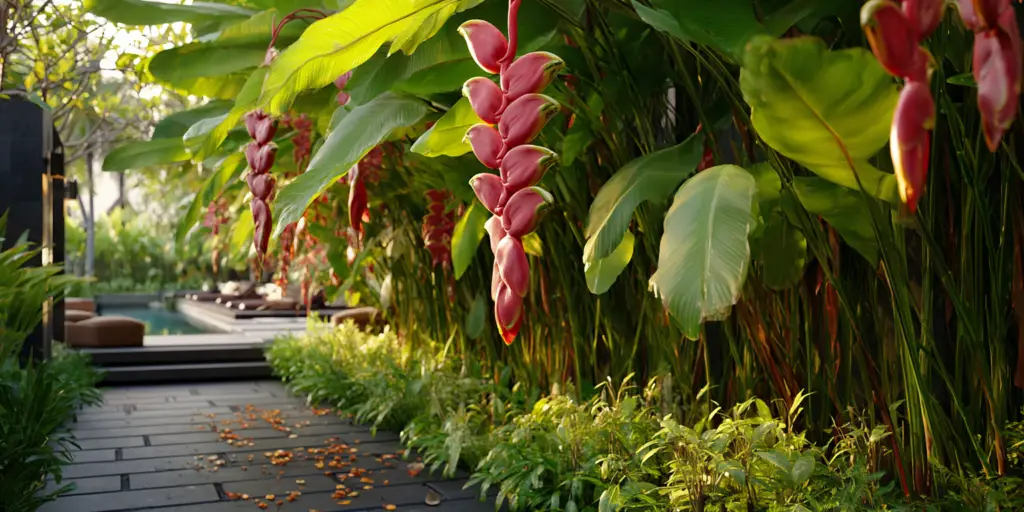
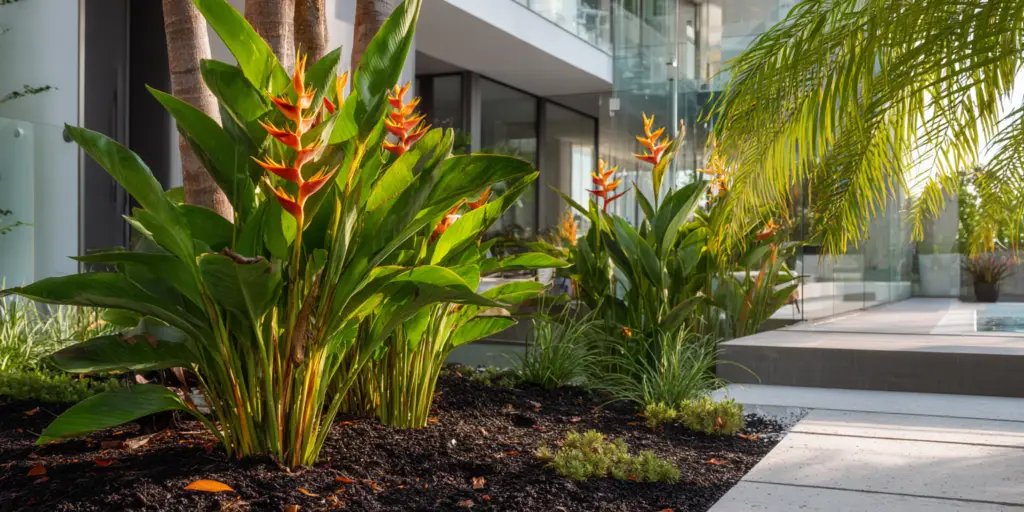
Heliconia rostrata is a tropical relative often called false bird of paradise. Pendant chains of scarlet and yellow bracts hang beneath tall canes, with the true flowers tucked inside. In North America it thrives only in frost-free zones and in warm greenhouses. Outdoors in South Florida or Hawaii it can make a tall, dramatic clump; elsewhere grow in large containers you can shelter for winter. Bracts are waxy and long-lasting, and stems are widely used by florists in tropical designs.
At‑a‑glance
Group/Class: Heliconia (false bird of paradise)
Height × spread: 6 to 15 ft × 3 to 5 ft (1.8 to 4.6 m × 0.9 to 1.5 m)
Bloom window: spring to summer in warm climates
Color & flower form: pendant scarlet and yellow bracts with small hidden flowers
Fragrance: 0 none
USDA hardiness: 10b to 11; container elsewhere
Breeder / Year / Origin: unknown, unknown, Western South America
Cut-flower notes: Waxy, long-lasting bracts; widely used as tropical cut stems
Pet safety: unknown / not listed by ASPCA; use caution
How it differs
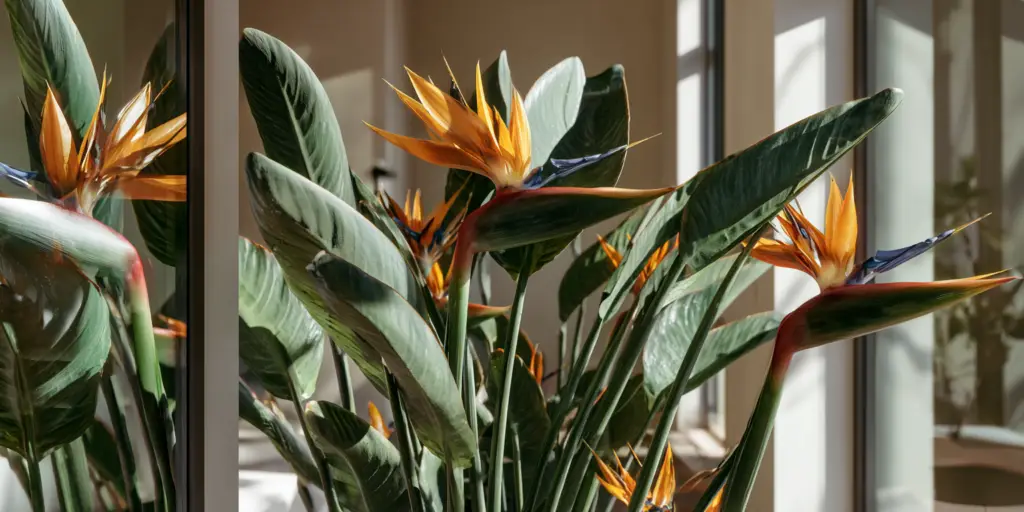
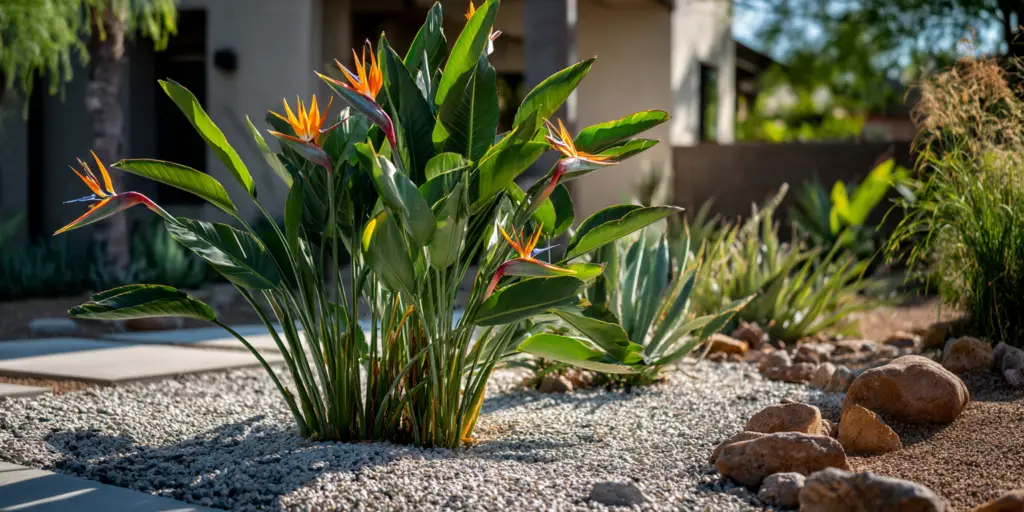
Not a Strelitzia; bracts are the show rather than the petals.
Bloom mainly in the warm season, not winter to spring.
Taller canes and pendant inflorescences create a different silhouette.
Strengths
Spectacular, long-lasting bracted stems
Thrives in heat and humidity
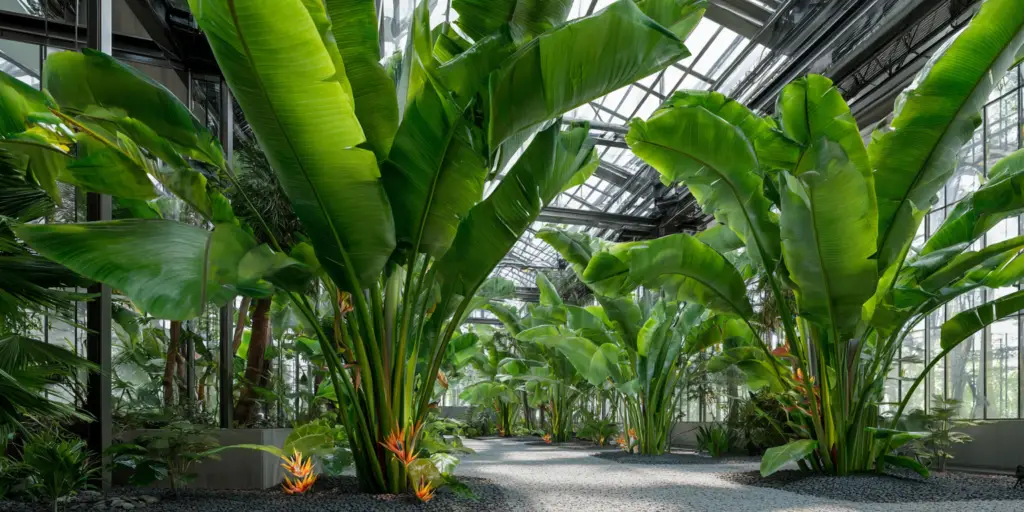
Good for bold screens in frost-free zones
Care in one minute
Site: full sun to partial shade in hot climates.
Soil: organic-rich, well-drained; pH slightly acidic to neutral; mulch to conserve moisture.
Water: keep evenly moist; do not allow prolonged drought.
Feeding: monthly balanced fertilizer in the growing season.
Grooming: remove spent canes after flowering; divide rhizomes to manage size.
Overwinter: protect from temperatures below 50°F; move containers to warm shelter.
Watch‑outs
Frost and cold quickly damage foliage
Needs rich soil and regular moisture; dries out fast in containers
Written by: Your Flowers Guide editorial team We are a small independent group of flower lovers who research and review each guide using trusted horticultural and educational sources. Learn more about us