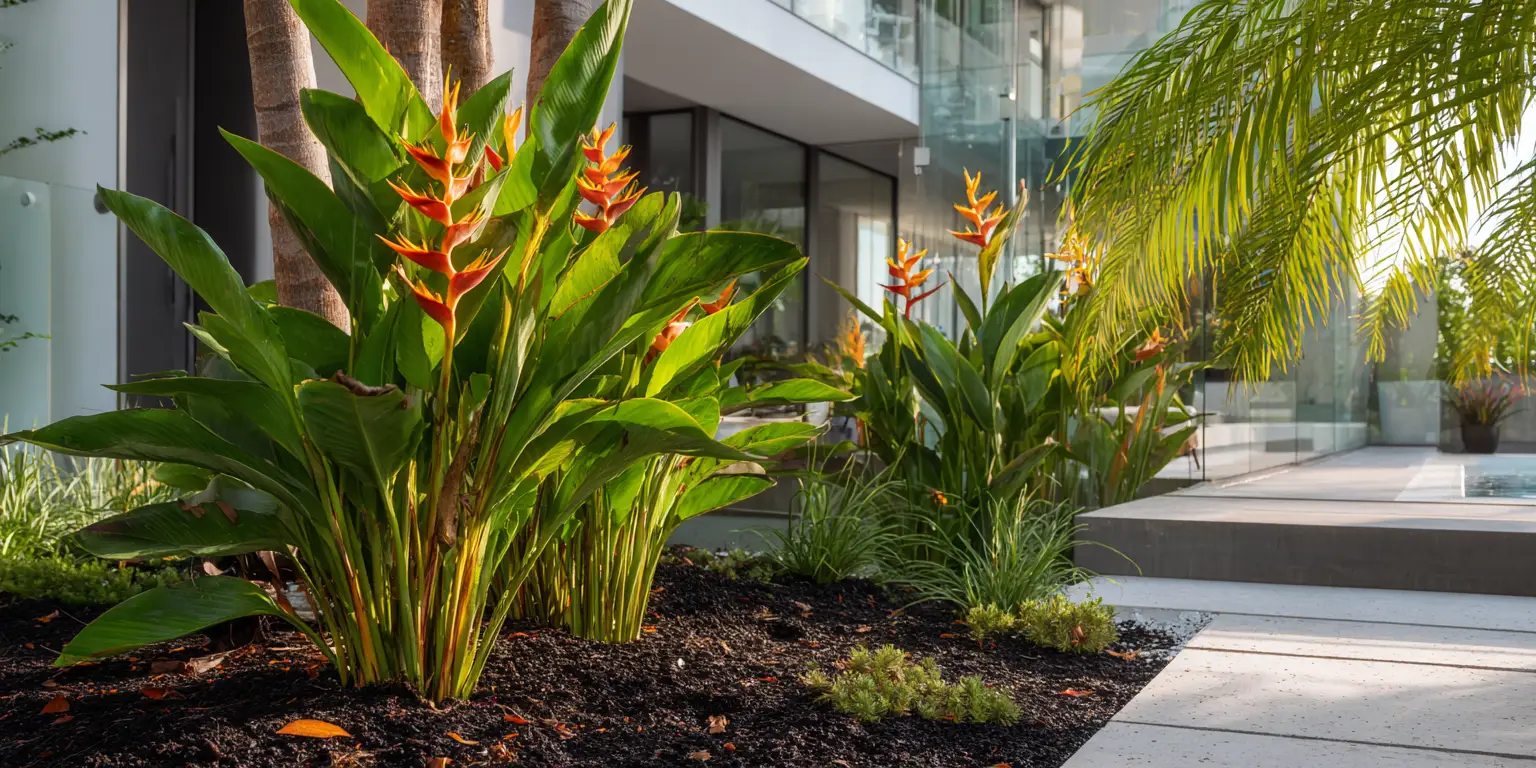
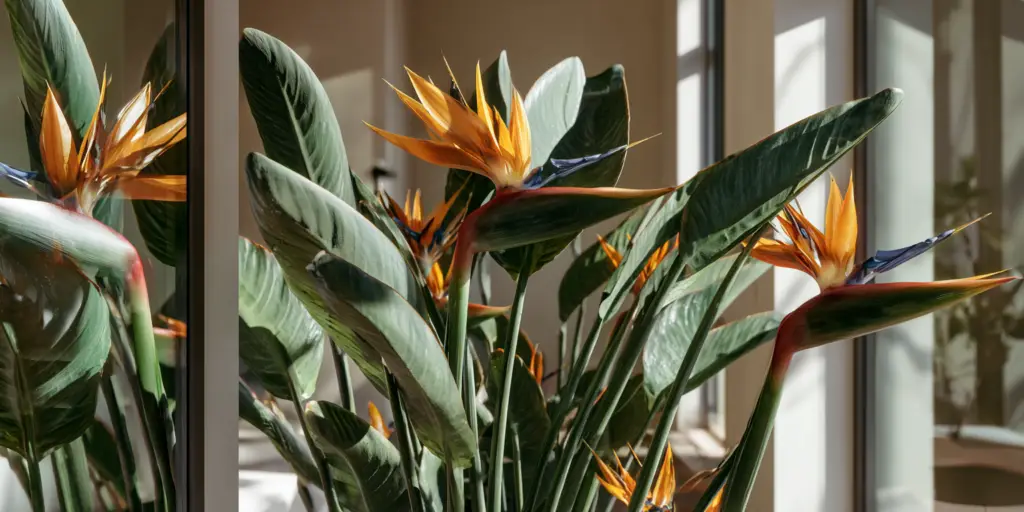
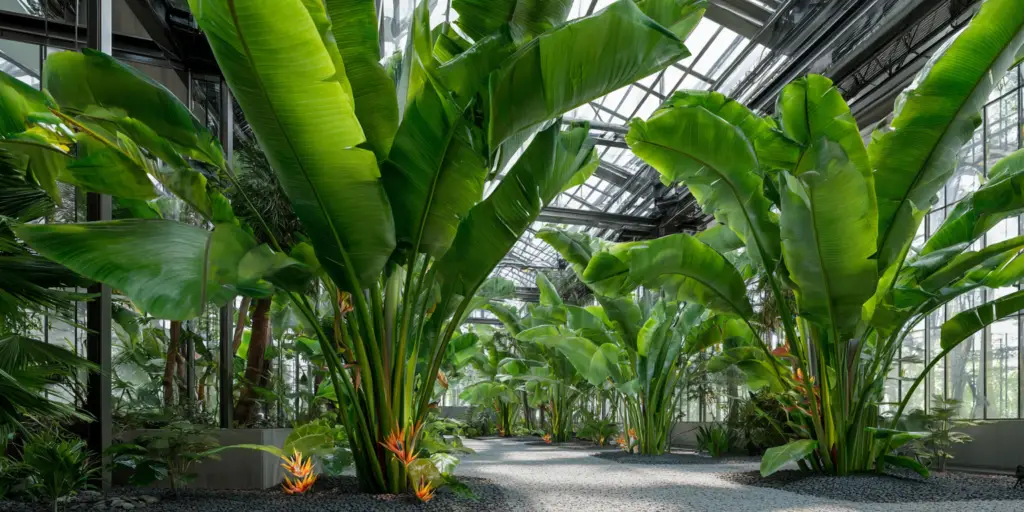
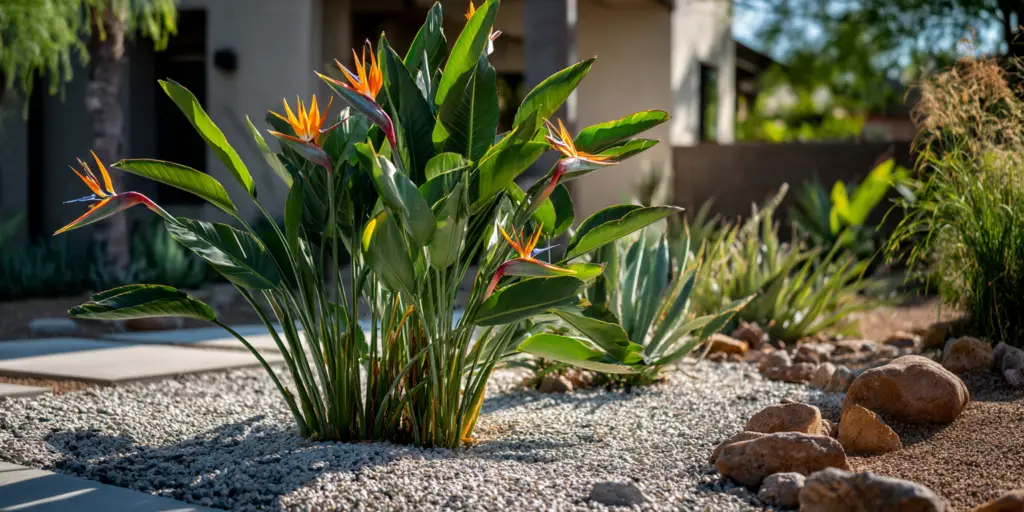
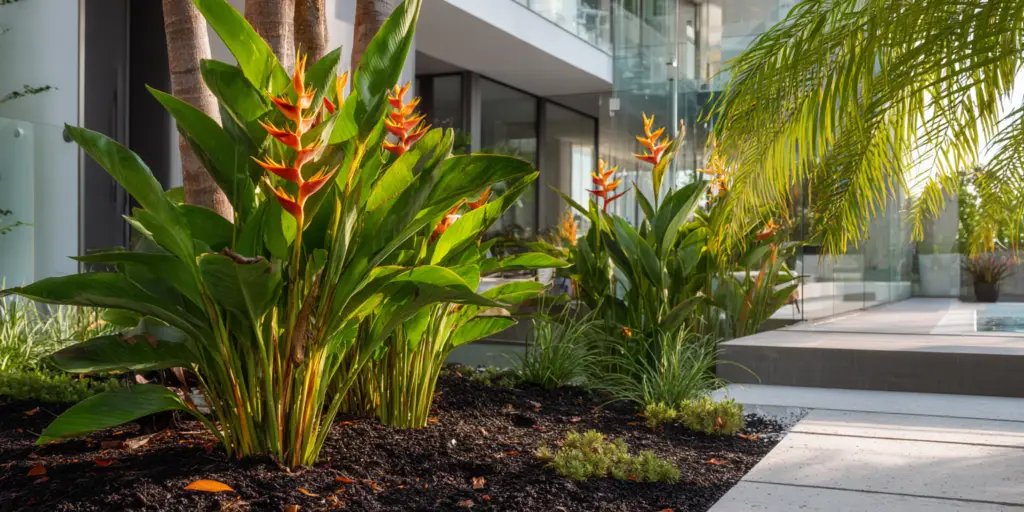
Heliconia psittacorum is a compact parrot’s-beak heliconia valued for near-year-round color in warm climates. Stems carry upright, slender bracts in shades of orange, red, or yellow with small tubular flowers. It suits massing in South Florida landscapes and large containers elsewhere. Production for cut flowers in southern Florida runs late spring to fall and continues year-round under heat. Plants demand warmth, moisture, and bright light, and freeze easily.
At‑a‑glance
Group/Class: Heliconia (false bird of paradise)
Height × spread: 2 to 5 ft × 2 to 3 ft (0.6 to 1.5 m × 0.6 to 0.9 m)
Bloom window: late spring to fall outdoors; year-round under heat
Color & flower form: upright narrow bracts in orange, red, or yellow; small tubular flowers
Fragrance: 0 none
USDA hardiness: 10b to 11; container elsewhere
Breeder / Year / Origin: unknown, unknown, Tropical Americas
Cut-flower notes: Common tropical cut stem; bracts are waxy and long-lasting; production runs April to November in unheated beds in South Florida
Pet safety: unknown / not listed by ASPCA; use caution
How it differs
Smaller and more upright than lobster-claw types.
Shows color through much of the warm season; can produce indoors under heat.
Bracts are narrow and slender rather than broad and pendant.
Strengths
Compact size for massing and containers
Long display period in heat
Suited to tropical cut-flower use
Care in one minute
Site: full sun to light shade with heat and humidity.
Soil: fertile, well-drained; pH slightly acidic to neutral; mulch to keep roots cool.
Water: keep evenly moist; do not let dry out during growth.
Feeding: regular balanced fertilizer during warm months.
Grooming: remove spent stems after bloom; divide rhizomes to maintain vigor.
Overwinter: move containers to heated greenhouse or indoors before 50°F.
Watch‑outs
Very cold sensitive; frost kills top growth
Requires consistent moisture and feeding for best color
Written by: Your Flowers Guide editorial team We are a small independent group of flower lovers who research and review each guide using trusted horticultural and educational sources. Learn more about us