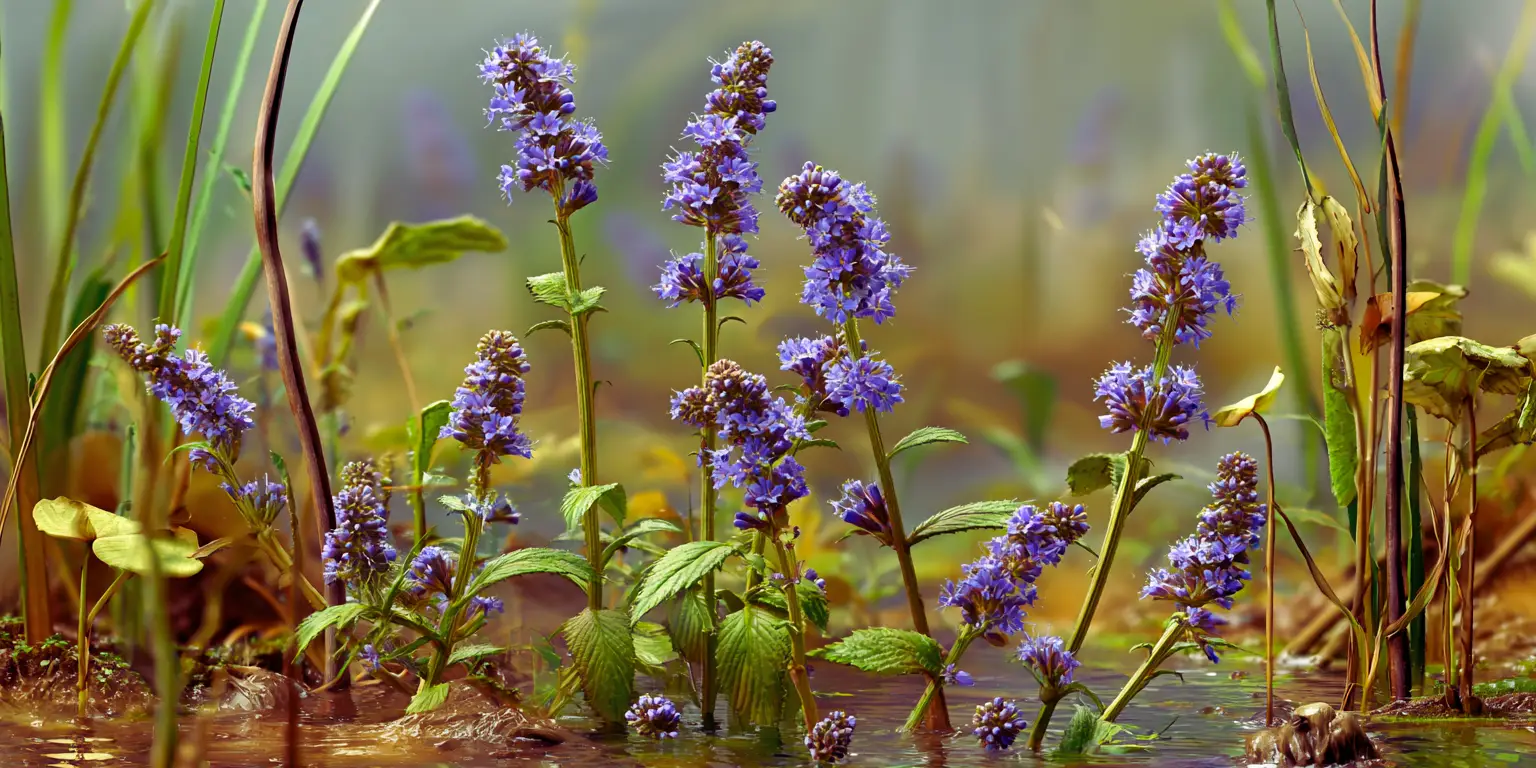
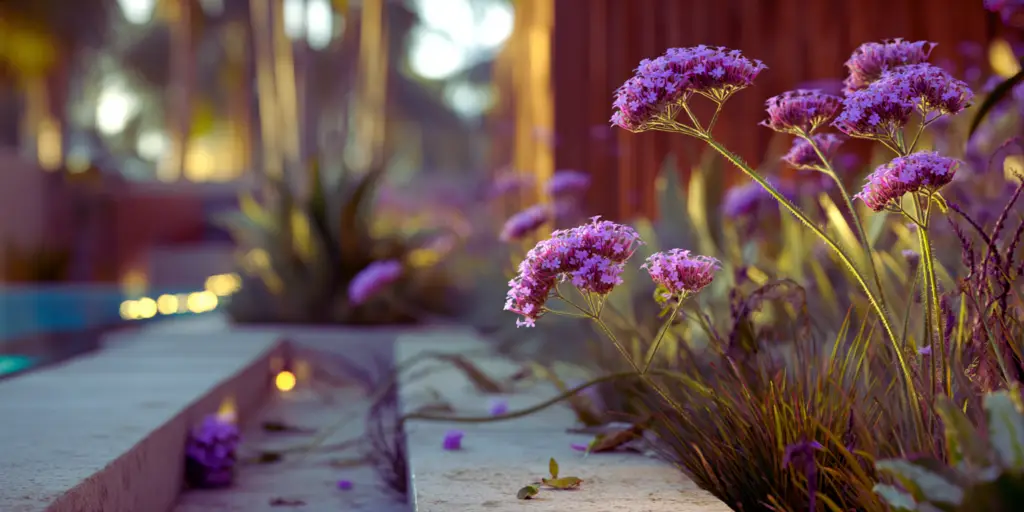
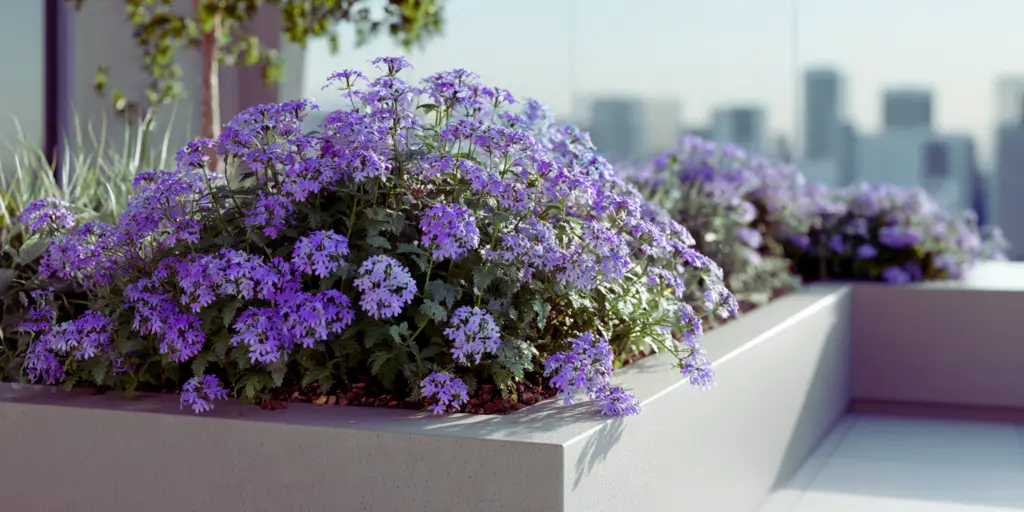
This North American native vervain brings tall, branching spires of violet-blue flowers to meadows and rain gardens. It blooms from mid summer into early fall and supports a wide range of pollinators. Plants are upright and clump-forming, usually 3 to 5 feet tall. It accepts average to wet soils better than other verbenas and is very winter hardy. Self-seeding can occur in open ground. Use it where a fine, vertical texture is desired.
At‑a‑glance
Group/Class: species (blue vervain)
Height × spread: 3-5 ft × 1-2 ft (90-150 cm × 30-60 cm)
Bloom window: mid summer to early fall
Color & flower form: violet-blue spikes on candelabra-branched stems; florets open bottom to top
Fragrance: 0 none
USDA hardiness: zones 3-9
Breeder / Year / Origin: wild origin / n/a / native to North America
Cut-flower notes: stems are fairly stiff; vase life varies by handling
Pet safety: unknown / sources differ
How it differs
Far more cold-hardy and moisture-tolerant than bedding verbenas.
Tall, upright spires instead of domed clusters or trailing forms.
Native species suited to naturalistic plantings.
Readily self-seeds in open soil.
Strengths
Long midsummer bloom that attracts many pollinators.
Very winter hardy across northern regions.
Tolerates average to wet soils, including heavy clay with drainage.
Provides strong vertical accents in mixed plantings.
Care in one minute
Plant in full sun; allow regular moisture, especially in summer.
Deadhead to limit reseeding or to encourage a tidier look.
Stake if plant height or wind exposure demands support.
Fertilize lightly; rich soil can make stems lanky.
Cut back in late winter or early spring as new growth appears.
Watch‑outs
Can self-seed and wander in open meadows.
May lean if plants grow above 5 feet or in partial shade.
Often short-lived; allow some reseeding to maintain stands.
Written by: Your Flowers Guide editorial team We are a small independent group of flower lovers who research and review each guide using trusted horticultural and educational sources. Learn more about us