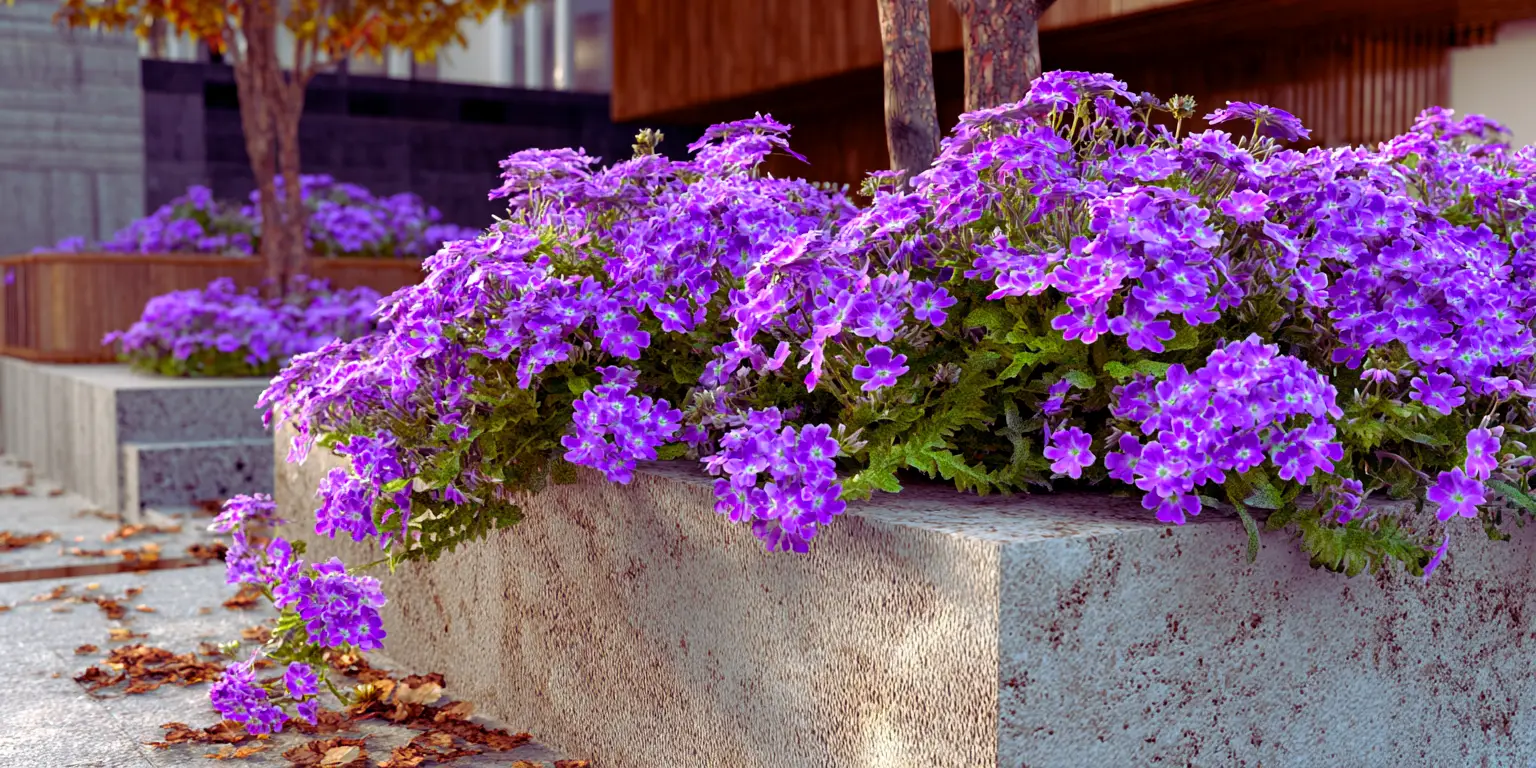
in bloom
now
through Oct
Bloom calendar
Verbena peruviana
At‑a‑glance
- Group/Class: species (Peruvian mock vervain; often listed as *Glandularia peruviana*)
- Height × spread: 6-12 in × 1-3 ft (15-30 cm × 30-90 cm)
- Bloom window: spring to fall
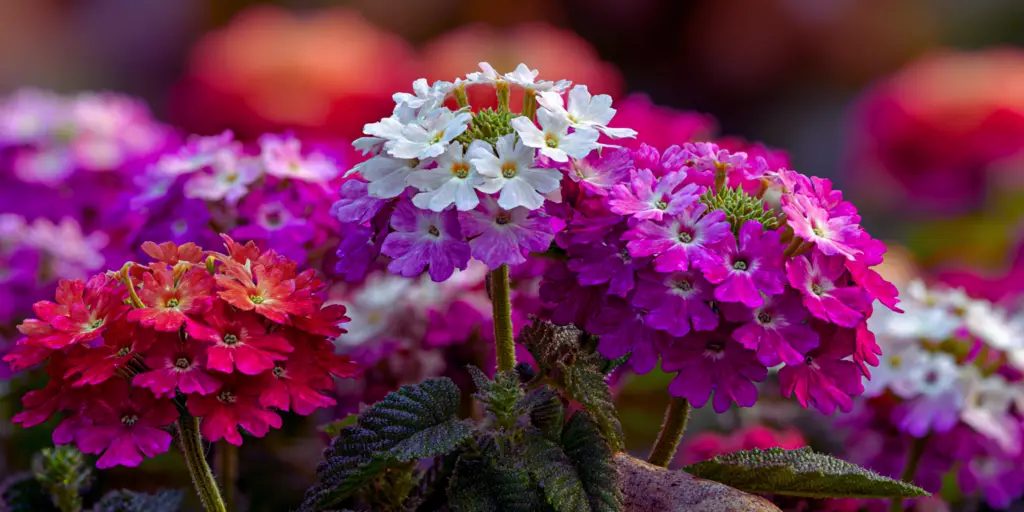
- Color & flower form: flattened clusters, commonly scarlet; pink, white, and purple selections exist
- Fragrance: 0 none
- USDA hardiness: grown as annual in most regions; perennial hardiness varies by selection
- Breeder / Year / Origin: unknown / n/a / native to South America
- Pet safety: unknown / sources differ
How it differs
- Carpeting habit stays low and trails rather than forming tall stems.
- Strongest bloom in spring and fall; summer bloom pauses in extreme heat.
- Generally less cold hardy than *V. canadensis* selections.
- True red tones are common among its cultivars.
Strengths
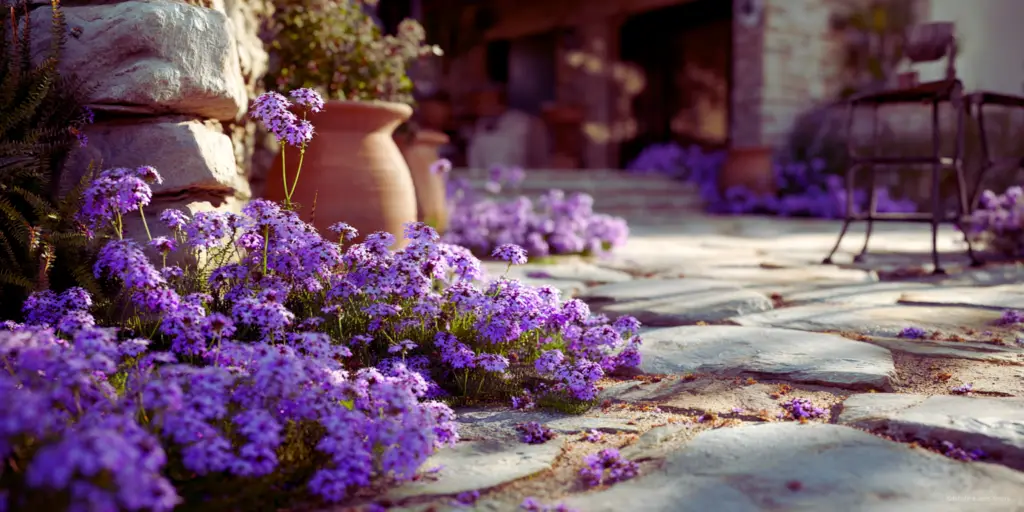
- Cascades over rocks, walls, and container rims.
- Good heat tolerance with adequate drainage.
- Long season of color with deadheading.
- Useful in water-wise plantings once established.
Care in one minute
Plant in full sun with excellent drainage.
Water to establish; then provide moderate, infrequent water.
Fertilize lightly in spring; avoid excessive nitrogen.
Shear after peak flush to encourage rebloom.
In frost-prone climates, grow as an annual or protect in winter.
Watch‑outs
- Perennial hardiness is variable by cultivar and region.
- Declines in poorly drained or overwatered soils.
- Regular deadheading needed to maintain flowering.
Best uses (tags)
Provenance note
Now widely treated as *Glandularia peruviana*. Many color forms are in cultivation and used in warm-climate bedding and containers.
References
- Royal Horticultural Society – Glandularia peruviana
- Kew Plants of the World Online – Glandularia peruviana
Similar Flowers
Enjoying our flower guides? Add YourFlowersGuide as a preferred source on Google. It helps more readers find us.
Add to Preferred Sources