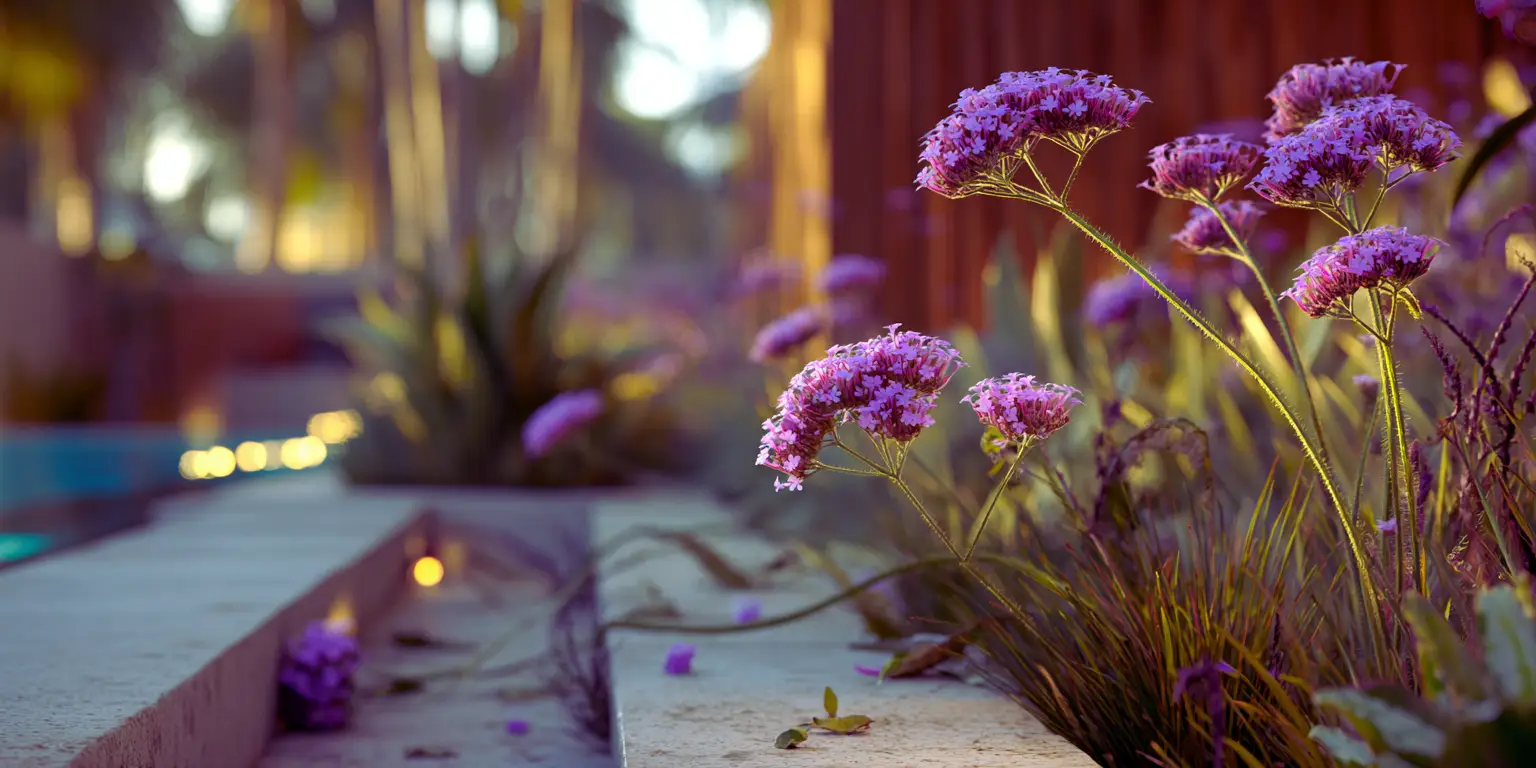
in bloom
now
through Oct
Bloom calendar
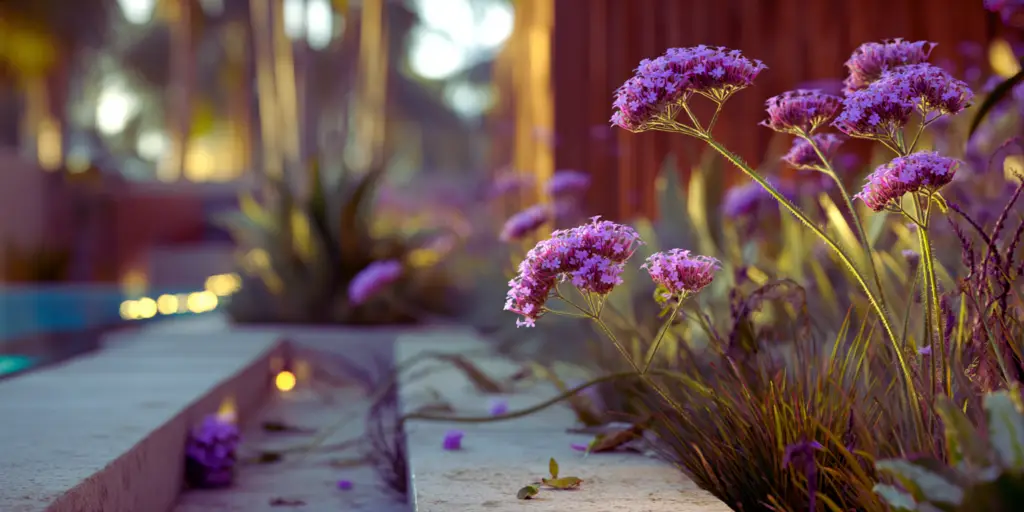
Verbena bonariensis
species (tall verbena)
At‑a‑glance
- Group/Class: species (tall verbena)
- Height × spread: 2-5 ft × 1.5-3 ft (60-150 cm × 45-90 cm)
- Bloom window: June to frost
- Color & flower form: rose-violet to lavender; tiny tubular florets in airy, flat-topped clusters
- Fragrance: 0 none
- USDA hardiness: zones 7-11; grown as annual in colder regions
- Breeder / Year / Origin: unknown / n/a / native to South America
- Awards/registration: RHS Award of Garden Merit
- Cut-flower notes: wiry stems; good airy filler; vase life varies by handling
- Pet safety: sources differ / supervise pets
How it differs
- Much taller and more transparent than typical bedding verbenas.
- Vertical, see-through stems rather than trailing or mounded forms.
- Blooms summer to frost with minimal deadheading.
- Self-seeds and can naturalize where winters are mild.
Strengths
- Very long bloom into fall.
- Attracts butterflies and hummingbirds.
- Tolerates poor, dry soils if drainage is good.
- Low maintenance once established.
Care in one minute
Site in full sun with well-drained soil; avoid heavy shade.
Water to establish, then water during prolonged dry spells; avoid overwatering.
Fertilize lightly; lush growth can lean.
Stake only in very windy sites; stems are naturally wiry.
Deadhead to limit self-seeding or leave seedheads for wildlife.
Leave some hollow stems over winter for stem-nesting bees; cut back in spring.
Watch‑outs
- Freely self-seeds; listed as invasive in some areas of the U.S.
- Powdery mildew can show up in shade or with poor air flow.
- Cold tender outside zones 7-11.
Best uses (tags)
Provenance note
The specific epithet means “of Buenos Aires.” The species is sometimes listed as synonym *V. patagonica* in references.
References
- Missouri Botanical Garden – Verbena bonariensis
- Royal Horticultural Society – Verbena bonariensis (AGM)
- NC State Extension Plant Toolbox – Verbena bonariensis
- ASPCA – Lemon Verbena (Aloysia triphylla) toxicity note
Similar Flowers
Enjoying our flower guides? Add YourFlowersGuide as a preferred source on Google. It helps more readers find us.
Add to Preferred Sources