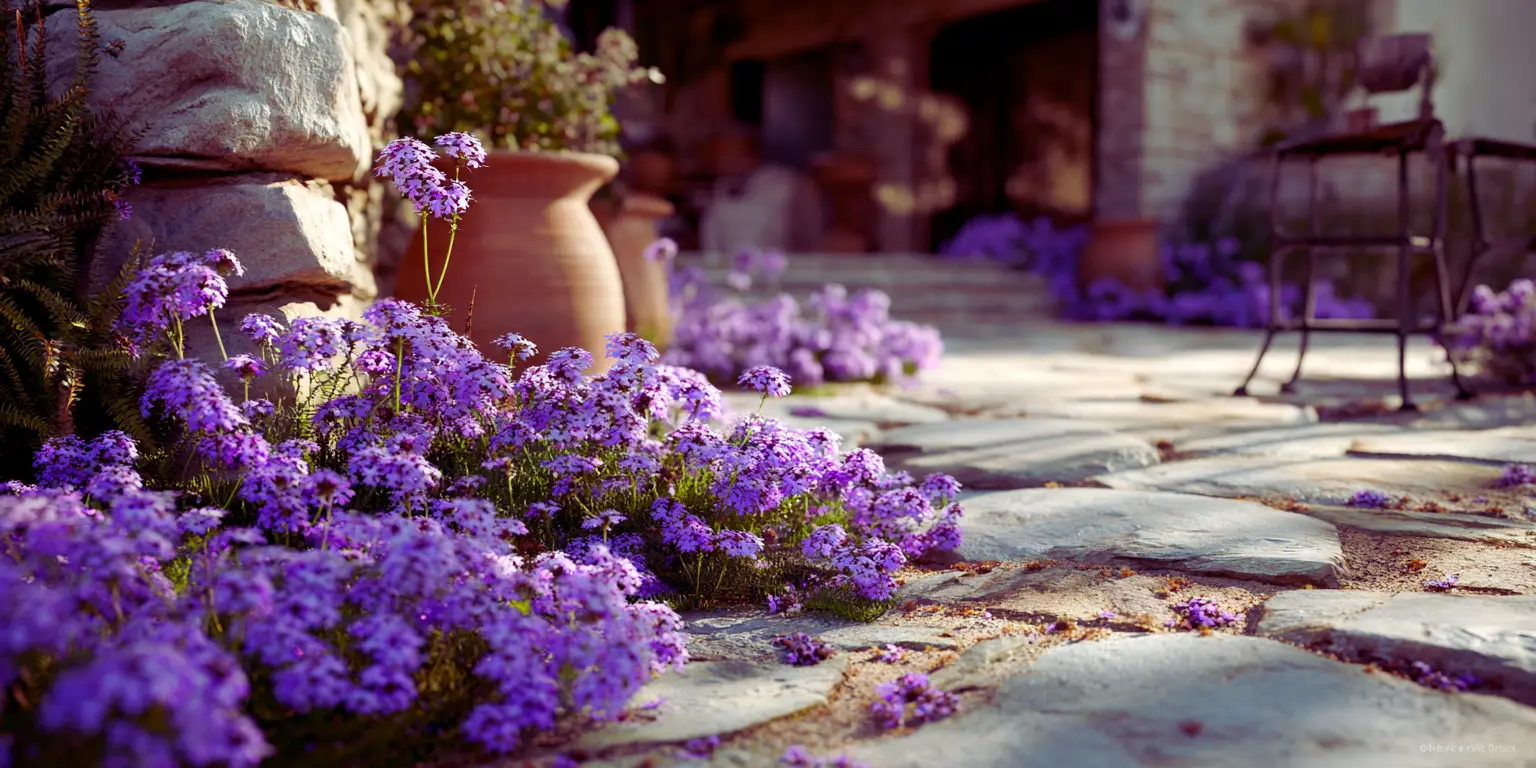
in bloom
now
through Oct
Bloom calendar
Homestead Purple
cultivar of *V. canadensis*; trailing groundcover verbena · Allan Armitage & Michael Dirr / 1994 / United States
At‑a‑glance
- Group/Class: cultivar of *V. canadensis*; trailing groundcover verbena
- Height × spread: 8-12 in × 24-36 in (20-30 cm × 60-90 cm)
- Bloom window: early spring to frost
- Color & flower form: deep purple clusters of small, starry florets
- Fragrance: 0 none
- USDA hardiness: commonly perennial in zones 7-10; grown as annual in colder regions
- Breeder / Year / Origin: Allan Armitage & Michael Dirr / 1994 / United States
- Awards/registration: Georgia Gold Medal (1994); Arkansas Select (2001)
- Pet safety: unknown / sources differ
How it differs
- Better heat and humidity tolerance than many seed-grown bedding verbenas.
- Blooms in cool spring and again to frost, extending the season.
- Trailing habit covers ground and edges quickly.
- Reported tolerance to abiotic stress and Phytophthora in trials.
Strengths
- Very long bloom window with periodic shearing.
- Performs well in Southeastern heat and humidity.
- Drought tolerant once established with good drainage.
- Showy color that attracts butterflies and hummingbirds.
Care in one minute
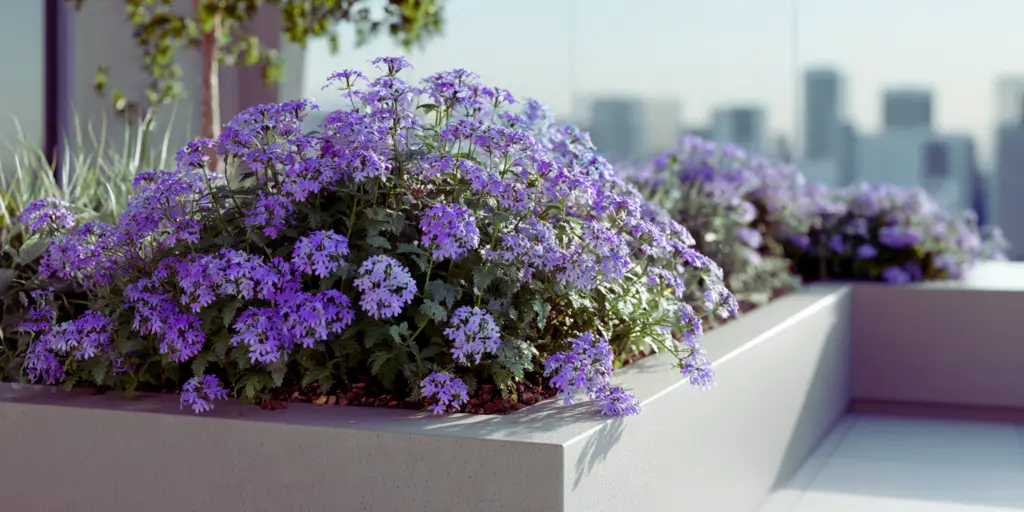
Full sun and well-drained soil; raised beds and containers suit it.
Water weekly during heat if rainfall is lacking; avoid overhead watering.
Feed lightly in spring and again after a midsummer shear.
Shear back by one fourth if flowering slows; plants rebound in 2-3 weeks.
Mulch lightly in zone 7; treat as annual north of zone 7.
Watch‑outs
- Short-lived perennial; plan to replant every few years in cold winters.
- Requires excellent drainage; vulnerable to root rots in wet soil.
- Powdery mildew can appear if crowded or in shade.
Best uses (tags)
Provenance note
Discovered at an old Georgia homesite and introduced through University of Georgia trials; widely promoted for performance in the Southeast.
References
- Clemson Extension HGIC – Verbena (includes ‘Homestead Purple’)
- UGA Extension – Georgia Gold Medal Winners 1994-2009 (includes ‘Homestead Purple’)
- UAEX – Plant of the Week: Homestead Purple Verbena
- NC State Extension Plant Toolbox – Verbena canadensis (includes ‘Homestead Purple’)
Similar Flowers
Enjoying our flower guides? Add YourFlowersGuide as a preferred source on Google. It helps more readers find us.
Add to Preferred Sources