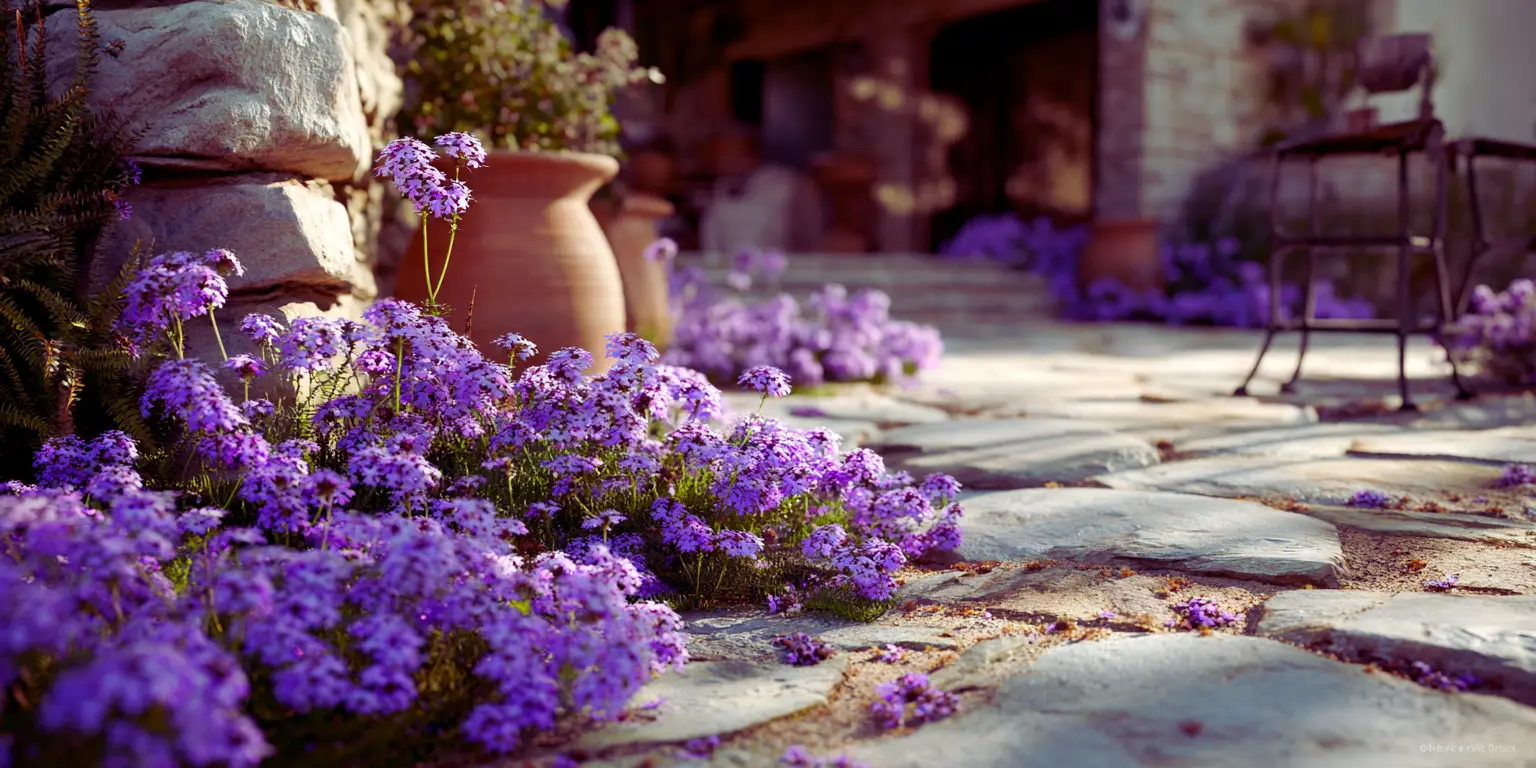
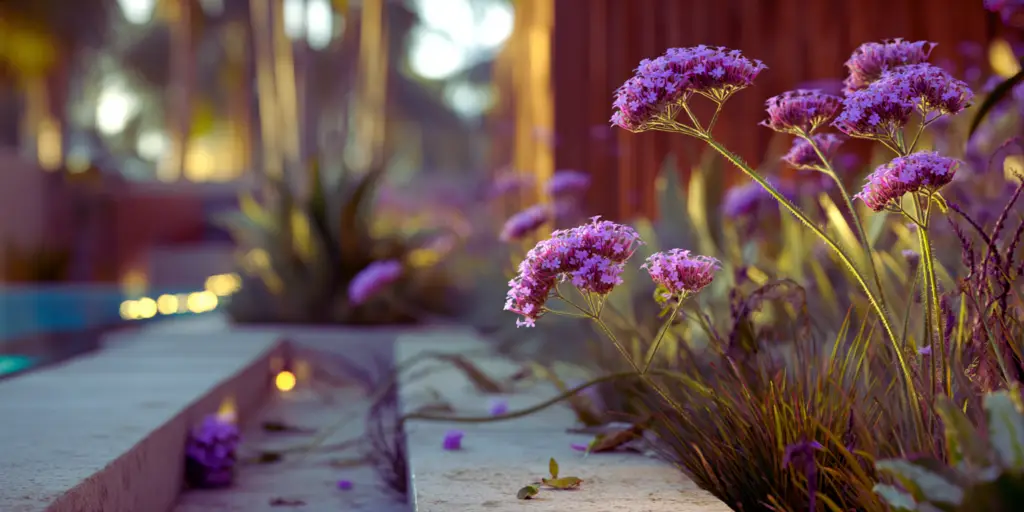
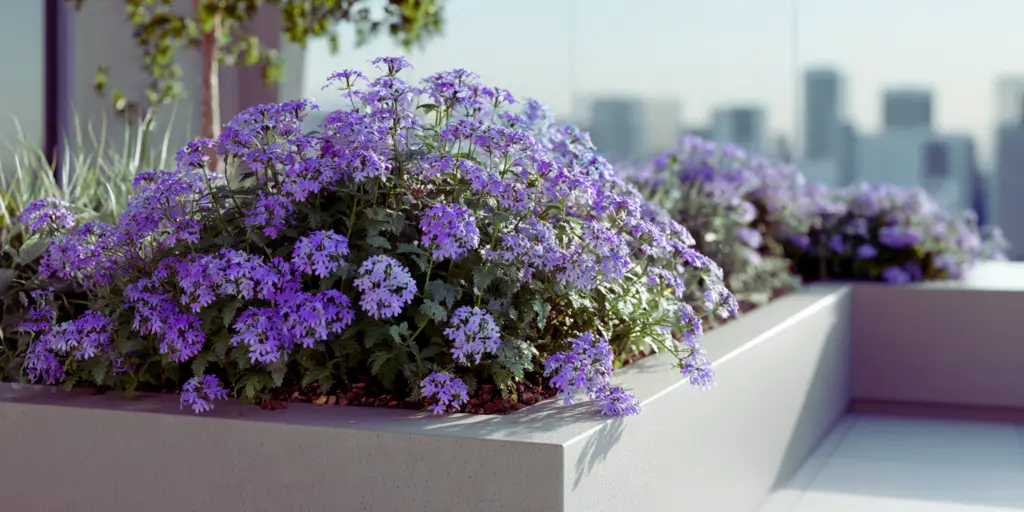
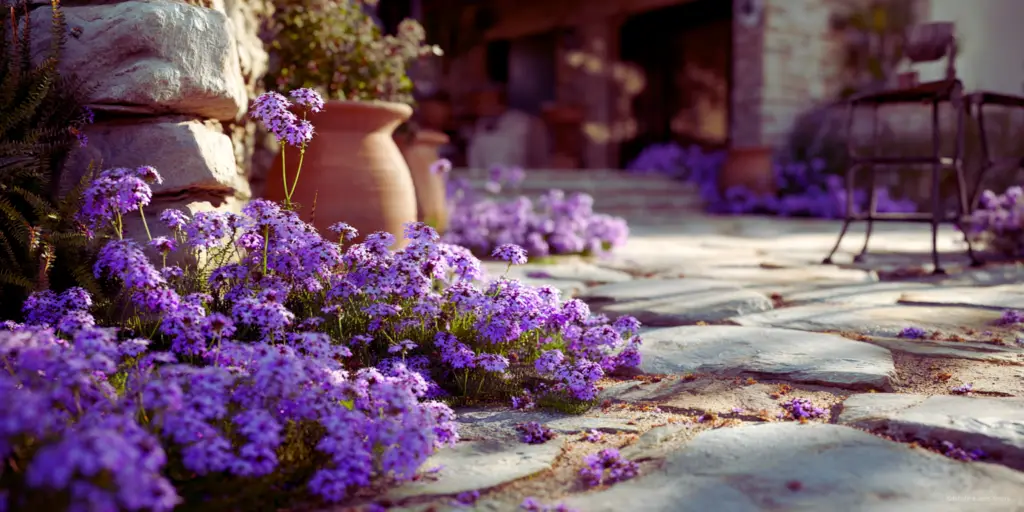
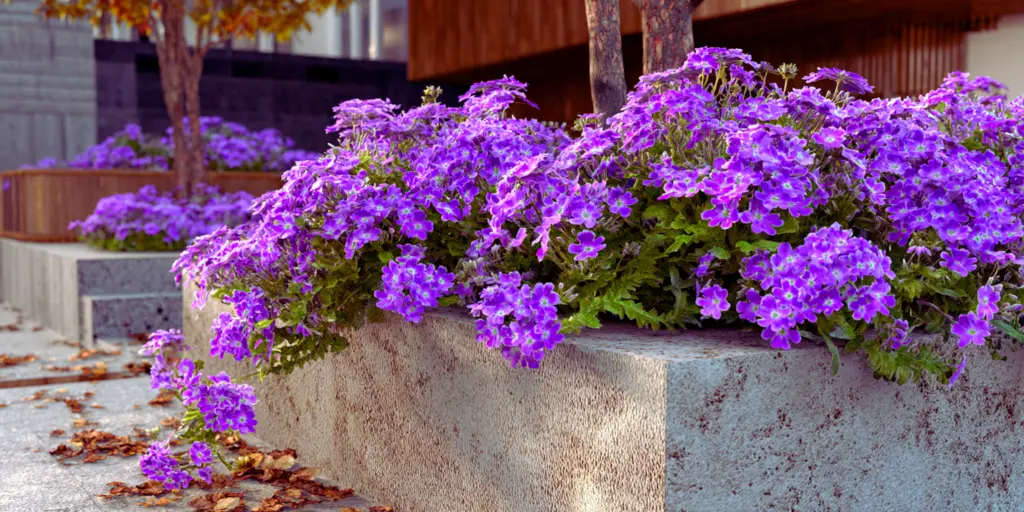
‘Homestead Purple’ is a vigorous, trailing selection of North America’s rose verbena grown for carpets of deep purple blooms. It flowers from early spring until frost in full sun and well-drained soil. Plants spread 2 to 3 feet wide yet stay about a foot tall and root at the nodes. Heat and humidity tolerance make it a reliable choice in the Southeast. Farther north it is best treated as an annual or short-lived perennial.
At‑a‑glance
Group/Class: cultivar of *V. canadensis*; trailing groundcover verbena
Height × spread: 8-12 in × 24-36 in (20-30 cm × 60-90 cm)
Bloom window: early spring to frost
Color & flower form: deep purple clusters of small, starry florets
Fragrance: 0 none
USDA hardiness: commonly perennial in zones 7-10; grown as annual in colder regions
Breeder / Year / Origin: Allan Armitage & Michael Dirr / 1994 / United States
Awards/registration: Georgia Gold Medal (1994); Arkansas Select (2001)
Pet safety: unknown / sources differ
How it differs
Better heat and humidity tolerance than many seed-grown bedding verbenas.
Blooms in cool spring and again to frost, extending the season.
Trailing habit covers ground and edges quickly.
Reported tolerance to abiotic stress and Phytophthora in trials.
Strengths
Very long bloom window with periodic shearing.
Performs well in Southeastern heat and humidity.
Drought tolerant once established with good drainage.
Showy color that attracts butterflies and hummingbirds.
Care in one minute
Full sun and well-drained soil; raised beds and containers suit it.
Water weekly during heat if rainfall is lacking; avoid overhead watering.
Feed lightly in spring and again after a midsummer shear.
Shear back by one fourth if flowering slows; plants rebound in 2-3 weeks.
Mulch lightly in zone 7; treat as annual north of zone 7.
Watch‑outs
Short-lived perennial; plan to replant every few years in cold winters.
Requires excellent drainage; vulnerable to root rots in wet soil.
Powdery mildew can appear if crowded or in shade.
Best uses (tags)
containers, edging, groundcover, slopes, pollinators, long season
Provenance note
Discovered at an old Georgia homesite and introduced through University of Georgia trials; widely promoted for performance in the Southeast.
Written by: Your Flowers Guide editorial team We are a small independent group of flower lovers who research and review each guide using trusted horticultural and educational sources. Learn more about us