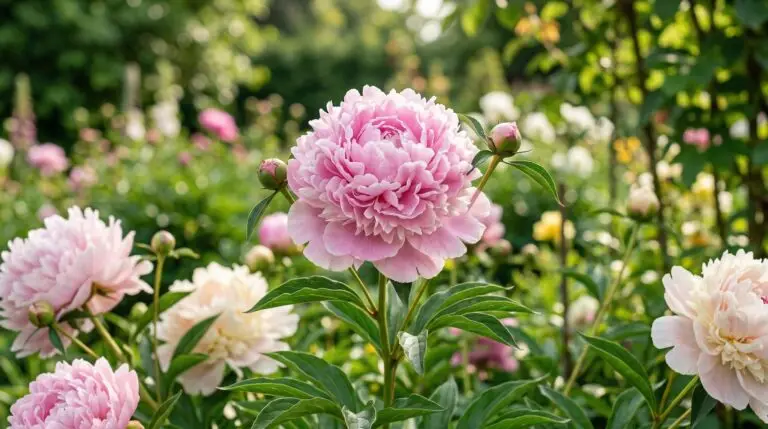
I have watched peonies planted by my predecessors at botanical gardens bloom reliably fifty years later without a single intervention. The peony is a true legacy plant that often outlives the gardener who dug the original hole. When you commit to growing peonies, you are making a decision that will shape your garden for decades. These herbaceous perennials form massive, fleshy root systems that anchor them firmly against harsh weather and poor seasons. Success with this plant requires patience in the first few years as the root system establishes its permanent footprint. Once settled, a healthy peony asks very little of you while delivering massive, complex flowers year after year.
Understanding peony types and cold requirements
Most home gardeners begin with herbaceous peonies, which die back completely to the ground each winter. We also cultivate tree peonies, which maintain a woody stem year-round, and intersectional or Itoh peonies, which are crosses between the herbaceous and tree types. For this guide, we will focus primarily on the herbaceous varieties because they form the backbone of traditional spring borders. Herbaceous peonies require a period of winter chill, known botanically as vernalization, to produce their flower buds. They thrive in USDA Hardiness Zones 3 through 8, needing at least 400 hours of temperatures below 40 degrees Fahrenheit during the winter months. If you live in a climate with mild winters, you will struggle to get traditional herbaceous varieties to bloom, though some early-blooming cultivars require slightly fewer chill hours.
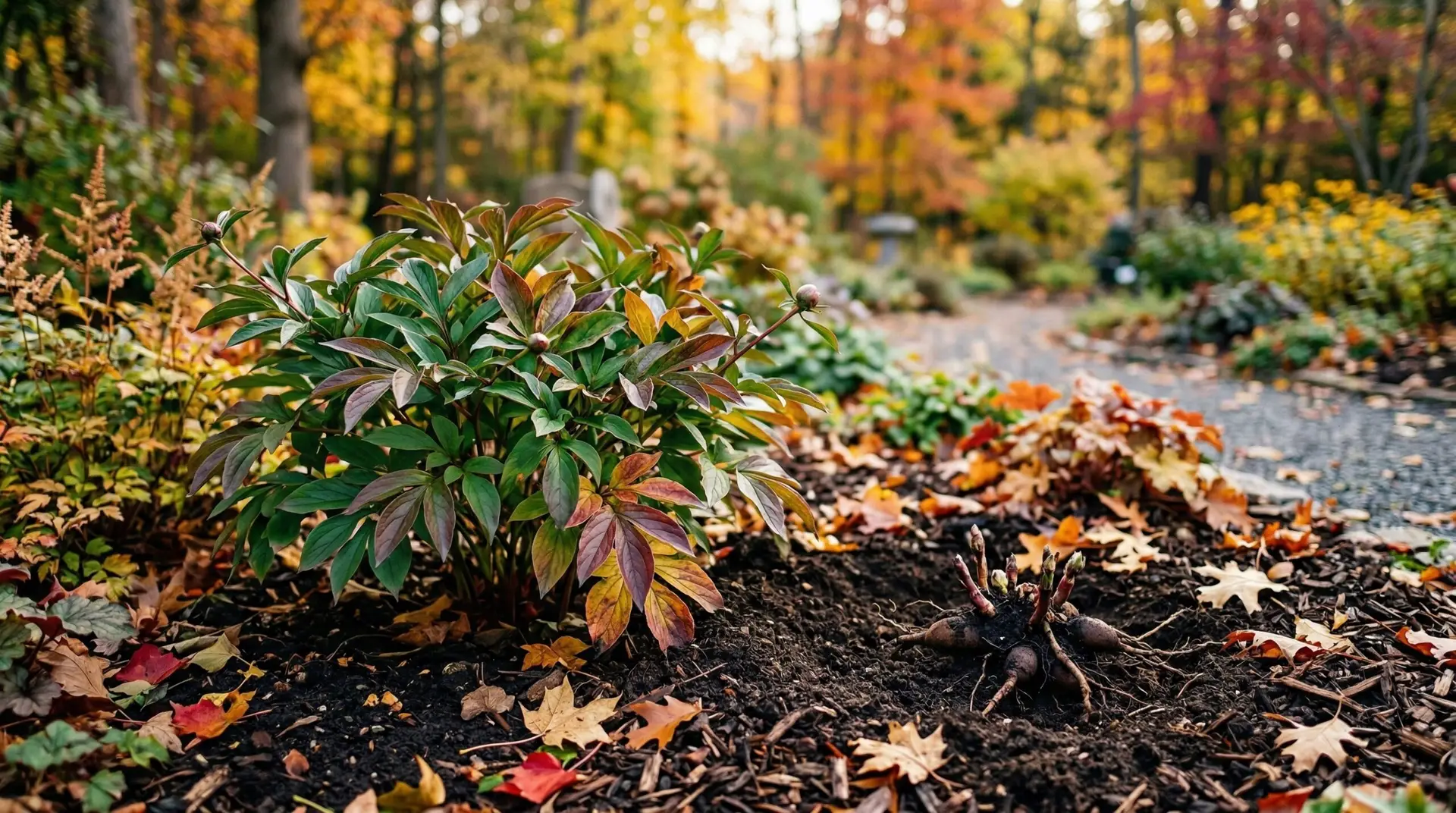
The need for winter dormancy dictates much of how we handle peony care throughout the year. As the foliage dies back in late autumn, the plant pulls carbohydrates down into its thick, fleshy roots. These roots contain the “eyes,” which are the pink or white growth buds that will emerge as next year’s stems. You must allow the plant to experience the natural freezing and thawing cycles of your local climate without excessive winter mulching. Heavy layers of mulch insulate the ground too much and prevent the necessary chill from reaching the dormant buds. I always advise growers in colder zones to clear away all debris and let the winter frost do its essential work on the bare soil above the crowns.
Site selection and soil preparation
Choosing the right location is the single most important decision you will make in your peony planting guide. Peonies deeply resent being moved once established, so you must select a permanent site from the very beginning. They require full sun, meaning at least six to eight hours of direct, unfiltered sunlight each day to produce strong stems and large flowers. Plants grown in partial shade stretch toward the light, resulting in weak stems that flop over under the weight of the heavy blooms. The soil must drain exceptionally well, as the fleshy roots rot quickly in heavy, waterlogged clay. If your garden has poor drainage, you will need to build raised beds or heavily amend the native soil with coarse sand and organic matter before planting.
Soil chemistry also plays a significant role in the long-term health of your plants. Peonies prefer a neutral soil pH ranging strictly between 6.5 and 7.0. Soils that are too acidic lock up essential nutrients, causing stunted growth and yellowing foliage over time. I recommend testing your soil well before planting and incorporating agricultural lime if you need to raise the pH level. These plants are heavy feeders once they reach maturity, much like a classic rose, and they benefit from a rich foundation of well-rotted compost worked deeply into the planting hole. Preparing the site thoroughly ensures the roots have immediate access to nutrients without requiring heavy synthetic fertilization in the first few seasons.
The mechanics of fall planting
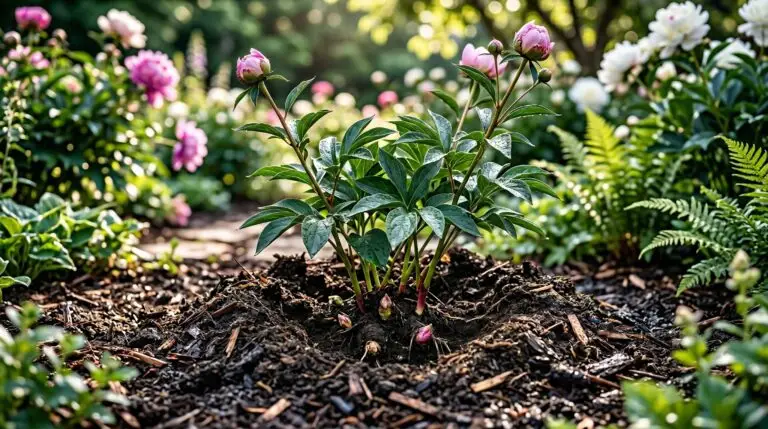
Fall is the only appropriate season for planting bare root peonies. The soil is still warm from the summer, which encourages rapid root growth, while the cooling air temperatures keep the top of the plant dormant. When you purchase bare root peonies, you receive a chunk of root with at least three to five visible eyes near the top. The depth at which you plant these eyes dictates whether your plant will ever produce flowers. In colder climates, position the eyes exactly two inches below the soil surface. If you plant them deeper than two inches, the plant produces abundant green foliage but absolutely no flowers.
The planting process itself requires careful attention to the architecture of the root. Dig a hole roughly two feet wide and eighteen inches deep to loosen the soil completely. Create a small cone of firmed soil in the center of the hole and rest the root on top, letting the longer root sections drape down the sides. Lay a tool handle across the rim of the hole to serve as a depth gauge, ensuring the eyes sit at that exact two-inch mark below the soil line. Backfill the hole gently with native soil, pressing down firmly with your hands to eliminate air pockets around the roots. Water the area deeply to settle the soil, and refrain from adding any supplemental fertilizer until the plant emerges the following spring.
Long term care and disease management
Even the most robust peonies face specific challenges during the growing season, primarily in the form of fungal diseases. Botrytis blight is the most common issue, presenting as blackened buds that fail to open, brown spots on the leaves, and stems that rot at the soil line. This fungus thrives in cool, wet spring weather and spreads rapidly if the plants lack adequate air circulation. To manage Botrytis, you must space your plants at least three feet apart and avoid overhead watering whenever possible. Fall cleanup is your best defense against fungal spores overwintering in your garden. You must cut all herbaceous peony stems all the way to the ground after the first hard frost and remove the debris from the property completely.
Physical support is another reality of growing large, double-flowered varieties. The massive blooms easily fill with rainwater and snap their stems if left unsupported. You should place metal peony rings or sturdy stakes around the plants early in the spring just as the new shoots emerge from the ground. Waiting until the plants are tall makes it nearly impossible to corral the foliage without breaking the brittle stems. After the blooming period concludes, remove the spent flowers by cutting the stem down to the first set of healthy leaves. This practice, similar to how you might manage a dahlia or a spring ranunculus, prevents the plant from wasting energy on seed production and redirects its resources back into the root system.
Your newly planted peonies will likely look sparse and unimpressive during their first spring. They often produce only a few thin stems and perhaps one or two small flowers, which is entirely normal for this species. It takes three full growing seasons for a peony to establish its root system and begin producing the massive, abundant blooms you expect. Do not dig them up or move them in frustration during this establishment period. Keep the area free of competing weeds, provide moderate moisture during dry spells, and let the plants settle into their permanent home. The patience you practice now rewards you with a resilient, self-sufficient plant that returns to anchor your spring garden for the rest of your life.
More About Peonies
Best peony varieties from classic Sarah Bernhardt to trendy Coral Charm
Peony flower meaning and why this bloom represents romance prosperity and good fortune
Why peonies fail to bloom and the planting depth mistake that keeps them flowerless

Peonies as the most coveted wedding flower and why brides pay premium for peony season

Companion plants for peonies that extend the beauty season beyond peony’s brief moment
Why peonies need ants and the truth about the ant myth that refuses to die
Itoh peonies the hybrid breakthrough that gives the best of both herbaceous and tree peonies
Growing peonies in warm climates and the chill-hour challenge in zones 8 and above