Contents
Marigold
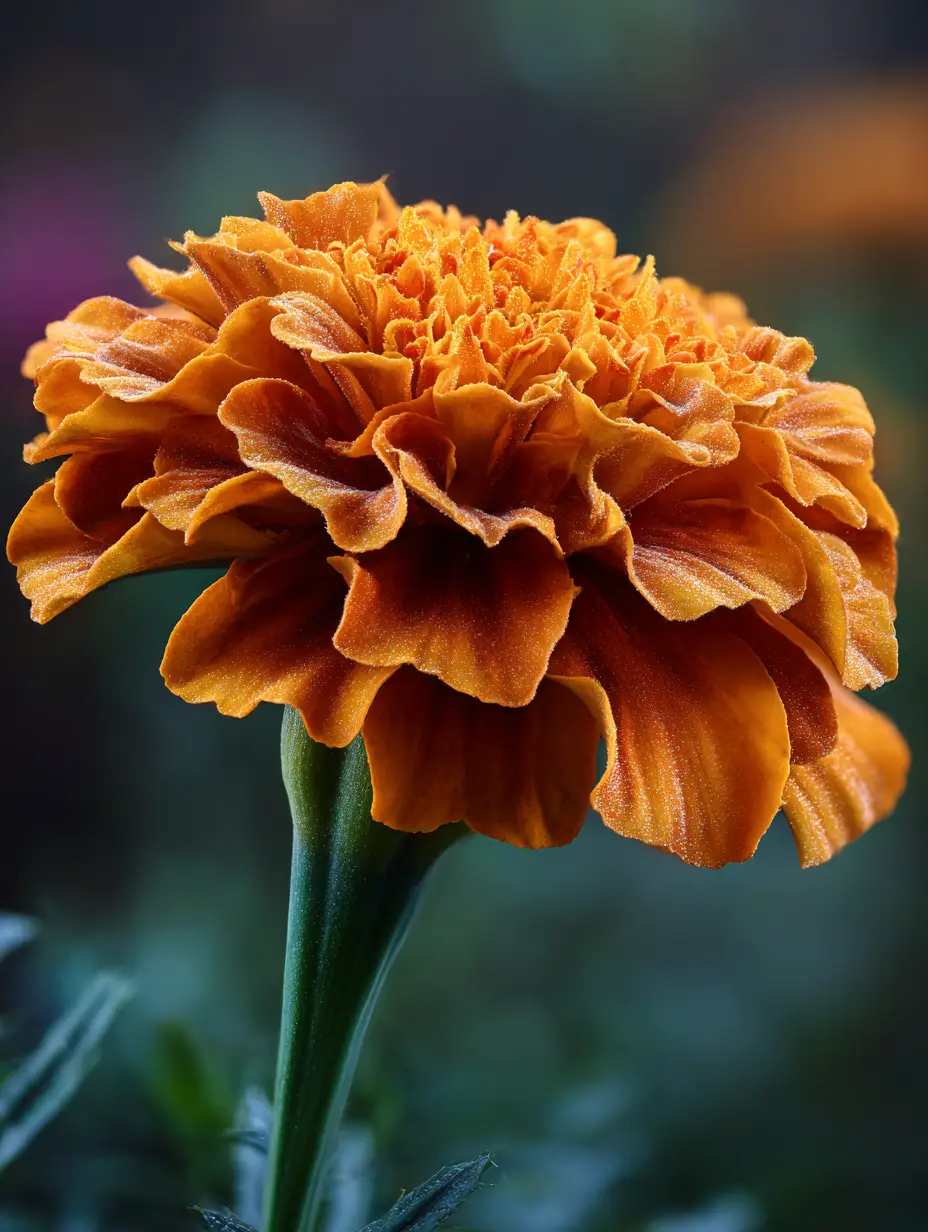
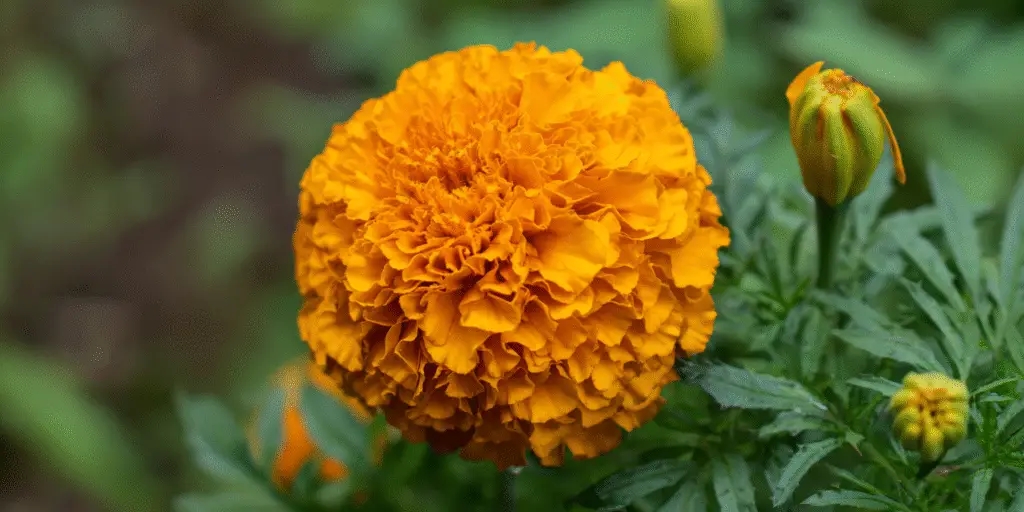
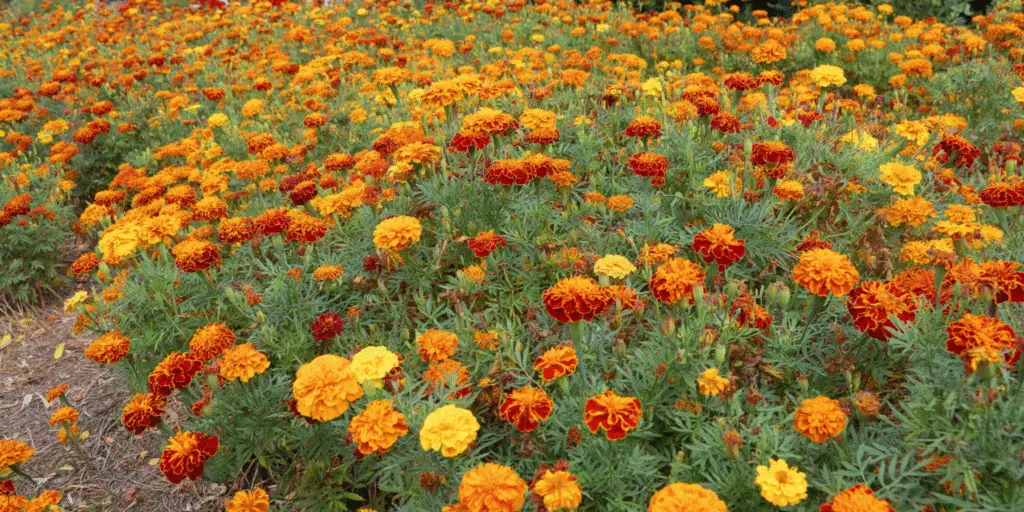
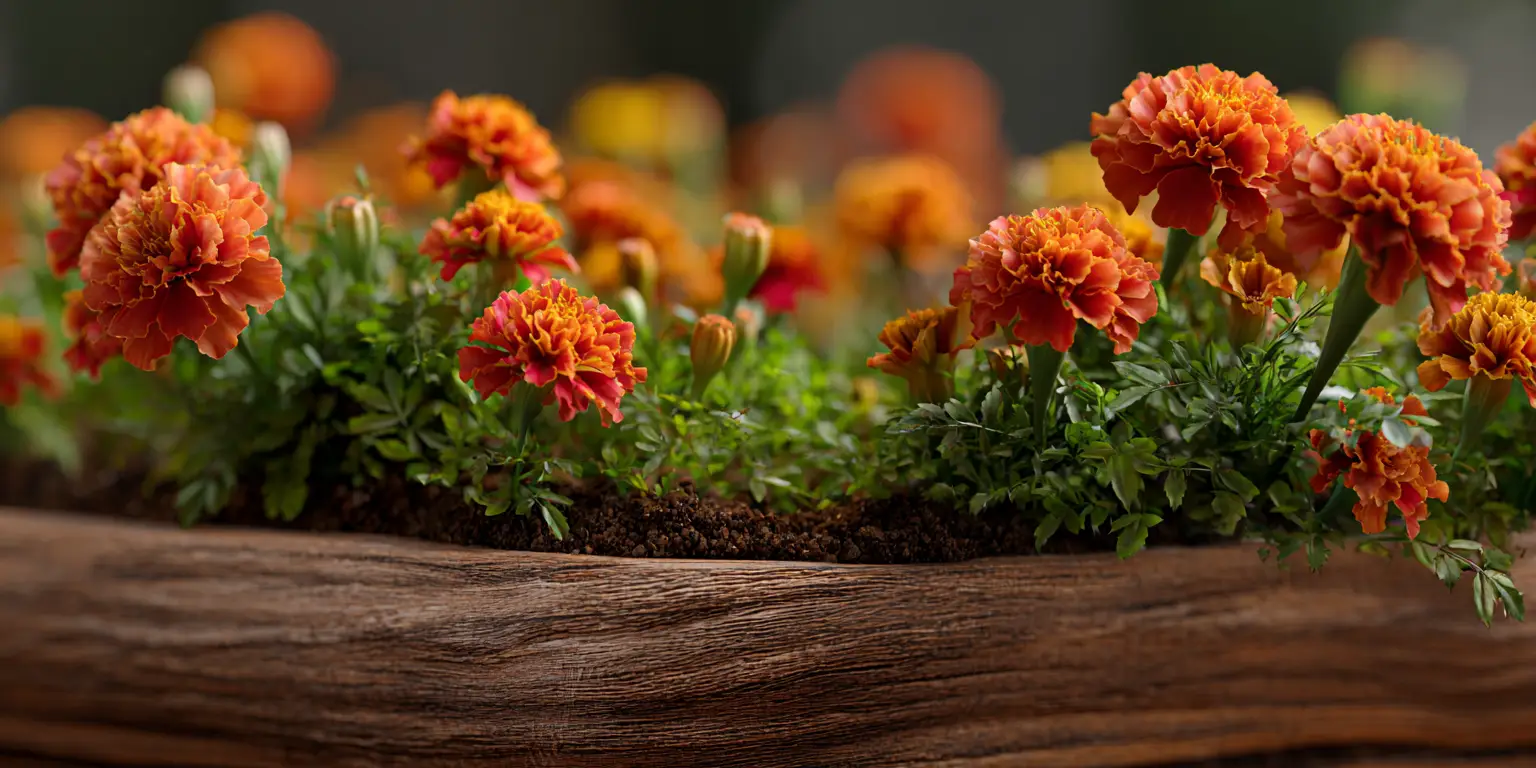
Marigold is a tough, warm-season annual grown for steady summer color. In the daisy family (Asteraceae), it makes flowers in yellow, orange, red, and bronze. Gardeners use marigolds in beds, borders, and pots because they bloom for months, handle heat, and stay low-maintenance. Some types form big, ruffled, pompon-like heads. Others keep it simple with single, daisy-like blooms. In most climates, marigolds flower from late spring until the first frost. Many gardeners also tuck them near vegetables, partly for looks and partly because the foliage scent can bother some pests.

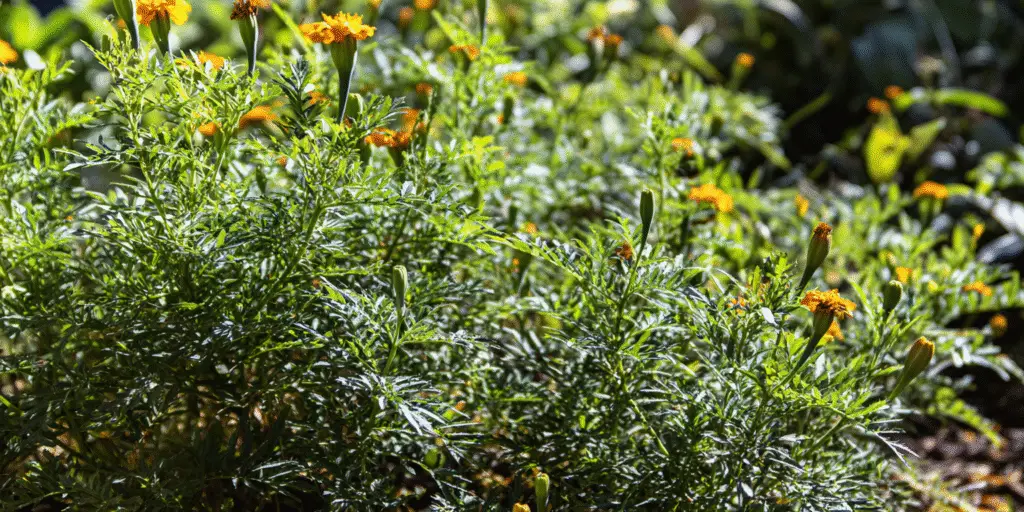
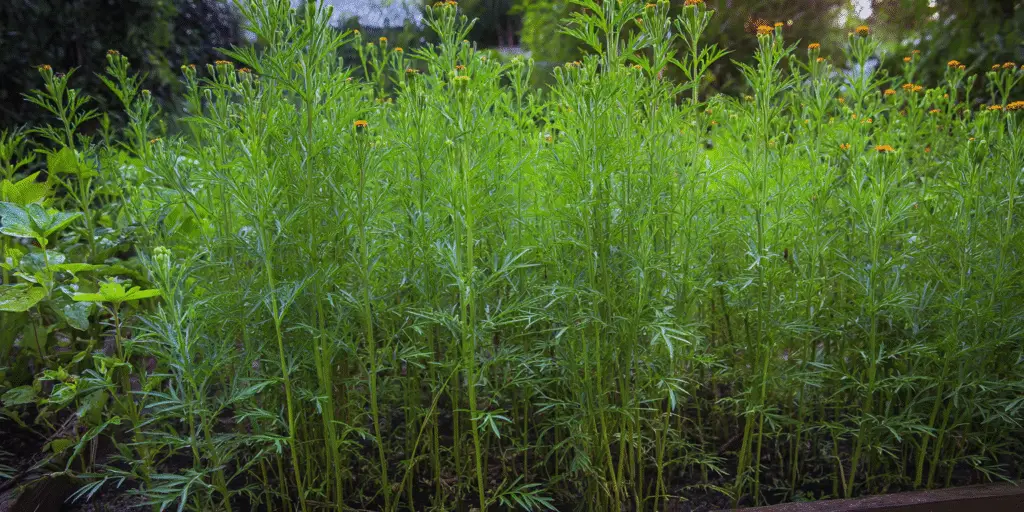
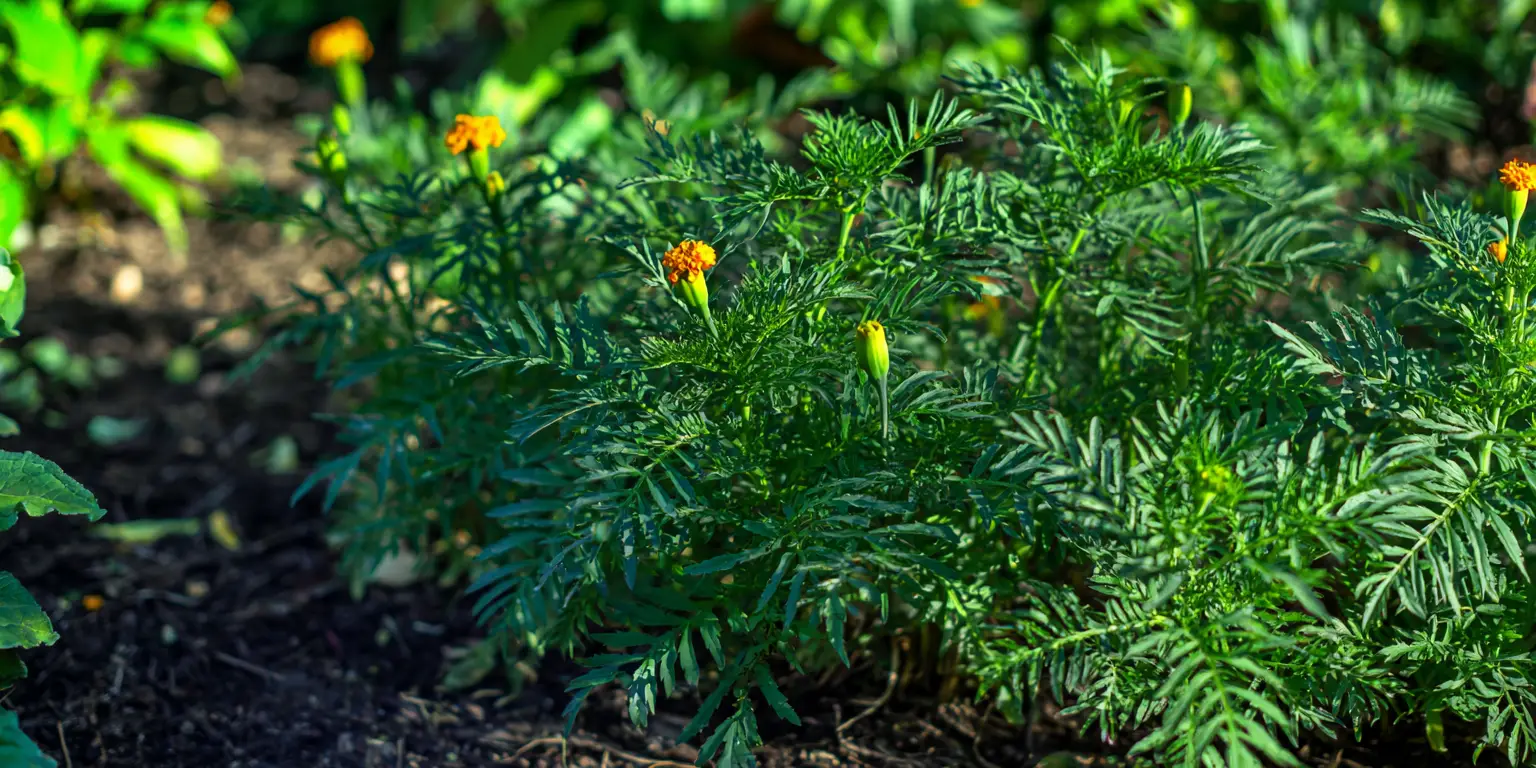
A clear, step-by-step guide to soil, planting, watering, feeding, pruning, and winter care. Includes zone timing, container tips, companions, and quick fixes for common problems.

Bouquet Ideas
Explore simple, beautiful bouquet ideas for the home, gifts, and special occasions from romantic mixes to clean, minimal styles. Each idea includes suggested flower combinations, color palettes, and sizes, with photos for quick inspiration.
Why marigolds stop blooming in midsummer heat and how to get them flowering again
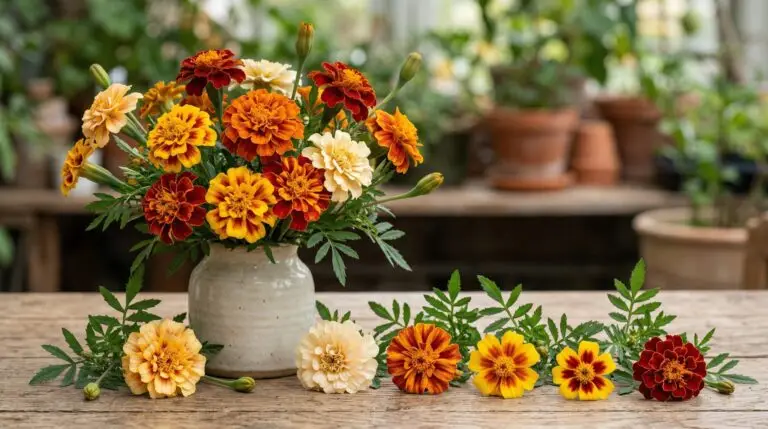
Best marigold varieties from tiny French Bonanza to towering African Antigua
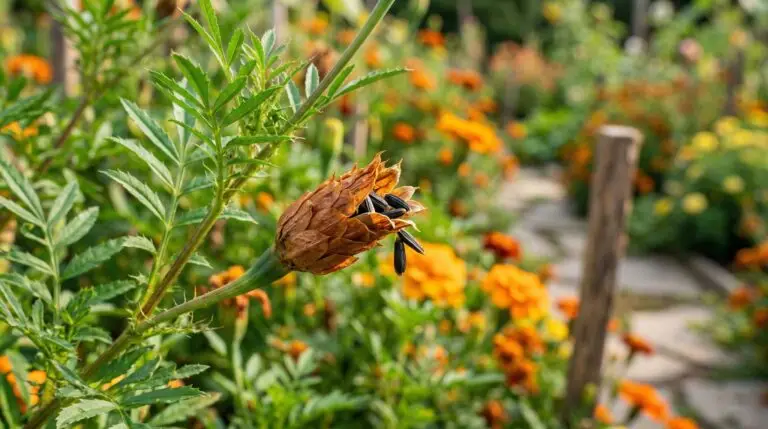
Growing marigolds from seed so easily that children can do it on their first try

Marigold meaning, from the sun and celebration to Victorian grief
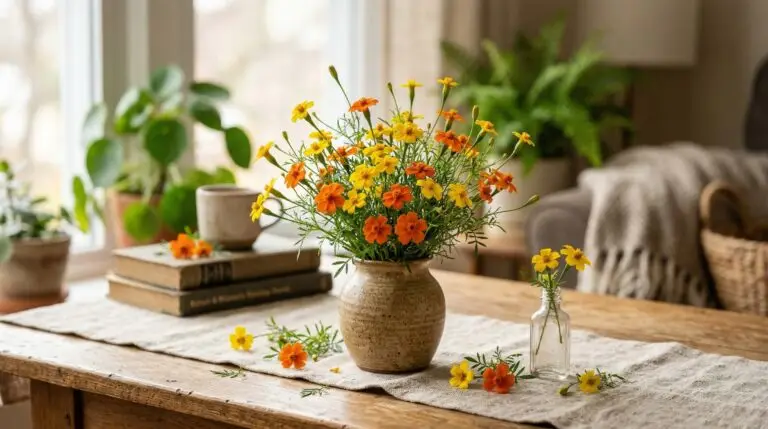
Signet marigolds for edible flowers that taste like citrus in salads and cocktails
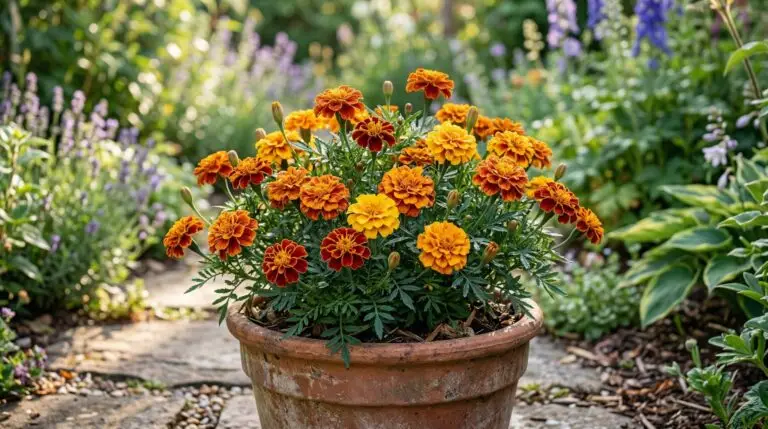
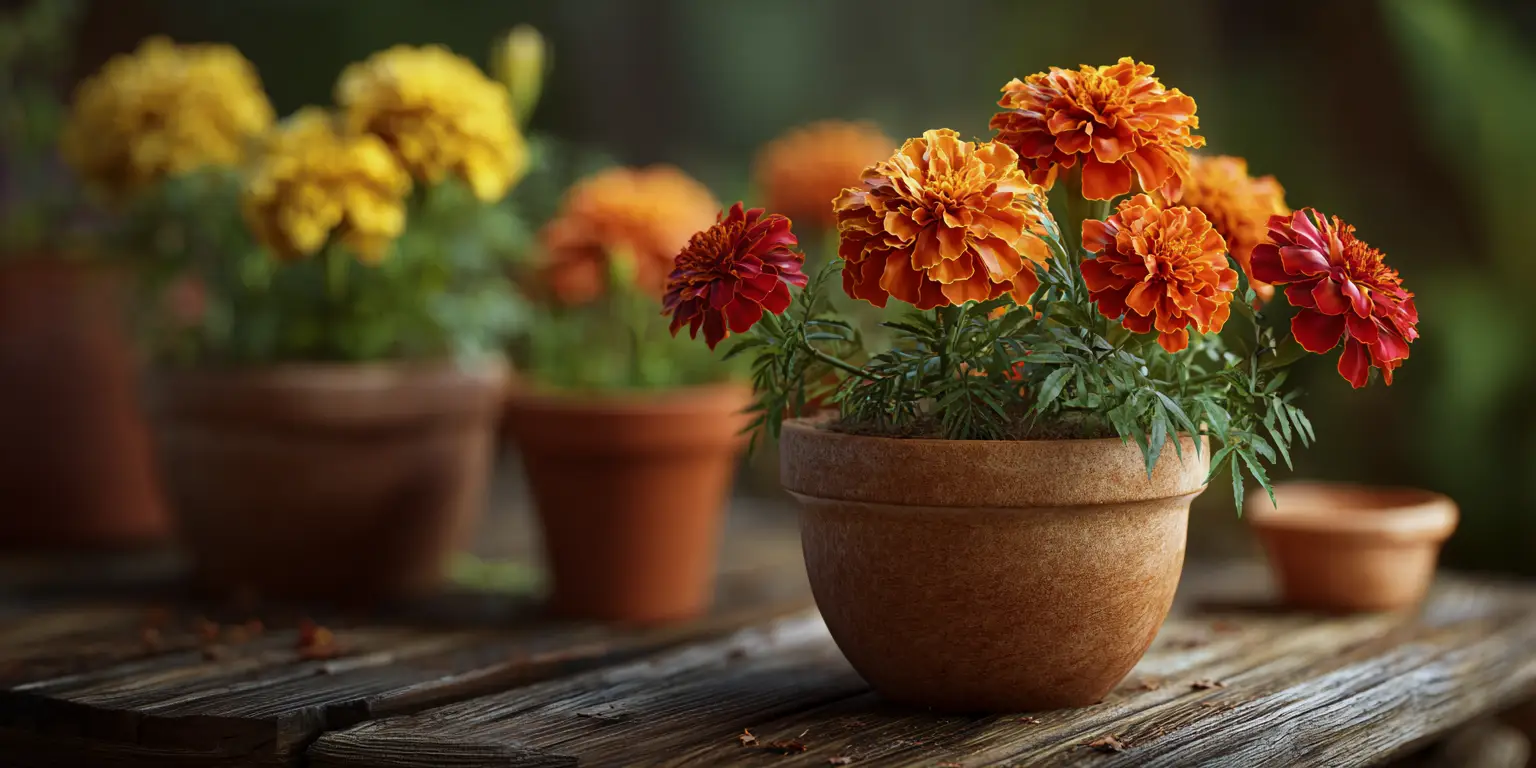
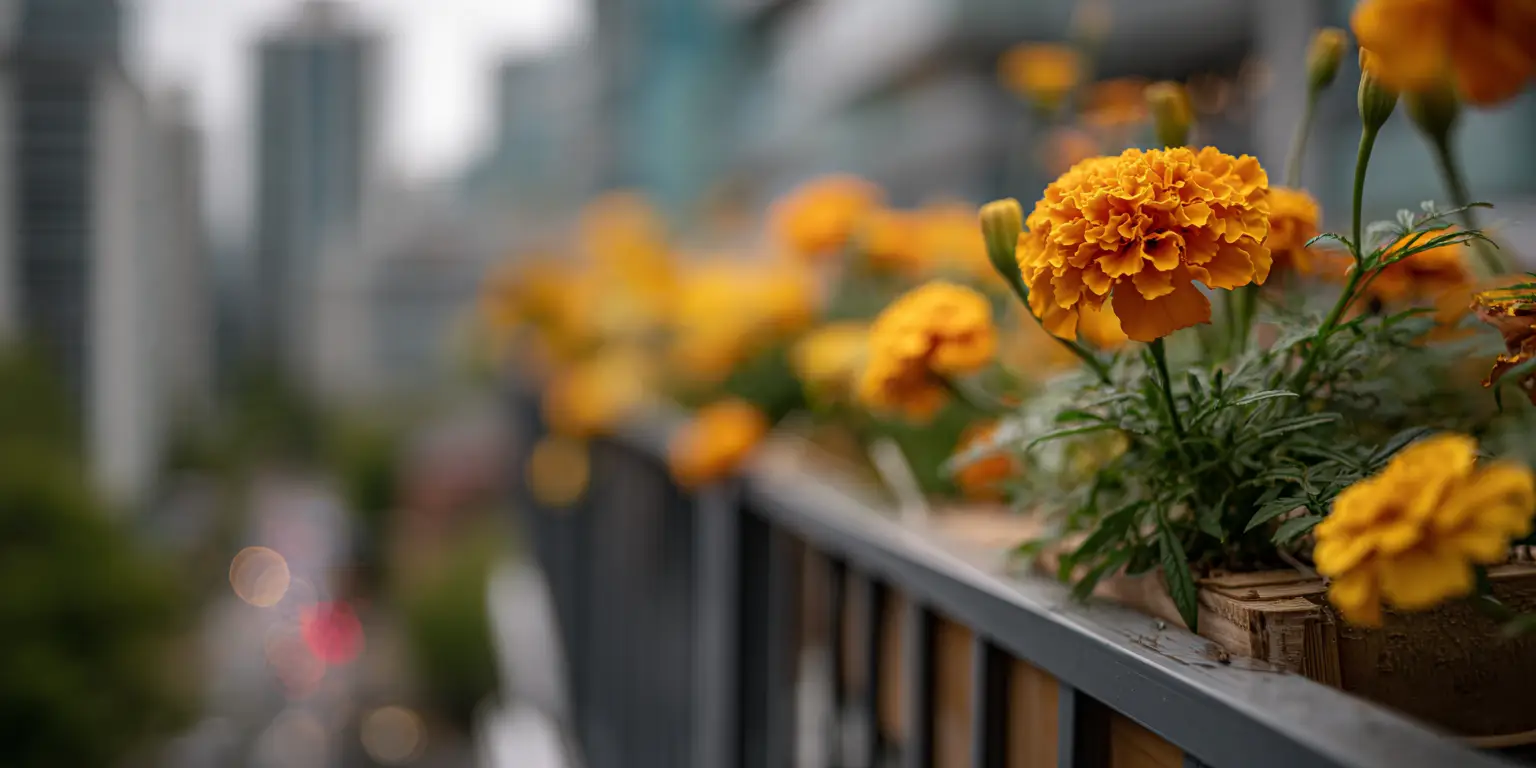
Marigolds in containers and window boxes for instant summer curb appeal
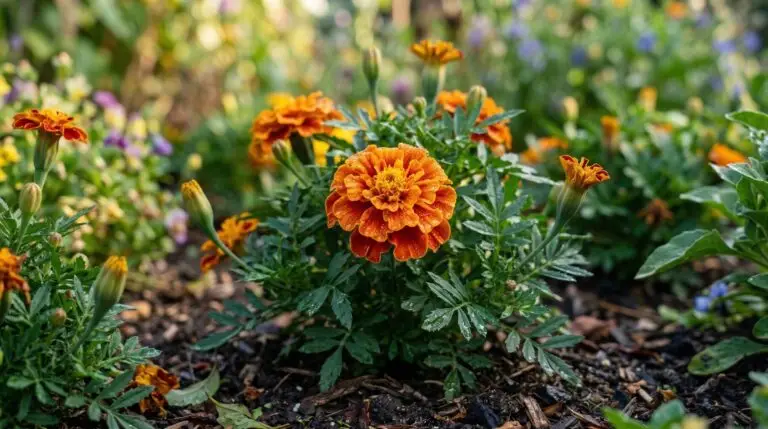
How to grow marigolds for bulletproof color from planting day to first frost
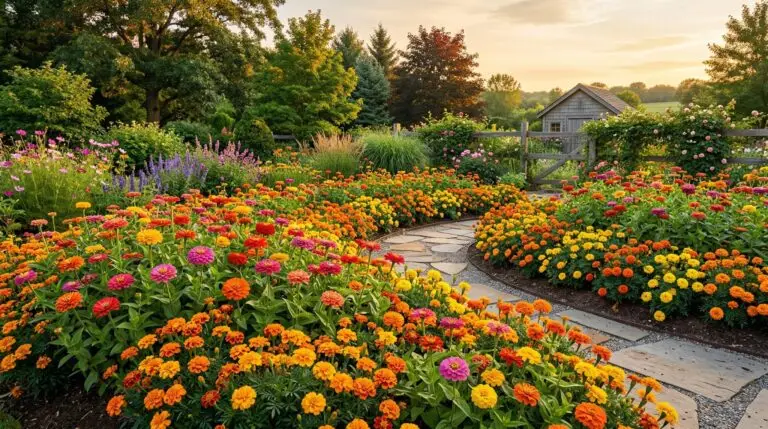
Marigold companion plants: what works, and what’s folklore
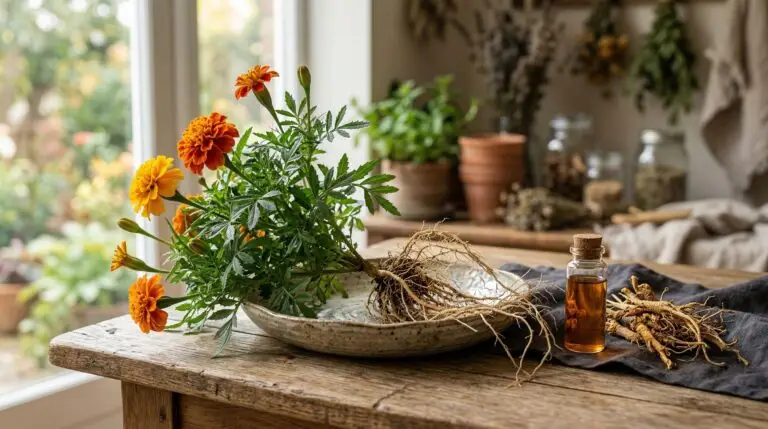
Marigolds in the vegetable garden and the pest-repelling companion planting tradition
🌱 Taxonomy and origin
Garden marigolds belong to the genus Tagetes, a group of roughly 50 species native to the Americas. Most of the marigolds sold for gardens come from African marigold (Tagetes erecta) and French marigold (Tagetes patula), along with signet marigold (Tagetes tenuifolia), which has smaller, single flowers. The common names are misleading: both African and French marigolds trace back to Mexico and Central America. Tagetes erecta, also called Aztec or American marigold, was grown in Mexico long before it reached Europe. Tagetes patula was later selected and bred into the compact forms people plant today. Marigolds arrived in Europe in the 1500s with Spanish explorers and spread quickly because they were easy to grow. The name Tagetes is often linked to “Tages” from Etruscan myth, a nod to how readily marigolds pop up from seed in worked soil. “Marigold” comes from “Mary’s gold” and originally referred to Calendula (pot marigold), but in modern gardening the name is widely used for Tagetes. In Mexico, marigolds (especially Tagetes erecta) are closely tied to Day of the Dead traditions. In India and South Asia, strings of marigold flowers are common in weddings and festivals.
🌸 Bloom time
Marigolds usually start flowering in late spring or early summer, once warm weather settles in. After that, they keep producing buds through summer and into fall until frost. Deadheading helps keep plants tidy and can encourage extra blooms, but many varieties flower well even if you miss a few spent heads. Heat rarely stops them. In very hot spells they may slow down a bit, then rebound when watering is consistent. As nights cool in autumn, blooming tapers off, and the first frost ends the season.
📏 Height and spread
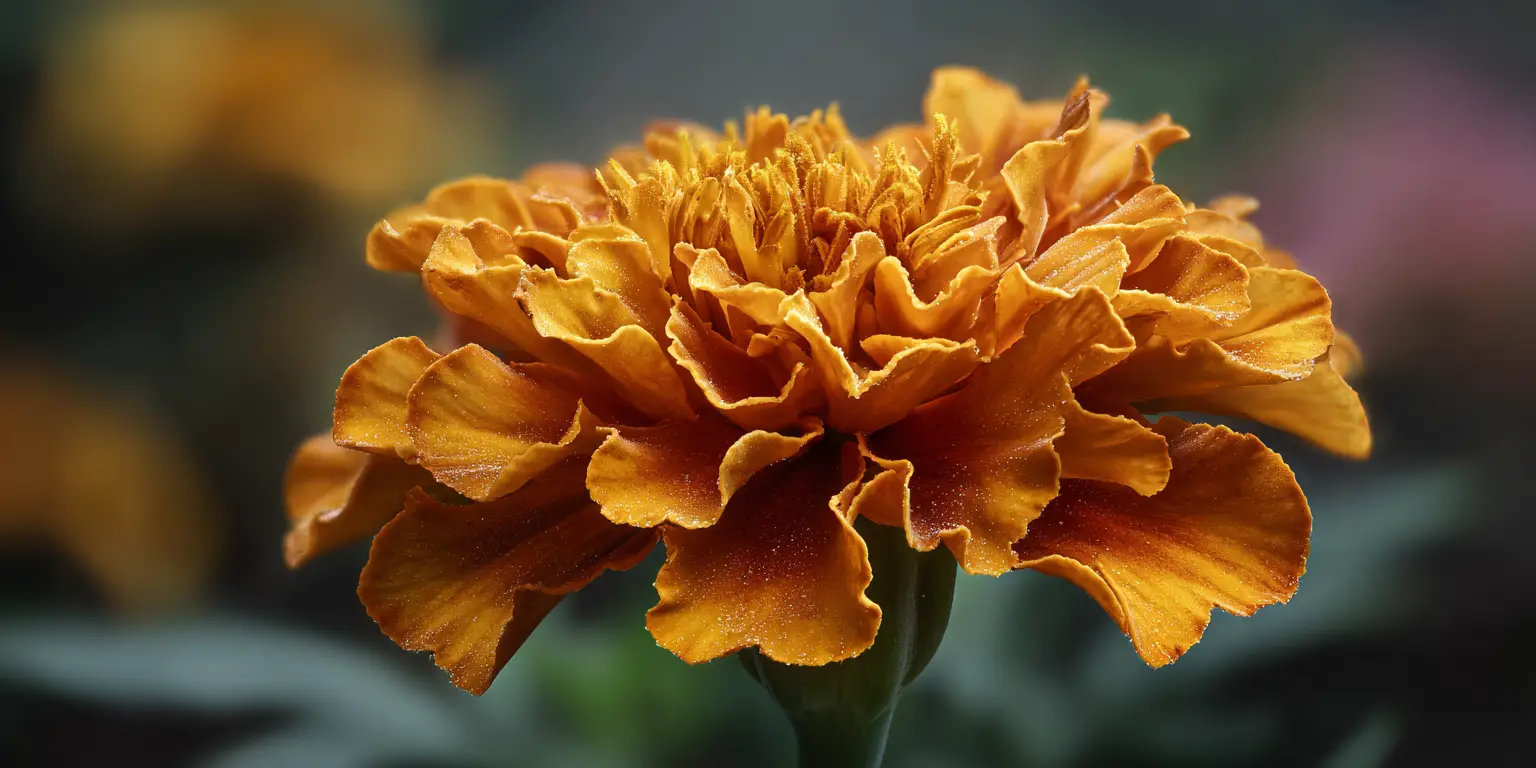
Marigold size depends on the type and cultivar, but most plants form a dense, branching mound. Dwarf French marigolds often stay around 6 to 12 inches tall (15 to 30 cm) and spread about 6 to 8 inches (15 to 20 cm), which works well for edging and containers. African marigolds grow taller and more upright, commonly 1 to 3 feet (30 to 90 cm) tall with a spread of 1 to 2 feet (30 to 60 cm). Signet marigolds are usually 8 to 12 inches tall (20 to 30 cm) and can spread into a soft, ferny mat covered in small blooms. Many hybrids land in the middle, around 12 to 18 inches tall (30 to 45 cm). Give plants enough space for airflow: about 8 to 10 inches between French marigolds and 12 to 16 inches for African marigolds is a solid starting point.
☀️ Light
Marigolds do best in full sun. Aim for at least 6 to 8 hours of direct light each day. In bright sun, plants stay compact and flower heavily. They can handle a little shade, but too much shade leads to fewer blooms and leggy growth. In very hot desert climates, a touch of light afternoon shade can help prevent stress, but in most gardens an open, sunny spot is ideal. Good sun exposure also helps foliage dry quickly, which reduces the chance of fungal problems.
💧 Water
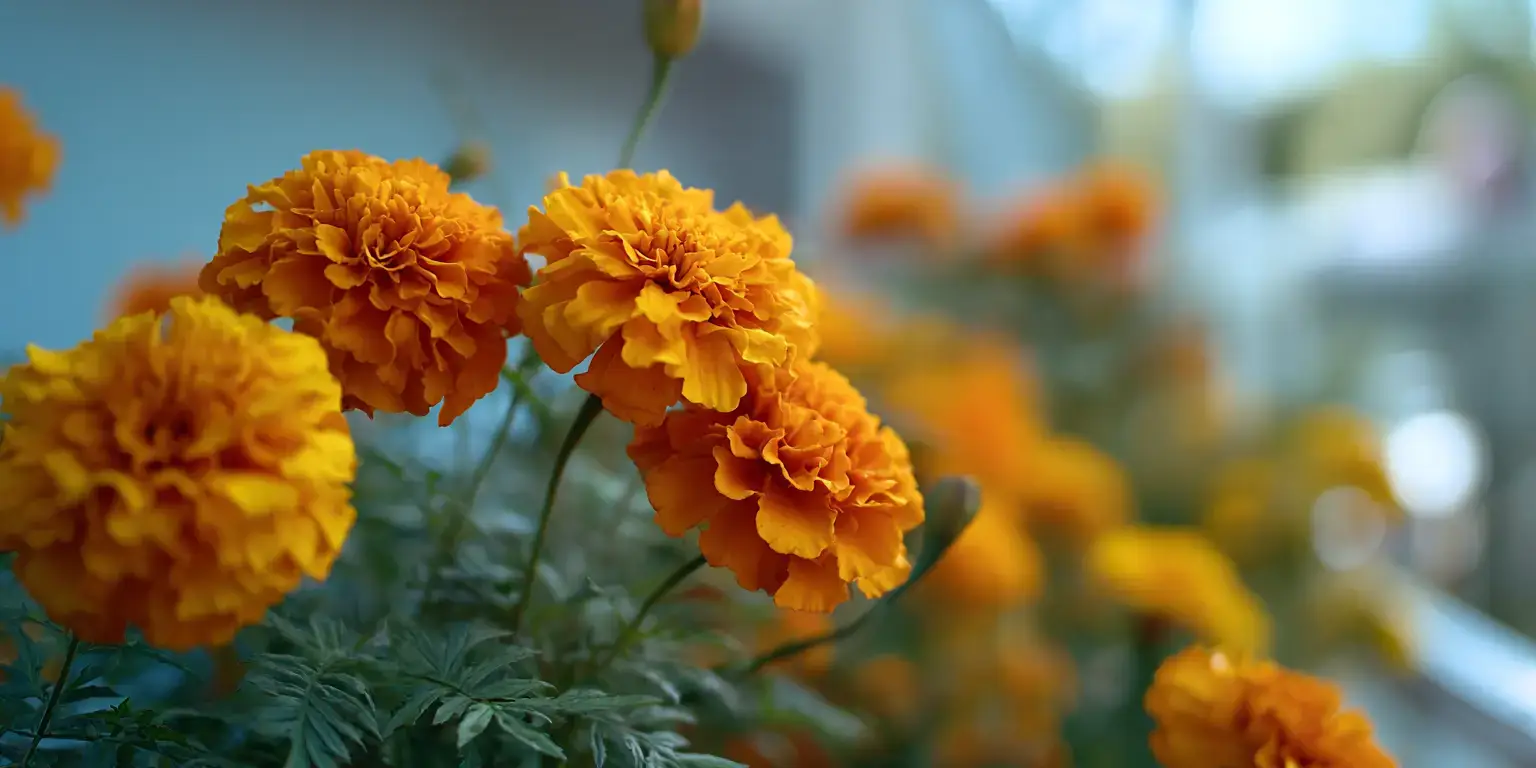
Marigolds like even moisture while they are getting established, then they tolerate short dry spells once roots are settled. Water deeply after planting to settle the soil. For the first couple of weeks, keep the top layer from drying out completely. After that, most garden beds do well with about 1 inch of water per week from rain or irrigation. Containers and sandy soils dry faster, so check them more often in summer. Water at the base of the plant instead of overhead, and try to water earlier in the day so leaves dry quickly. Avoid soggy soil. Poor drainage is a fast way to end up with weak growth and root rot.
🌍 Soil and pH
Marigolds are adaptable, but they grow best in well-draining soil that is moderately fertile. Loamy soil with some compost mixed in is ideal. Heavy clay that stays wet can lead to root problems, so improve drainage before planting if needed. Marigolds also do not need heavy feeding. Too much nitrogen can push leafy growth at the expense of flowers. For pH, a slightly acidic to neutral range (about 6.0 to 7.0) suits marigolds well, though they tolerate mild swings either way. If soil is very acidic or very alkaline, leaf color and flowering can suffer, so adjusting pH gradually can help.
❄️ USDA hardiness
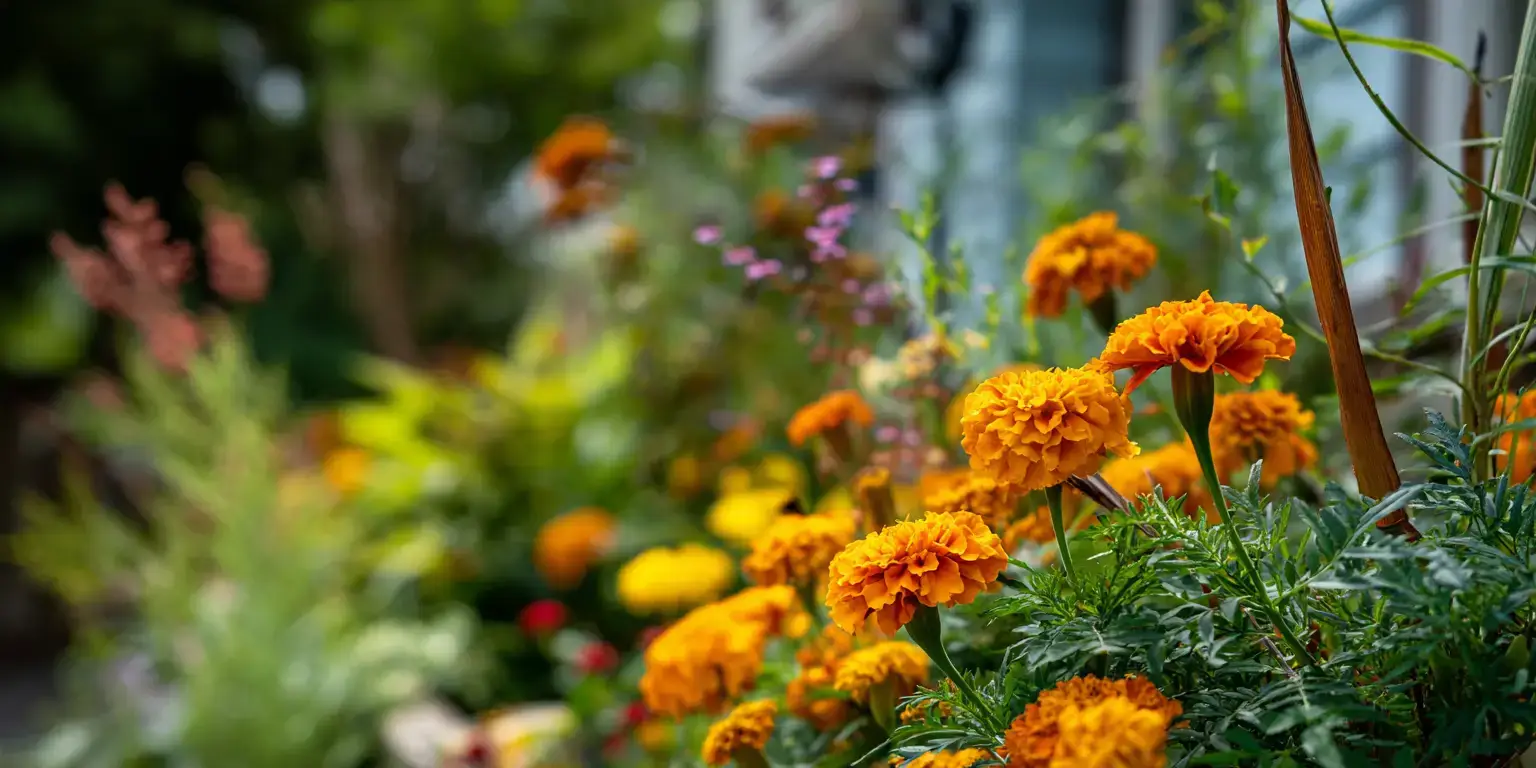
Marigolds are tender plants that do not tolerate frost, so they are grown as annuals in most climates. They can be planted across USDA zones 2 to 11 during the warm season, but freezing temperatures will kill them. In cold and temperate regions, gardeners plant marigolds after the last spring frost and enjoy them until autumn frost. In warmer areas, the season is longer, and marigolds may reseed or linger where winters stay mild. A few Tagetes relatives are perennial in warm zones, such as Tagetes lemmonii (Mexican marigold) and Tagetes lucida (Mexican tarragon) in mild winters. For the common French and African marigolds, plan to replant each year or save seed for the next season.
🌼 Propagation and longevity
Marigolds are easy to grow from seed, and they germinate quickly. For an early start, sow seeds indoors about 4 to 6 weeks before the last expected frost. Keep them warm (around 70 F or 21 C) and lightly moist. Seedlings often appear within a week. Transplant outside after frost risk has passed and plants have a couple sets of true leaves. You can also direct-sow outdoors after the last frost by planting seeds about 1/4 inch deep in prepared soil, then thin seedlings as they grow. Many varieties flower about 8 to 10 weeks from sowing. Nursery transplants are common, too, if you want flowers sooner. Most marigolds live for one season, but they often self-sow if you leave a few spent flowers to dry and drop seed. In frost-free climates, plants may persist longer, though they usually decline after a couple of years. If you want the same look next year, save seed from open-pollinated (non-hybrid) varieties: let a few flowers dry on the plant, collect the seed heads, and store seeds cool and dry until spring.
👃 Fragrance
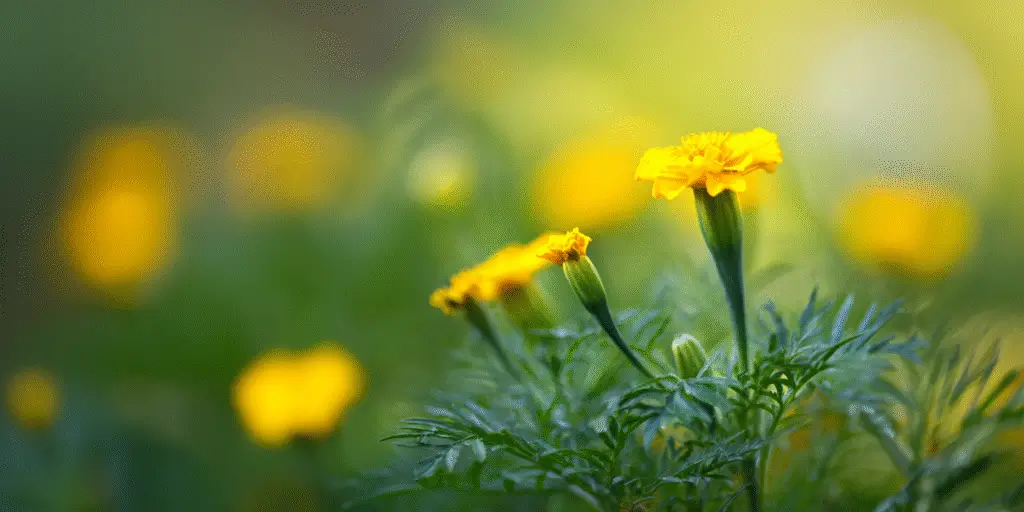
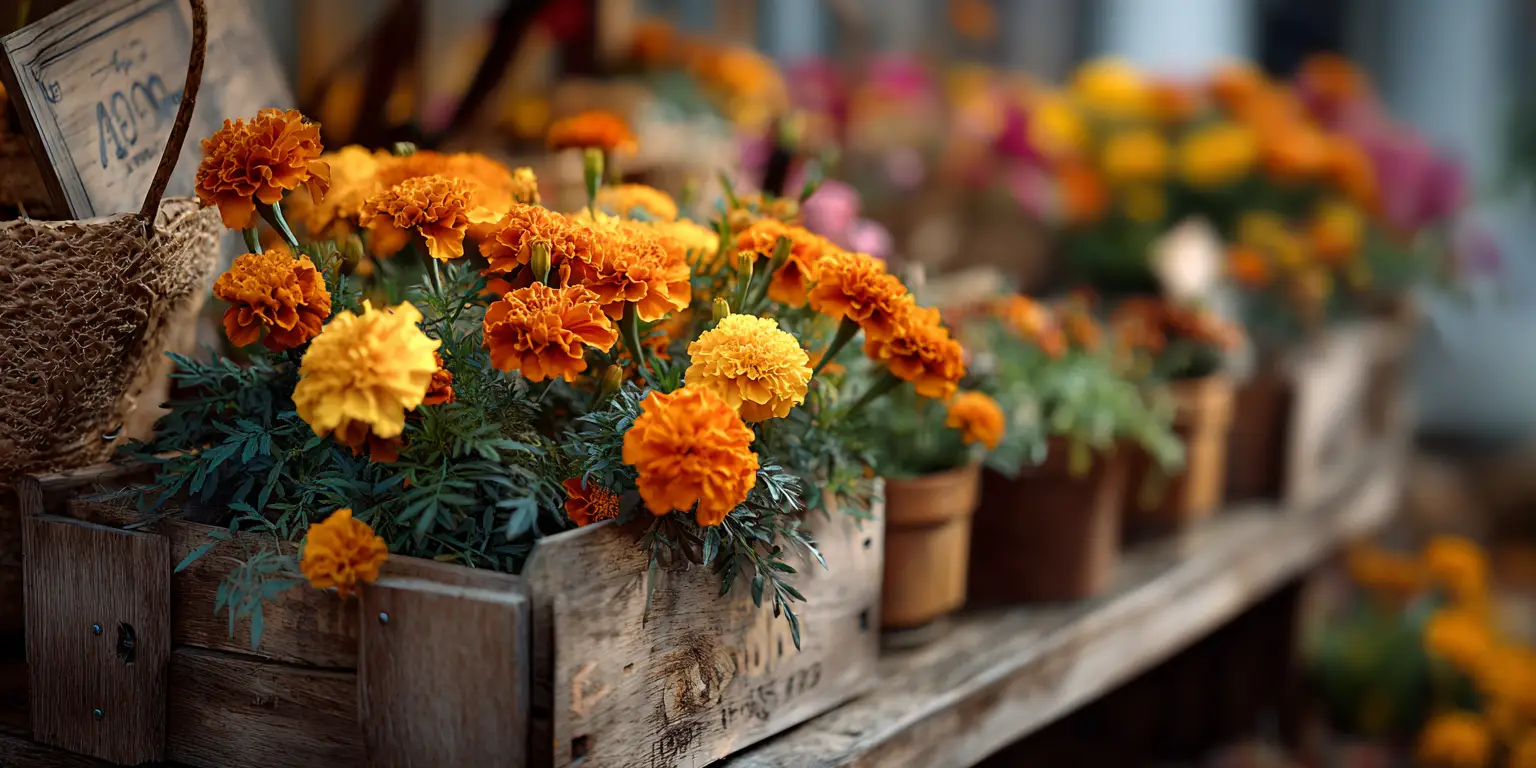
Marigolds have a strong scent that is nothing like rose or jasmine. Most of it comes from the leaves and stems. Brush the foliage and you will notice a pungent, herbal smell right away. Some people dislike it, while others associate it with summer gardens. The flowers themselves are usually mild, especially on French and African types. Signet marigold (Tagetes tenuifolia) is the exception: the small blooms can smell lightly citrusy, and the petals are often used as a garnish. That sharp foliage scent is one reason marigolds are often left alone by deer and rabbits, and it may discourage some insects nearby.
⚠️ Toxicity and pet safety
Marigolds (Tagetes species) are generally considered non-toxic to people, dogs, and cats, with a few minor caveats. If a pet eats a lot of leaves or flowers, mild stomach upset is possible, but serious poisoning is not typical. Marigold sap can irritate sensitive skin, so gloves are helpful if you notice redness or itching after handling the plants. The name “marigold” is also used for Calendula (pot marigold), which is a different plant. Calendula is also commonly treated as low-risk and is often grown as an edible flower. As a simple rule, discourage pets from chewing any garden plants, but marigolds are not usually a high-concern choice for pet safety.
🌿 Vase life
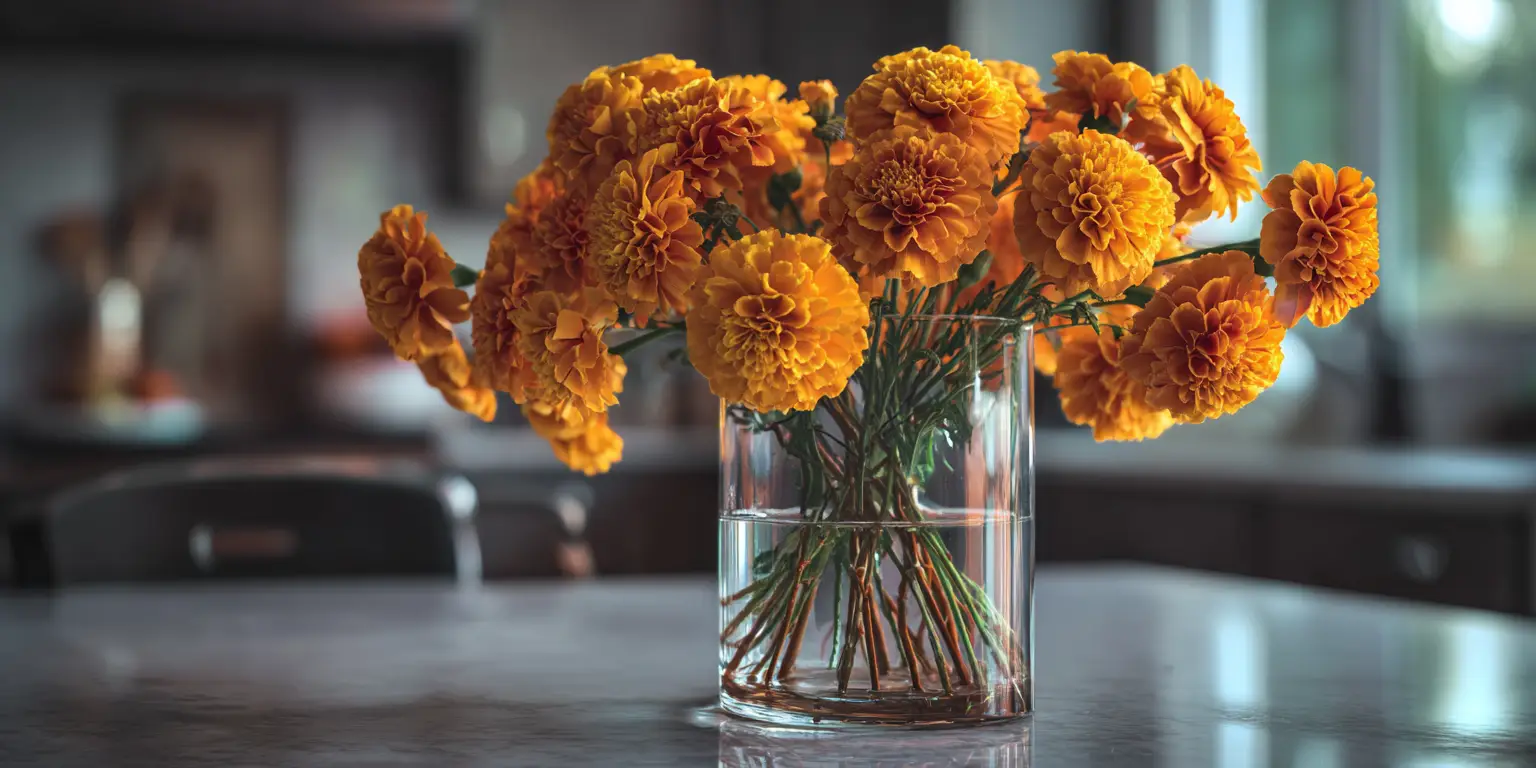
Marigolds can work as cut flowers, especially the larger African types with longer stems. If you cut blooms at the right stage, they often last about 7 to 10 days in a vase. Harvest in the cool part of the day and choose flowers that are partly open. Place stems in water right away, remove any leaves that would sit below the water line, and change the water regularly. Marigold stems can cloud vase water, so a clean vase and frequent water changes make a noticeable difference. If the scent feels strong indoors, keep arrangements in a well-ventilated spot.
🐛 Pests and diseases
Marigolds are not pest-proof, but they are fairly resilient. Deer and rabbits usually avoid them because of the foliage scent. Marigolds are also used in some gardens to help reduce certain soil nematodes, especially when French marigolds are grown as a cover or companion plant. Even so, common pests can show up. Aphids may gather on new growth, spider mites can flare up in hot, dry weather, and whiteflies or thrips sometimes appear in crowded plantings. Caterpillars occasionally chew leaves, and slugs or snails can be rough on young seedlings. In many cases, problems stay small and can be handled with hand-picking, a strong spray of water, or insecticidal soap for heavier aphid or mite outbreaks.
Disease problems are usually tied to damp conditions and poor airflow. In humid weather, marigolds can develop powdery mildew or leaf spot, especially if plants are crowded. Gray mold (Botrytis) can attack fading flowers during long wet spells. Root and stem rots are more likely in heavy, poorly drained soil or with frequent overwatering. Seedlings can also suffer damping off if started in overly wet, unclean conditions. Aster yellows and a few plant viruses can occur, typically spread by sap-feeding insects. These cannot be cured, so infected plants should be removed. The best prevention is simple: full sun, well-drained soil, proper spacing, and watering at the base. Clear away spent flowers and any diseased leaves, and most marigolds will keep growing with few issues.
FAQ
Are marigolds annuals or perennials?
Most marigolds are grown as annuals, meaning they complete their life cycle in one season. In any climate with frost, plants die back at the end of the year and need replanting. In warmer areas with little or no frost (roughly USDA zones 9 to 11), marigolds may survive longer and sometimes behave like short-lived perennials. There are also perennial Tagetes species, such as Tagetes lemmonii (Mexican marigold), that can live for multiple years in mild climates. For French and African marigolds, it is safest to plan on planting them fresh each spring.
Can marigolds grow in pots or indoors?
Marigolds grow very well in containers. Use a pot with drainage holes and a quality potting mix, and place it where the plant gets plenty of sun. Containers dry faster than garden soil, so check moisture more often in summer and water when the top inch feels dry. Growing marigolds fully indoors is harder because they need strong light to bloom well. A bright windowsill can work for starting seedlings, but for long-term indoor growth you often need supplemental grow lights. Most marigolds perform best outdoors with direct sun and good airflow.
Do marigolds really repel pests and mosquitoes?
Marigolds can help in small, local ways, but they do not create a pest-free garden. The foliage smell may discourage some insects nearby, and French marigolds are sometimes grown to reduce certain soil nematodes over time. That said, pests can still show up on marigolds and on neighboring plants, especially if conditions favor them. Think of marigolds as one useful companion plant, not a standalone solution. For mosquitoes, any effect is usually mild and limited to the immediate area.
How do I collect and save marigold seeds?
Toward the end of the season, let a few healthy flowers dry on the plant instead of deadheading them. When the heads turn brown and papery, pull them off and break them apart over a tray or paper towel. You will find long, slender seeds that are dark on one end and pale on the other. Let the seeds finish drying for a day or two if needed, then store them in a labeled paper envelope in a cool, dry place. Saved seed usually stays usable for a couple of years. If the parent plant was a hybrid, seedlings may not match exactly. Open-pollinated varieties are more consistent from seed.
Are marigolds safe for pets and people?
Marigolds are generally considered low risk around pets and people. At most, chewing on leaves or flowers may cause mild stomach upset, and the sap can bother sensitive skin. If you have a pet that likes to nibble plants, it is still worth discouraging the habit, but marigolds are not typically grouped with highly toxic ornamentals.
What is the difference between African and French marigolds?
African marigolds (Tagetes erecta) are the larger type. They can reach 2 to 3 feet tall and make big, full flower heads, often in yellow, gold, and orange. French marigolds (Tagetes patula) stay shorter and bushier, usually 8 to 18 inches tall, with smaller flowers that often show two-tone colors or darker red-brown shading. French types also tend to handle rain and humidity a little better because their smaller blooms dry faster. Many gardeners use French marigolds for edging and containers, and African marigolds for the back of beds or for cutting.
Interesting tips
- Deadhead regularly. Remove faded flowers to keep the plant looking neat and to encourage more buds. Pinch or snip off spent blooms so the plant puts its energy into new growth.
- Good for companion planting. Marigolds are often planted near vegetables, and French marigolds are sometimes used to help reduce certain soil nematodes over time. They also add quick color around beds and paths.
- Often deer and rabbit resistant. Many gardeners find that deer and rabbits avoid marigolds because of the strong foliage scent. They can be useful along borders where browsing is a regular problem.
- Edible and useful blooms. The petals of some marigolds are edible, especially signet marigolds such as “Tangerine Gem” and “Lemon Gem.” They can add color to salads and garnishes. Marigold petals have also been used as a natural dye, and extracts are used in food and feed coloring.
- Cultural significance. In Mexico and parts of Central America, marigolds (especially Tagetes erecta) are used during Day of the Dead observances. In India and South Asia, marigold garlands are common for weddings and festivals.
Related Guides & Flowers
- Calendula
Warm season annual with daisy like orange and yellow blooms, often called pot marigold. Works well near marigolds as a bright edging plant and in herb or cottage style beds. - Zinnias
Sun loving annuals with bold colors from yellow and orange to red and magenta. They flower for a long season and combine well with marigolds in hot, dry borders and cutting gardens. - Coreopsis
Cheerful yellow daisy like flowers on airy stems, usually more drought tolerant than marigolds. Good partner for informal pollinator beds and naturalistic borders. - Mexican sunflower
Tall annual with big orange daisy flowers that attract butterflies and bees. Plant behind marigolds to build a hot color theme from low to high layers in sunny beds. - Butterfly weed
Perennial milkweed with strong orange flower clusters and very high value for pollinators and monarch caterpillars. Works well with marigolds in dry, sunny, low maintenance borders. - Lantana
Heat and drought tolerant flowering plant with clusters of yellow, orange, red, or mixed colors. Ideal with marigolds in containers and front yard beds in hot climates. - Goldenrod
Late summer and fall spikes of golden yellow blooms that feed many pollinators. A good companion if you want to extend the warm color theme after marigolds begin to fade.
References
- Marigolds – University of Minnesota Extension
Covers French, African, and signet marigolds with details on light, soil, spacing, bloom time, deadheading, and common problems, plus tips for containers and bedding displays. - Marigolds – Wisconsin Horticulture Division of Extension
Explains main Tagetes species, plant sizes, flower forms, colors, cultural needs, and typical insect and disease issues, with clear guidance for home gardeners. - Marigold Common but Reliable – University of Missouri Integrated Pest Management
Article on marigold history, origin in the Americas, use by the Aztec people, movement through Europe, plus discussion of heat tolerance, low maintenance habit, and use for nematode and pest suppression in companion planting. - Tagetes erecta African Marigold – NC State Extension Gardener Plant Toolbox
Detailed plant profile with height and spread range, soil pH range, light preferences, bloom season, fragrance, wildlife value, and notes on low severity poison characteristics and possible skin irritation from sap. - Common Plants Whats Poisonous and Whats Not – University of Wisconsin Extension
Toxicity list for common garden and house plants, including an entry for marigold listed as non toxic, useful for your toxicity and pet safety paragraph.
Written by: Your Flowers Guide editorial team
We are a small independent group of flower lovers who research and review each guide using trusted horticultural and educational sources. Learn more about us