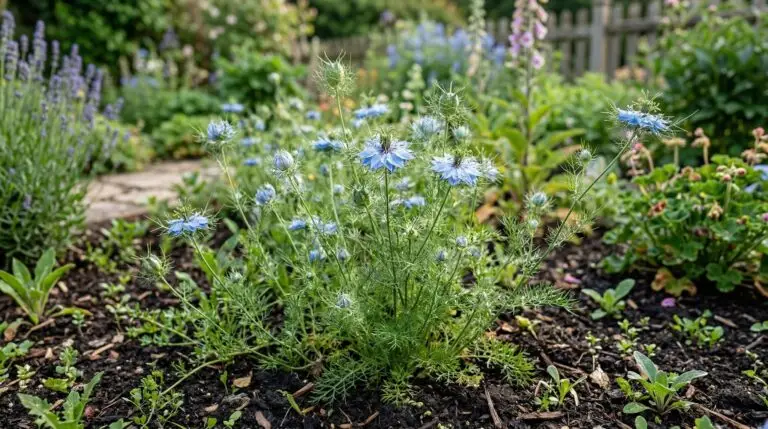
There is a specific feeling that hits every spring when looking at empty terracotta pots on a bare patio or balcony. The local garden centers are full of stiff, formal geraniums and predictable petunias, but sometimes the goal is a wild, untamed cottage garden look in a very confined space. Love-in-a-mist is the ideal plant for creating that soft, feathery effect right on a windowsill or balcony railing. The foliage resembles fine dill or fennel, creating a green mist that eventually produces delicate blue, white, or pink flowers. Growing a nigella balcony garden brings a piece of the countryside to the most urban concrete settings. The plants are surprisingly tough, provided they are treated exactly the way they want to be treated from the very beginning. They grow quickly, fill in empty spaces easily, and require very little fuss once they are established in their pots.
Direct sowing is the only reliable method for love-in-a-mist
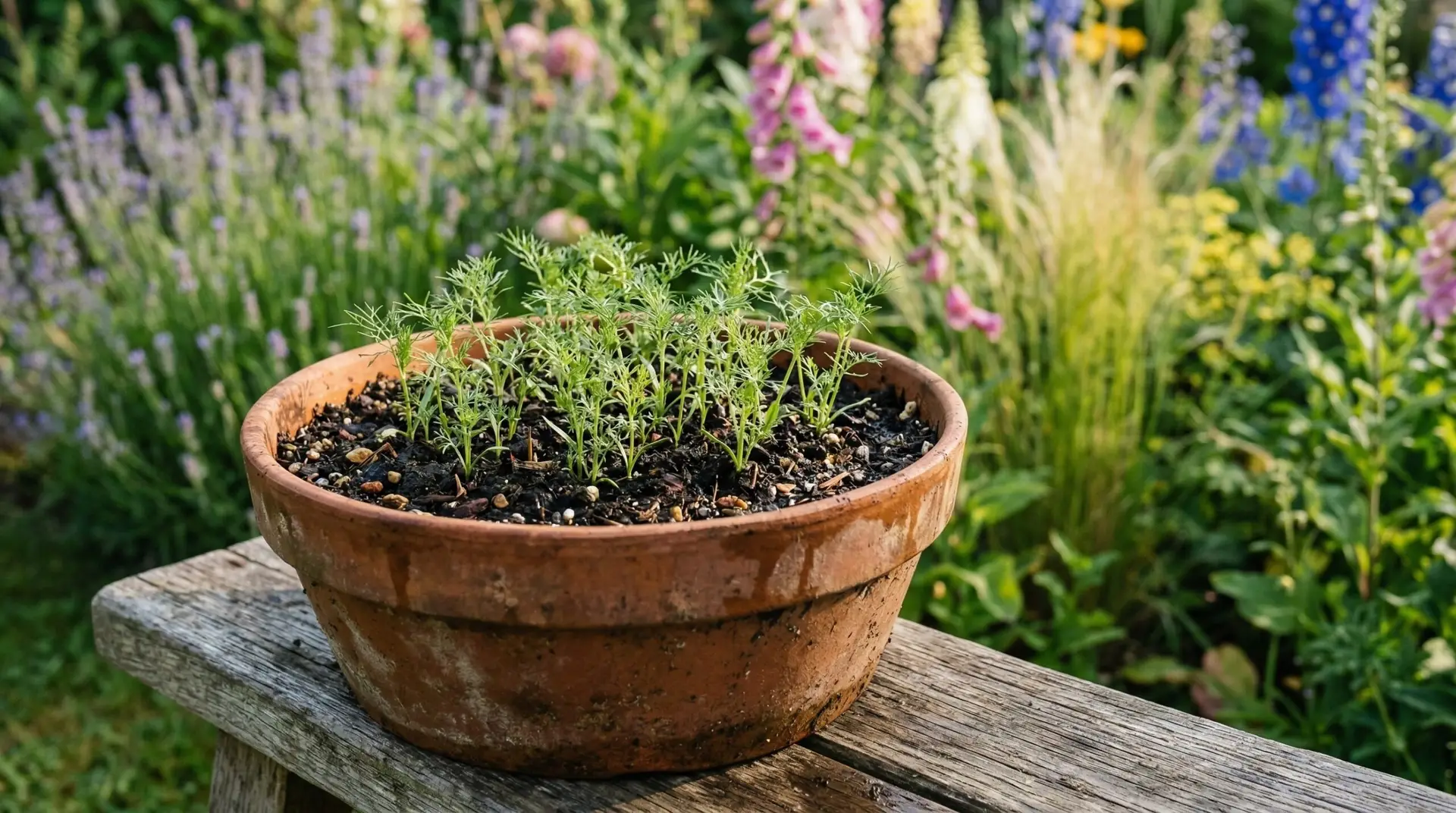
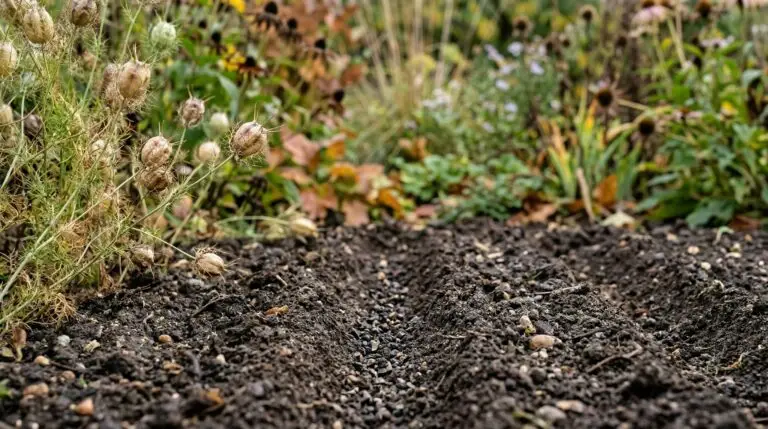
Gardeners often make the mistake of buying nursery six-packs of nigella or starting seeds in tiny peat pellets indoors under grow lights. This plant develops a long, sensitive taproot very early in its life, and disturbing that root usually results in stunted, yellowing plants that refuse to bloom. After trying both methods for several years, the one that consistently works is sowing the seeds directly into the final container outdoors. Fill the pot with soil, water it thoroughly until it drains out the bottom, and then scatter the small black seeds right on the damp surface. Cover them with just a light dusting of soil, as they need a little bit of light to germinate properly. The seedlings look fragile and grass-like when they first emerge, but they are cold-hardy and can handle light spring frosts without any protection. Gardeners in the South may find this easier to do in late fall for early spring blooms, while northern zones should sow the seeds a few weeks before the last expected frost.
Choosing the right pots and soil for a balcony garden
Because of that stubborn taproot, shallow window boxes are rarely the right choice for a love-in-a-mist container. The plants need a pot that is at least eight to ten inches deep to grow to their full height and produce strong stems that will not flop over in the wind. Standard plastic or terracotta pots work perfectly, provided they have clear, unobstructed drainage holes at the bottom. A basic, inexpensive potting soil from the hardware store is entirely sufficient, though mixing in a few handfuls of perlite helps keep the soil from compacting after heavy spring rains. Love-in-a-mist does not need heavy fertilization, and adding too much nitrogen will actually produce a massive tangle of green foliage with zero flowers. The soil in containers dries out much faster than garden beds, so checking the moisture daily during the summer is a necessary chore. If the soil stays completely dry for too long, the plants will quickly drop their lower leaves and rush to set seed. A layer of fine mulch or even a topping of gravel helps retain moisture and keeps the roots cool on baking hot concrete balconies.
Finding the right sunlight and watering routine
Finding the right spot on a balcony for these plants requires balancing their need for sun with the harsh realities of container gardening. Love-in-a-mist thrives in full sun, meaning it needs at least six hours of direct light to produce the maximum number of blooms. However, a black plastic pot sitting in the afternoon sun on a concrete patio can literally cook the roots of cool-weather annuals. Placing the containers where they receive morning sun and a little afternoon shade is a practical compromise that keeps the plants blooming longer. Watering should happen at the base of the plant rather than over the top of the foliage. The dense, feathery leaves trap moisture easily, and wet foliage combined with poor air circulation on a sheltered balcony invites fungal diseases. A simple watering can with a narrow spout makes it easy to direct the water right into the soil. Lifting the pot slightly to feel its weight is the most reliable way to know if the soil is dry below the surface.
Mixing with other cottage annuals in containers
A pot filled entirely with nigella in pots is attractive, but mixing it with other easy annuals creates a true miniature cottage garden. The feathery foliage acts as a soft filler that supports taller, spindly plants and hides their bare lower stems. Sowing seeds of cosmos in the center of a large pot and surrounding them with nigella seeds results in a continuous display of blooms. The nigella will flower first, providing a cloud of blue or white color while the taller plants are still putting on green growth. Another highly reliable combination is mixing love-in-a-mist with cornflowers, which share the exact same preference for direct sowing and cool spring weather. Both plants will bloom simultaneously in early summer, creating a classic blue and pink meadow effect in a single container. Thinning the seedlings is the hardest part of this process, but pulling out the weakest plants allows the remaining ones enough air circulation to prevent powdery mildew. Leaving about four inches of space between each plant feels drastic when they are tiny, but they will quickly fill the gaps.
Managing the fast life cycle and decorative seedpods
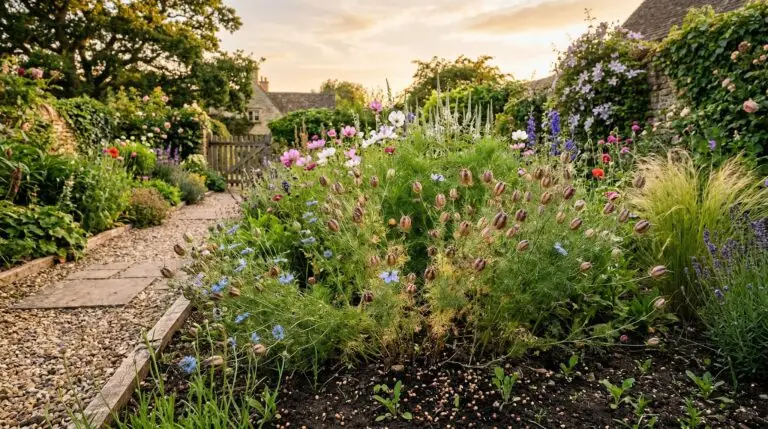
One of the honest realities of growing love-in-a-mist is that the actual flowering period is relatively short, usually lasting only three to four weeks. Once the petals drop, the plant forms large, balloon-like seedpods adorned with the same feathery bracts that surrounded the flowers. These striped, burgundy and green pods are highly decorative and extend the visual interest of the container well into late summer. Leaving the pods on the plant allows the seeds to mature, at which point they can be shaken into a paper bag and saved for the following year. To keep flowers coming longer, sowing a new pinch of seeds in bare spots every three weeks creates a succession of blooms. Eventually, the intense heat of late summer will cause the plants to turn brown and dry out entirely. This is the natural end of their life cycle rather than a failure of care or watering. Pulling the spent plants and replacing them with late-season annuals is just part of the normal seasonal rhythm of container gardening.
More About Love in a Mist

Nigella seeds in the spice world and the culinary history of black cumin
Love-in-a-mist as a self-sowing annual that creates a cottage garden on autopilot
Growing love-in-a-mist from seed with the simple scatter and forget method
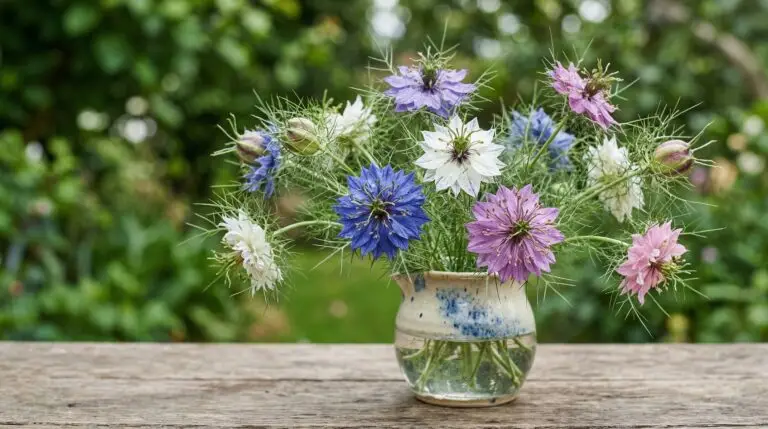
Best love-in-a-mist varieties from classic Persian Jewels to double Albion Green Pod
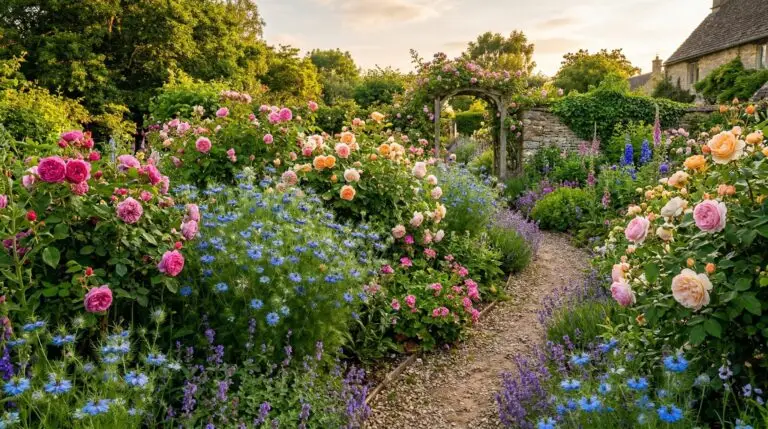
Companion plants for love-in-a-mist: what to grow and avoid
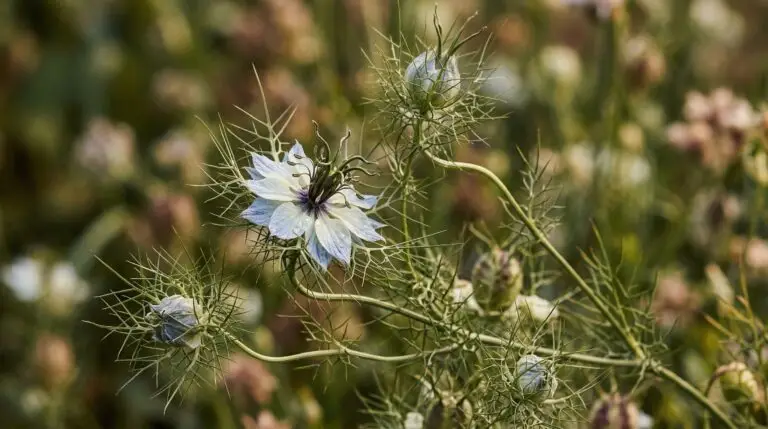
Love-in-a-mist flower meaning and the romantic mystery behind this enchanting bloom
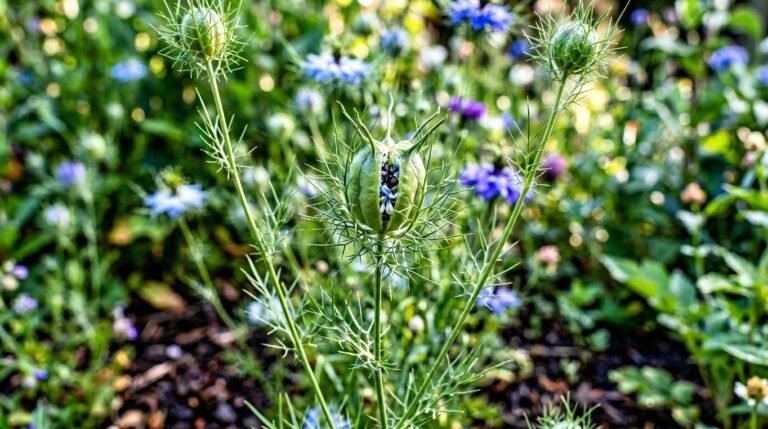
Love-in-a-mist as a delicate cut flower for wildflower-style bouquets and arrangements
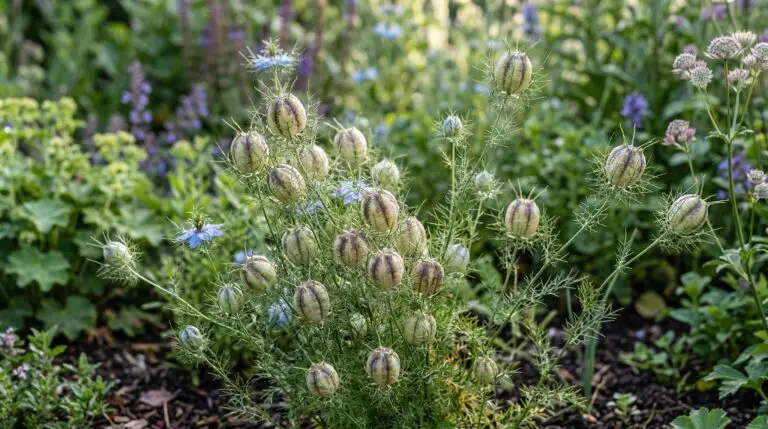
Love-in-a-mist seed pods that are as beautiful as the flowers and perfect for drying