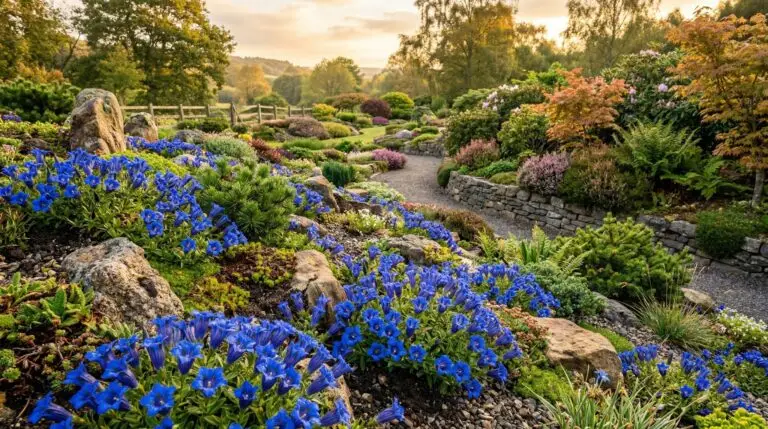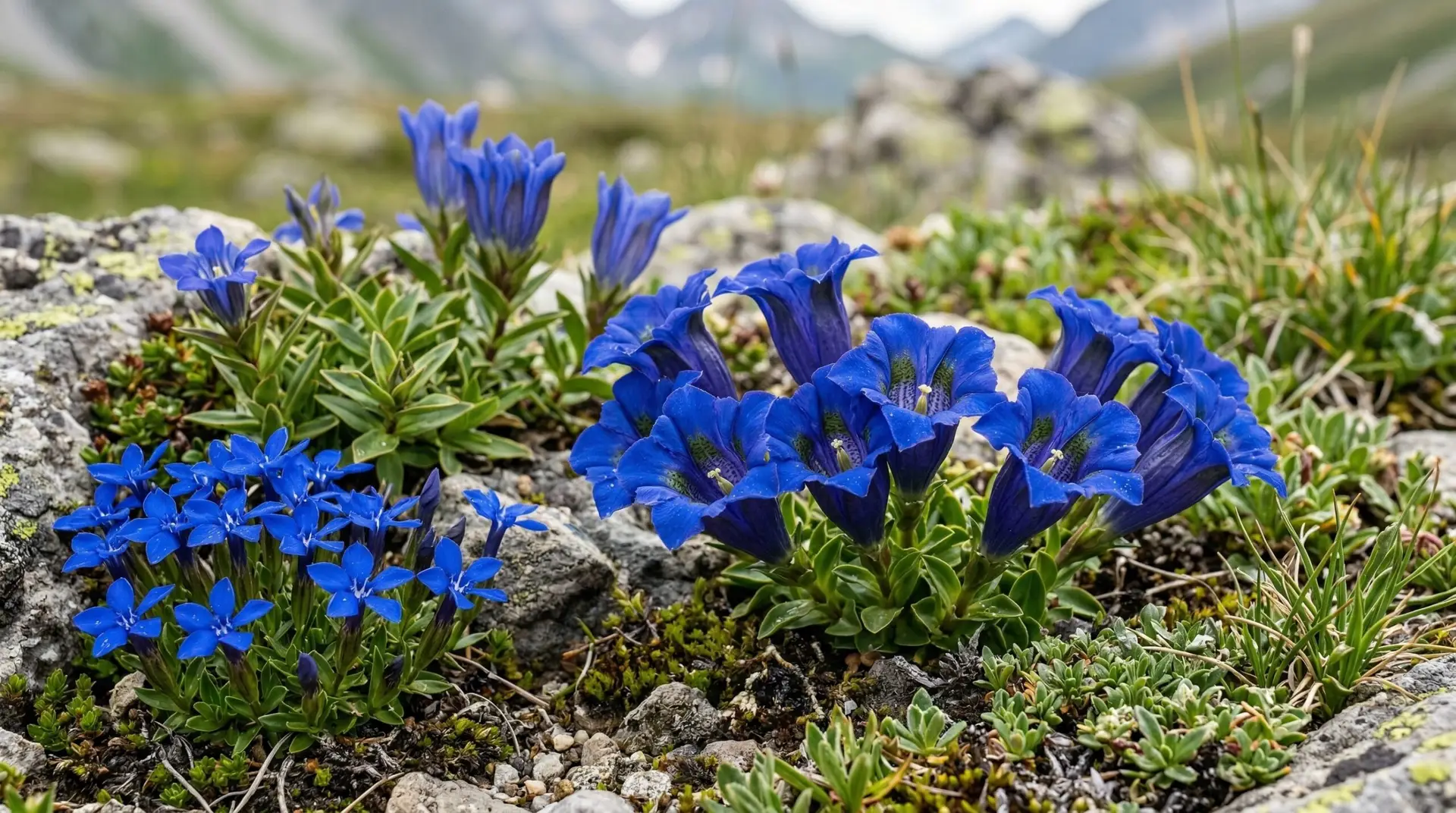
There is a very specific shade of blue that exists almost nowhere else in the botanical world except in the petals of a gentian. When you see that intense, piercing color for the first time, it has a way of lodging itself in your memory and making you want to replicate it in your own garden. I remember exactly where I was when I saw my first alpine gentian blooming in a rocky crevice, its upward-facing trumpets looking entirely too large for the tiny mat of green foliage beneath them. That single moment started a lifelong fascination with gentian species, leading me to seek out all the different types of gentians available to home growers. You quickly learn that this is a genus of extremes, offering both immense satisfaction and occasional heartbreak depending on the species you choose to plant. The reward of getting a difficult alpine variety to settle in and finally produce a bud is a feeling that few other garden plants can provide.
Many gardeners assume all gentian varieties are impossible to grow outside of a high-altitude rock garden, but the genus is actually incredibly diverse and adaptable. You can find species that thrive in deep woodland shade, varieties that demand acidic peat beds, and tall architectural types that look completely different from the classic alpine image. The trick is simply matching the right species to the specific conditions you can provide in your garden. If you are used to growing the tall spires of Delphinium elatum for your garden blues, gentians will ask you to look a little closer to the ground and appreciate a more intimate scale. You will find yourself checking the foliage daily in the spring or late summer, waiting for that tightly twisted bud to finally unfurl and reveal the saturated color inside.
The elusive spring trumpets of Gentiana acaulis
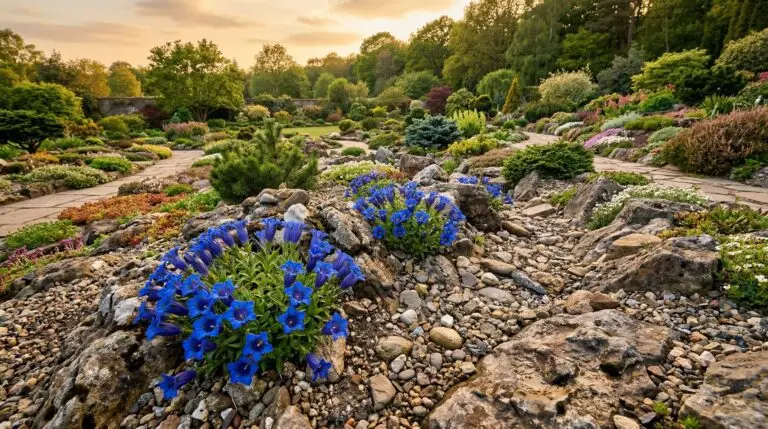
For many collectors, Gentiana acaulis is the holy grail of alpine gardening and the exact plant they picture when they hear the word gentian. This species grows as a low, spreading mat of glossy green rosettes that slowly creeps over gravelly soil or between rocks. In mid-spring, it produces solitary, upward-facing trumpets of the most intense, pure blue imaginable, often marked with green spotting deep inside the throat. I will be completely honest and admit that this plant can be incredibly frustrating to coax into bloom, as it sometimes produces lush green mats for years without offering a single flower. It demands sharp drainage, cool roots, and a tricky balance of moisture and aeration that can take several attempts to get right in a standard garden bed. When you finally figure out its preferred spot and see those massive blue trumpets open on a sunny May morning, every previous failure is immediately forgotten.
The secret to success with Gentiana acaulis is understanding its native habitat in the European Alps, where it grows in limestone-rich soils that never stay waterlogged. I have had my best results growing it in a dedicated trough or a raised rock garden filled with a gritty mix of pumice, coarse sand, and a small amount of loam. It is entirely normal to lose a few plants while learning what they need, and you have to accept that as part of the process of growing specialized alpines. Unlike the reliable late-summer bloom of a Balloon Flower, this gentian makes you earn its display through careful observation and soil preparation. Once it decides it likes where it is planted, it will slowly expand into a wide patch and become a permanent fixture that you will look forward to checking on as soon as the snow melts.
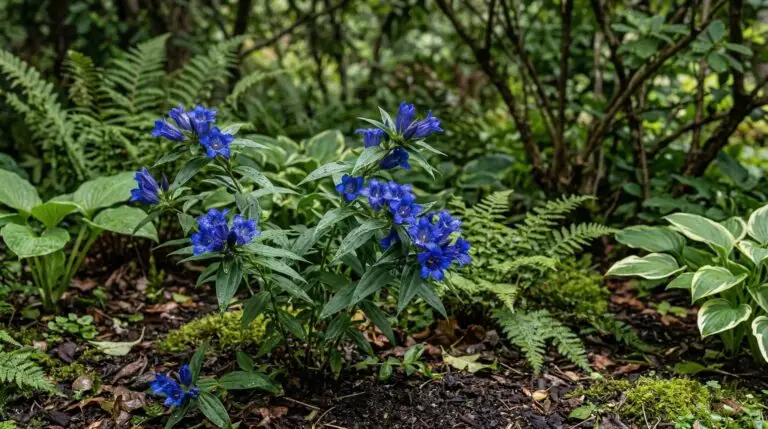
Arching stems of the willow gentian
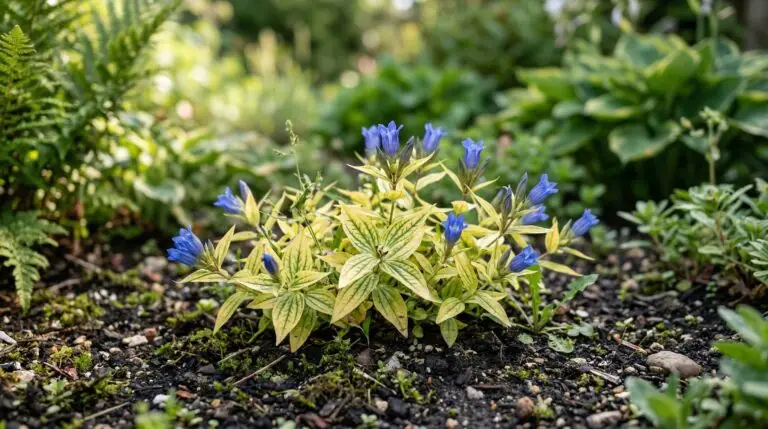
If you want the characteristic blue color without the demanding temperament of the alpine types, Gentiana asclepiadea is the species I always recommend first. Known commonly as the willow gentian, this plant breaks all the rules you might expect from the genus by thriving in partial shade and tolerating heavier soils. It grows tall, sending up elegant, arching stems reaching two to three feet in length, lined with narrow leaves that genuinely resemble those of a willow tree. In late summer and early autumn, pairs of deep blue, tubular flowers emerge from the leaf axils all along the upper portion of the stems. I love planting this species near the edge of a woodland path where the late afternoon sun can catch the flowers and illuminate their rich color just as the rest of the garden is starting to fade for the year.
One of the great joys of growing Gentiana asclepiadea is watching it establish over several years into a substantial, multi-stemmed clump that requires almost no intervention. It actually resents disturbance once planted, so you need to choose a permanent spot with moisture-retentive soil and leave it alone to develop its deep root system. Occasionally, you might find a self-sown seedling popping up a few feet away from the parent plant, which is always a welcome surprise in the shade garden. There is also a white form, Gentiana asclepiadea ‘Alba’, which provides a beautiful contrast when planted alongside the traditional blue variety. The sheer reliability of the willow gentian makes it an absolute joy to grow, offering a dependable burst of late-season color exactly when the garden needs it most.
Autumn stars of Gentiana sino-ornata
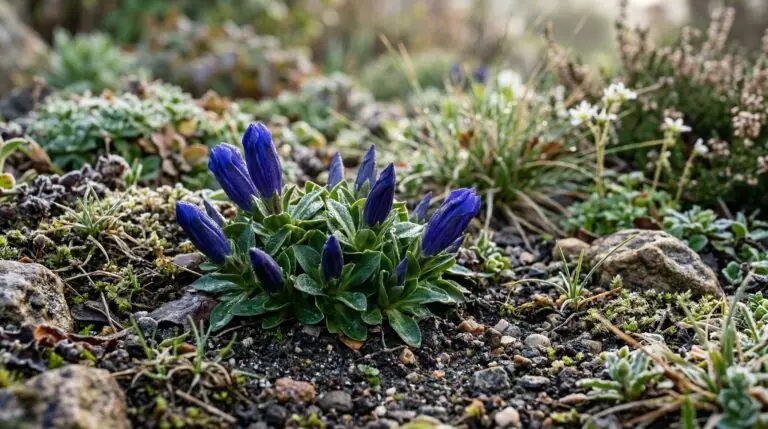
Just when you think the gardening season is ending, the autumn-blooming gentian varieties step in to provide one last dramatic display. Gentiana sino-ornata is arguably the finest of these late bloomers, producing sprawling stems that root as they grow and form dense carpets of fine, grassy foliage. Starting in September and often continuing well into November, it covers itself in large, upward-facing trumpets of clear azure blue with distinctive dark blue and yellowish-white stripes down the outside of the petals. The color is so vivid that a mature patch looks almost artificial against the falling autumn leaves, drawing your eye from across the yard. Growing this species requires a specific soil profile, as it absolutely demands acidic conditions and will quickly yellow and decline if exposed to lime or alkaline water.
I have found that creating a dedicated peat bed or incorporating copious amounts of leaf mold and pine bark into the planting area is the best way to keep Gentiana sino-ornata happy. It needs consistent moisture during the growing season but must never sit in winter wet, which makes site selection a bit of a balancing act. When you get the soil acidity and moisture right, it is an incredibly vigorous plant that can be easily propagated by carefully lifting and dividing the rooted stems in early spring. There are numerous hybrids bred from this species, such as the widely grown ‘Strathmore’ and ‘Shot Silk’, each offering slight variations in the shade of blue and the intensity of the exterior striping. Watching these intense blue stars open on a crisp, cool autumn day is a profound reminder of why we put so much effort into cultivating these specific plants.
The architectural presence of yellow gentian
To truly appreciate the diversity of gentian species, you have to look at Gentiana lutea, a plant that abandons the traditional blue trumpet entirely. The great yellow gentian is a massive, architectural perennial that can reach four to five feet tall in bloom, looking more like a robust hosta or a wild veratrum when it emerges in the spring. It produces large, deeply ribbed, blue-green leaves that form a bold basal rosette before sending up a thick, sturdy flower stalk. In midsummer, the stalk develops dense whorls of star-shaped, bright yellow flowers stacked in tiers at the leaf axils. It is a completely different aesthetic from the low alpine creepers, bringing strong vertical structure and a wild, meadow-like character to the back of a sunny border.
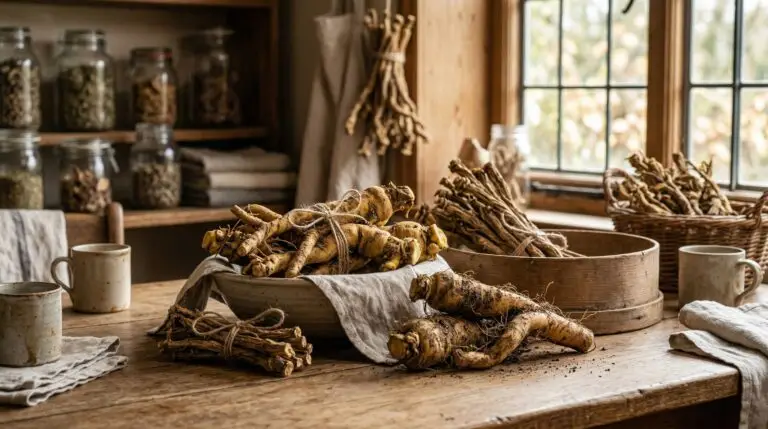
Growing Gentiana lutea is an exercise in extreme patience, as plants grown from seed can take up to ten years to reach flowering size. This long wait deters many casual gardeners, but for a dedicated enthusiast, nursing a plant through its juvenile stages and finally seeing that massive flower stalk rise is a deeply satisfying experience. It develops an enormous taproot that makes it completely drought tolerant once established, but this same root makes the plant impossible to move, meaning you must commit to its location from day one. I love knowing that this plant has a rich history as the primary source of the bitter flavoring used in many classic European aperitifs and digestifs. It is a plant of substance and permanence, anchoring the garden with its bold foliage and demanding attention through its sheer size and unusual floral display.
The lasting appeal of the genus
What keeps me returning to gentians year after year is the specific, quiet thrill of succeeding with a plant that asks you to pay attention to its needs. They are not the kind of flowers you can buy in bloom at a hardware store, plant in generic potting soil, and forget about. Each species asks you to understand where it came from, whether that is a high alpine scree, a damp European woodland, or an acidic Himalayan meadow. The disappointments, like a patch of Gentiana acaulis that refuses to flower or a newly planted Gentiana sino-ornata that succumbs to alkaline soil, only make the eventual successes feel more earned. When you finally get it right, you are rewarded with a purity of color and a structural elegance that feels entirely unique to this genus.
There is a profound satisfaction in walking through the garden and seeing these distinct personalities emerge as the seasons shift. You get the anticipation of the spring alpines, the reliable late-summer elegance of the woodland types, and the final, defiant blue stars of the autumn bloomers holding out against the frost. They teach you to become a better observer of your own garden microclimates, forcing you to notice the exact path of the sun or the way water drains through a particular slope. I will gladly accept the occasional failures and the demanding soil requirements just to have that vivid, true blue color present in my garden. Once you experience the quiet triumph of a thriving gentian, you will find yourself making room for just one more species, eager to see what else this remarkable group of plants has to offer.
More About Gentian
How to grow gentians for the most intensely blue flowers in the entire plant world
Gentian flower meaning and the alpine legend behind this intensely blue bloom
Growing gentians in rock gardens and alpine troughs where they truly shine
Why gentians are difficult to grow and the secrets to keeping them alive
Growing gentians from seed and the cold stratification they demand for germination
Companion plants for gentian: what to grow and what to avoid
Willow gentian as the easiest gentian for beginners and shady woodland gardens
Gentian root in herbal medicine and the bitter that has healed for centuries