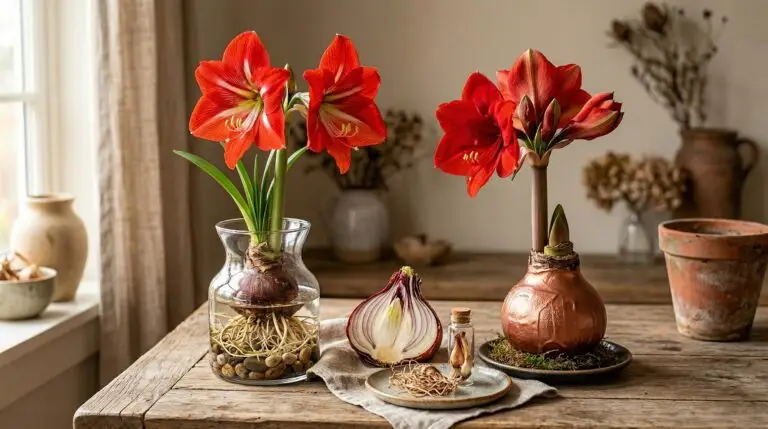
People usually buy an amaryllis expecting a foolproof holiday centerpiece, but they quickly find themselves dealing with floppy stalks, mushy bulbs, or plants that refuse to grow at all. The frustration is incredibly common because these kits often come with poor instructions that encourage bad habits right out of the box. You unbox a dormant bulb, add water to a plastic pot with no drainage, and expect a perfect bloom in a few weeks. Instead, you end up watching a heavy flower stalk slowly tilt until it crashes onto your table. I have seen countless home gardeners blame themselves for these failures when the real issue is simply a mismatch between what the bulb needs and what the typical indoor environment provides. Growing a healthy amaryllis requires understanding how these plants behave in their natural habitat and adjusting your care to prevent problems before they start.
Dealing with leaning amaryllis stalks
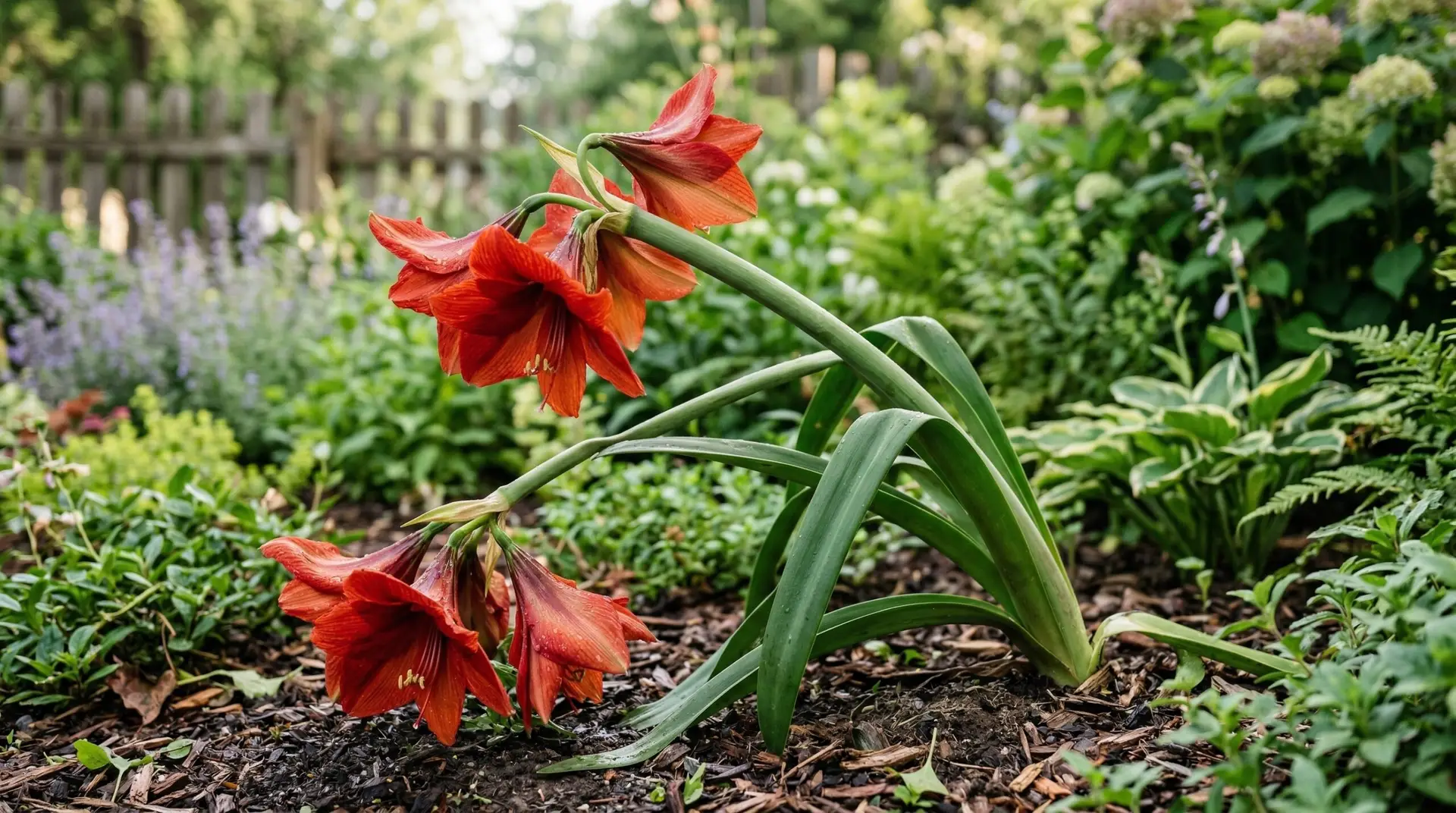
When an amaryllis stalk starts falling over, it usually means the plant is desperately reaching for light. People often place their pots in the center of a dining table or on a dark mantle because that is where they want to display the flowers. In low light conditions, the plant responds by growing abnormally tall and weak in a process called etiolation, stretching toward the nearest window. Combine a weak, stretched stem with the immense weight of four large blossoms, and a collapse is inevitable. The immediate fix is to provide physical support using a bamboo stake and some soft twine, tying the stem loosely before it snaps completely. To prevent an amaryllis leaning in the first place, you must place the pot in the brightest window you have the moment you see the green tip emerge from the bulb. You also need to rotate the pot a quarter turn every single day so the stalk grows straight up rather than bending permanently toward the glass.
Recognizing and treating amaryllis bulb rot
Amaryllis bulb rot is the single most frequent killer of these plants, and it is almost always caused by overwatering combined with poor drainage. When you water an amaryllis too frequently, the soil stays saturated, suffocating the roots and inviting fungal pathogens to consume the basal plate at the bottom of the bulb. You will usually notice the problem when the plant stops growing entirely, and a gentle tug on the stalk reveals that the whole bulb is loose in the soil. If you dig it up, the roots will be dark brown and mushy instead of firm and white, and the bulb itself might feel soft or smell like rotting vegetables. Sometimes the pressure from the rot causes the bulb layers to separate, leading to a split bulb that cannot support new growth. If you catch the rot early enough, you can remove the bulb from the wet soil, cut away the mushy roots with a sterile knife, dust the base with a fungicide, and replant it in fresh, dry potting mix. Much like caring for a begonia, you must let the top two inches of the soil dry out completely before you even think about picking up your watering can again.
Managing red blotch disease and fungal infections
Gardeners often panic when they see bright red streaks or spots appearing on their amaryllis leaves, stalks, or the outside of the bulb itself. This symptom usually points to a specific fungal infection called red blotch, caused by the pathogen Stagonospora curtisii. When red blotch strikes, it causes the tissues to crack, deform, and eventually weaken the entire structure of the plant. The fungus thrives in cool, damp environments and spreads easily when water splashes onto the exposed neck of the bulb. To fix this issue, you need to change your watering habits immediately by applying water directly to the soil rather than pouring it over the top of the bulb. You should also peel away the loose, papery outer tunics of the bulb if they are heavily infected, and treat the affected areas with a systemic fungicide designed for ornamental bulbs. Prevention is always easier than a cure, so keeping your indoor temperatures warm and providing good air circulation around the pot will keep the fungus from establishing a foothold.
Solving stunted growth and missing leaves
Sometimes an amaryllis simply refuses to cooperate, sending up a tiny, stunted flower stalk or producing flowers with absolutely no leaves. When a bulb pushes up a flower but no foliage, it is actually following a normal, though unpredictable, growth pattern for certain varieties. However, if the stalk itself is stunted and barely clears the neck of the bulb before opening, the plant is usually suffering from severe root loss or incorrect temperatures during its previous dormancy period. A bulb that was stored in a spot that was too warm will exhaust its stored energy prematurely, leaving nothing left for proper stem elongation. If your plant is stunted, there is no quick fix for the current blooming cycle, and you just have to enjoy the short flowers while they last. To get better results next year, you must let the leaves grow vigorously all summer, feeding the plant regularly to rebuild the bulb. Just as you would carefully manage the dormancy of a tender lily bulb, you must give your amaryllis a proper cool rest period of eight to ten weeks at around fifty-five degrees before trying to force it into bloom again.
The most useful piece of advice I can give anyone growing an amaryllis is to completely ignore the decorative, hole-free pots they are often sold in. Always plant your bulb in a heavy terracotta pot that has a large drainage hole at the bottom, and make sure the pot is only about two inches wider than the bulb itself. The porous clay allows the soil to breathe, preventing the dreaded bulb rot, while the heavy weight of the pot acts as a counterweight to keep the tall, top-heavy blooms from tipping over. You must also leave the top third of the bulb exposed above the soil line to keep the neck dry and free from fungal diseases. If you start with a proper pot, bright light, and a strict rule to water only when the soil is truly dry, you will eliminate almost every problem that frustrates amaryllis growers.
More About Amaryllis
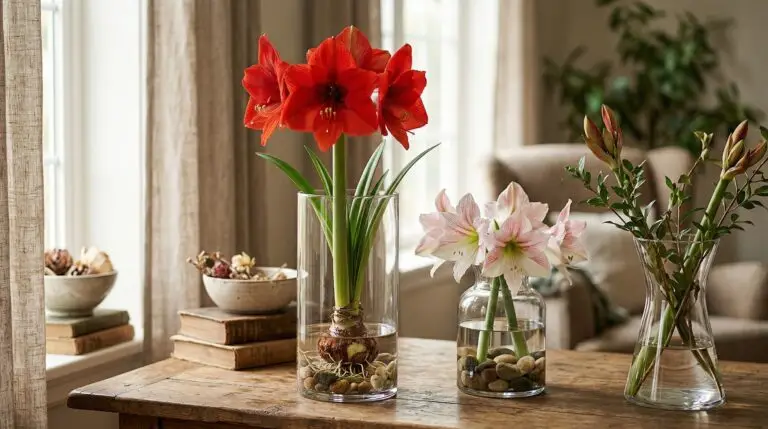
Creative ways to display amaryllis bulbs as winter home decor
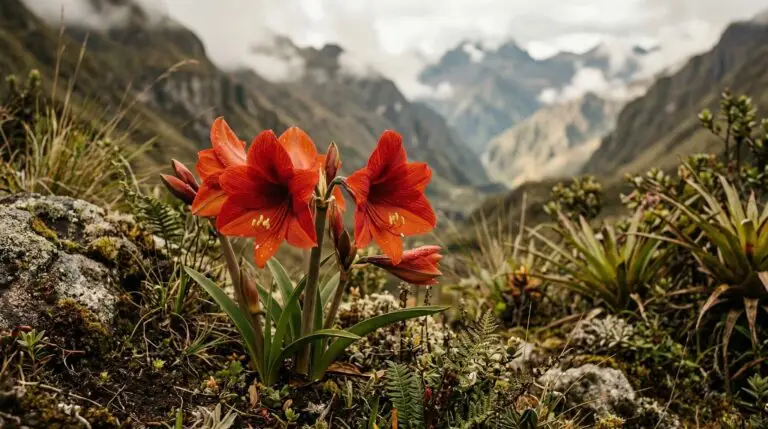
The fascinating history of amaryllis from South American wildflower to holiday tradition
How to grow amaryllis outdoors in warm climates for year-round garden color
Amaryllis color guide and the most striking varieties to grow at home
How to force amaryllis bulbs to bloom indoors for the holidays
Amaryllis gift ideas and how to choose the perfect bulb for someone special
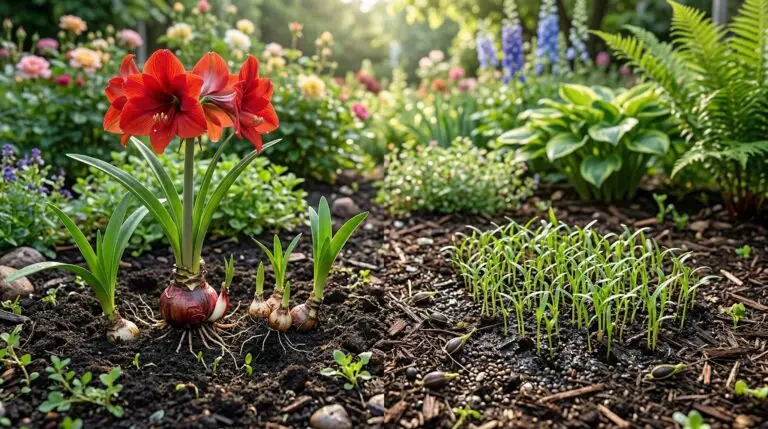
How to propagate amaryllis from offsets and seeds for a growing collection
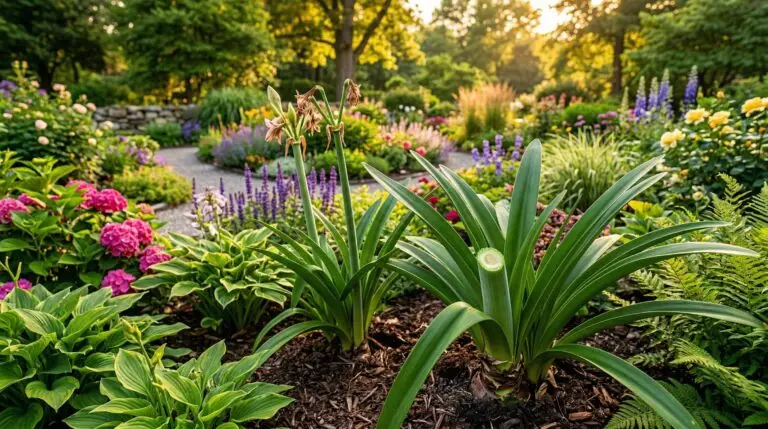
What to do with amaryllis after it finishes blooming so it flowers again next year