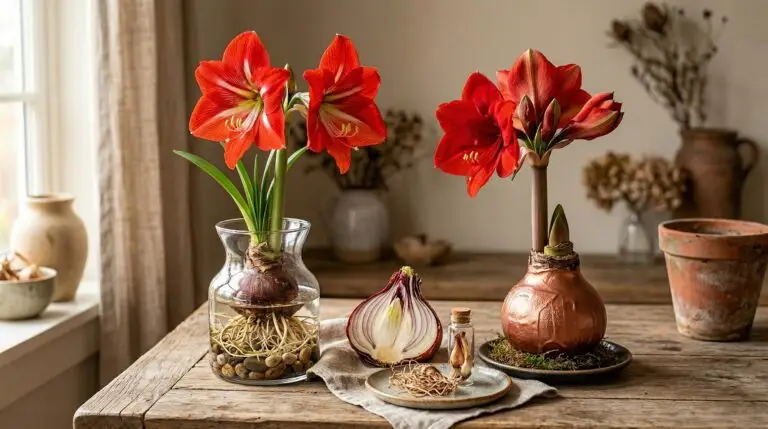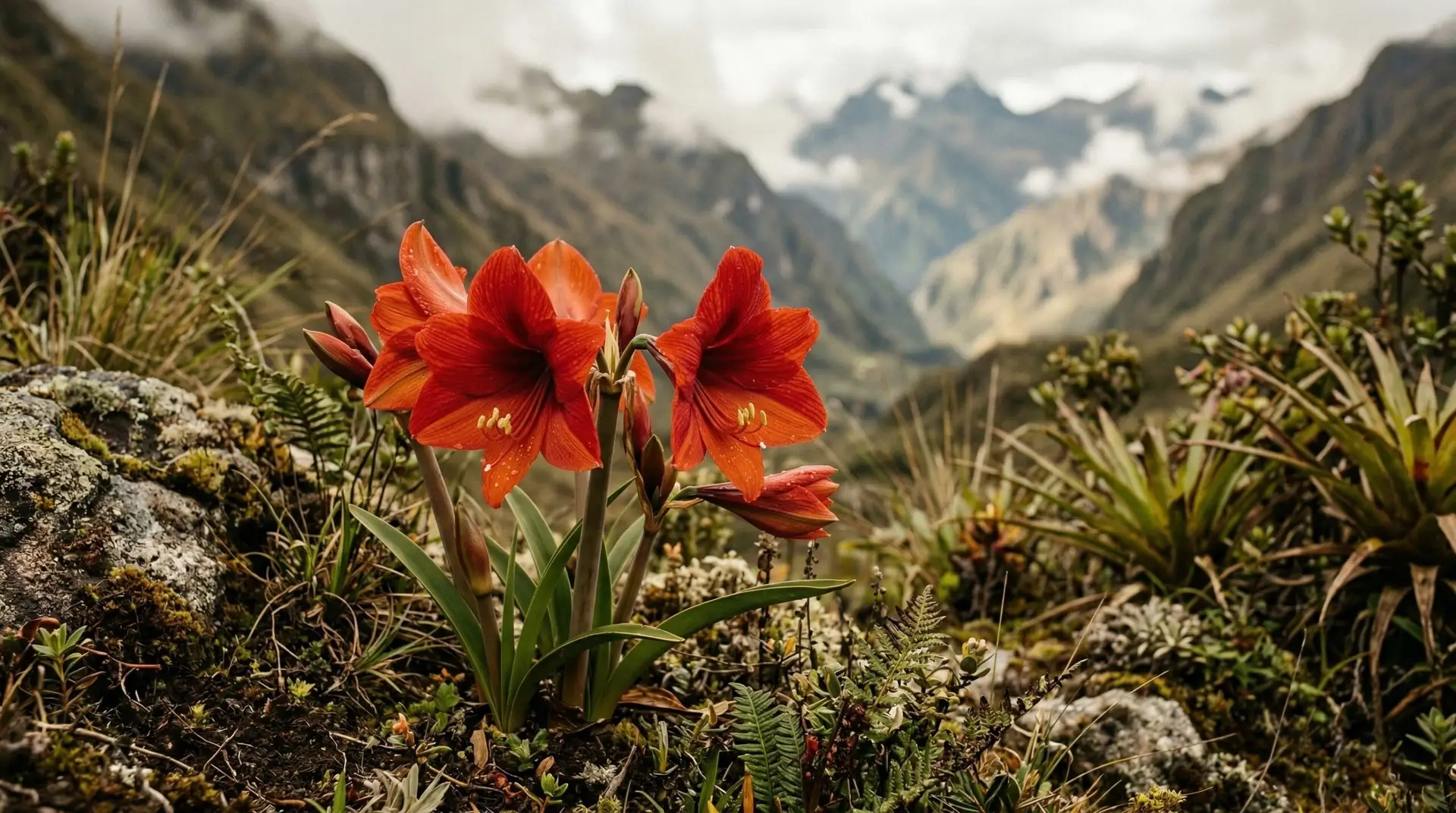
The amaryllis origin story begins in the high, rocky elevations of the South American Andes, long before the plant became a fixture of winter windowsills. Indigenous peoples of Peru and Chile knew these bright, trumpet-shaped flowers that pushed through the harsh mountain soil after seasonal rains. When European botanists and plant hunters began exploring these ridges in the eighteenth and nineteenth centuries, they found a flower that defied the cold, thin air with thick stalks and massive petals. Eduard Friedrich Poeppig, a German physician and botanist, spent years navigating the rivers and mountains of Chile and Peru in the 1820s, documenting wild specimens of this bulb. He collected seeds and pressed flowers to send back across the Atlantic, introducing European horticulturists to a plant that possessed a remarkable will to grow. These early specimens were completely different from the perfectly symmetrical holiday centerpieces sold today. They had narrow, irregular petals, often striped with green or pale yellow, designed to attract local hummingbirds and moths rather than human buyers.
When modern gardeners ask where do amaryllis come from, the answer involves a botanical misunderstanding that persists to this day. In the middle of the eighteenth century, the famous Swedish botanist Carl Linnaeus established the genus name Amaryllis, borrowing the name of a shepherdess from ancient Greek pastoral poetry. Linnaeus applied this name to a pale pink, autumn-blooming bulb from South Africa, now known as Amaryllis belladonna. Decades later, when the thick-stalked South American bulbs arrived in European botanical gardens, early taxonomists assumed they belonged to the exact same family and labeled them accordingly. By the time the British botanist William Herbert realized the Andean plants were structurally distinct and created the new genus Hippeastrum, meaning “knight’s star,” the original name had already taken root in the public mind. The scientific community spent the next two hundred years arguing over the classification, finally settling the matter in 1987. The true Amaryllis remains the South African belladonna lily, while the holiday bulb we force into winter bloom is officially a Hippeastrum. Gardeners and florists ignored the ruling entirely, continuing to use the familiar, poetic name they had always known.
The Dutch bulb merchants take notice
Once the South American bulbs reached the Netherlands in the nineteenth century, they entered a horticultural machine that had been perfecting the art of plant breeding for generations. Dutch growers saw immense potential in the Hippeastrum, recognizing that its large seeds and relatively fast maturation cycle made it an ideal candidate for hybridization. They began crossing different wild species, taking the deep red color from one mountain variety and the wide, flat petal shape from a lowland river species. The breeders worked methodically in their glasshouses, carefully transferring pollen with small brushes to create flowers that grew larger and more uniform with each passing decade. Just as they had done with the tulip centuries earlier, the Dutch transformed a modest wild species into a highly commercialized agricultural product. They selected for thick, sturdy stems that could support the weight of four or five massive blooms simultaneously without snapping. By the early twentieth century, the Dutch had created the large-flowering Leopoldii hybrids, the direct ancestors of the modern bulbs that fill garden centers today.
As the breeding programs expanded, the growers realized they had a plant with a highly predictable internal clock. In its native habitat, the Hippeastrum experiences a natural dry season that forces the bulb into a period of deep dormancy. The leaves wither and fall away, leaving a brown, papery sphere resting just below the soil surface, waiting for the return of the rains. Dutch commercial growers replicated this cycle artificially, withholding water in late summer and storing the bulbs in dark, temperature-controlled warehouses to simulate the dry season. When they finally introduced moisture and warmth to these dormant bulbs, the plants responded immediately by sending up rapid new growth. This physiological trait allowed growers to manipulate the exact timing of the bloom cycle. They could hold the bulbs in suspended animation for months, then ship them across the ocean to awaken exactly when consumers wanted them.
Forcing winter into bloom
The amaryllis history shifted significantly when growers realized they could time this artificial awakening to coincide with the darkest months of the North American winter. In the middle of the twentieth century, the flower transitioned from a specialized greenhouse specimen to a mass-market holiday tradition. Before this shift, winter color indoors was mostly limited to forced daffodils or paperwhites, which offered delicate blooms and strong fragrances but lacked visual mass. The amaryllis provided something entirely different, offering a massive, architectural presence that felt almost tropical in the middle of a snowstorm. Nurseries began marketing the dormant bulbs in decorative boxes as holiday gifts. They capitalized on the reliable, almost theatrical way the plant grows. A person could buy a dry brown lump in late November, add water, and watch a thick green stalk rise an inch a day through December. The deep red and pure white varieties naturally aligned with the traditional colors of the season, cementing the plant’s status as a staple of winter celebrations.
The process of forcing an amaryllis is an exercise in compressed time, playing out over the course of six to eight weeks. When the bulb first sits in the soil, it looks entirely lifeless, a dense structure wrapped in brittle, papery tunics. After the first thorough watering, a pale green tip emerges from the neck of the bulb, usually a flower bud rather than a leaf. The stalk thickens and stretches upward with surprising speed, drawing on the massive reserves of energy stored in the fleshy scales of the bulb during the previous summer. As the hollow stem reaches its full height, the protective sheath at the top splits open, revealing three or four tightly packed buds. These buds slowly lower themselves to a horizontal position, swelling for several days before they finally break open into wide, velvet-textured stars. The sheer size of the flowers seems impossible compared to the container they grow in, a biological trick that relies entirely on the bulb’s prior months of quiet preparation in the fields.
A quiet winter companion
Today, the ritual of growing an amaryllis marks the passage of the winter months for countless gardeners waiting for the ground to thaw. The bulbs arrive in the mail or appear on store shelves just as the outdoor garden goes completely dormant, offering a temporary cure for the loss of green things before the spring tulips emerge. Planting the bulb requires only a heavy pot and a handful of soil, a simple task that initiates a daily watch for new growth. The plant demands very little from the person tending it, asking only for a sunny window and occasional water as it performs its deeply ingrained biological routine. When the dark red or striped petals finally unfold in January or February, they bring a sudden, loud presence into a quiet room. The flower is a direct line back to the rocky slopes of the Andes and the careful hands of nineteenth-century botanists. It is a piece of wild mountain history, sleeping in a cardboard box, waiting for a cup of water to begin the cycle all over again.
More About Amaryllis
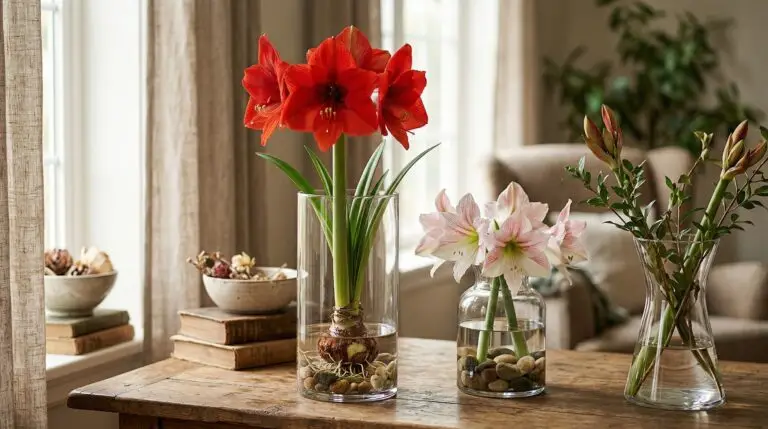
Creative ways to display amaryllis bulbs as winter home decor
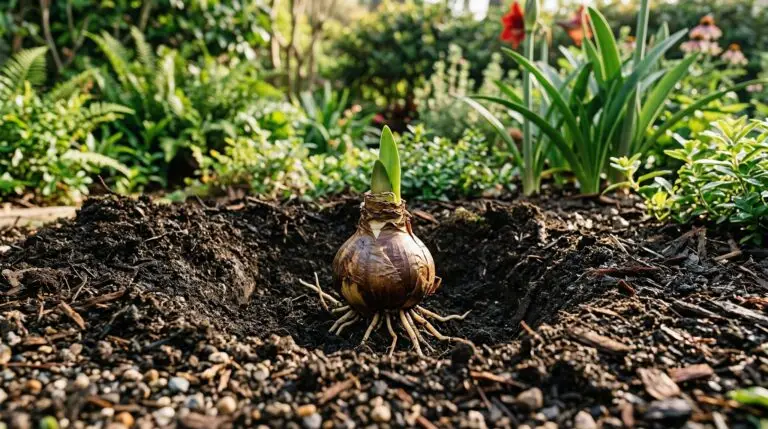
How to grow amaryllis outdoors in warm climates for year-round garden color
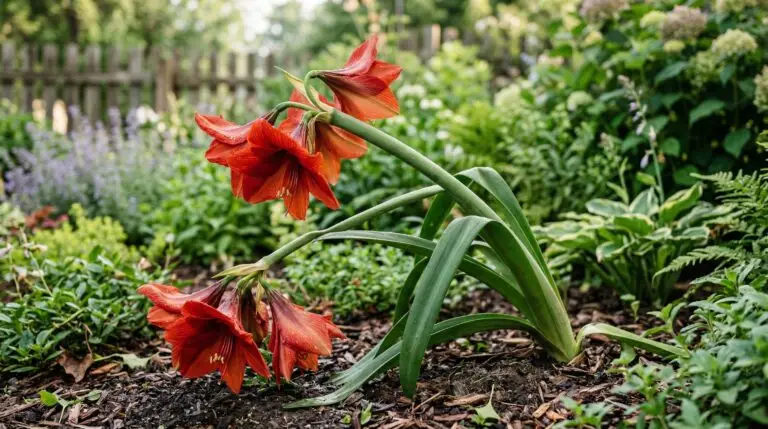
Common amaryllis problems including leaning stalks and split bulbs
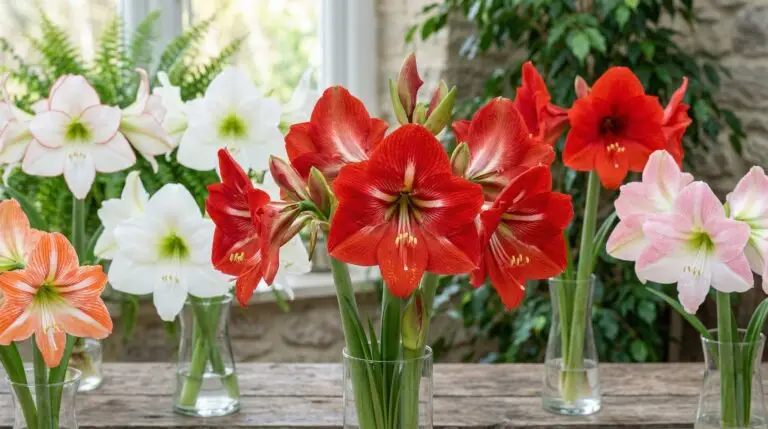
Amaryllis color guide and the most striking varieties to grow at home
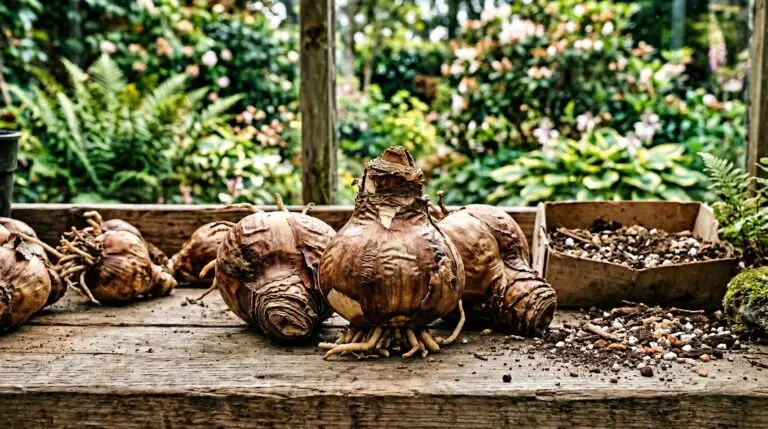
How to force amaryllis bulbs to bloom indoors for the holidays
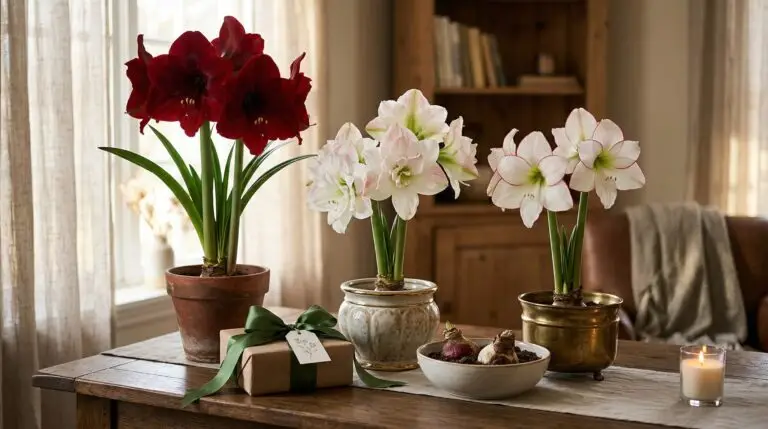
Amaryllis gift ideas and how to choose the perfect bulb for someone special
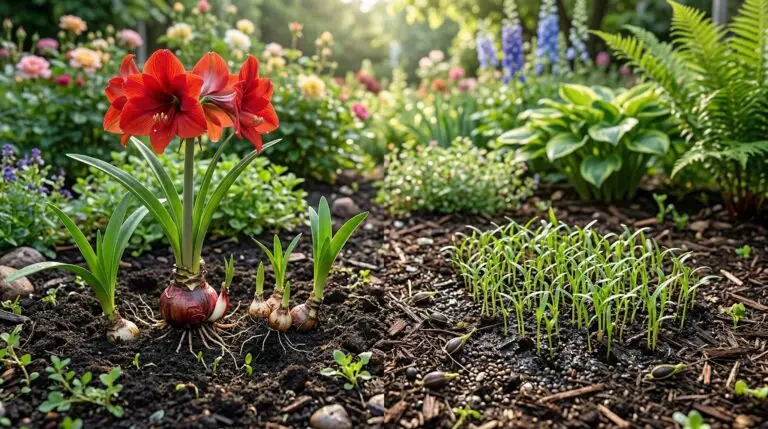
How to propagate amaryllis from offsets and seeds for a growing collection
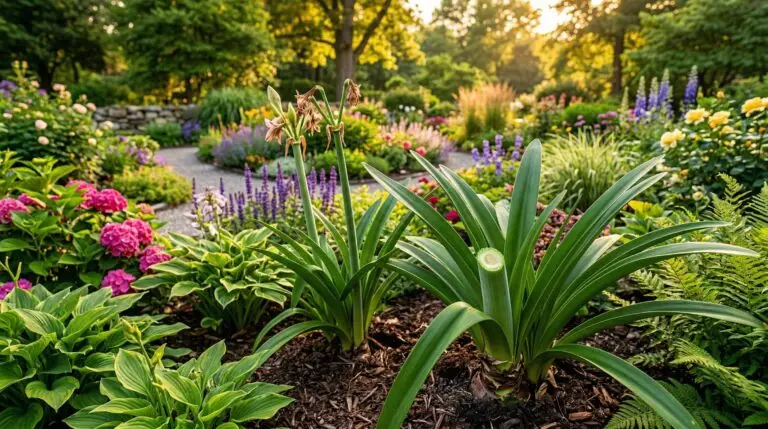
What to do with amaryllis after it finishes blooming so it flowers again next year