Hawthorn flower meaning: Celtic Beltane tradition, folklore, and growing
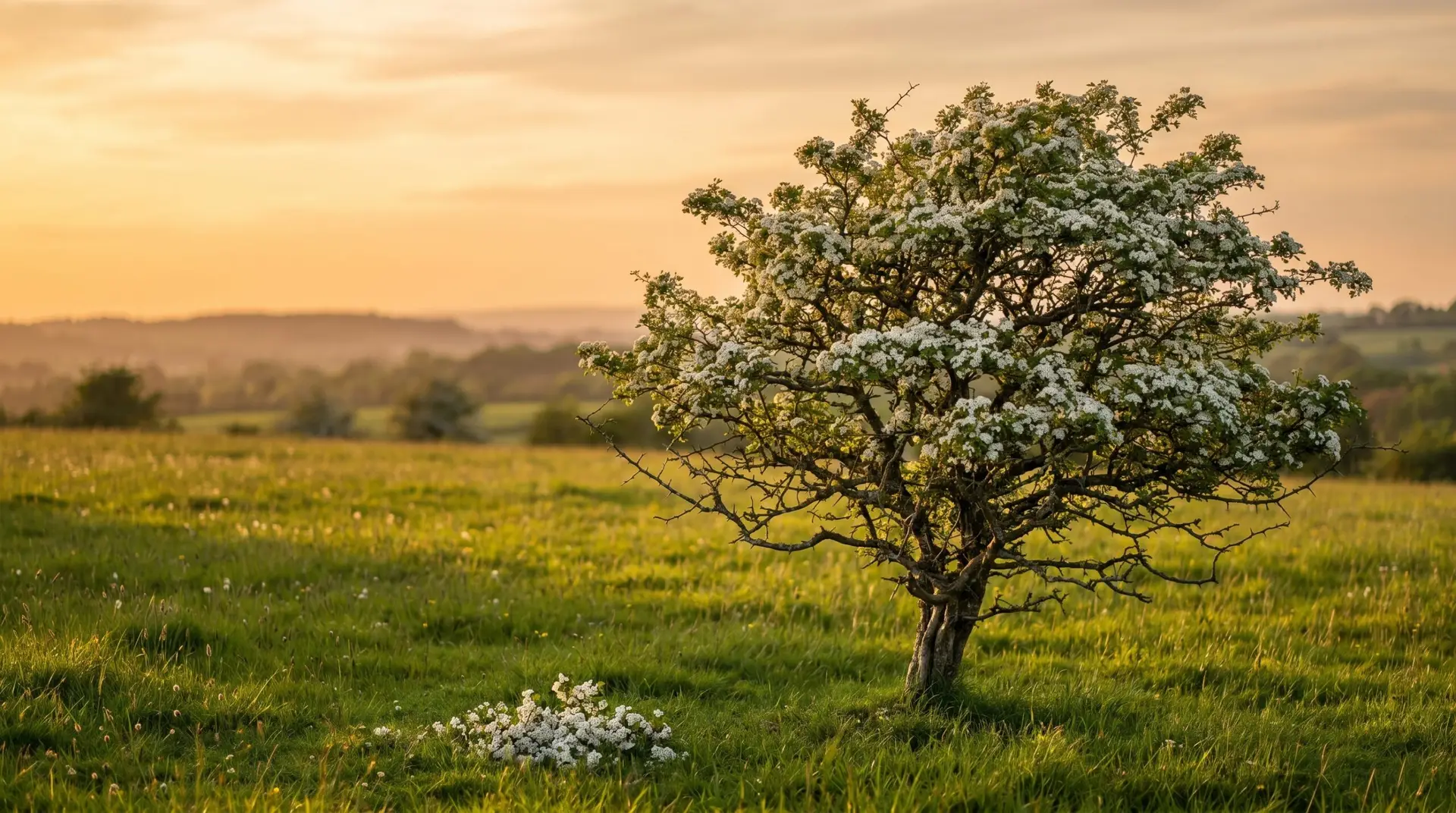
Hawthorn is May’s secondary birth flower in Western tradition. Where lily of the valley stands for return of happiness and humility, hawthorn stands for hope, supreme happiness, and the last great bloom before summer arrives. The plant is Crataegus monogyna (the common hawthorn or “May tree” in English folk tradition) and related species in the genus Crataegus, native to Europe and widely cultivated and naturalized across temperate regions worldwide.
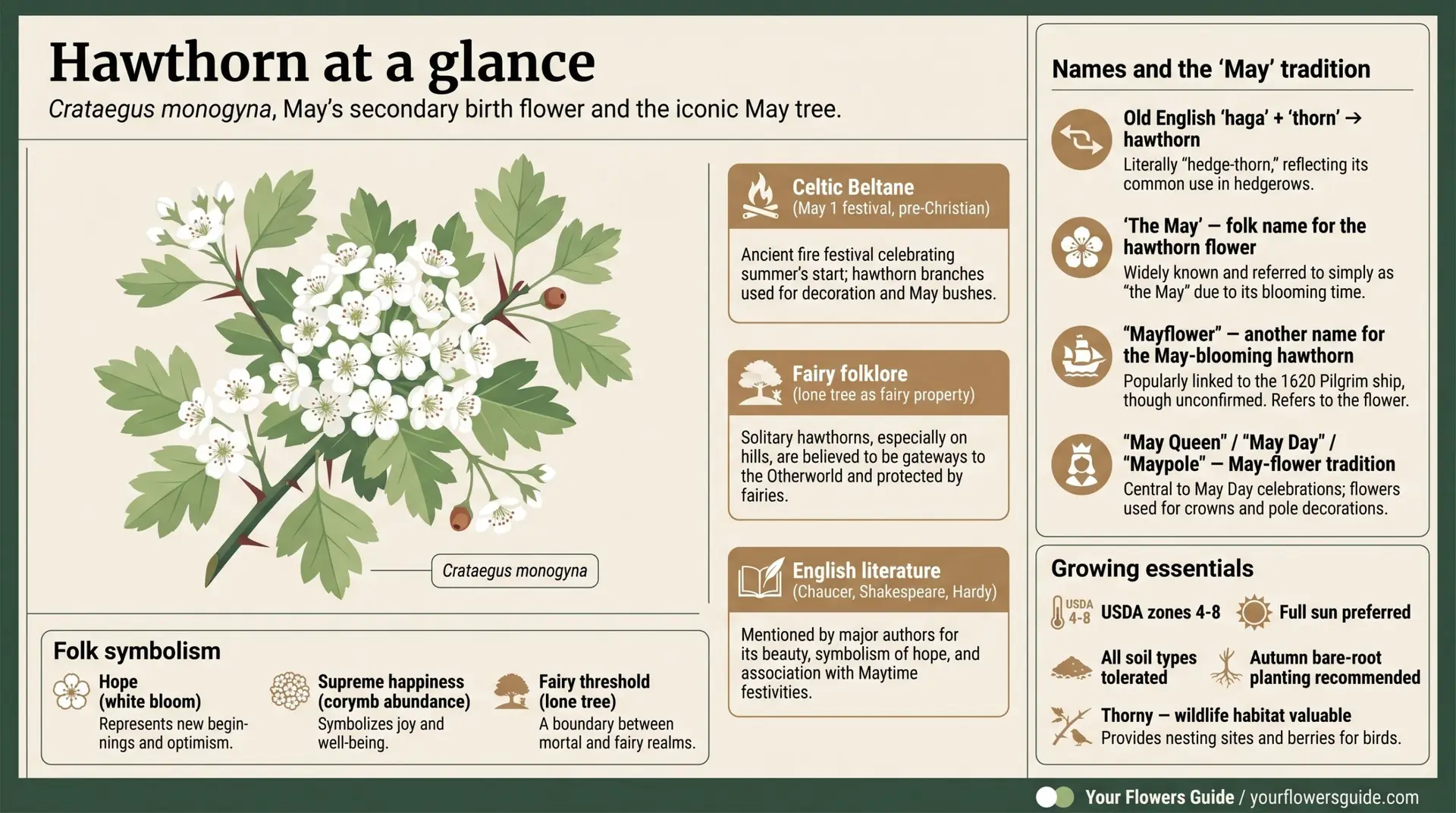
Hawthorn holds an unusually deep place in European folk tradition. The plant brings together three distinct cultural layers. The Celtic Beltane (May 1) symbolism predates Christianity in the British Isles by thousands of years. The fairy folklore treats lone hawthorn trees in fields as portals to the fairy realm in Irish and Welsh tradition. The English literary tradition gave hawthorn its common name “the May” and embedded it in seasonal expressions used in English speech for over five hundred years. The plant also has documented medicinal uses (cardiovascular support through compounds in the berries), edible fruit traditions (hawthorn jellies, wines, and folk remedies), and a centuries-long history as the most common hedge plant in British and Northern European agricultural landscapes.
Hawthorn botany: Crataegus monogyna and laevigata
Hawthorn belongs to the genus Crataegus in the family Rosaceae (the rose family, also containing apple, pear, cherry, and almond). The genus contains about 280 species globally, though species-level taxonomy is notoriously difficult because hawthorn species hybridize freely in the wild, blurring the boundaries between named species in many regional populations.
Two species dominate the European May birth flower tradition. Crataegus monogyna (the common hawthorn, single-seeded hawthorn, or “May tree”) is the most widespread species across Britain, Ireland, and continental Europe. The species has small white flowers with a single style and a single seed per fruit, distinguishing it from the related Crataegus laevigata (the Midland hawthorn) which has flowers with two or three styles and correspondingly two or three seeds per fruit. The two species hybridize where their ranges overlap, producing intermediate forms that botanists call Crataegus × media.
The plant is typically a small tree or large shrub reaching 5 to 15 meters tall at maturity, with characteristically thorny branches that gave the genus its name. The Greek “krataios” (meaning strong) refers to the wood’s exceptional hardness; hawthorn wood was historically valued for tool handles, walking sticks, and small craft items requiring durable material. The leaves are deeply lobed with rounded teeth, typically 1 to 2 inches long, dark green above and paler beneath.
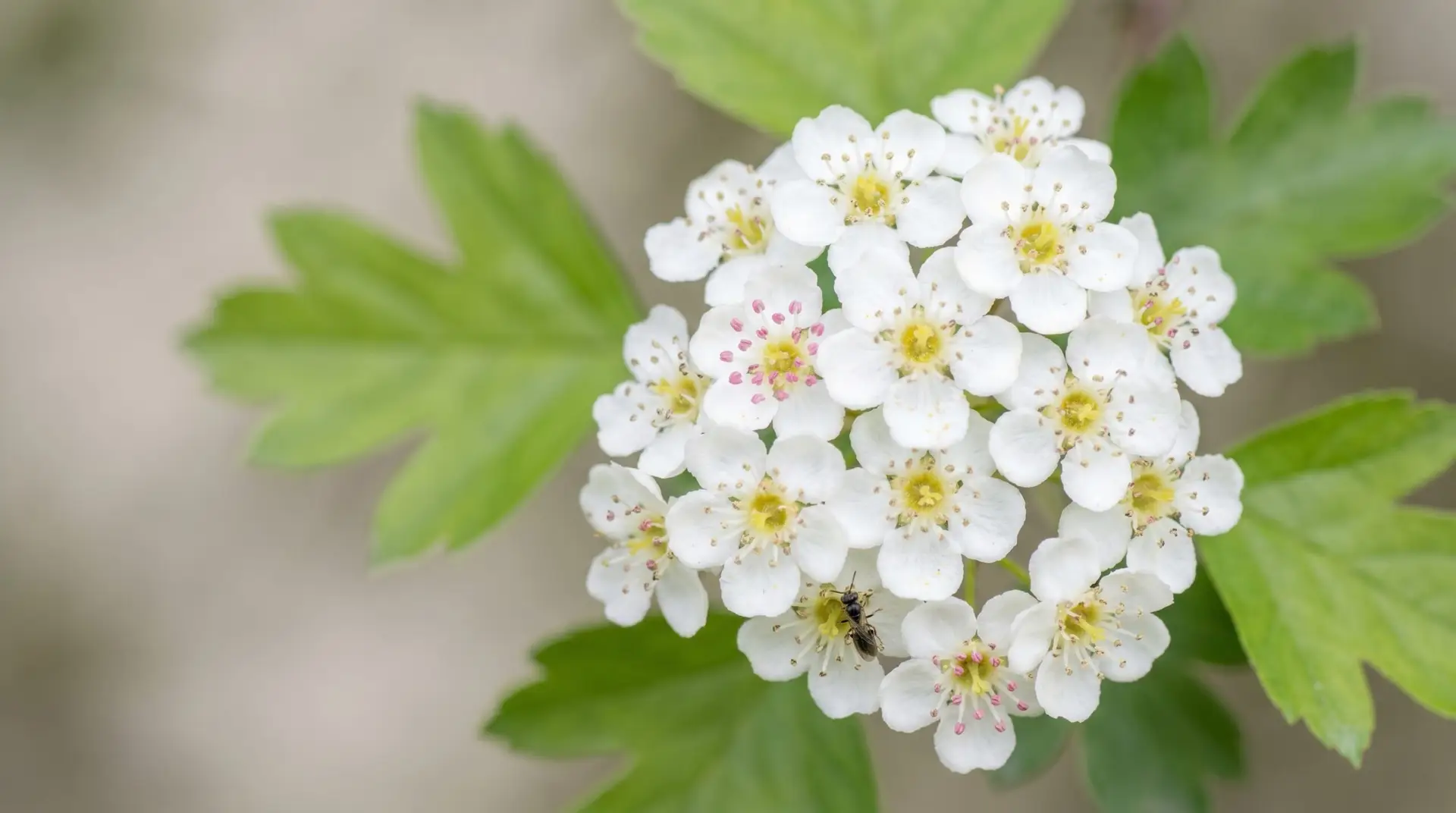
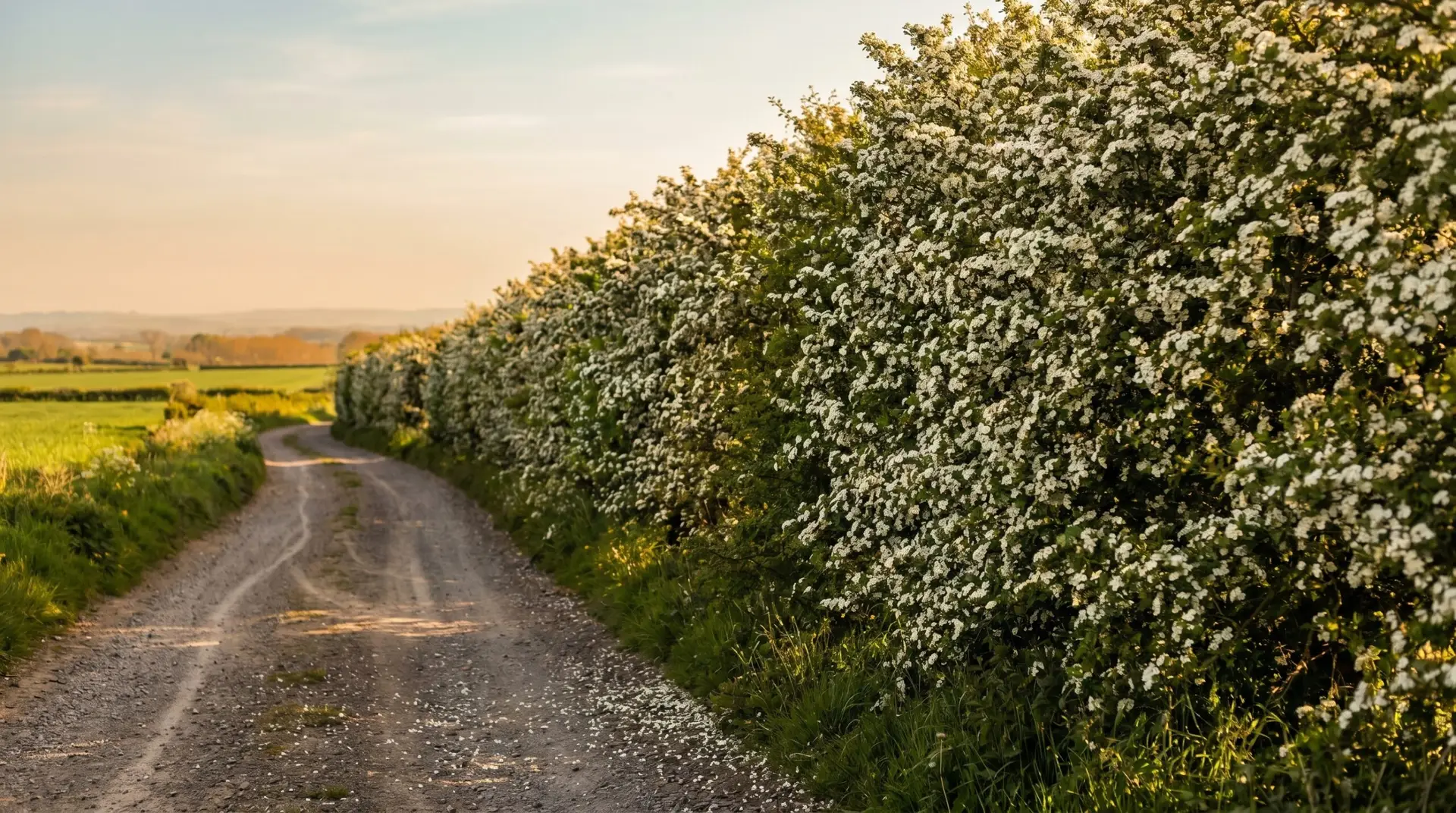
The flowers appear in dense corymbs (flat-topped flower clusters) at the ends of new growth in May. Each individual flower is small (about 0.5 inch across) with five rounded white petals around a central cluster of stamens. The flowers have a distinctive fragrance: sweet and almond-like at first, but with a slightly heavy or even unpleasant undertone that is often attributed to the chemical trimethylamine (also found in decomposing flesh). Some people find the scent pleasant; others find it unpleasant. The chemical ambiguity may explain why hawthorn folklore includes both positive symbolism (hope, supreme happiness) and cautionary elements (the unlucky-to-bring-indoors tradition).
Pink and red flowering cultivars exist in modern garden cultivation. ‘Paul’s Scarlet’ (Crataegus laevigata ‘Paul’s Scarlet’) is a deep red double-flowered cultivar developed in England in the late nineteenth century and now widely planted as an ornamental tree. ‘Crimson Cloud’ is a single-flowered red variant. ‘Rosea Plena’ is a double pink form. These cultivars expand the visual range of hawthorn for garden planting and ornamental landscaping.
Bloom timing varies by climate and species. In southern England, common hawthorn typically blooms in late April through early May. Northern England, Scotland, and Scandinavia see bloom in mid-May to early June. The “May tree” name reflects the southern English bloom timing that establishes the cultural connection.
The Celtic Beltane May Day tradition
Hawthorn holds a central place in Celtic Beltane (May 1) folk tradition. Beltane is one of the four major Celtic seasonal festivals (alongside Samhain, Imbolc, and Lughnasadh) and marks the transition from spring to summer. The festival predates Christianity in the British Isles by thousands of years and continues in modern Celtic-revival observance across Ireland, Scotland, Wales, and Cornwall.
Hawthorn is the Beltane flower. The tree blooms in late April and early May across most of Celtic Britain and Ireland, with peak bloom timing aligned with the Beltane festival. The white-flowered hawthorn became known as “the May” or “May tree” specifically because of this seasonal alignment with the festival, with the festival itself sometimes called “Bealtaine na hAibhinne” (Beltane of the river) or just “Bealtaine” in Irish.
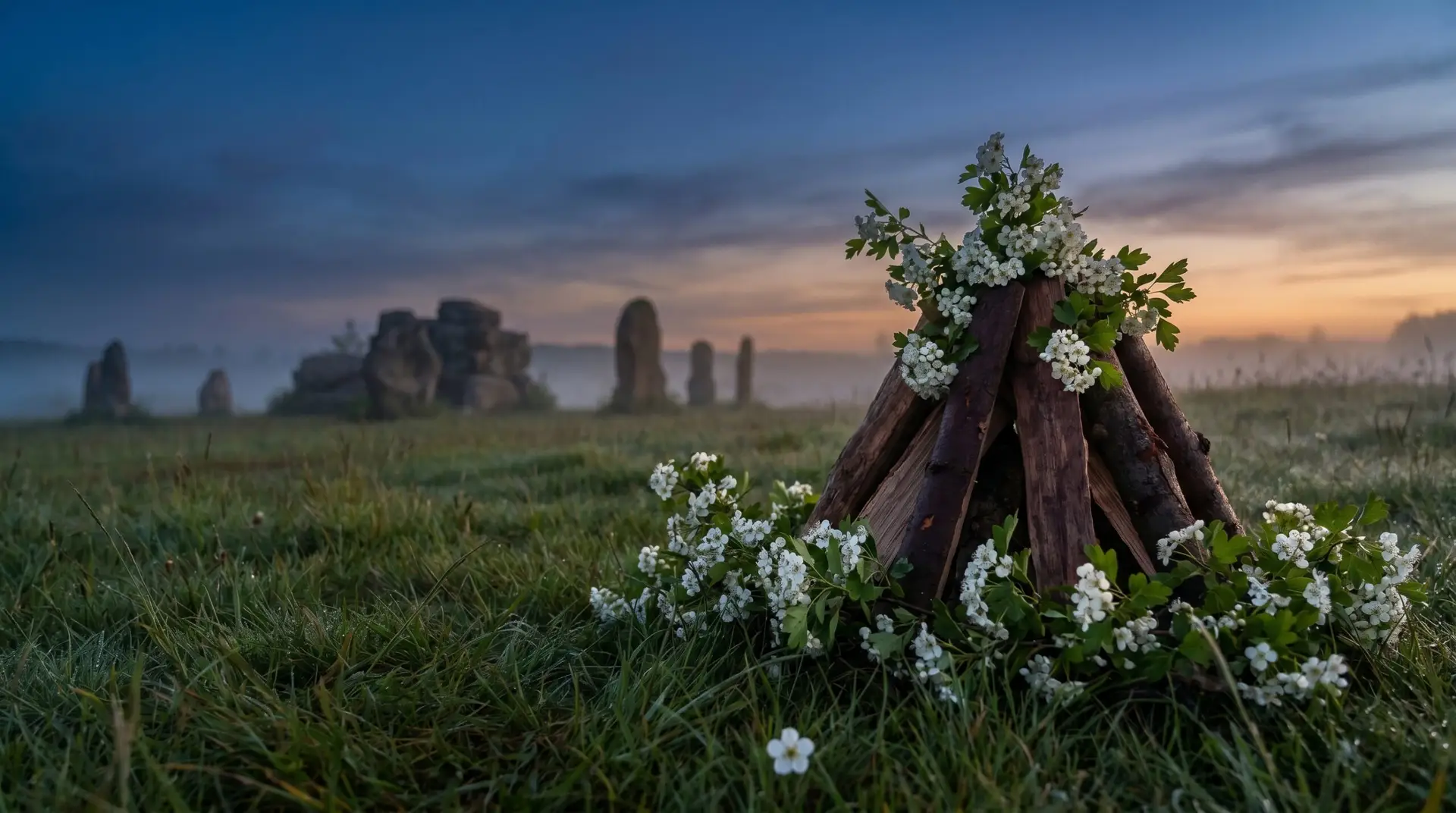
Beltane folk customs centered on lighting bonfires to celebrate the lengthening days and to symbolically purify livestock before the summer pasturing season. Cattle were driven between two Beltane fires in a purification ritual before being released to summer grazing. Hawthorn branches were used to decorate doorways and were sometimes incorporated into the Beltane bonfires themselves. May Day garlands and crowns made from hawthorn flowers and other May-blooming flowers were worn by young women in some regional traditions.
The “May Queen” tradition (a young woman crowned with flowers and processed through the village as a symbolic figure of spring) appears in folk records across England, Wales, Scotland, and Ireland from at least the medieval period. The May Queen’s crown typically incorporated hawthorn flowers as the defining seasonal flower, often supplemented with daisy, primrose, bluebell, and other locally available May flowers.
The English May Day morris dance tradition draws on the same Beltane-related folk culture. Morris dancers wear costumes incorporating flowers (often hawthorn blossoms in the white sashes and decorations) and perform traditional dances around a maypole. The maypole tradition itself involves a tall wooden pole decorated with ribbons and flowers, with dancers weaving ribbons around the pole. Maypole dances were traditionally performed on May 1 in village squares and continue in modern English revival folklore.
The “ne’er cast a clout till May be out” English saying refers specifically to the hawthorn bloom (the May) rather than to the calendar month, advising listeners not to remove winter clothing until the hawthorn is in flower. The saying functioned as practical weather guidance in pre-modern Britain where the timing of summer-suitable weather varied year to year and the hawthorn bloom marked reliable warmth.
Fairy folklore and the lone hawthorn
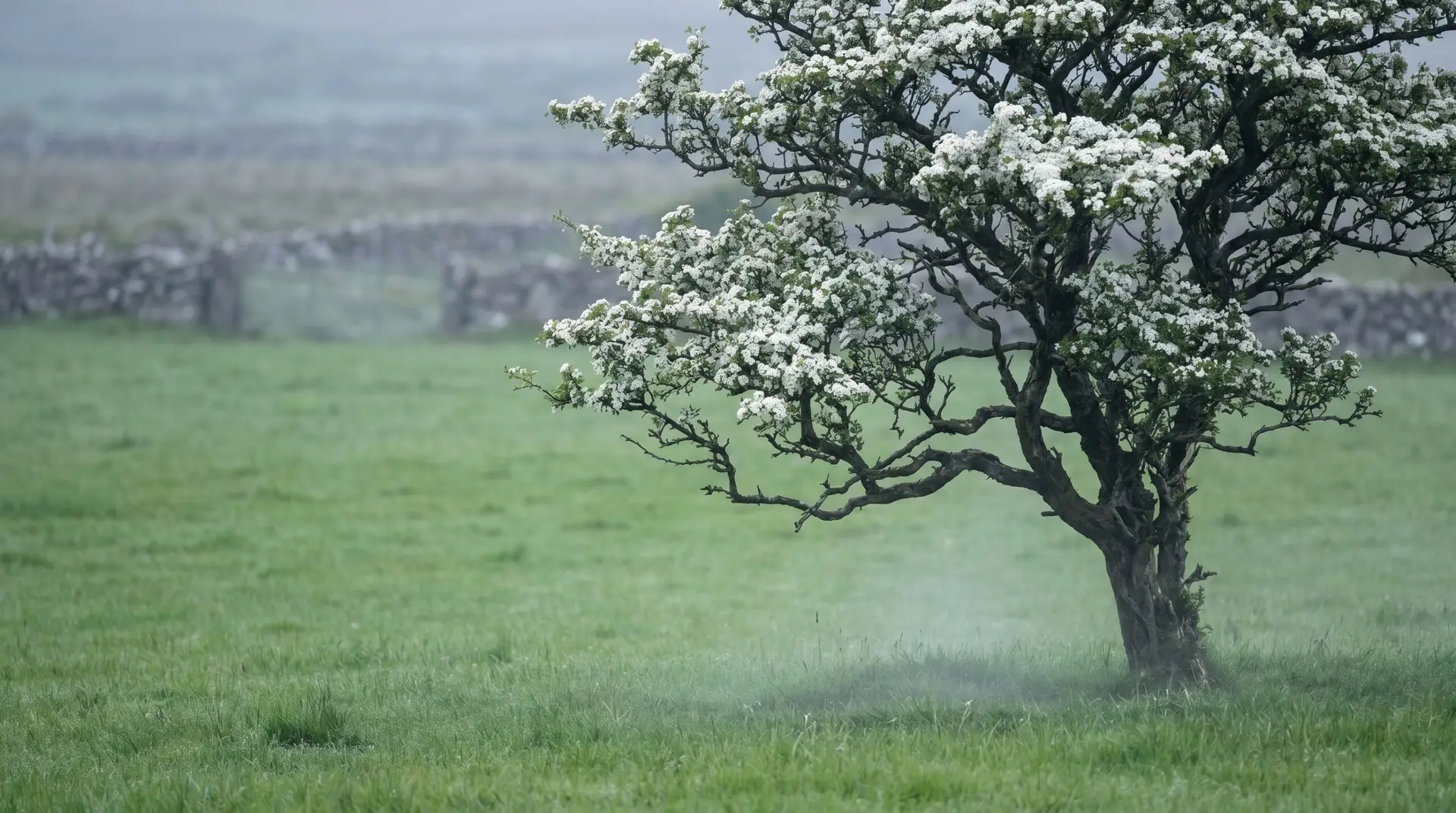
Hawthorn folklore in Ireland, Wales, Scotland, and parts of England treats lone hawthorn trees in open fields as fairy trees that mark portals to the fairy realm. The folklore is unusually consistent across Celtic cultural regions and continues to influence modern Irish folk attitudes toward isolated hawthorn trees in agricultural landscapes.
The classic lone hawthorn (called “lone bush” or “scéach aonair” in Irish) stands alone in a field, surviving generations of agricultural change without being cleared by farmers. The survival is explained in folk tradition by the belief that lone hawthorns are fairy property and that harming them brings supernatural misfortune. Folklore records contain many stories of farmers who cleared lone hawthorns and subsequently experienced illness, accidents, or financial difficulty, with the harm attributed to fairy retribution.
The folk belief has had measurable effects on modern Irish infrastructure. Irish road planners have occasionally rerouted major roads to avoid disturbing lone hawthorn trees, with notable cases including the 1999 Latoon hawthorn case where a planned highway near Limerick was diverted to preserve a hawthorn that local folklorists identified as a fairy tree. The case attracted international attention and demonstrates that the folk belief persists in modern Ireland as a culturally significant force rather than just historical reference.
Beyond lone hawthorns, several folk customs treat hawthorn with cautionary respect. Bringing hawthorn flowers indoors is traditionally considered unlucky in English and Irish folk tradition, with the belief that the flowers carry the smell of death and attract misfortune to the household. The unpleasant note in hawthorn fragrance, often attributed to trimethylamine (mentioned in the botany section), gives this belief a plausible botanical basis: the scent is sometimes likened to compounds associated with decomposition.
The fairy folklore extends to hawthorn blossoms used in May Day festivities. While May Day garlands and crowns made from hawthorn flowers were traditional, the flowers were typically worn outdoors during the festival rather than brought into the house. The boundary between outdoor festival use (safe) and indoor decoration (unlucky) reflects the careful folk navigation of hawthorn’s ambivalent symbolic register.
Modern Irish, Welsh, and Scottish Celtic-revival practice continues these folk traditions in varying degrees. Some readers from Celtic cultural backgrounds maintain the lone-hawthorn respect, the avoidance of bringing hawthorn flowers indoors, or the use of hawthorn in outdoor Beltane observances. Others treat the traditions as historical reference rather than active belief.
The May tree in English literature
The hawthorn appears extensively in English literature from medieval poetry through Victorian Romanticism to modern fiction. Geoffrey Chaucer references hawthorn in the Canterbury Tales (about 1400), specifically in the Knight’s Tale where Emelye gathers May flowers in the garden. William Shakespeare references hawthorn in several plays including A Midsummer Night’s Dream (with the famous “I know a bank where the wild thyme blows” passage featuring hawthorn alongside other meadow flowers) and Henry IV (where “the may” appears as a seasonal marker).
John Keats wrote about hawthorn in his Romantic-era poetry, drawing on the broader English tradition of May celebration in nature poetry. Thomas Hardy’s Wessex novels (Tess of the d’Urbervilles, Far from the Madding Crowd, others) include hawthorn as a recurring symbol of rural English landscape and changing seasons. The novelist’s deep engagement with English agricultural folk tradition shaped his use of hawthorn as a literary symbol of rural authenticity.
The modern English literary tradition continues the hawthorn reference. Robert Macfarlane’s nature writing (The Wild Places, Underland) treats hawthorn as one of the defining trees of British landscape, with attention to both botanical and cultural dimensions. Roger Deakin’s Wildwood includes hawthorn in his survey of British trees with significant folkloric and ecological weight.
The hawthorn-as-May-tree linguistic legacy is particularly important. In English folk usage, “the may” is sometimes said to have referred to the hawthorn flower as well as to the calendar month. The “May Queen,” “May Day,” and “Maypole” all draw on this May-flower tradition. The Mayflower ship that carried Pilgrims to Plymouth in 1620 is popularly linked to the hawthorn (the “may” flower), though no surviving records confirm why the ship was named Mayflower.
Color symbolism within Crataegus
Hawthorn color has somewhat less symbolic weight than other Crataegus elements (the species, the season, the folk tradition), but color variation in modern cultivated hawthorn does support some symbolic register:
White hawthorn (Crataegus monogyna wild form): the classic May tree symbolism. Hope, supreme happiness, and the arrival of summer. The default reading for hawthorn in the broader Western birth flower tradition.
Pink hawthorn (‘Rosea Plena’ and similar cultivars): love, playful affection, and the gentler side of the broader hawthorn symbolic register.
Red hawthorn (‘Paul’s Scarlet’ and similar): passionate love, ardent affection, and a more dramatic visual register than the wild white form. Suits readers who want a more striking ornamental tree without losing the cultural connection to the May tree tradition.
Crataegus ‘Crimson Cloud’ (single-flowered red): modern hawthorn cultivar suited to garden specimen planting. Visual dramatic effect without the heavy double-petal form of ‘Paul’s Scarlet.’
Growing hawthorn
Hawthorn grows well across temperate climates with most soil and exposure conditions. The species is remarkably tolerant and gives readers in zones 4 through 8 (USDA hardiness scale) reliable cultivation without significant difficulty.
Sun exposure can range from full sun to light partial shade. The plant performs best in full sun for flowering and fruiting; partial shade produces a healthy tree with reduced bloom and fruit yield.
Soil tolerance is broad. Hawthorn handles sandy, loamy, and clay soils well. The plant tolerates both acidic and alkaline soil pH. The main soil requirement is reasonable drainage; waterlogged soils cause root problems.
Planting timing in autumn (October to November) gives the best establishment in temperate climates. Hawthorn is sold as bare-root whips (1 to 2 year old young trees, very inexpensive at about three to ten dollars each, ideal for hedging) or as larger container-grown specimens (twenty to one hundred fifty dollars depending on size).
Maintenance requirements are minimal. Hawthorn responds well to pruning and can be maintained as a hedge (with annual trimming) or allowed to develop into a small tree (with minimal pruning). The plant tolerates harsh pruning and recovers quickly from heavy cutting, making it a forgiving hedge plant for novice gardeners.
The thorns require consideration. Common hawthorn has sharp 1 to 3 inch thorns on the stems and branches. The thorns make hawthorn excellent as a deterrent hedge (the traditional purpose of hawthorn hedging across centuries of British agriculture) but require care when pruning and pose minor risks to gardeners and children.
Hawthorn supports wildlife extensively. The flowers feed pollinators (bees, hoverflies, beetles), the berries feed birds (thrushes, blackbirds, fieldfares, redwings) and small mammals, and the dense thorny canopy provides nesting sites for many songbirds. Ecological value is unusually high for a flowering ornamental tree, which makes hawthorn an excellent choice for wildlife-friendly garden design.
Hawthorn berries and folk uses
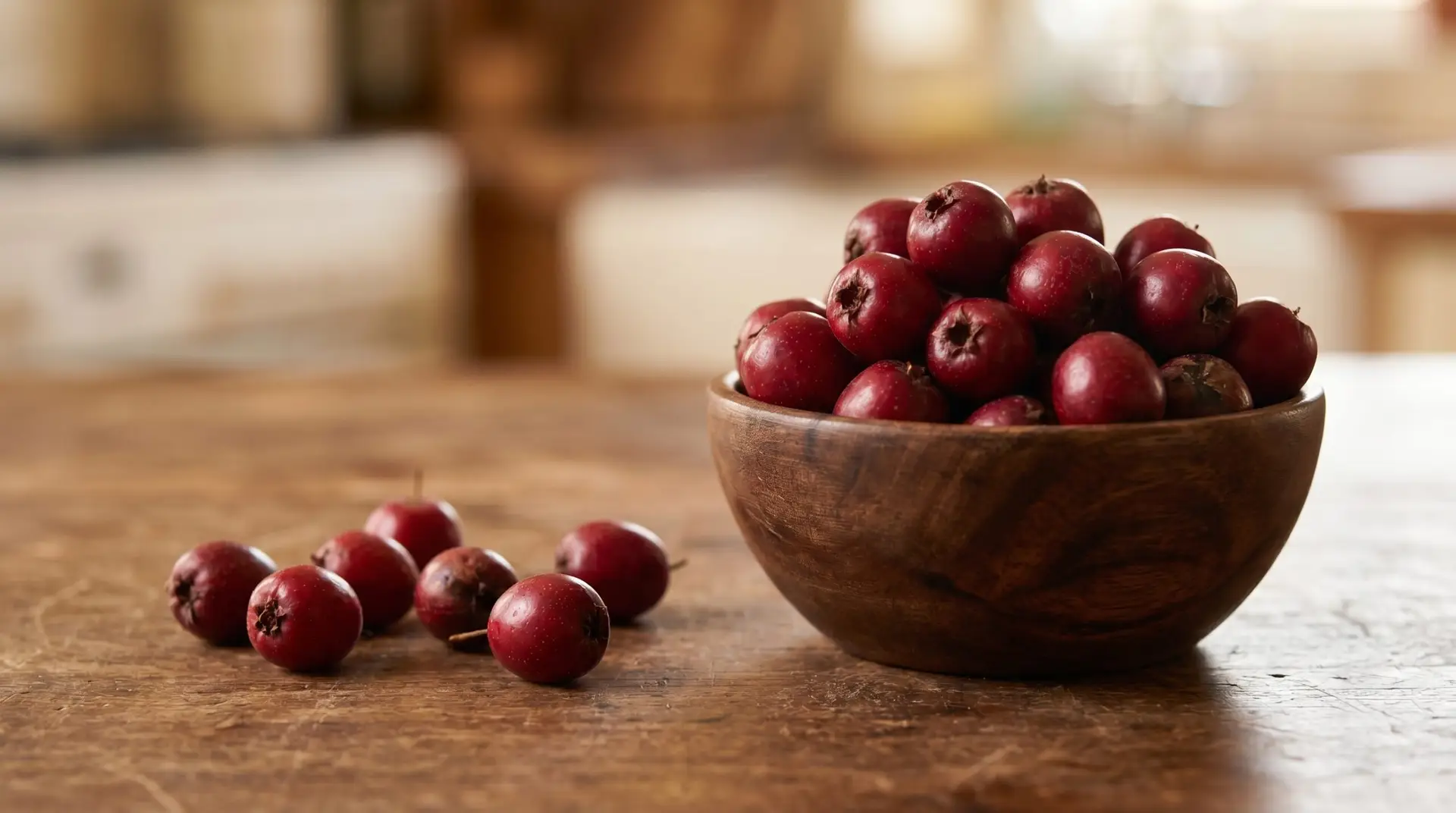
After the May bloom, hawthorn produces small red fruits called haws. The haws ripen through late summer and early autumn, typically reaching peak ripeness in September and October. Each haw is about 0.4 inch across, deep red to dark crimson, with mealy flesh and one or several hard seeds (depending on species).
The haws are edible but not particularly pleasant eaten raw. The flesh is mealy and the flavor is mild and slightly sweet with an apple-like undertone. Traditional folk uses make the haws more palatable through cooking, fermentation, or preservation.
Hawthorn jelly is the most common haws preserve. Cook ripe haws with water, strain through muslin to remove seeds, add sugar, and reduce to jelly consistency. The result is a clear red preserve with mild apple-like flavor, traditionally served with cold meats (particularly venison) in British cooking.
Hawthorn wine is a traditional folk wine in rural Britain and parts of continental Europe. The haws are fermented with sugar and yeast over several months to produce a sweet wine with about 10 to 12 percent alcohol. Modern hobby winemakers occasionally produce hawthorn wine as a heritage craft; commercial production is essentially nonexistent.
Hawthorn brandy or liqueur is made by infusing fresh haws in spirits (vodka, gin, or brandy) for several months. The result is a clear red liqueur with mild fruit flavor. Various commercial small-batch producers offer hawthorn-infused spirits in the UK and Eastern Europe.
Hawthorn folk medicine uses haws, flowers, and leaves for various claimed cardiovascular benefits. The plant contains compounds (oligomeric proanthocyanidins, hyperoside, vitexin) that affect cardiovascular function. Modern phytomedicine has investigated hawthorn for heart failure support, blood pressure regulation, and circulation improvement, with mixed clinical results. Standardized hawthorn extracts are available in pharmacies and health food stores in much of Europe and North America. Note that hawthorn supplements can interact with prescription cardiovascular medications; consult a healthcare provider before taking hawthorn supplements if you take blood-pressure or heart medications.
Frequently asked
What does hawthorn flower symbolize?
Hope, supreme happiness, and the arrival of summer in basic Western reading. Additional layers include Celtic Beltane (May 1) tradition where hawthorn is the central May Day flower, fairy folklore in Irish, Welsh, and Scottish tradition where lone hawthorn trees are treated as fairy property, and the English literary tradition where hawthorn appears as the defining “May tree” from medieval poetry to modern fiction.
Why is hawthorn called the May tree?
Hawthorn blooms in May, giving the plant its traditional English folk name. In English folk usage, “the may” is sometimes said to have referred to the hawthorn flower as well as to the calendar month. “May Queen,” “May Day,” and “Maypole” all draw on this May-flower tradition.
What is the Celtic Beltane connection?
Beltane is one of the four major Celtic seasonal festivals, marking the transition from spring to summer on May 1. Hawthorn is the central Beltane flower because it blooms at the festival time. Beltane customs centered on bonfires to celebrate the lengthening days and purify livestock before summer pasturing. Hawthorn branches decorated doorways and were incorporated into Beltane bonfires.
Why are lone hawthorn trees considered fairy trees?
Irish, Welsh, and Scottish folk tradition treats isolated hawthorn trees standing alone in fields as fairy property and portals to the fairy realm. The folk belief is that harming such trees brings supernatural misfortune. The belief continues to influence modern Irish infrastructure: planners have occasionally rerouted roads to preserve lone hawthorns identified as fairy trees, with notable cases including the 1999 Latoon hawthorn near Limerick.
Is it unlucky to bring hawthorn flowers indoors?
Yes in traditional English and Irish folk belief. The unpleasant undertone in the hawthorn scent is often attributed to trimethylamine, a compound also associated with decomposing flesh, which folk tradition interpreted as the smell of death. The custom is to use hawthorn flowers outdoors (May Day garlands, doorway decorations) but not bring them inside the house.
Can you eat hawthorn berries?
Yes, the red haw berries are edible. Eaten raw they are mealy and mildly sweet with an apple-like flavor. Traditional folk uses include hawthorn jelly (served with cold meats), hawthorn wine (a traditional folk wine), and hawthorn brandy or liqueur. Standardized hawthorn extracts are also used in herbal medicine for cardiovascular support.
What’s the difference between Crataegus monogyna and Crataegus laevigata?
Both are European hawthorn species. Crataegus monogyna (the common hawthorn) has flowers with a single style and a single seed per fruit; Crataegus laevigata (the Midland hawthorn) has flowers with two or three styles and two or three seeds per fruit. The two species hybridize where their ranges overlap.
Why does hawthorn smell unpleasant to some people?
The unpleasant undertone in hawthorn fragrance is often attributed to trimethylamine, a compound also associated with decomposing flesh, which sits alongside the sweet floral notes. Some people perceive the scent as primarily pleasant; others find it primarily unpleasant. This ambiguity is sometimes used to explain both the positive cultural symbolism (hope, supreme happiness) and the cautionary folk traditions (the unlucky-to-bring-indoors belief).
How do you grow hawthorn?
Plant in full sun to light partial shade with reasonable drainage. The plant tolerates sandy, loamy, and clay soils, both acidic and alkaline pH. Plant bare-root whips in autumn for cheapest establishment. Maintenance is minimal; respond well to harsh pruning and recovers quickly. The thorns require careful pruning handling.
What does the Mayflower ship name reference?
The Mayflower that carried Pilgrims to Plymouth in 1620 is popularly linked to the hawthorn (the “may” flower), since “mayflower” was an English name for the May-blooming hawthorn. No surviving records confirm why the ship was named Mayflower, so the hawthorn connection is a popular association rather than a documented fact.
Sources
- Hawthorn (Crataegus) · Encyclopedia Britannica
- Crataegus growing guide · Royal Horticultural Society
- Plants of the World Online (Crataegus monogyna) · Kew Royal Botanic Gardens
About this article. > Written and reviewed by the Your Flowers Guide editorial team. Botanical content from Britannica and the Royal Horticultural Society. Celtic Beltane tradition references from Irish folklore archives (UCD National Folklore Collection) and standard Celtic studies sources. The 1999 Latoon hawthorn case documented in contemporary Irish press coverage. English literary references from standard editions of Chaucer, Shakespeare, Keats, and Hardy.