Peony flower meaning: Chinese imperial heritage, color, and growing
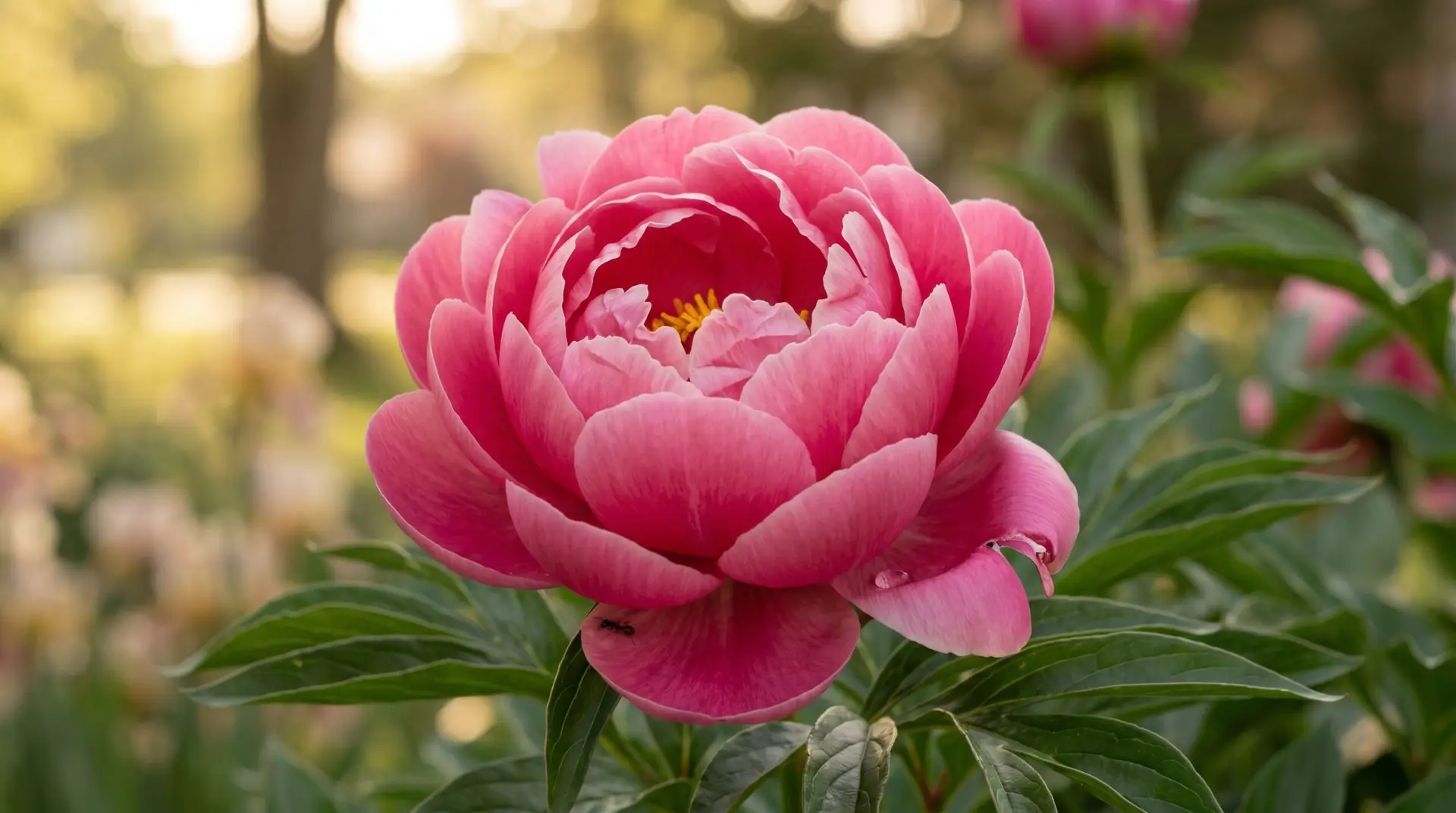
Peony is November’s historical secondary birth flower in Western tradition, though modern sources increasingly list chrysanthemum alone as November’s birth flower. Where chrysanthemum signals loyalty and joyful longevity, peony signals romance, prosperity, noble dignity, and happy marriage. The flower refers primarily to the genus Paeonia in the family Paeoniaceae (a small family containing only the genus Paeonia), with the genus containing approximately 33 species native to Europe, Asia, and western North America.
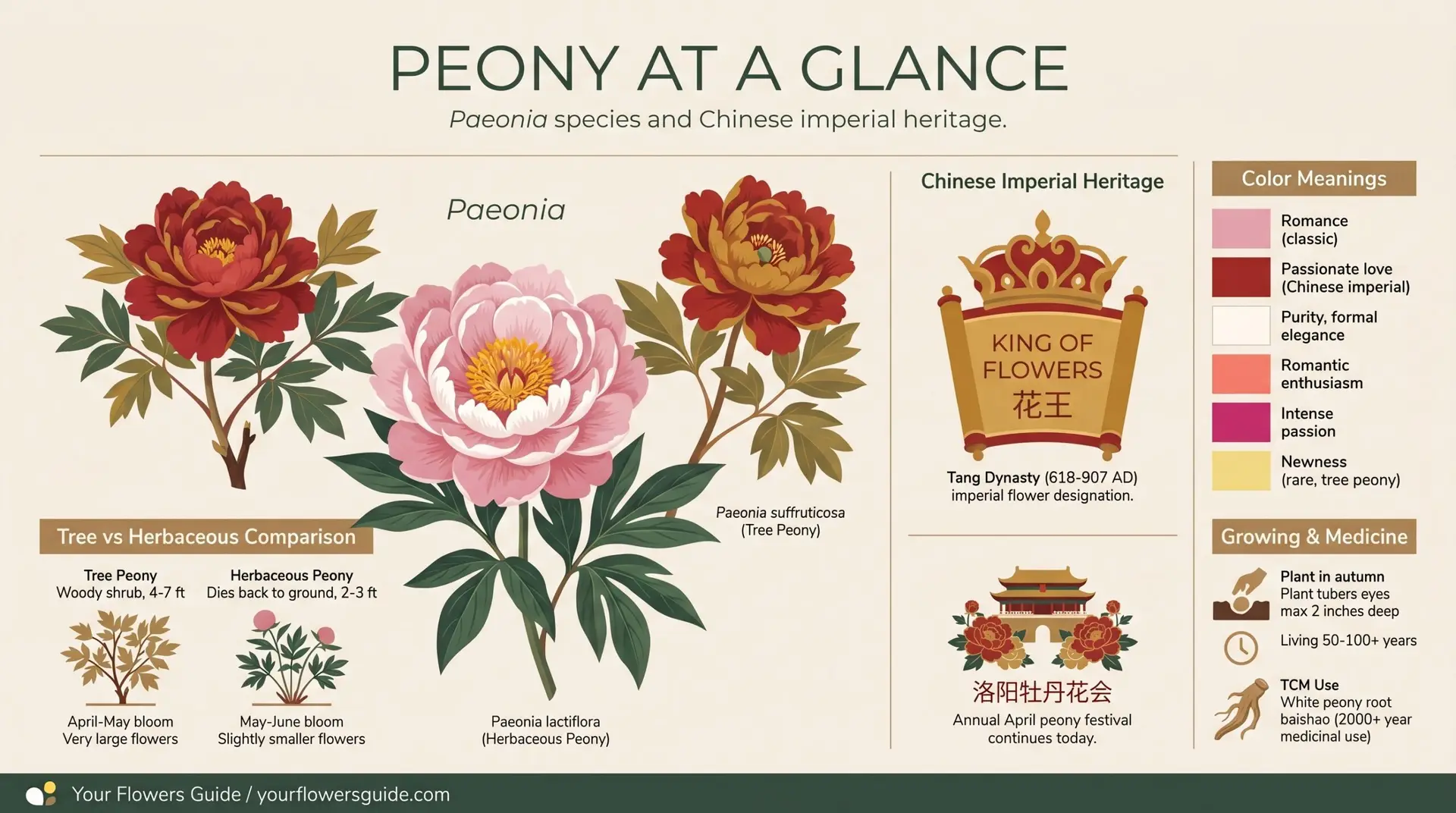
The peony holds extraordinary cultural depth in Chinese tradition where it is celebrated as the “King of Flowers” (花王, huawang) and the imperial flower of multiple Chinese dynasties. The dramatic large size, doubled layered form, and rich color register of cultivated peonies give the species the symbolic weight to merit imperial flower status; Chinese horticultural tradition has cultivated peony for over 1500 years, producing thousands of cultivars and establishing the city of Luoyang as the historical peony cultivation center that continues today.
Note on the November birth flower designation: peony’s place as November secondary is less universally recognized than other birth flower assignments. Peony’s late-spring/early-summer bloom timing (typically May to June in temperate climates) is more strongly associated with April, May, and June in modern Western birth flower tradition. The November secondary designation reflects historical Victorian-era sources rather than current dominant tradition; the November association may relate to peony root harvesting (traditionally done in autumn) for winter medicinal use rather than to bloom timing.
Peony botany: Paeonia species and relatives
The most culturally and horticulturally significant peony species are the following.
Paeonia lactiflora (Chinese peony, common garden peony). The dominant garden peony of European and American cultivation. Native to central China and Siberia. Long-lived herbaceous perennial reaching 2 to 3 feet tall with deeply divided dark green foliage and large flowers (4 to 8 inches across) in colors ranging from pure white through cream, pale pink, deep pink, magenta, and red. The species has produced thousands of garden cultivars over centuries of European breeding.
Paeonia officinalis (European peony, common peony). Native to Europe (southern France, Italy, Albania). Historically the European medicinal peony, with extensive use in traditional European herbalism. Smaller and less dramatic than P. lactiflora, with simple or semi-double red flowers in late spring.
Paeonia suffruticosa (Chinese tree peony, mudan 牡丹). Woody shrub reaching 4 to 7 feet tall, distinguished from herbaceous peony by its persistent above-ground woody stems that do not die back to ground in winter. Native to central China. The Chinese tree peony has the most extensive cultivar diversity in the genus, with over 1000 named Chinese cultivars and additional Japanese, European, and American cultivars. Flowers reach 6 to 10 inches across in colors ranging from pure white through pink, red, purple, and (in some cultivars) yellow.
Paeonia ostii (Chinese yellow tree peony). Native to central China. Smaller white-to-pink flowers than P. suffruticosa. Significant in current Chinese cultivation as the parent species for many modern yellow tree peony cultivars.
Paeonia rockii (rock’s tree peony, gansu mudan). Native to northwest China (Gansu province). Distinguished by very large flowers with characteristic dark purple basal blotches at the petal bases. The species has produced distinctive cultivar lines particularly significant in Chinese tree peony tradition.
Paeonia mlokosewitschii (Caucasian peony, “Molly the Witch”). Native to Caucasus. Distinctive light yellow single flowers and bronze-purple new foliage. Rare and prized by serious peony enthusiasts.
The visual character across all peony species centers on the dramatic large flower size, the dense layered petal arrangement (in doubled cultivars), the deeply divided dark green foliage, and the long-lived perennial habit. Individual peony plants commonly live and bloom for 50 to 100+ years from established roots, making peony among the longest-lived perennial garden flowers.
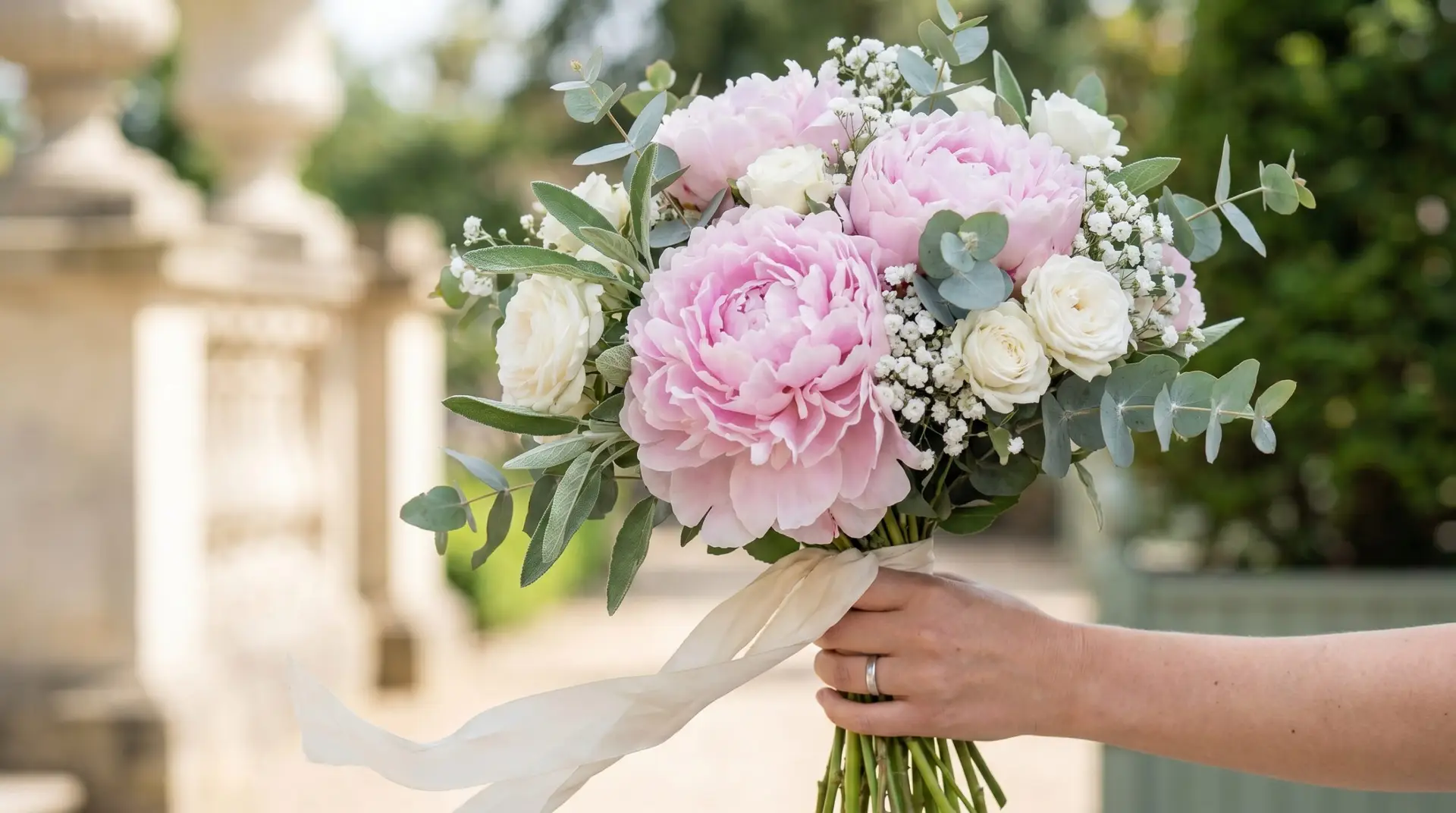
Chinese imperial heritage and the King of Flowers
Peony holds an unmatched cultural symbolic register in Chinese tradition through its central role as the “King of Flowers” (花王, huawang) and as the imperial flower of multiple Chinese dynasties. The Chinese peony tradition extends back over 1500 years with documented cultivation, breeding, and cultural celebration that produced the global peony heritage.
Chinese peony cultivation extends back to at least the sixth or seventh century, with the earliest detailed historical references in Sui and early Tang dynasty sources. The Tang Dynasty (618-907 AD) saw the most intensive cultural celebration of peony, with the city of Luoyang becoming the historical peony cultivation center. Tang Dynasty poets and writers extensively celebrated peony as the imperial flower; the poet Liu Yuxi (772-842 AD) and the famous poet Bai Juyi (772-846 AD) wrote multiple poems featuring peony as the central subject.
The Luoyang peony cultivation tradition continues today as one of China’s most important horticultural cultural celebrations. The annual Luoyang Peony Festival (洛阳牡丹花会, Luoyang Mudan Huahui) is held each April when the peonies reach peak bloom, attracting millions of visitors to view the extensive Luoyang peony gardens. The festival has been held annually since 1983 and is recognized as one of China’s most significant flower festivals.
The Chinese tree peony (mudan 牡丹) has been particularly celebrated as the imperial flower. The Tang Dynasty imperial gardens included extensive tree peony collections, and successive Chinese dynasties maintained tree peony as the imperial garden centerpiece. The Qing Dynasty (1644-1912) Empress Dowager Cixi was particularly known for her enthusiasm for peonies, with the Summer Palace gardens featuring extensive peony collections.
The Chinese symbolic register for peony includes romance (the peony as flower of romantic love), prosperity (the dense doubled flower form as visual abundance and material success), noble dignity (the imperial flower status extending into broader cultural noble register), and happy marriage (the peony as wedding flower across multiple Chinese traditions). The peony appears extensively in Chinese visual art, ceramics, textile design, and traditional poetry as the cardinal symbol of these themes.
Modern Chinese cultural reference continues the peony imperial tradition. The Chinese government has considered designating peony as the official Chinese national flower (though no formal designation has been completed); peony already serves as the de facto Chinese national flower in popular cultural reference, sharing this informal status with plum blossom in different cultural contexts. The 2008 Beijing Olympics opening ceremony featured peony imagery prominently.
The Japanese peony tradition (botan 牡丹) developed from Chinese imports during the Nara and Heian periods (8th-12th centuries AD) and produced significant Japanese peony cultivars. Japanese peony breeding emphasized different aesthetic characteristics than Chinese tradition (typically simpler doubled forms and more refined color combinations), and Japanese tree peony cultivars have become important in modern global peony cultivation.
Tree peony vs herbaceous peony
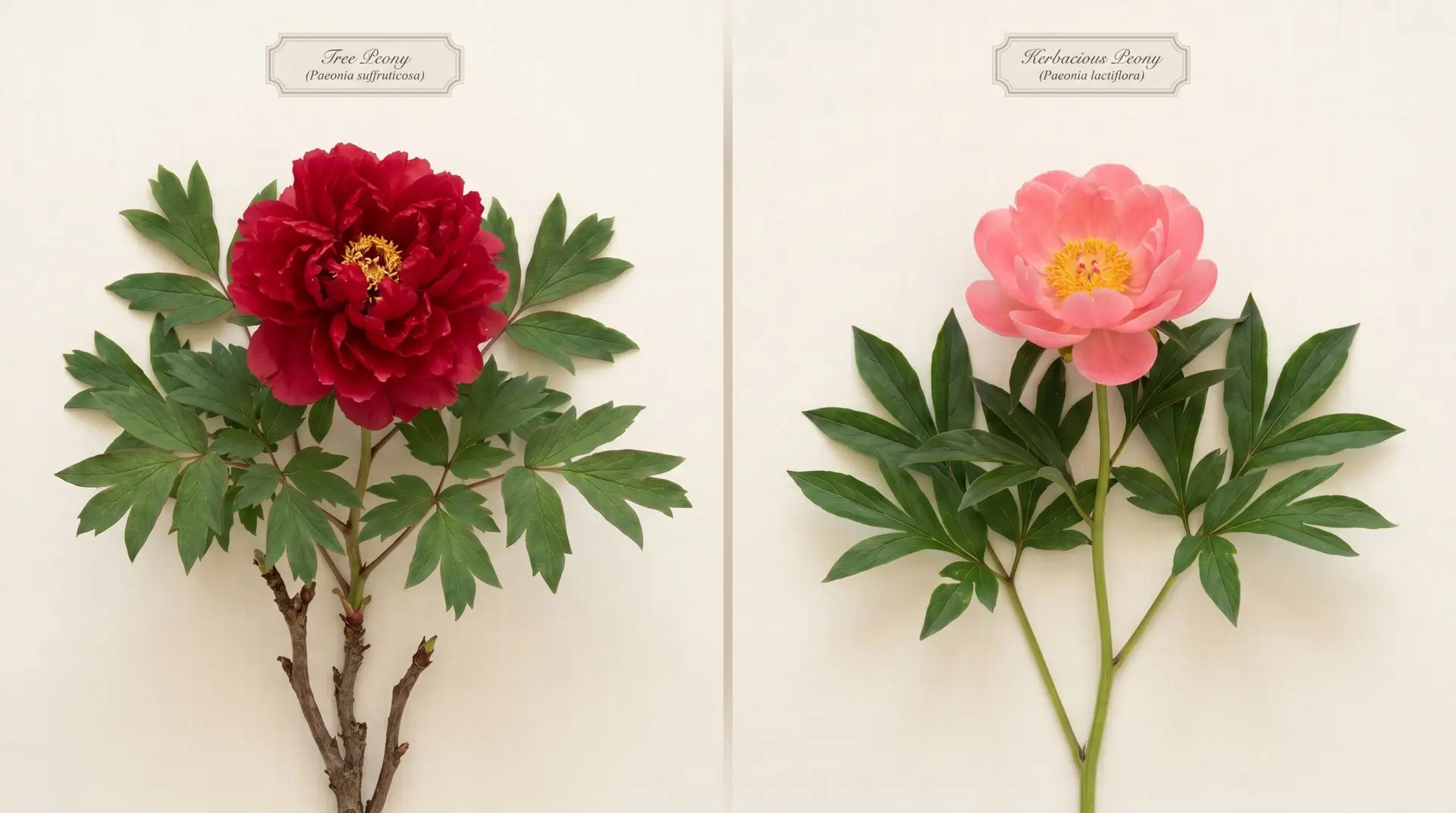
The fundamental distinction in peony cultivation is between tree peony (Paeonia suffruticosa and related woody species) and herbaceous peony (Paeonia lactiflora and related herbaceous species). The two types share many cultural and symbolic associations but have significantly different growth habits and cultivation requirements.
Tree peony (Paeonia suffruticosa, mudan 牡丹). Woody shrub with persistent above-ground stems that do not die back to ground in winter. Reaches 4 to 7 feet tall at maturity. Flowers earlier than herbaceous peony (typically late April to mid-May in temperate climates). Flowers larger and often more dramatic than herbaceous peony (6 to 10 inches across). Tree peonies are extremely long-lived (commonly 100+ years from established plants). More demanding cultivation requirements than herbaceous peony: well-drained soil, partial shade preferred (full sun acceptable in cooler climates), protection from late spring frosts that can damage emerging buds. More expensive than herbaceous peony at purchase (typically $50-$200 per plant for named cultivars).
Herbaceous peony (Paeonia lactiflora and others). Perennial plant with above-ground stems that die back to ground each autumn after frost, returning from underground roots each spring. Reaches 2 to 3 feet tall at maturity. Flowers later than tree peony (typically May to June in temperate climates). Flowers slightly smaller than tree peony (4 to 8 inches across) but still dramatic by garden standards. Herbaceous peonies are also long-lived (commonly 50-100+ years from established plants). Easier cultivation than tree peony: tolerates full sun and a wider range of soil conditions, less prone to spring frost damage because flowers later. Less expensive than tree peony at purchase (typically $15-$50 per plant for named cultivars).
Intersectional peony (Itoh hybrid peony). A relatively recent cultivar group (developed beginning 1960s by Japanese breeder Toichi Itoh) crossing herbaceous and tree peony. The intersectional peonies combine the smaller herbaceous size and easy cultivation with the larger flower size and color range of tree peony (including yellow color from tree peony parentage). Intersectional peonies are more expensive than either parent type (typically $40-$150 per plant) but are increasingly popular for combining the best characteristics of both peony types.
The choice between tree peony and herbaceous peony depends on the gardener’s space, budget, and aesthetic preferences. Tree peonies provide dramatic spring color and persistent garden structure with woody stems remaining visible in winter; herbaceous peonies provide reliable spring bloom with less garden space commitment.
Color symbolism across peony varieties
Peony color shifts the symbolic reading within the broader theme of romance and noble dignity:
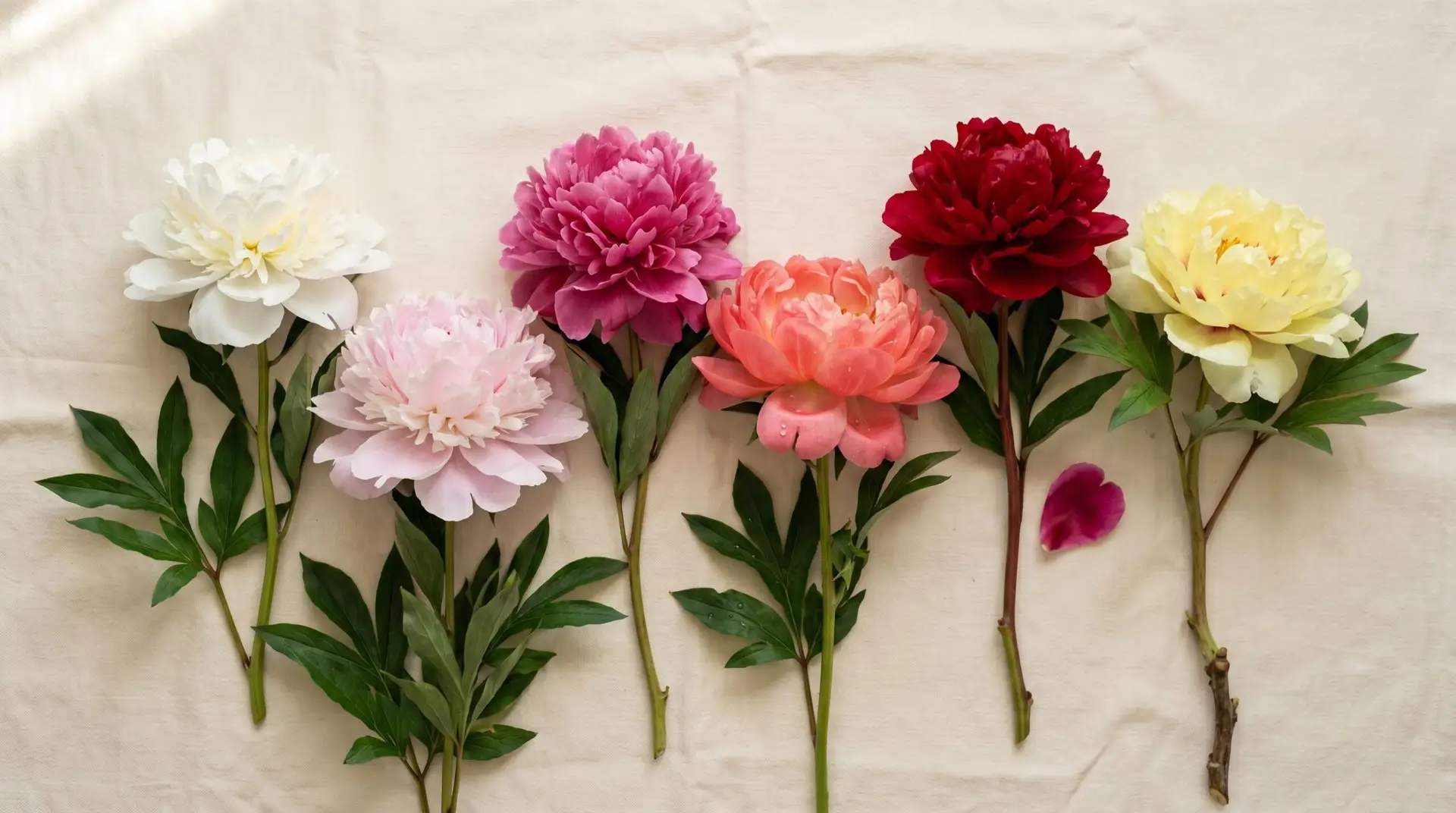
Pink peony: the most traditional and most common. Romance, gentle affection, sweet love. The dominant garden peony color and the most universally appropriate gift register.
Red peony: passionate love, deep romantic devotion, dramatic affection. Particularly significant in Chinese tradition where red peonies have wedding and prosperity associations.
White peony: purity, innocence, formal elegance. Often used in wedding bouquets where the pure white provides the most formally appropriate color. White peony also has memorial associations in some Western traditions.
Coral peony: romantic enthusiasm, vibrant affection. The warm coral color combines the romantic register of pink with the vibrancy of orange-red.
Magenta and deep pink peony: intense passion, dramatic romance, vibrant feeling. Often used in bold romantic gift contexts.
Yellow peony (tree peony and intersectional): newness, fresh affection, dignified joy. The yellow peony color is rare in herbaceous peony but common in tree peony and intersectional cultivars. The Chinese yellow tree peony has particular symbolic significance.
Purple peony (Paeonia rockii with dark blotches): unique elegance, mystery, distinctive beauty. The dark purple blotches characteristic of Paeonia rockii give these cultivars distinctive aesthetic register.
Coral-yellow bicolor peony: layered relationships, complex feelings, the natural variation of authentic affection. Modern cultivars with bicolor patterns provide additional symbolic registers.
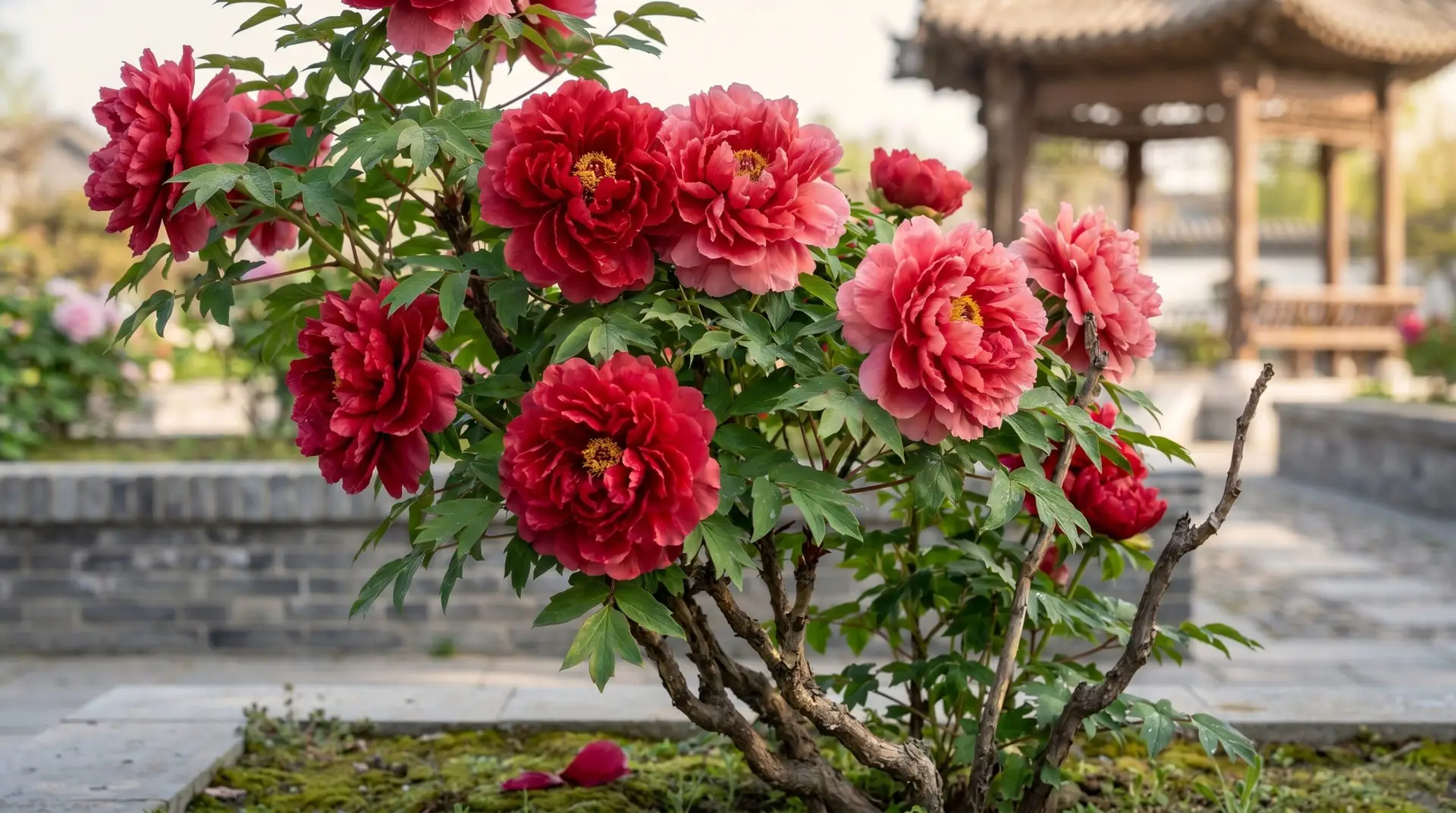
Florist usage treats peony as the dramatic spring statement flower across most temperate climate florist trade. Peonies work well for spring weddings (the timing aligns with peak peony bloom), romantic anniversary celebrations, milestone birthday celebrations, and Mother’s Day arrangements where the dramatic flower size and the romantic symbolic register suit the gift context.
Growing peony in the garden
Peony cultivation requires patience but rewards long-term commitment with reliable spring bloom for decades. Both herbaceous and tree peony share similar overall cultivation principles with some important differences.
Plant peonies in autumn (September to November in most temperate climates) for spring planting if necessary. Autumn planting allows the roots to establish before winter dormancy. Spring planting is possible but typically delays first flowering by an additional year.
Peonies require well-drained soil with adequate organic matter. Heavy clay soils that hold water through winter can cause root rot; raised beds or amended soil may be necessary in such conditions. Full sun (6+ hours daily) is optimal for herbaceous peony; partial shade is preferred for tree peony in warmer climates.
Plant herbaceous peony tubers with the “eyes” (pink buds at the crown) no more than 2 inches below soil surface. Planting too deep is the most common cause of peony non-flowering; eyes buried more than 2-3 inches will produce healthy foliage but no flowers. Plant tree peony with the graft union (where the named cultivar meets the rootstock) approximately 4-6 inches below soil surface to encourage development of cultivar roots independent of the rootstock.
Established peonies dislike disturbance. Once planted in a suitable location, peonies may flower reliably for 50 to 100+ years without division or replanting. Avoid transplanting established peonies unless absolutely necessary. If transplanting is required, do so in early autumn with as much root mass intact as possible.
Peony flowering in the first year after planting is uncommon for herbaceous peony (most flower in the second or third year) and rare for tree peony (most flower in the third to fifth year). Established peonies produce reliable annual bloom of increasing abundance over time. Old well-established peony plants can produce 50 to 100+ blooms in a single spring.
Pests and diseases for peony include botrytis blight (fungal disease causing brown spots on flowers and foliage in wet spring weather), ants on flower buds (the ants are attracted to nectar but cause no plant damage and require no treatment), and occasional crown rot in poorly drained soils. Standard horticultural pest management approaches work for botrytis blight; no treatment is needed for ants.
Peony staking is essential for the larger doubled cultivars whose dense flower heads become top-heavy in rain or wind. Peony rings or grow-through plant supports installed in early spring (before the foliage and buds develop) provide unobtrusive support. Staking after the flowers have developed produces less elegant garden appearance.
Cut peonies for vase arrangements when the buds are showing the first color but still partially closed. Cut peony lasts 5-10 days in the vase with regular water changes. The single-cutting harvest from each stem is the standard approach; the plant produces only one flower per stem and the cutting does not affect future year flowering.
Peony in traditional medicine
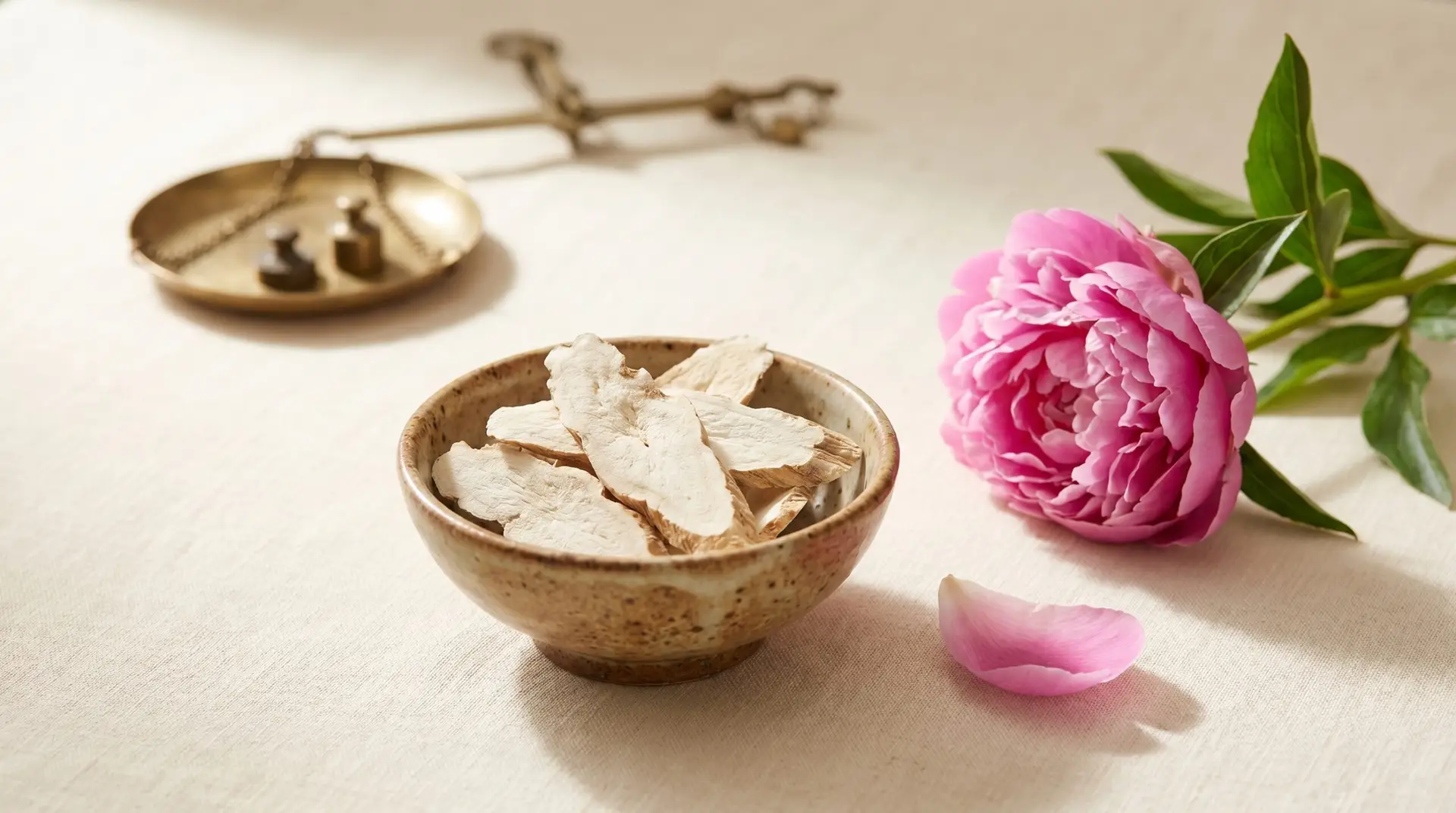
Peony has extensive traditional medicinal use across Chinese, Japanese, Korean, and broader East Asian medical traditions. The Chinese pharmacopeia includes multiple peony preparations using both the herbaceous peony root (白芍 baishao, white peony root from Paeonia lactiflora) and the tree peony root bark (丹皮 danpi, from Paeonia suffruticosa).
White peony root (baishao) has been used in traditional Chinese medicine for over 2000 years for treating menstrual irregularities, abdominal pain, muscle spasms, and various blood-related conditions. Modern pharmacological research has identified active compounds in peony root including paeoniflorin and related glycosides with documented anti-inflammatory and antispasmodic effects. White peony root is included in many traditional Chinese herbal formulas including Si Wu Tang (Four Substance Decoction), a foundational formula for blood-related conditions in traditional Chinese medicine.
Tree peony root bark (danpi) has different traditional uses than white peony root, primarily for “clearing heat” conditions in traditional Chinese medical categorization. Modern research has identified paeonol and related compounds in tree peony root bark with documented analgesic and anti-inflammatory effects.
European peony (Paeonia officinalis) has historical European medicinal use extending back to ancient Greek and Roman medicine. The Greek name “Paeonia” derives from Paeon (Παιάν), the physician of the Greek gods in Greek mythology, who used the peony plant to heal Pluto’s wounds in classical mythological tradition. The species name reflects this medicinal origin, with the genus name maintaining the connection to Greek medical mythology.
Modern medicinal use of peony continues primarily in East Asian traditional medicine systems. Standardized peony root extracts are available in herbal medicine markets in China, Japan, Korea, and other countries with traditional Asian medicine practice. Western herbal medicine includes some peony use but less extensively than East Asian tradition.
The November birth flower secondary designation for peony may relate to the traditional autumn harvest of peony root for winter medicinal use. Chinese peony root is traditionally harvested in autumn (October-November) when the plant’s stored nutrients are at peak concentration, then dried and processed for winter and year-round medicinal use. The November peony association may therefore reflect the harvested-root tradition rather than the spring flowering.
Important toxicity note: peony root and other peony plant parts should not be consumed without proper preparation by qualified traditional medicine practitioners. Improperly prepared peony root can cause digestive upset and other adverse effects. Standardized commercial peony preparations from qualified traditional medicine sources are the appropriate route for medicinal use.
Frequently asked
What does the peony flower symbolize?
Romance, prosperity, noble dignity, and happy marriage. The Chinese cultural register adds the “King of Flowers” (花王) imperial designation, with extensive symbolic meaning around imperial power, wedding traditions, and material prosperity that informs the broader peony cultural vocabulary.
Why is peony called the “King of Flowers”?
The Chinese cultural designation of peony as “King of Flowers” (花王, huawang) emerged during the Tang Dynasty (618-907 AD) when peony became the imperial flower and the dominant garden flower of the Tang imperial court. The dramatic large flower size, doubled layered form, and rich color register justified the imperial title in Chinese horticultural and cultural tradition.
What’s the difference between tree peony and herbaceous peony?
Tree peony (Paeonia suffruticosa) is a woody shrub with persistent above-ground stems reaching 4 to 7 feet tall, flowering in late April to mid-May with very large flowers (6 to 10 inches across). Herbaceous peony (Paeonia lactiflora and others) is a perennial that dies back to ground each winter, reaching 2 to 3 feet tall, flowering in May to June with smaller flowers (4 to 8 inches across). Tree peony is more expensive and demanding; herbaceous peony is easier and more widely grown.
Why is peony listed as November’s birth flower?
Peony’s place as November secondary is less universally recognized than other birth flower assignments. The historical Victorian-era November peony designation may relate to peony root harvesting (traditionally done in autumn for winter medicinal use) rather than to bloom timing. Modern Western birth flower tradition more commonly places peony in April, May, or June months when peonies actually bloom.
When do peonies bloom?
Herbaceous peonies bloom in May to June in temperate climates; tree peonies bloom slightly earlier, in late April to mid-May. The specific bloom timing varies by climate and by cultivar (early, mid, and late season cultivars extend the total peony bloom period across 4-6 weeks of late spring). Peonies do not bloom in November in any climate.
How long do peonies live?
Peonies are among the longest-lived perennial garden flowers. Established herbaceous peonies commonly flower reliably for 50 to 100+ years; established tree peonies commonly live and flower for 100+ years. Peonies dislike disturbance, so once planted in a suitable location, they may not need to be moved or divided for generations.
Are peonies easy to grow?
Yes, peonies are among the easier perennial flowers to grow in temperate climate gardens once established. The most common cultivation challenge is planting too deep (which causes non-flowering despite healthy foliage). Plant herbaceous peony tubers with “eyes” no more than 2 inches below soil surface; plant tree peony with graft union 4-6 inches below soil surface. Otherwise peonies require minimal ongoing care.
What does the Chinese peony tradition celebrate?
Chinese peony tradition celebrates the peony as the “King of Flowers” with extensive cultural significance around romance, prosperity, noble dignity, and happy marriage. The annual Luoyang Peony Festival (held each April in the historical peony cultivation center) is one of China’s most significant flower festivals, attracting millions of visitors to view the extensive Luoyang peony gardens.
Can peony flowers be eaten?
Peony petals can be used in salads, teas, and other culinary preparations in some traditional Asian cuisines. Peony root and other plant parts should not be consumed without proper preparation by qualified traditional medicine practitioners (improperly prepared peony root can cause digestive upset). Standardized commercial peony preparations from qualified traditional medicine sources are the appropriate route for medicinal use.
Why do ants visit peony buds?
Ants are attracted to nectar produced by peony flower buds. The ants cause no plant damage and provide no benefit to the peony (despite the common myth that ants are necessary for peony flowering). No treatment is needed; the ants will leave the plants after flowering. When cutting peonies for vase use, gently shake or rinse the buds to remove ants before bringing the flowers indoors.
Sources
- Peony (Paeonia) · Encyclopedia Britannica
- Paeonia growing guide · Royal Horticultural Society
About this article. > Written and reviewed by the Your Flowers Guide editorial team. Botanical content from Britannica and the Royal Horticultural Society. Chinese peony imperial heritage references via Luoyang Peony Festival documentation and Tang Dynasty classical Chinese poetry. Traditional Chinese medicine peony references via standard Chinese pharmacopeia sources.