Chrysanthemum tattoo: meaning, designs, and Japanese heritage
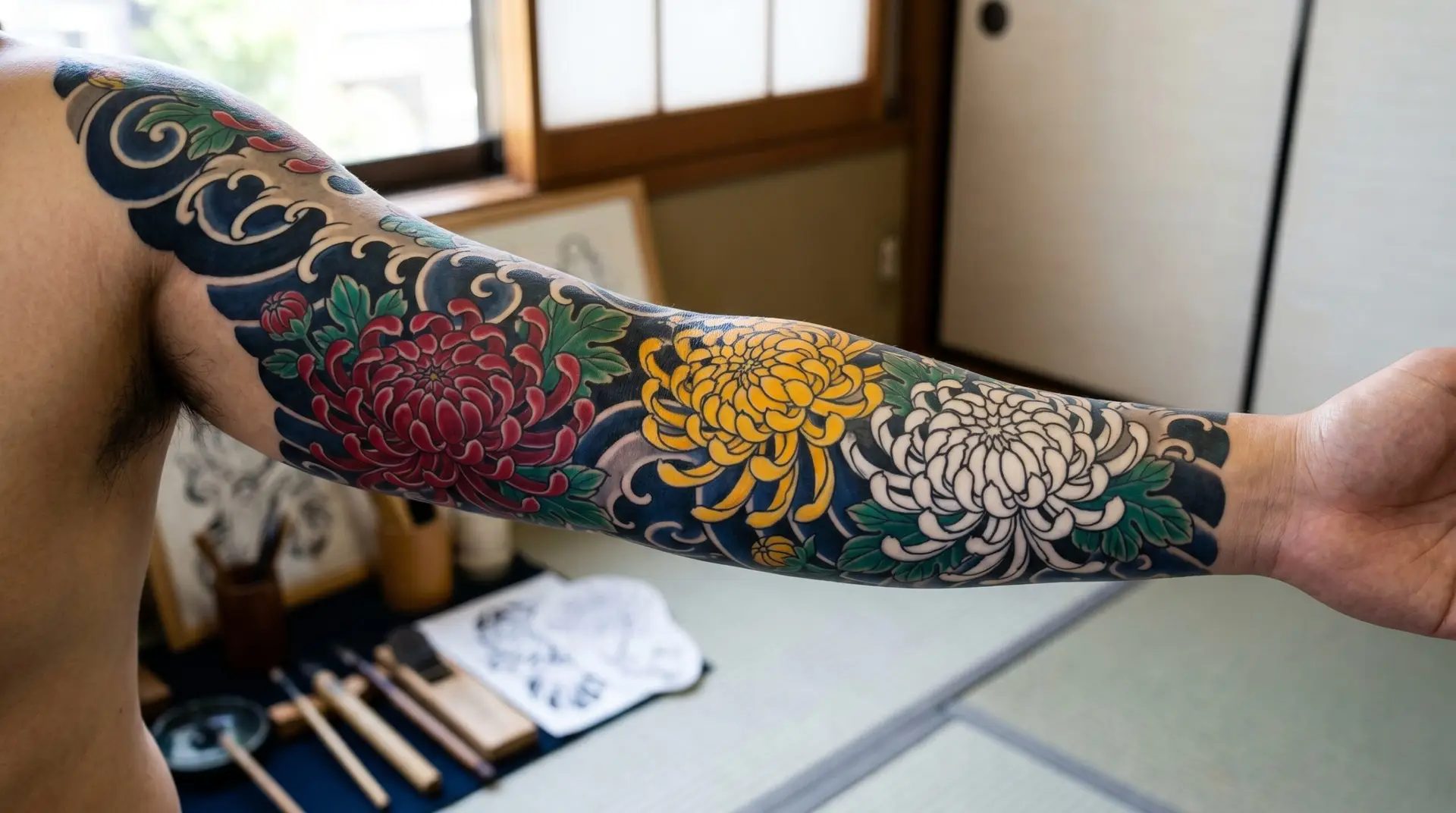
A chrysanthemum tattoo is a deeply meaningful choice for November-born readers, for Japanese and broader East Asian heritage wearers, and for anyone drawn to flower tattoos with extraordinary cultural depth. The flower’s dense layered petal structure, dramatic radial symmetry, and unmatched cultural symbolism through Japanese imperial heritage and Chinese scholarly tradition give the design distinctive visual impact and rich content. Chrysanthemum tattoos have a particularly long tradition in Japanese tattoo culture (irezumi 入れ墨), where the chrysanthemum (kiku 菊) has been one of the central traditional flower subjects for centuries alongside cherry blossom, peony, lotus, and chrysanthemum’s autumn floral companions.
The combination of dramatic dense flower form, layered cultural symbolic depth, and centuries-long Japanese tattoo tradition makes chrysanthemum particularly well-suited to large-scale traditional Japanese tattoo work (sleeves, back pieces, bodysuits) where the dense petal structure provides extensive detail opportunity. Smaller chrysanthemum tattoos work for fine-line, watercolor, and minimalist contemporary styles where the radial symmetry of the flower translates well to compact visual spaces.
What a chrysanthemum tattoo means
Chrysanthemum tattoo meaning draws on multiple layered symbolic registers. The personal birth flower register applies for November-born wearers. The Japanese imperial heritage register applies for Japanese-heritage wearers and for anyone drawn to the dignified imperial symbolism of the chrysanthemum (with the important note that the literal 16-petal Imperial Seal of Japan should not be reproduced as personal tattoo content, as the seal is reserved for the imperial family). The Chinese scholarly tradition register applies for wearers drawn to autumn contemplation, reflective wisdom, and the broader East Asian flower scholarship tradition exemplified by Tao Yuanming and other classical Chinese poets.
The Japanese tattoo tradition gives chrysanthemum tattoos their richest design heritage. Traditional Japanese tattoo (irezumi) developed chrysanthemum as one of the major floral subjects starting in the Edo period (1603-1868), often combined with other classical Japanese tattoo elements (waves, dragons, samurai imagery, koi fish, autumn foliage). The chrysanthemum’s symbolic register in Japanese tattoo culture includes longevity, joyful long life, loyalty to leadership, and refined autumn beauty appropriate to mature character development. Traditional irezumi chrysanthemum work continues today through skilled Japanese tattoo artists who maintain the historical techniques and motif vocabulary.
The Chinese scholarly tradition adds complementary symbolic depth. The Chinese poet Tao Yuanming (365-427 AD) established the chrysanthemum as the iconic flower of autumn contemplation and scholarly retirement from political life. The Chinese cultural association of chrysanthemum with the four noble plants (sijunzi 四君子: orchid for spring, bamboo for summer, chrysanthemum for autumn, plum blossom for winter) gives the flower additional symbolic weight as one of the four cardinal seasonal plants of Chinese scholarly tradition.
Memorial chrysanthemum tattoos work in two distinct cultural contexts. In Western tattoo tradition, chrysanthemum memorial tattoos work effectively for honoring deceased loved ones with the loyalty, friendship, and joyful long life symbolic register. In East Asian tattoo contexts, the chrysanthemum (particularly white chrysanthemum) has stronger funeral and memorial associations, with white chrysanthemum tattoos sometimes specifically chosen for memorial commemoration of deceased family members.
Cultural sensitivity consideration: chrysanthemum tattoos for non-Japanese wearers should generally avoid the literal 16-petal Imperial Seal of Japan reproduction. The seal is reserved for the imperial family and reproduction may be considered culturally insensitive. Generic chrysanthemum bloom designs (with varying petal counts and stylization) avoid this concern while still invoking the broader Japanese chrysanthemum cultural heritage.
Design styles for chrysanthemum tattoos
Several tattoo style traditions work well for chrysanthemum depending on the wearer’s aesthetic preferences and the symbolic register the design needs to express.
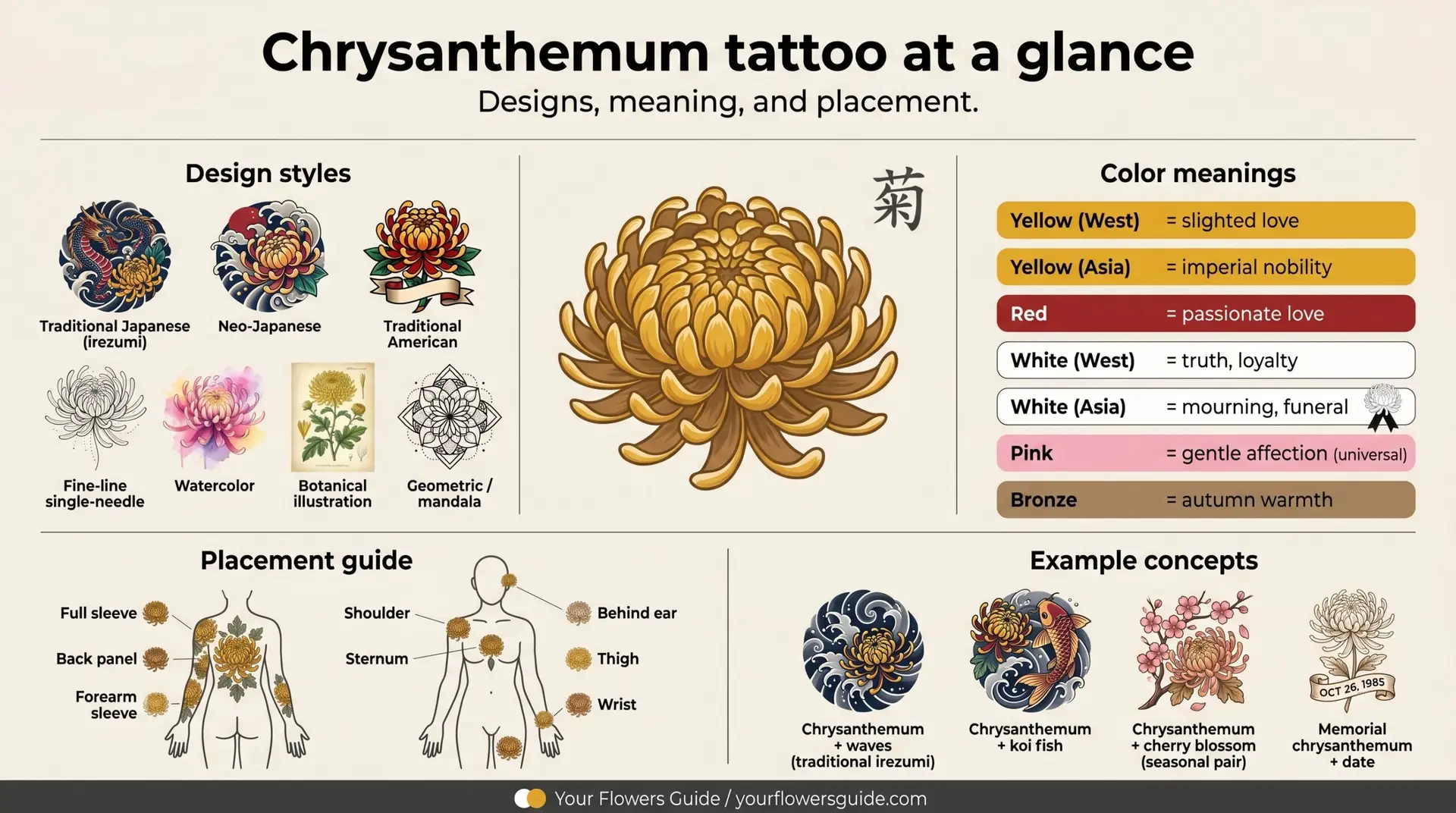
Traditional Japanese (irezumi 入れ墨) style produces the most culturally anchored chrysanthemum tattoos. The style uses bold black outlines, dramatic flat color fields (typically deep reds, dark blacks with grey-scale shading, and gold or yellow accent), and integration with other traditional Japanese motifs (waves, dragons, koi, autumn foliage). Traditional irezumi work typically covers substantial body area (sleeves, back pieces, bodysuits) and requires extensive time commitment (many sessions across many months or years). Authentic irezumi work requires highly skilled Japanese tattoo artists with traditional training; some traditional masters in Japan and abroad continue the historical irezumi tradition.
Neo-Japanese style draws on irezumi tradition but adapts the techniques and motifs for contemporary tattoo culture. The style maintains the dramatic chrysanthemum imagery and bold color use of traditional irezumi but in adapted scale and composition suitable for contemporary wearers who may not want full bodysuit commitment. Neo-Japanese chrysanthemum work commonly appears as forearm sleeves, shoulder pieces, and back panels.
Traditional American (Sailor Jerry) style produces bolder Western-style chrysanthemum tattoos with thick dark outlines, flat saturated color fill (typically yellow, red, or pink), and graphic stylization. Often combined with classic Americana banners, dates, and decorative elements.
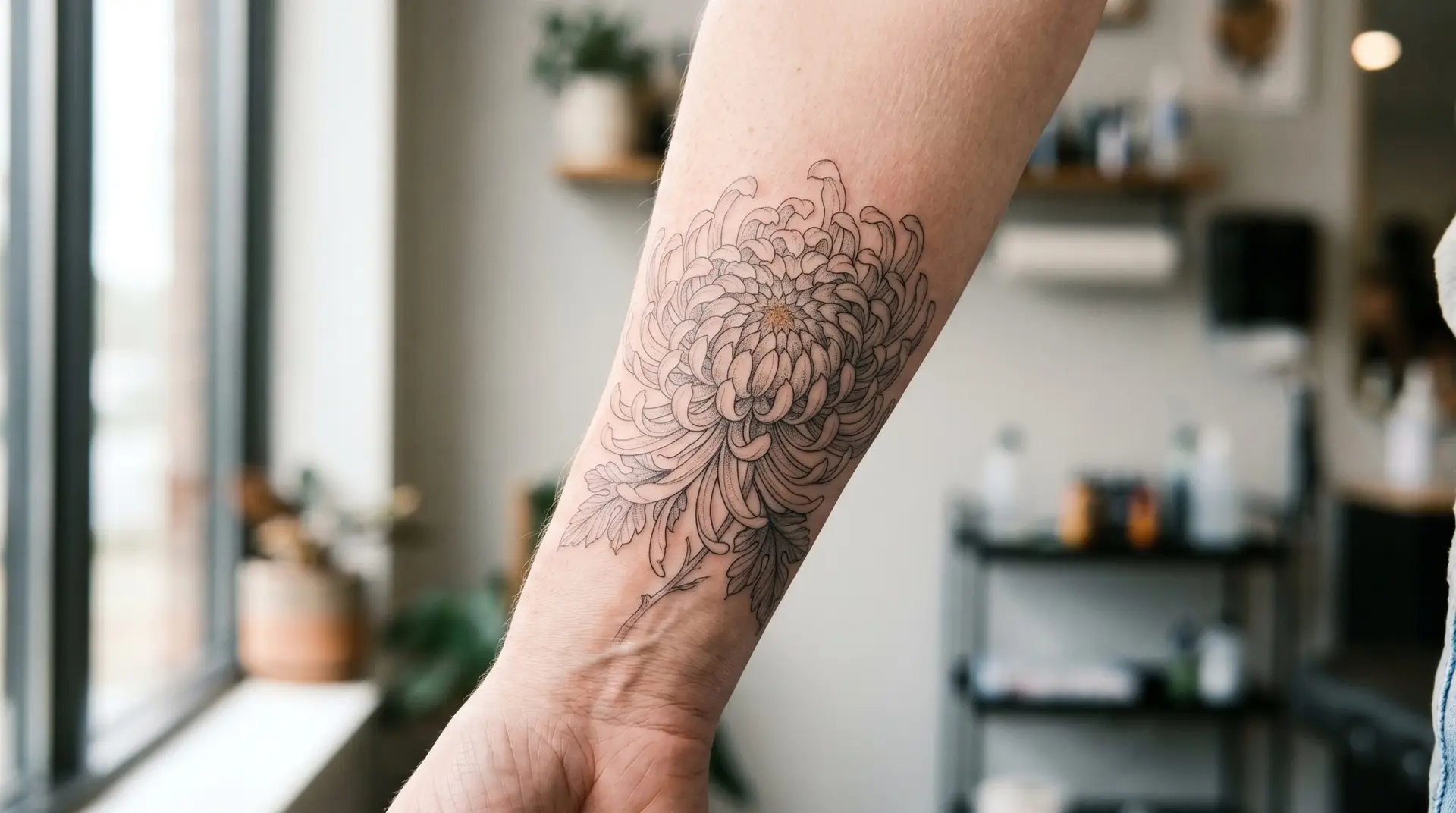
Fine-line single-needle style produces delicate chrysanthemum tattoos with very thin clean lines that capture the dense flower structure at small to medium scale. Fine-line chrysanthemum tattoos require highly skilled tattoo artists because of the dense layered petal structure of the species. The style suits wearers who want subtle elegant chrysanthemum imagery rather than bold cultural statement work.
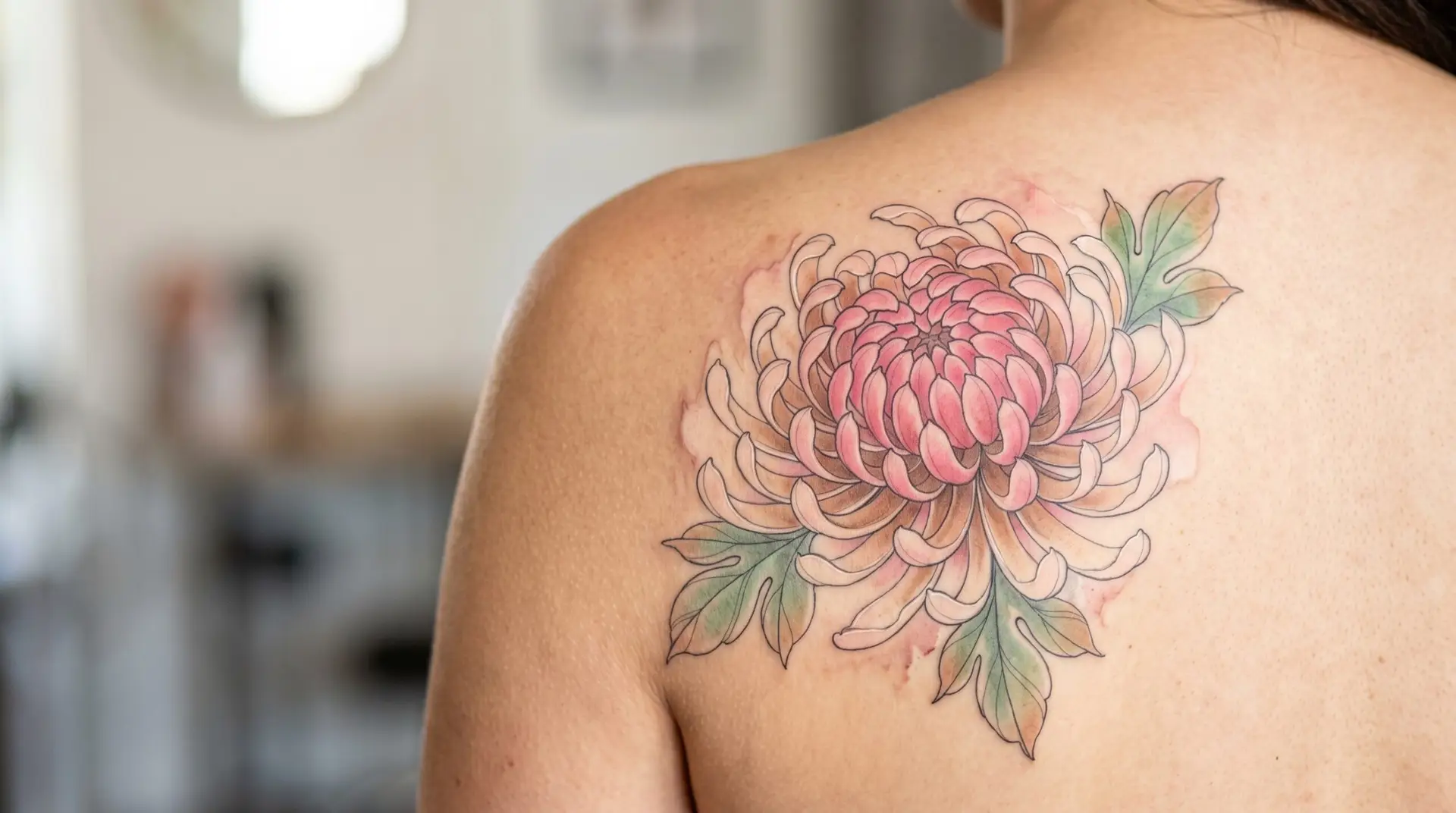
Watercolor chrysanthemum tattoos use color-bleed technique to suggest watercolor painting applied to skin, creating soft dreamy color transitions around the central botanical outline. Works particularly well for pink, yellow, and bronze chrysanthemum where the natural color variation translates effectively.
Botanical illustration style produces botanically accurate chrysanthemum tattoos with detailed line work showing the precise dense petal structure, foliage detail, and stem characteristics. Suits wearers who value scientific accuracy and want a tattoo that reads as botanical specimen illustration.
Geometric and mandala chrysanthemum tattoos use the flower’s natural radial symmetry as the basis for stylized sacred geometry designs. The chrysanthemum’s radial petal arrangement lends itself naturally to mandala integration, producing tattoos that combine the floral subject with broader spiritual and contemplative symbolic register.
Black-and-grey realism produces highly detailed photo-realistic chrysanthemum tattoos in black ink with grey-scale shading. Works particularly well for memorial designs where the absence of color gives dignified gravitas suitable for memorial purposes.
Color choices and symbolism
Chrysanthemum tattoo color choice extends the broader chrysanthemum color symbolism into the personal meaning of the tattoo, with significant cultural variation in color reading:
Yellow chrysanthemum tattoo: in Japanese tradition, imperial nobility and dignified joy (the imperial seal color register); in Western Victorian tradition, slighted love. The cultural reading varies significantly, so context matters when choosing yellow chrysanthemum tattoos.
Red chrysanthemum tattoo: passionate love, deep affection, romantic devotion. The most romantic chrysanthemum color reading and the most universally appropriate for romantic memorial designs.
White chrysanthemum tattoo: in Western tradition, truth and loyalty; in East Asian tradition, mourning and funeral commemoration. The cultural distinction matters significantly. White chrysanthemum tattoos for memorial purposes work powerfully in East Asian tradition; for non-memorial purposes in Western tradition, white chrysanthemums work effectively but may be confusing for viewers of East Asian heritage.
Pink chrysanthemum tattoo: gentle affection, soft warmth, sweet remembrance. The most universally appropriate color across cultural contexts.
Bronze and rust chrysanthemum tattoo: autumn warmth, mature reflection, harvest abundance. Common autumn-season tattoo color choice particularly for November birth flower tattoos.
Purple chrysanthemum tattoo: longevity, wishes for long life, scholarly contemplation. The Chinese cultural reading emphasizes longevity and wisdom themes.
Black-and-grey chrysanthemum tattoo: dignified memorial, classical elegance, refined gravitas. Works particularly well for serious memorial designs where the wearer wants formal symbolic register without color complications.
Multi-color chrysanthemum cluster tattoo: varietal abundance, the natural diversity of autumn flowers. Mixed-color chrysanthemum cluster tattoos suit wearers wanting visual richness alongside the symbolic content.
Color saturation choice significantly affects tattoo longevity. Yellow and lighter color chrysanthemum tattoos fade faster than darker colors and need touch-ups sooner to maintain the original intensity. Black-and-grey designs maintain their visual integrity longest.
Placement guide
Chrysanthemum tattoo placement choice depends on the design scale, the desired visibility, the cultural register, and the wearer’s aesthetic and professional considerations.
Full sleeve and bodysuit: the traditional Japanese irezumi chrysanthemum placement. The dramatic chrysanthemum imagery combined with other traditional Japanese motifs (waves, dragons, koi) creates the most culturally authentic chrysanthemum tattoo expression. Full irezumi work requires a substantial time and cost investment, often spread over many sessions and many months or years. The placement allows for the dramatic visual impact that maximally honors the Japanese chrysanthemum tradition.
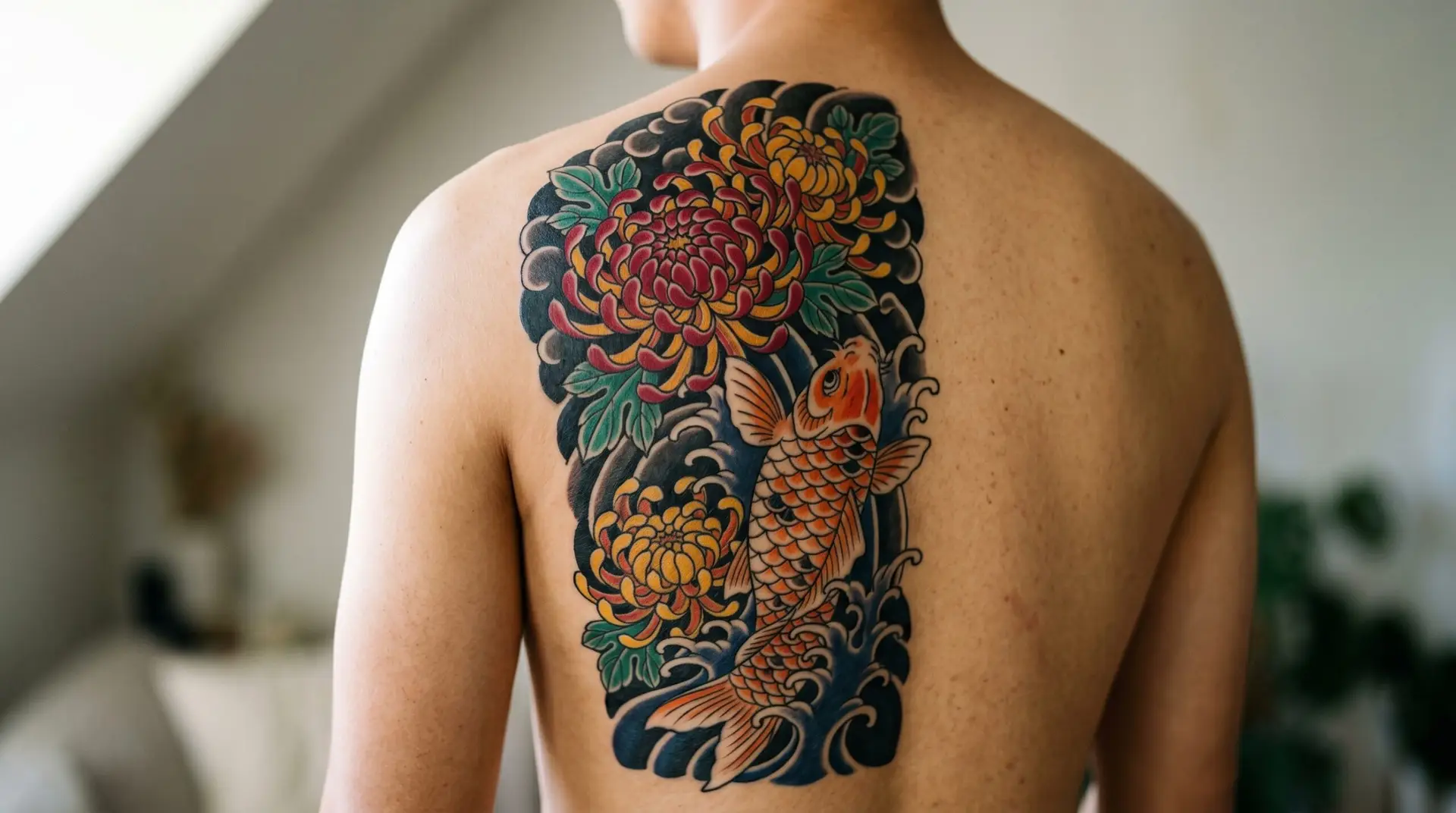
Back panel: large-scale chrysanthemum tattoos work well on the upper or full back where the body provides extensive canvas. Back placements allow 10 to 24 inches of detailed work suitable for elaborate compositions including multiple chrysanthemum blooms with supporting Japanese tattoo motifs.
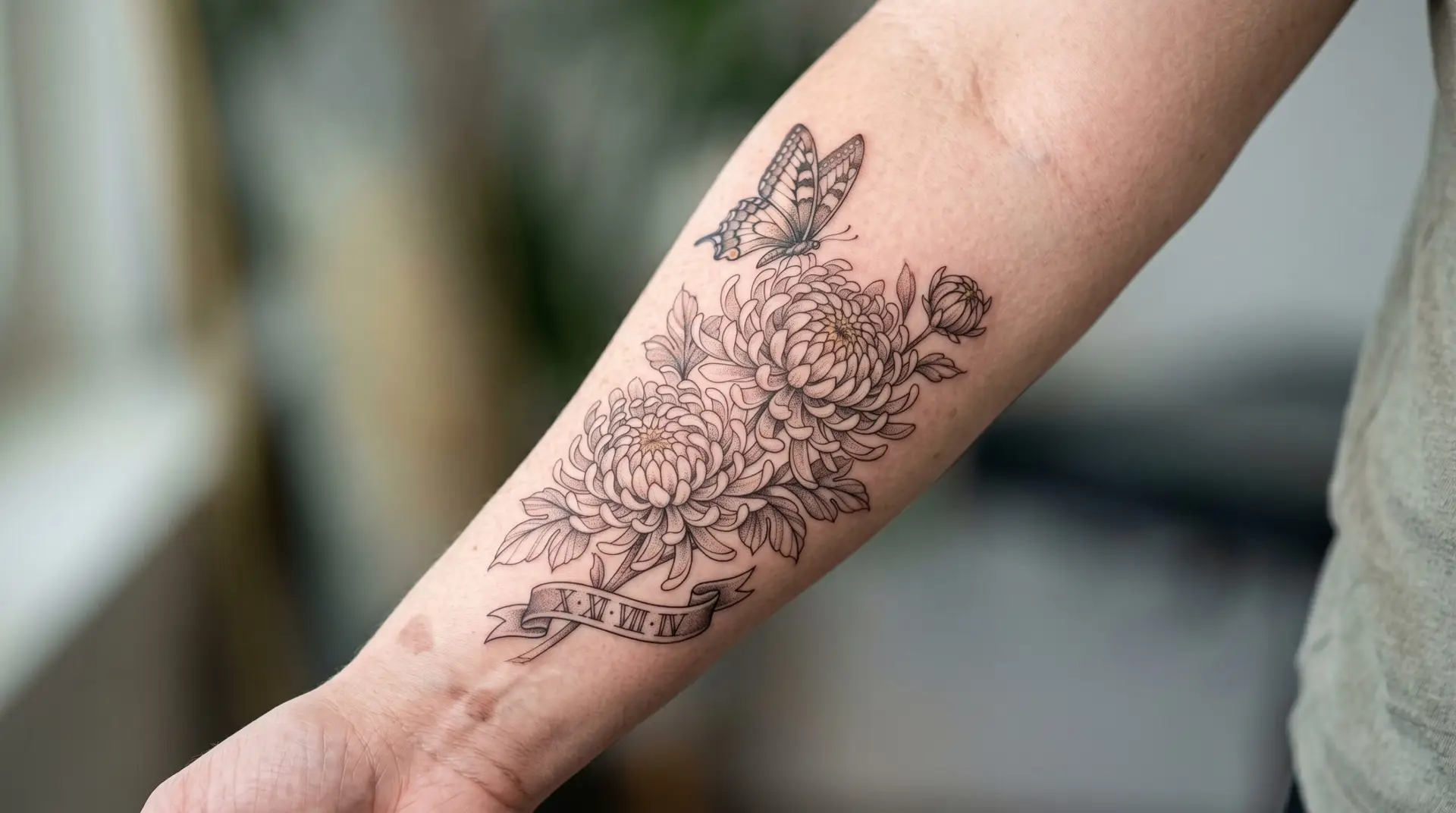
Forearm sleeve: half-sleeve or full-sleeve chrysanthemum designs on the forearm provide significant visual impact in more contained scale than full bodysuit work. Common for wearers wanting Japanese-style chrysanthemum imagery without full traditional commitment.
Shoulder and upper arm: chrysanthemum tattoos work well on the shoulder where the body provides ample canvas space for cluster designs with multiple bloom heads. Common for medium-scale work (5 to 10 inches).
Sternum and ribs: larger chrysanthemum cluster designs work along the sternum or down the ribs, taking advantage of the natural vertical line of the upper torso. The placement is more painful than other locations but provides striking visual results.
Thigh and hip: medium to large chrysanthemum designs work well on the thigh where the body provides ample canvas. Thigh placement allows the wearer to control visibility while having substantial detailed tattoo work.
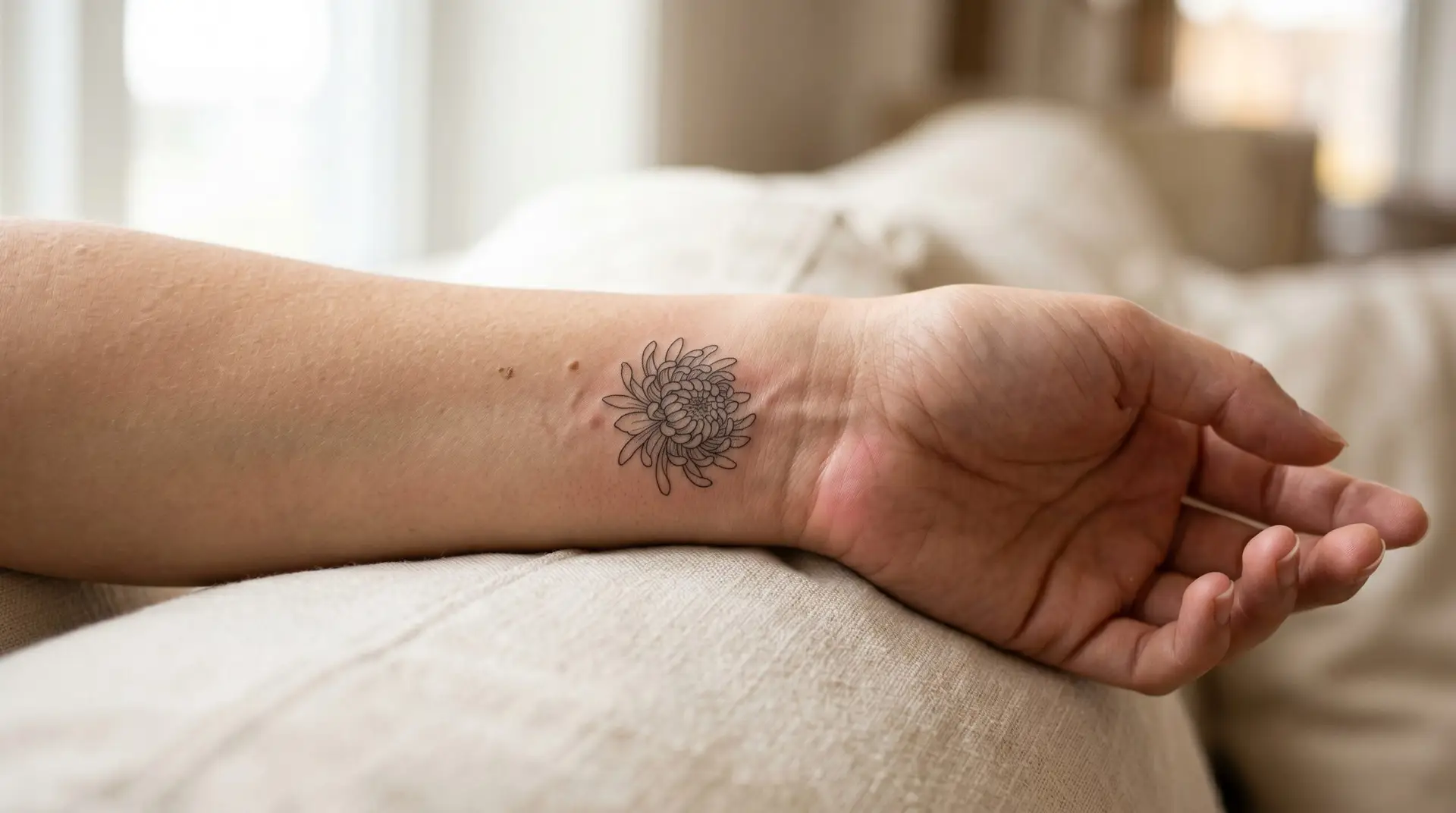
Wrist and ankle: small delicate chrysanthemum tattoos (2 to 4 inches) work for wrist and ankle placement. These small placements suit wearers who want chrysanthemum birth flower symbolism without bold statement work.
Behind ear and neck: very small minimalist chrysanthemum tattoos work for these placements as subtle personal aesthetic choice rather than as explicit cultural statement.
Example design concepts
Several design concepts demonstrate effective ways to combine chrysanthemum imagery with other symbolic elements:
Traditional irezumi chrysanthemum sleeve. A full forearm sleeve combining chrysanthemum blooms with waves (the iconic Hokusai “Great Wave” influence), small dragon elements, and classical Japanese decorative motifs provides the most culturally anchored chrysanthemum tattoo expression. Requires highly skilled traditional Japanese tattoo artist.
Chrysanthemum with date or name. A chrysanthemum tattoo with a small date (memorial date) or name provides specific personal commemorative content alongside the symbolic floral imagery. Common for memorial designs honoring deceased loved ones.
Chrysanthemum and koi fish. A traditional Japanese pairing of chrysanthemum bloom with koi fish provides classic irezumi imagery. The combination layers Japanese cultural symbolism through both floral and aquatic imagery.
Chrysanthemum with cherry blossom. A design combining November chrysanthemum and spring cherry blossom provides Japanese seasonal flower duality (autumn and spring imperial flower symbolism in single composition). Common for Japanese-heritage wearers wanting comprehensive cultural identity expression.
Chrysanthemum mandala. A chrysanthemum bloom serving as the central element of a sacred geometry mandala design suits wearers drawn to contemporary spiritual aesthetic. The chrysanthemum’s natural radial symmetry lends itself perfectly to mandala integration.
Black-and-grey memorial chrysanthemum. A photo-realistic chrysanthemum cluster rendered in black-and-grey provides dignified memorial commemoration without color complications. Particularly suitable for East Asian heritage wearers where white chrysanthemums specifically signal memorial commemoration.
Chrysanthemum and peony pairing. November-born wearers sometimes combine chrysanthemum and peony (both November birth flowers) in a single design. The combination provides both birth flower references in a unified composition.
Chrysanthemum with topaz color accent. A chrysanthemum tattoo with small warm golden color accents suggesting topaz (the November birthstone) provides complete November birth flower and birthstone reference in single design.
Watercolor chrysanthemum on shoulder blade. A pink or yellow chrysanthemum rendered in watercolor style provides flowing artistic statement using soft color technique to suggest beauty and autumn warmth.
Minimalist single chrysanthemum on wrist. A small fine-line drawing of a single chrysanthemum bloom on the wrist provides elegant subtle reference at minimal scale. Suits wearers wanting birth flower symbolism without bold statement work.
Aftercare and longevity
Standard tattoo aftercare applies to chrysanthemum tattoos: keep the area clean with gentle unscented soap, apply a thin layer of recommended healing ointment for the first week, avoid direct sun exposure during the initial healing period (2 to 4 weeks), and avoid swimming or full water submersion until fully healed.
Chrysanthemum tattoo longevity depends primarily on the line work quality, the color saturation, and the wearer’s skin and lifestyle factors. The dense detailed structure of chrysanthemum flowers requires highly skilled tattoo artists to render at small scale without the detail becoming muddied. Fine-line and colored work generally need touch-ups sooner than bold blackwork. Traditional irezumi and bold-line tattoos maintain their structural clarity longest due to the heavy line work and the saturation of traditional Japanese tattoo pigments.
Yellow and bright color chrysanthemum tattoos fade more rapidly than darker colors. Sun exposure is the primary cause of color fading; SPF 50+ sunscreen significantly extends visual longevity. Traditional irezumi work often includes specific aftercare protocols developed through centuries of Japanese tattoo tradition; consult with traditional Japanese tattoo artists for specific care recommendations if pursuing authentic irezumi work.
Skin changes over time affect chrysanthemum tattoo appearance. Tattoos on areas of skin that stretch significantly (abdomen, hip, thigh, breast) can distort over time. Wearers planning significant body changes should discuss placement with their tattoo artist to choose locations that hold the design well over decades.
For Japanese-heritage cultural identity tattoos, some wearers choose to undertake the irezumi commitment as a long-term progressive project, beginning with smaller initial designs and expanding to full sleeve or bodysuit work over many years. The progressive approach allows time for relationship development with the tattoo artist and for the wearer to mature into the deeper cultural commitment.
Frequently asked
What does a chrysanthemum tattoo mean?
Loyalty, friendship, and joyful longevity. The symbolism draws on Japanese imperial heritage (the chrysanthemum as imperial flower), Chinese scholarly tradition (Tao Yuanming’s autumn contemplation poems), and broader East Asian flower culture emphasizing sustained presence and dignified mature beauty. For Western birth flower context, chrysanthemum signals friendship and joyful longevity.
Why are chrysanthemums important in Japanese culture?
The 16-petal chrysanthemum has been the symbol of the Japanese imperial family since the late twelfth century (Imperial Seal of Japan, kikukamonshō). The Order of the Chrysanthemum (established 1876) is Japan’s highest honor. Japanese chrysanthemum cultivation has produced extraordinary cultivar diversity through centuries of dedicated breeding. The chrysanthemum (kiku 菊) is one of the major traditional flower subjects in Japanese tattoo (irezumi) tradition.
Where is the best place for a chrysanthemum tattoo?
Full sleeves, back panels, and forearm sleeves work best for traditional Japanese-style chrysanthemum tattoos. Smaller chrysanthemum designs work on wrists, ankles, behind the ear, shoulders, and sternum. The placement choice depends on the design scale and the desired cultural symbolic register.
Can I get a chrysanthemum tattoo without being Japanese?
Yes, chrysanthemum tattoos can be appropriate for non-Japanese wearers in several contexts: November birth flower marker, autumn season aesthetic, friendship and loyalty commemorative content. Important cultural consideration: avoid literal reproduction of the actual 16-petal Imperial Seal of Japan (kikukamonshō), as the seal is reserved for the imperial family. Generic chrysanthemum designs with varying petal counts and stylization avoid this concern while still invoking the broader cultural heritage.
What’s the difference between chrysanthemum tattoo and Japanese imperial seal?
The literal Imperial Seal of Japan is a specific 16-petal stylized chrysanthemum design reserved exclusively for the Japanese imperial family. Generic chrysanthemum tattoos can show many petal counts, stylization, and decorative variations without invoking the restricted Imperial Seal. The article and infographic specifically avoid reproducing the literal seal while honoring the broader chrysanthemum cultural heritage.
How long does a chrysanthemum tattoo take?
Session time varies widely by size, detail, style, and artist pace. Small fine-line work is usually completed in a single session, while large detailed clusters require multiple sessions, and traditional irezumi full sleeve or bodysuit work can span many sessions over many months or years. Your artist can give a realistic time estimate during the design consultation.
Are chrysanthemum tattoos appropriate for memorial designs?
Yes. In Western tradition, chrysanthemum memorial tattoos work effectively with the loyalty, friendship, and joyful long life symbolic register. In East Asian tradition (Japan, Korea, China, Vietnam), white chrysanthemum specifically signals funeral and memorial commemoration, making white chrysanthemum tattoos particularly powerful for memorial purposes in these cultural contexts.
Is a chrysanthemum tattoo good for women?
Chrysanthemum tattoos work well for any wearer regardless of gender. The dramatic flower form, complex cultural symbolism, and design flexibility (from delicate fine-line to bold traditional Japanese) suit a wide range of aesthetic preferences. Traditional irezumi chrysanthemum work has been historically more associated with male wearers but contemporary practice includes wearers of all genders.
How much does a chrysanthemum tattoo cost?
Cost varies widely by artist skill level, geographic region, design complexity, and tattoo size. Larger and more detailed work, including traditional irezumi full sleeve work, costs more and may span multiple sessions. Authentic Japanese irezumi by traditional masters commands premium pricing reflecting the specialized cultural-traditional skill requirements. Ask your chosen artist for a quote based on your specific design.
Sources
- Chrysanthemum (Chrysanthemum) · Encyclopedia Britannica
About this article. > Written and reviewed by the Your Flowers Guide editorial team. Botanical content from Britannica. Tattoo aftercare references from American Academy of Dermatology Association. Imperial Japan chrysanthemum heritage references via Imperial Household Agency of Japan documentation.