Holly flower meaning: Christmas tradition, color, and growing
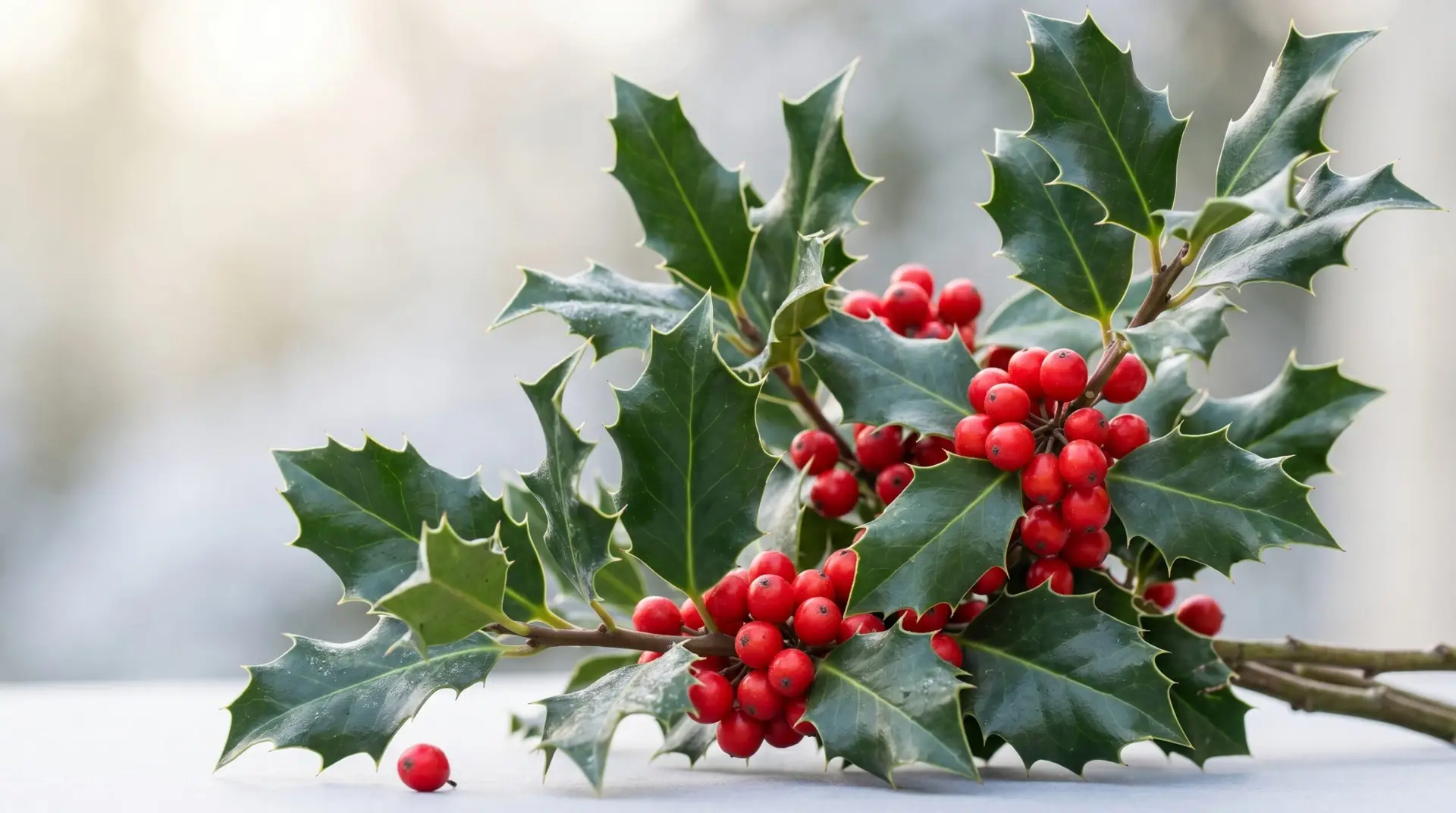
Holly is December’s secondary birth flower in Western tradition. Where paperwhite narcissus signals new beginnings and self-reflection, holly signals protection, foresight, defense against evil, festive joy, and immortality (through the evergreen leaves persisting through winter). The flower refers primarily to the genus Ilex in the family Aquifoliaceae, with the genus containing approximately 480 species native to temperate and tropical regions across both hemispheres.
The holly holds extraordinary cultural depth as the iconic Christmas plant across Western tradition. The bright red holly berries and the glossy dark green spiny-toothed leaves provide the characteristic red-and-green color combination that anchors Western Christmas decorative tradition. The Christmas holly tradition synthesizes pre-Christian European protective holly use (Druid winter solstice celebrations included holly as a protective sacred plant) with Christian symbolism (the prickly leaves representing the crown of thorns, the red berries representing the blood of Christ), creating one of the most enduring cross-cultural religious-cultural symbolic combinations in Western tradition.
Holly botany: Ilex species and relatives
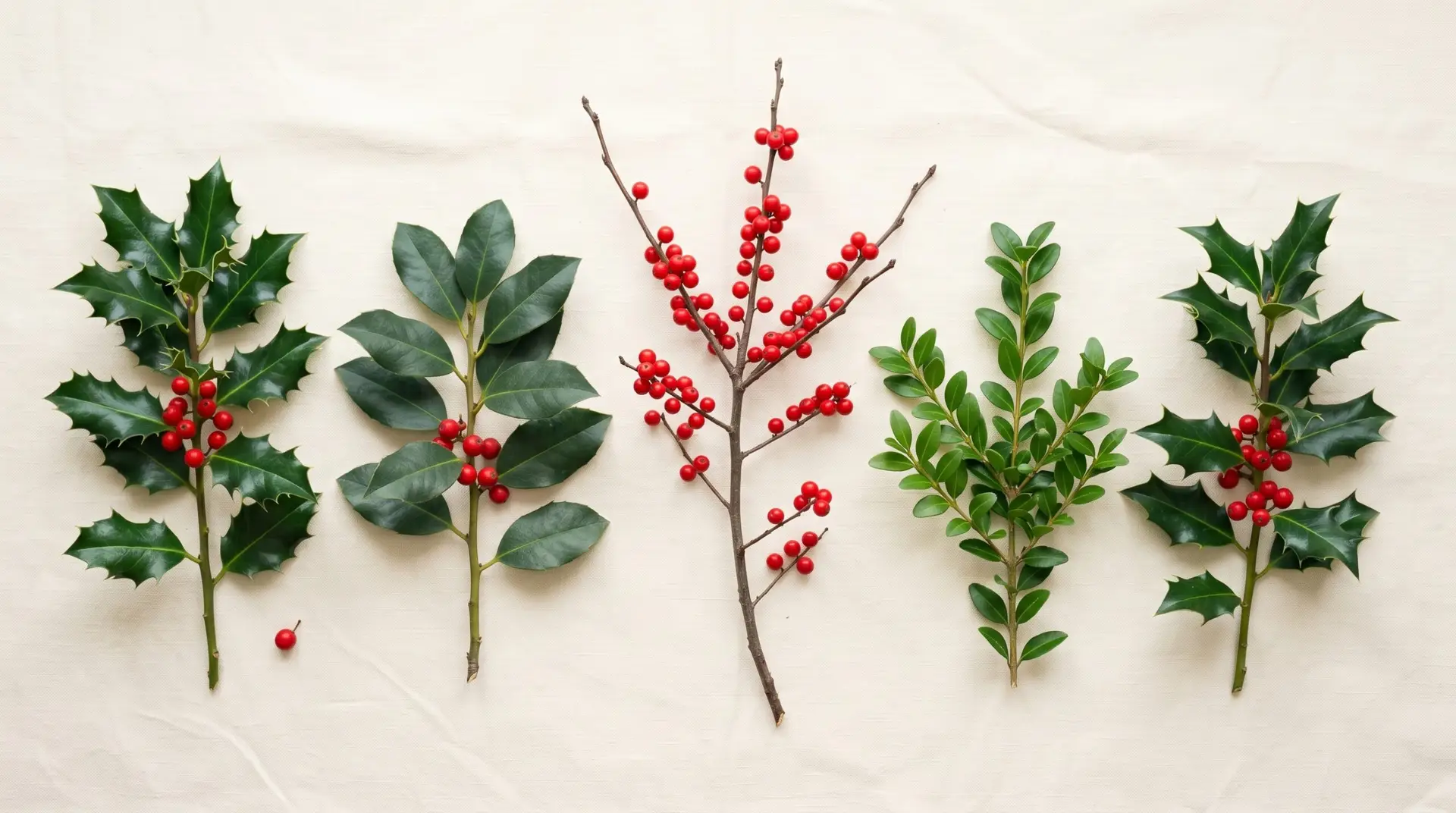
The most culturally and horticulturally significant holly species are the following.
Ilex aquifolium (European holly, English holly). The standard Christmas holly of European tradition. Native to western and southern Europe, northwest Africa, and southwest Asia. Evergreen tree reaching 30 to 50 feet at maturity (though commonly grown as smaller shrub in garden context). Glossy dark green leaves with characteristic deeply lobed spiny-toothed margins. Bright red berries on female plants. The dominant holly species in European Christmas tradition and the species most strongly associated with the December birth flower designation.
Ilex opaca (American holly). Native to eastern and central United States. Similar in appearance to European holly but with slightly duller leaves and somewhat smaller berries. The standard Christmas holly of American tradition. Common across eastern and central US gardens as ornamental tree and Christmas decoration source.
Ilex verticillata (winterberry, American winterberry). Native to eastern North America. The notable deciduous Ilex species, distinguished from other hollies by its annual leaf-drop in autumn. After leaf-drop, the bare branches show the bright red berries persisting through winter, creating dramatic visual effect of red berries on leafless stems. Increasingly popular for winter garden interest and cut-branch arrangements.
Ilex paraguariensis (yerba mate, South American holly). Native to South America (Brazil, Argentina, Paraguay, Uruguay). The source of the traditional South American yerba mate beverage. The leaves contain caffeine and other stimulants similar to coffee and tea, with extensive cultural use in southern South America. The species is not typically grown for ornamental Christmas use but is an important non-ornamental Ilex.
Ilex crenata (Japanese holly, box-leaved holly). Native to Japan and other East Asian regions. Small evergreen shrub reaching 5 to 10 feet at maturity, with smaller leaves resembling boxwood (Buxus) rather than typical Western Christmas holly. The leaves lack the characteristic spiny-toothed margins of European holly. Often used as substitute for boxwood in landscaping where boxwood blight is a concern.
Ilex cornuta (Chinese holly, horned holly). Native to China and Korea. Distinguished by leaves with horn-like spines at the corners rather than continuous spiny margins. Bears bright red berries on female plants.
The visual character across most ornamental Ilex species centers on the glossy dark green evergreen leaves with characteristic spiny margins, the bright red berries on female plants, and the small inconspicuous white or greenish flowers in late spring. The genus is typically dioecious (separate male and female plants), with only female plants producing the iconic bright red holly berries.
Pre-Christian Druid and Christian Christmas heritage
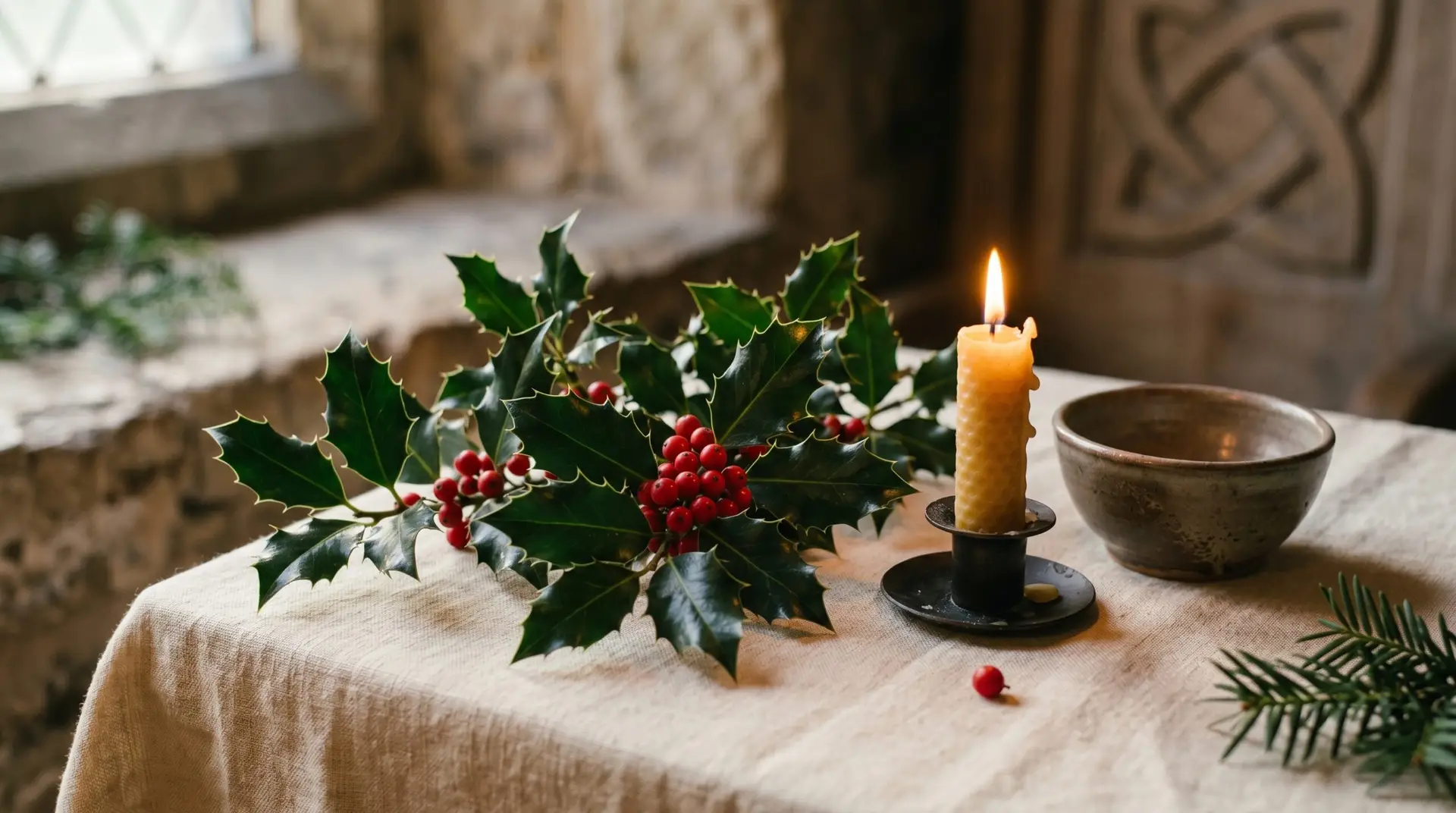
Holly holds an extraordinarily rich cultural and religious heritage as the iconic Christmas plant of Western tradition. The modern Christmas holly tradition synthesizes pre-Christian European protective holly use with Christian symbolism, producing one of the most enduring cross-cultural religious-cultural symbolic combinations in Western tradition.
Pre-Christian European holly tradition. Pre-Christian European religious traditions (particularly Celtic Druid tradition) included holly as a protective sacred plant central to winter solstice celebrations. The Druid winter solstice (typically December 21-22 in modern calendars) commemorated the year’s shortest day and the symbolic rebirth of the sun, with holly playing significant ritual role in protective and seasonal celebration contexts. Holly’s evergreen winter character (green leaves persisting through winter when most other plants are dormant or leafless) made it natural symbol of life persistence through death and darkness.
The Druid Oak King and Holly King tradition (a reconstructed pre-Christian European mythology, primarily known through later folklore sources rather than direct attestation) describes a seasonal battle between the Oak King (representing growing light and warmth of spring-summer) and the Holly King (representing decreasing light and cold of autumn-winter). The two kings exchange dominance at the solstices, with the Holly King reigning from summer solstice through winter solstice (June-December) and the Oak King reigning from winter solstice through summer solstice (December-June). The mythology gives holly significant pre-Christian religious symbolic weight as the dominant winter spirit.
Christian Christmas holly tradition. Early Christian missionaries in northern Europe (particularly the British Isles) adapted existing pre-Christian holly traditions for Christian Christmas celebration, providing continuity for converts while transforming the symbolic register. The Christian symbolic interpretation includes the prickly leaves representing the crown of thorns of Christ’s passion, the red berries representing the blood of Christ shed during the crucifixion, the white blossoms (which appear in late spring, several months after Christmas season) representing the purity of the Virgin Mary, and the bitter bark representing the bitterness of Christ’s sufferings.
The famous English Christmas carol “The Holly and the Ivy” (traditional, with the modern arrangement primarily from the early twentieth century but the underlying lyrics extending back to medieval English Christmas tradition) provides the most extensive Christian holly symbolic vocabulary in song form. The carol’s verses describe each holly element (leaves, berries, prickle, bark) with corresponding Christian symbolic interpretation, anchoring the Christian holly tradition in popular Western Christmas song tradition.
The continuity of holly as Christmas decoration in modern Western tradition reflects the successful Christian adaptation of pre-Christian winter solstice plant traditions. Holly wreaths on doors, holly garlands across mantels, holly sprigs in Christmas table decorations, and holly imagery in Christmas cards and decorative materials all continue this synthesis tradition into contemporary celebration.
Druidic and Celtic continuity. Modern neo-pagan and Druidic religious revivals (particularly from the late twentieth century onwards) have increased interest in the pre-Christian holly tradition. Some modern winter solstice celebrations explicitly reference the Holly King tradition and the broader Druid winter celebration vocabulary. The reconstructed nature of much of this pre-Christian tradition (most direct evidence comes from medieval Christian sources writing about pre-Christian practices rather than from direct pre-Christian sources) requires acknowledgment, but the cultural significance of the modern revivals is substantial.

Color symbolism across holly varieties
Holly color symbolism centers primarily on the bright red berries and the deep green leaves rather than on flower color (the small inconspicuous spring flowers are not the symbolic focus). The dual-color identity is fundamental to holly’s cultural significance:
Holly red berries: festive joy, protection, the blood of Christ (Christian interpretation), winter food for birds, the iconic Christmas color. The bright red of holly berries is essential to the Christmas red-and-green color palette.
Holly green leaves: immortality (through evergreen winter persistence), life through death, eternal life, the iconic Christmas color. The deep glossy green provides the complementary half of the Christmas red-and-green color palette.
Variegated holly leaves (green with cream or gold edges): Some cultivated holly varieties have variegated foliage with cream-white or gold edge markings on the green leaves. These cultivars provide additional decorative interest without changing the fundamental holly symbolic register.
Yellow holly berries (rare cultivars): Some holly cultivars produce yellow rather than red berries. The yellow color shifts the symbolic register away from the iconic red and is less commonly used in traditional Christmas contexts.
Orange holly berries (some Ilex verticillata winterberry cultivars): A few winterberry cultivars produce orange rather than red berries. Less common but visually distinctive.
Black holly berries (some Ilex glabra inkberry cultivars): Some Ilex species (particularly Ilex glabra, inkberry) produce black rather than red berries. Significantly different from the traditional Christmas holly appearance and not typically used in Christmas decoration.
The dominant color symbolism remains the red-and-green combination of European holly (Ilex aquifolium) and American holly (Ilex opaca), with these traditional varieties providing the standard Christmas symbolic vocabulary. Florist usage treats holly as the iconic Christmas decoration material across Western tradition, with holly wreaths, holly garlands, and holly cut-branch arrangements dominating Christmas decorative work.
Growing holly: male and female plants
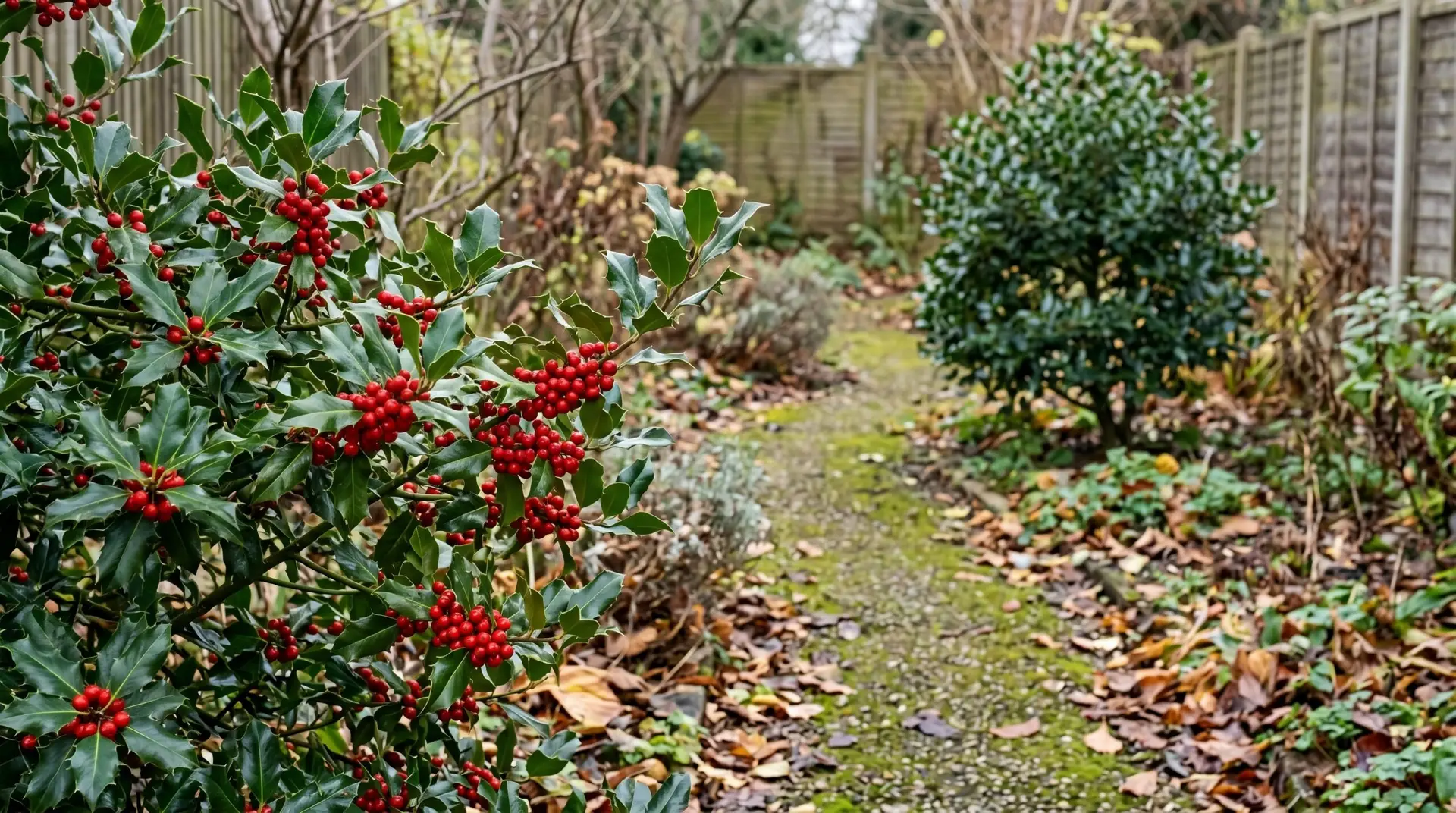
Holly cultivation has one fundamental challenge that sets it apart from most ornamental garden flowers: the genus is typically dioecious (separate male and female plants), with only female plants producing the iconic bright red holly berries. Gardeners wanting holly berries must plant both male and female plants in proximity for the female plants to produce berries through pollination by the male plants.
Plant hollies in autumn (September to November in most temperate climates) for spring planting if necessary. Autumn planting allows the roots to establish before winter dormancy. Spring planting is possible but less optimal.
Hollies require well-drained soil with adequate organic matter. The plants tolerate a wide range of soil pH from slightly acidic to slightly alkaline. Full sun to partial shade works for most species; deep shade is too dark for proper berry production on female plants.
For berry production, plant one male holly within approximately 50-100 feet of female hollies for adequate pollination. The male-female ratio can be approximate: one male plant can pollinate multiple female plants within suitable distance. Specific male cultivars are matched with specific female cultivars in some plantings (for example, “Blue Prince” male holly with “Blue Princess” female holly), but general male pollinators of the same species typically work.
Identifying male and female holly plants requires observation during late spring flowering. Male holly plants produce small clusters of white or greenish flowers with prominent stamens (the male reproductive structures) and no developed ovary. Female holly plants produce similar flowers but with the ovary visible at the center that will develop into the berry after pollination. Many garden centers label holly plants as male or female; if uncertain, consult horticultural references or wait through one flowering season to observe.
Hollies are generally low-maintenance once established. The plants tolerate drought reasonably well after establishment. Regular watering during the first 2-3 years supports root development. Mulching protects shallow roots and conserves soil moisture.
Pruning holly is best done in late spring or early summer after flowering. The plants tolerate hard pruning if necessary for shape control, but excessive pruning reduces berry production on female plants. Light pruning maintains shape while preserving the berries.
Pests and diseases for holly include holly leaf miner (small fly larvae that tunnel within the leaves creating visible serpentine trails), scale insects, and occasional fungal leaf diseases. Holly leaf miner is the most common cosmetic issue but rarely affects plant health significantly.
Holly cuttings can be propagated from semi-hardwood cuttings taken in summer or autumn. The cuttings root reasonably well in suitable conditions but slowly; established plants from nurseries provide faster gardening results.
Holly in Christmas decoration and gifts
Holly serves as the dominant Christmas decoration plant across Western tradition. Holly cuttings, wreaths, garlands, and table arrangements feature prominently throughout Western Christmas celebration.
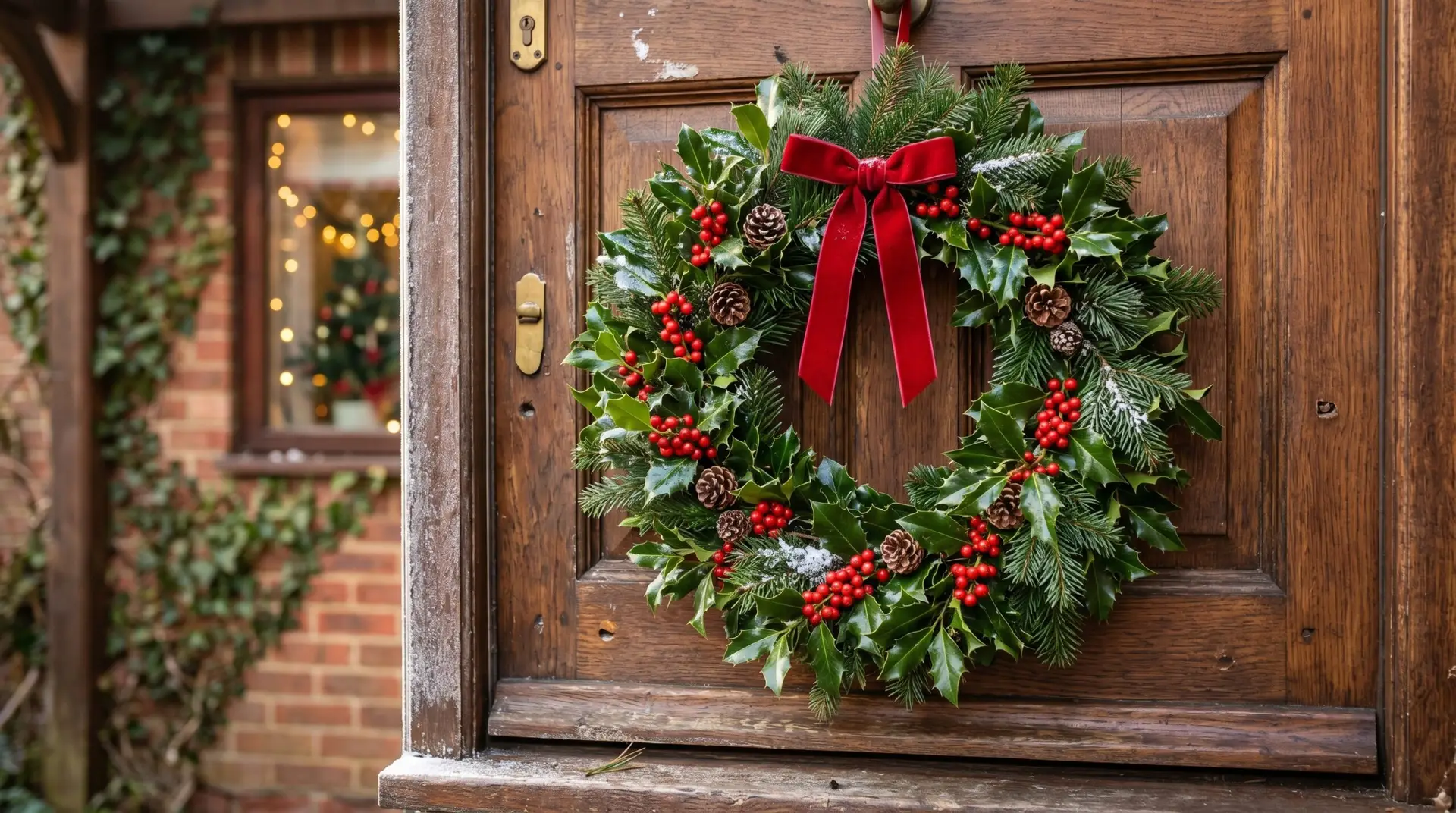
Holly wreaths are the most iconic Christmas holly gift category. A traditional Christmas holly wreath combines fresh holly branches with red berries, decorative ribbon, and often additional Christmas-season plant materials (pine cones, evergreen branches, ornamental berries). Wreath prices typically range from $30 for simple wreaths to $150+ for elaborate designer wreaths. The wreath gift suits Christmas-season birthday celebration and broader Christmas holiday gift-giving.
Holly cuttings for indoor arrangement use can be cut from established garden plants or purchased from florists during December. Cut holly lasts approximately 1-2 weeks indoors with regular water changes and protection from heating systems that can accelerate drying.
A living holly plant for the recipient’s garden provides a long-term gift that grows into a substantial evergreen tree over decades. Nursery prices typically range from $30 for small starter plants to $100+ for larger established plants. Specify whether the gift recipient wants berry-bearing female plants (and ensure they have or can plant a male holly within range for pollination).
Holly seed extracts and natural extracts are sometimes available for craft and traditional medicine purposes, though these are specialty market products rather than mainstream gift items.
For December birthdays falling near Christmas, a gift combining holly decoration with December birthday celebration elements (cake, candles, traditional gift items) provides seasonally integrated celebration content. The combination acknowledges both the personal birthday significance and the broader Christmas holiday timing.
Holly is associated with several traditional Christmas customs beyond simple decoration. The “holly and ivy” tradition (where holly signals male spirit and ivy signals female spirit) appears in some traditional English Christmas folk culture. Holly bushes near the house are believed to provide protection against witches, lightning, and other evil influences in some European folk traditions (the same protective folklore that supports the December birth flower designation).
Toxicity and pet safety
Holly berries contain saponins and other compounds that can cause stomach upset, vomiting, and diarrhea if consumed in significant quantities. The berries are not typically fatal to humans but should not be eaten and should be kept away from small children and pets.
For pet safety, holly berries are particularly concerning because the bright red color attracts curious pets (especially cats and dogs that may investigate or chew on decorative items). Consumption of even small numbers of berries can cause significant gastrointestinal symptoms in pets. Severe consumption can require veterinary treatment.
The holly leaves are also mildly toxic if consumed, primarily because of the saponin content. The leaves’ sharp spiny margins typically discourage consumption (the leaves are physically uncomfortable to chew), but pets occasionally consume small amounts.
Bird consumption of holly berries is not a concern. Birds eat holly berries without ill effects through different digestive chemistry that processes the saponins safely. The bright red berries provide important winter food for many bird species, including robins, thrushes, waxwings, and other winter-resident birds.
For household holly decoration during Christmas season, place holly arrangements out of reach of children and pets. Keep watch on children who might be curious about the bright red berries; if consumption is suspected, contact poison control immediately.
If pet consumption is suspected: contact poison control immediately (ASPCA Animal Poison Control Center is available 24/7 in the United States). Symptoms include vomiting, diarrhea, lethargy, drooling, and abdominal pain. Veterinary treatment may be needed depending on the quantity consumed and the pet’s size.
The toxicity considerations should not prevent enjoying holly as Christmas decoration but should inform placement choices and supervision in homes with children or pets.
Frequently asked
What does the holly flower symbolize?
Protection, foresight, defense against evil, festive joy, and immortality (through the evergreen leaves persisting through winter). The Christmas holly tradition synthesizes pre-Christian European protective holly use (Druid winter solstice celebrations) with Christian symbolism (the prickly leaves representing the crown of thorns, the red berries representing the blood of Christ).
Why is holly associated with Christmas?
Holly has been associated with winter celebration since pre-Christian European traditions, particularly Druid winter solstice celebrations where holly served as a protective sacred plant. Early Christian missionaries adapted existing holly traditions for Christmas celebration, providing continuity for converts. The bright red berries and glossy dark green leaves provide the iconic red-and-green Christmas color combination that anchors Western Christmas decorative tradition.
Why don’t all holly plants produce berries?
Holly is typically dioecious (separate male and female plants), with only female plants producing the iconic bright red holly berries. Male holly plants produce small flowers that pollinate the female flowers but never bear berries themselves. Gardeners wanting holly berries must plant both male and female plants in proximity for the female plants to produce berries through pollination.
What’s the difference between European holly and American holly?
European holly (Ilex aquifolium) is native to Europe and has slightly glossier leaves; American holly (Ilex opaca) is native to eastern and central United States and has somewhat duller leaves. Both species are evergreen, both produce bright red berries on female plants, and both serve as standard Christmas decoration plants in their respective regions.
Are holly berries poisonous?
Yes, mildly. Holly berries contain saponins and other compounds that can cause stomach upset, vomiting, and diarrhea if consumed in significant quantities. The berries are not typically fatal to humans but should not be eaten and should be kept away from small children and pets. Birds eat holly berries safely through different digestive chemistry.
What is the Holly King in Druid tradition?
The Holly King is a reconstructed pre-Christian European seasonal mythology figure representing decreasing light and cold of autumn-winter, in seasonal battle with the Oak King representing growing light and warmth of spring-summer. The two kings exchange dominance at the solstices, with the Holly King reigning from summer solstice through winter solstice. The mythology is primarily known through later folklore sources rather than direct pre-Christian attestation but has been adopted by modern neo-pagan and Druidic religious revivals.
Can I grow holly in my garden?
Yes, holly is among the easier evergreen shrubs and trees to grow in most temperate climate gardens. The plants tolerate a wide range of soil conditions, prefer full sun to partial shade, and are generally low-maintenance once established. For berry production, plant both male and female plants in proximity. Plant in autumn (September to November) for best establishment.
How long do holly trees live?
Holly is long-lived. Established holly trees commonly live 100-200+ years; some European holly trees over 500 years old have been documented. The exceptional longevity reinforces the species’s symbolic association with immortality and eternal life in Christmas tradition.
What is the carol “The Holly and the Ivy” about?
“The Holly and the Ivy” is a traditional English Christmas carol describing each holly plant element (leaves, berries, prickle, bark) with corresponding Christian symbolic interpretation. The carol’s verses anchor the Christian holly tradition in popular Western Christmas song tradition. The modern arrangement is primarily from the early twentieth century, but the underlying lyrics extend back to medieval English Christmas tradition.
Should I worry about pet exposure to Christmas holly decoration?
Yes, if you have pets that may chew on plants or decorative items. Holly berries are mildly toxic to pets (causing vomiting, diarrhea, and stomach upset). Place holly arrangements out of reach of pets. If consumption is suspected, contact poison control immediately (ASPCA Animal Poison Control Center is available 24/7 in the United States). The toxicity considerations should inform placement choices and supervision in homes with curious pets.
Sources
- Holly (Ilex) · Encyclopedia Britannica
- Ilex growing guide · Royal Horticultural Society
About this article. > Written and reviewed by the Your Flowers Guide editorial team. Botanical content from Britannica and the Royal Horticultural Society. Christian holly tradition references via standard Western Christmas tradition sources. Pre-Christian Druid holly tradition references via standard European folklore sources (acknowledging the reconstructed nature of much of this tradition). Pet toxicity references via ASPCA Animal Poison Control Center documentation.