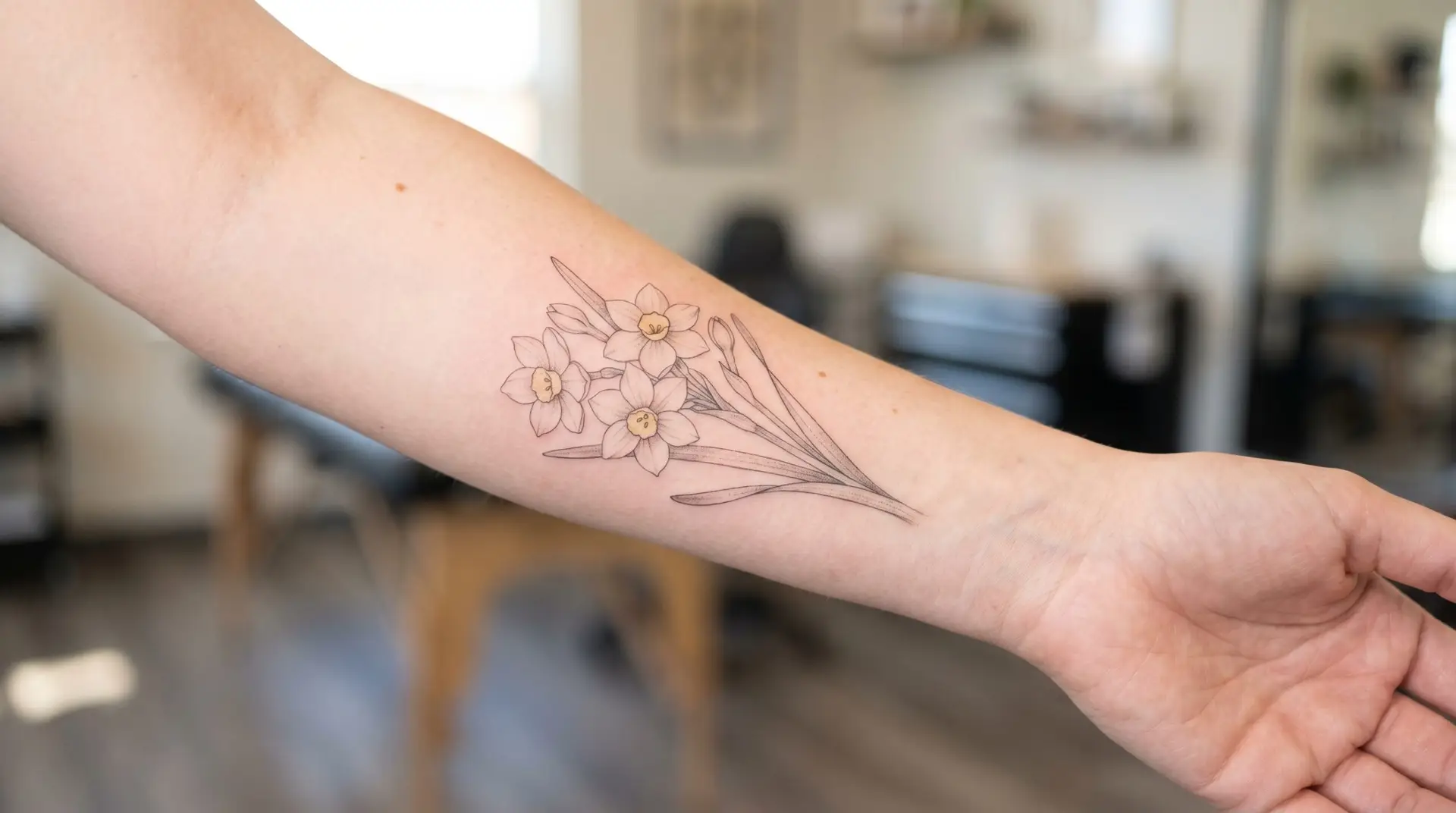
A narcissus tattoo is a meaningful choice for December-born readers and for anyone drawn to flower tattoos with deep Greek classical mythological heritage. The flower’s distinctive six-segment tepal arrangement around the central corona, the contemplative downward-bending growth habit (as if looking at one’s own reflection in water), and the unmatched cultural symbolism through the Greek Narcissus myth give the design naturally elegant visual character and rich philosophical content. Narcissus tattoos have grown in popularity over the last decade as fine-line tattoo techniques have made the delicate flower form possible to render at the precision needed for the layered symbolism to read clearly at compact tattoo scale.
The combination of distinctive elegant flower form, Greek philosophical heritage, and the contemporary interest in self-reflection themes makes narcissus particularly well-suited to wearers drawn to introspective and contemplative tattoo content. The narcissus tattoo can carry either positive symbolic register (self-knowledge, contemplation, renewal) or cautionary register (the warning embedded in the Greek myth about excessive self-absorption), allowing significant flexibility in personal meaning interpretation.
In this guide
What a narcissus tattoo means
Narcissus tattoo meaning draws on multiple layered symbolic registers. The personal birth flower register applies for December-born wearers (paperwhite narcissus as the specific December birth flower variety). The Greek classical heritage register applies for anyone drawn to themes of self-reflection, contemplation, and the warnings embedded in classical mythology about excessive self-absorption. The personal-meaning register applies for wearers who select narcissus for individual reasons (commemoration of someone with notable contemplative or thoughtful character, personal recognition of self-awareness work, or memorial honoring of a relationship that involved deep reflection and growth).
The Greek Narcissus mythological heritage gives narcissus tattoos their richest symbolic content. The classical story of Narcissus (the youth who fell in love with his own reflection and wasted away at the water’s edge) provides a layered narrative about self-knowledge, self-absorption, and the transformation of fatal narcissism into beauty through the gods’ transformation of his body into the narcissus flower. Wearers can choose to emphasize different aspects of the myth in their tattoo content: the positive reflection and self-knowledge themes (most common for personal birth flower or contemplative tattoos), the cautionary self-absorption themes (less common but powerful for wearers in recovery from self-absorption patterns), or the transformation themes (Narcissus turned into the flower, suggesting transformation through difficult experience).
The modern psychological narcissism associations require sensitivity in choosing narcissus tattoo content. The pathological “narcissism” psychological concept (developed by Freud and others from the late nineteenth century) has substantially expanded in modern usage to describe narcissistic personality patterns and difficult interpersonal dynamics. Wearers should consider whether their narcissus tattoo choice might invite unwanted association with the negative psychological concept, particularly in professional contexts. Most narcissus tattoo wearers emphasize the positive flower symbolism (new beginnings, self-reflection, contemplation, rebirth) rather than the psychological negative register.
Memorial narcissus tattoos work effectively for honoring deceased loved ones with the new beginnings and rebirth symbolic register. The species’s late winter bloom timing (paperwhite narcissus flowering in December-February when most flowers are dormant) gives the species particular resonance for memorials honoring relationships that involved renewal, transformation, or hope through difficult seasons.
Design styles for narcissus tattoos
Several tattoo style traditions work well for narcissus depending on the wearer’s aesthetic preferences and the symbolic register the design needs to express.
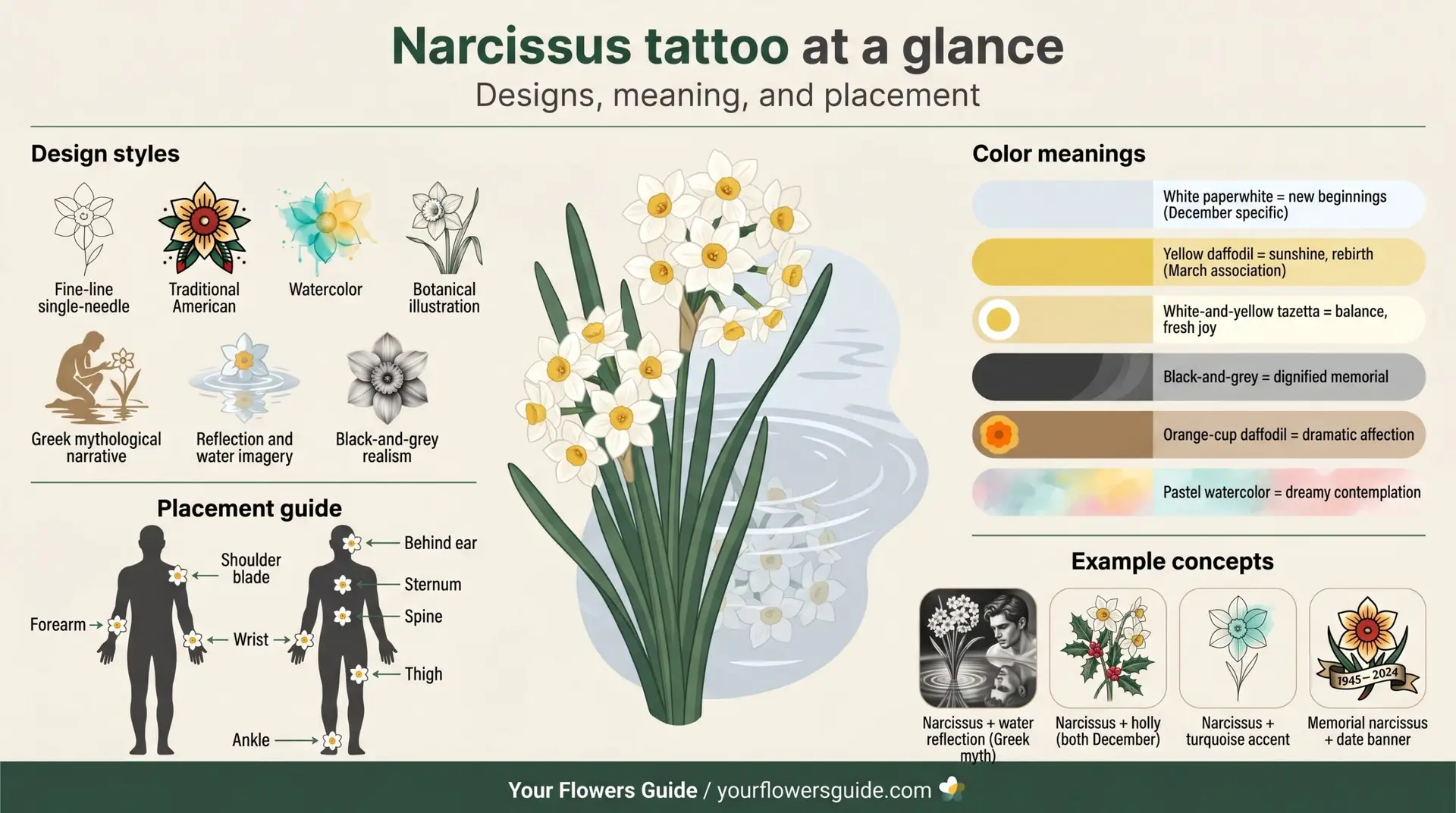
Fine-line single-needle style produces the most delicate narcissus tattoos, with very thin clean lines that capture the flower’s distinctive six-segment tepal structure and the central corona at small to medium scale (3 to 6 inches typical). Fine-line narcissus tattoos often feature single individual blooms with detailed tepal arrangement, allowing the elegant flower form to be clearly visible at small scale. The style suits wearers who want subtle elegant narcissus imagery rather than bold statement work.
Traditional American (Sailor Jerry) and neo-traditional styles produce bolder narcissus tattoos with thick dark outlines, flat saturated color fill (typically yellow for daffodil-style narcissus or white-and-yellow for paperwhite tazetta), and graphic stylization that prioritizes visual impact over botanical accuracy. The style ages well because of the heavy line work that maintains structural clarity through decades of color fading.
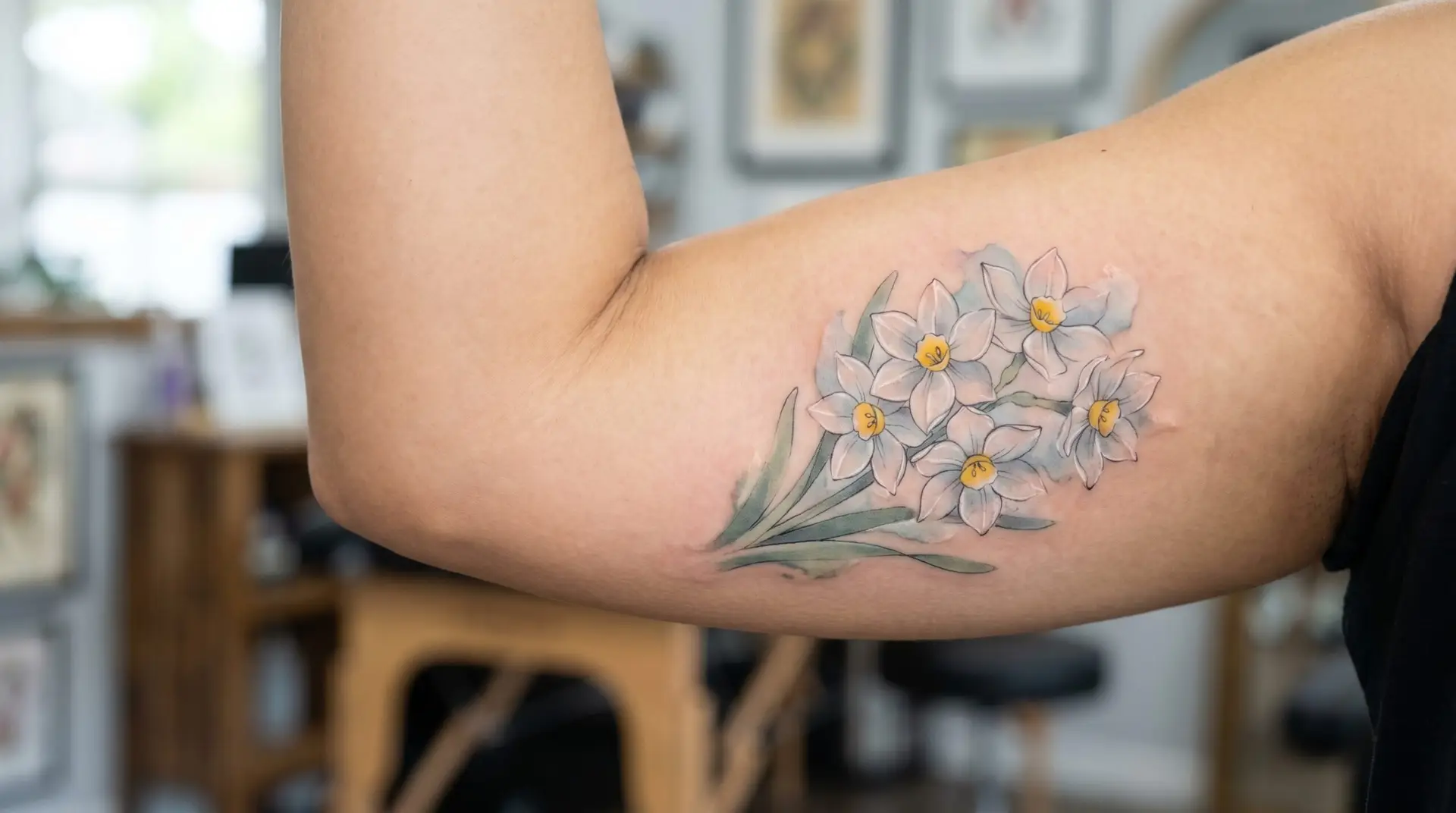
Watercolor narcissus tattoos use the characteristic color-bleed technique to suggest watercolor painting applied to skin, creating soft dreamy color transitions around the central botanical outline. The style works particularly well for yellow daffodil and white paperwhite where the soft color blending matches the flower’s natural appearance.
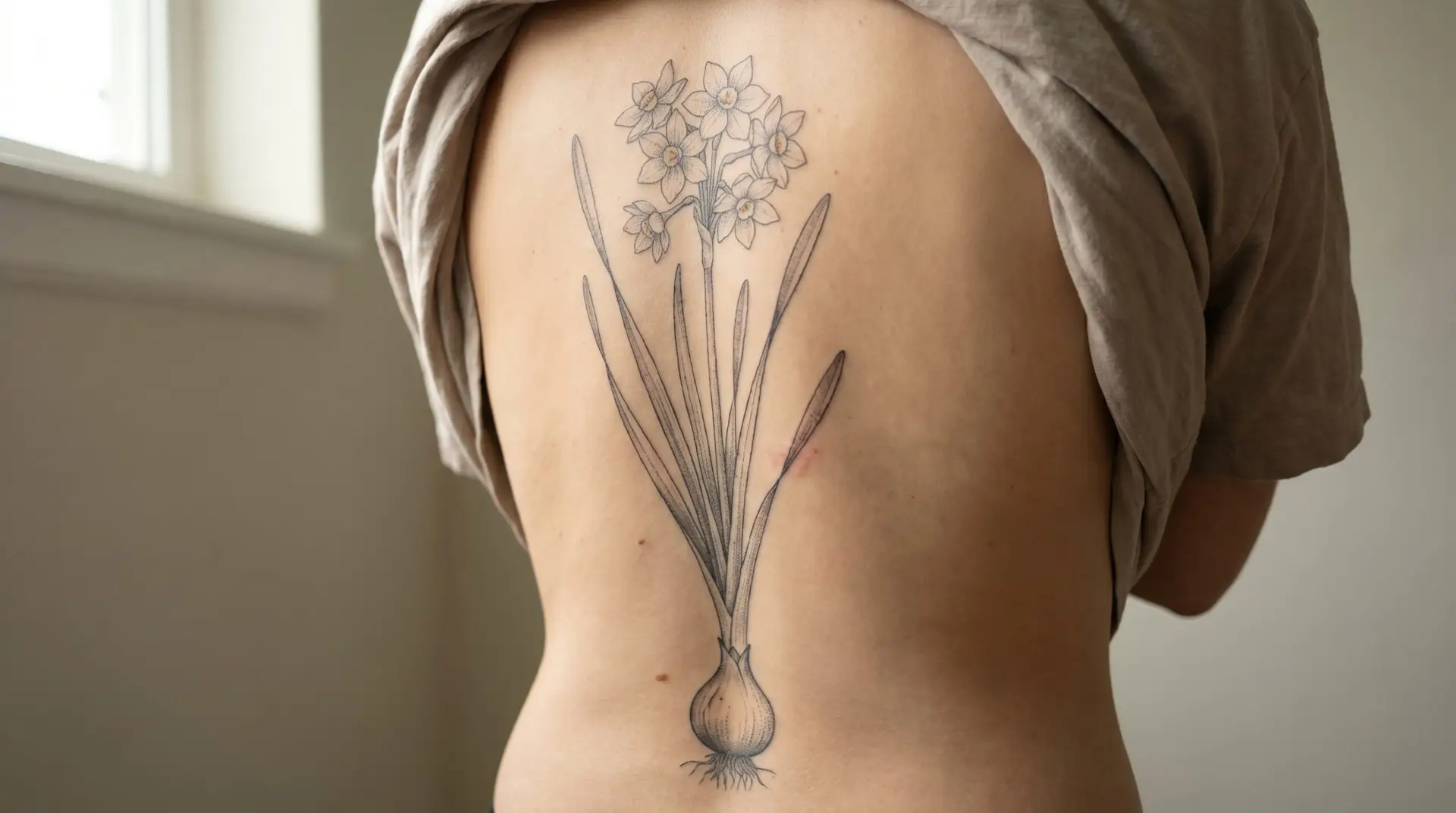
Botanical illustration style produces botanically accurate narcissus tattoos with detailed line work showing the precise flower structure, central corona, linear leaves, and bulb (for designs including the full plant). The style suits wearers who value scientific accuracy and want a tattoo that reads as botanical specimen illustration.
Greek mythological narrative style integrates narcissus flower imagery with classical Greek visual elements (small Greek pattern borders, references to the Narcissus myth through water or reflection imagery, classical Greek script if appropriate). The style suits wearers wanting explicit mythological reference alongside the floral subject.
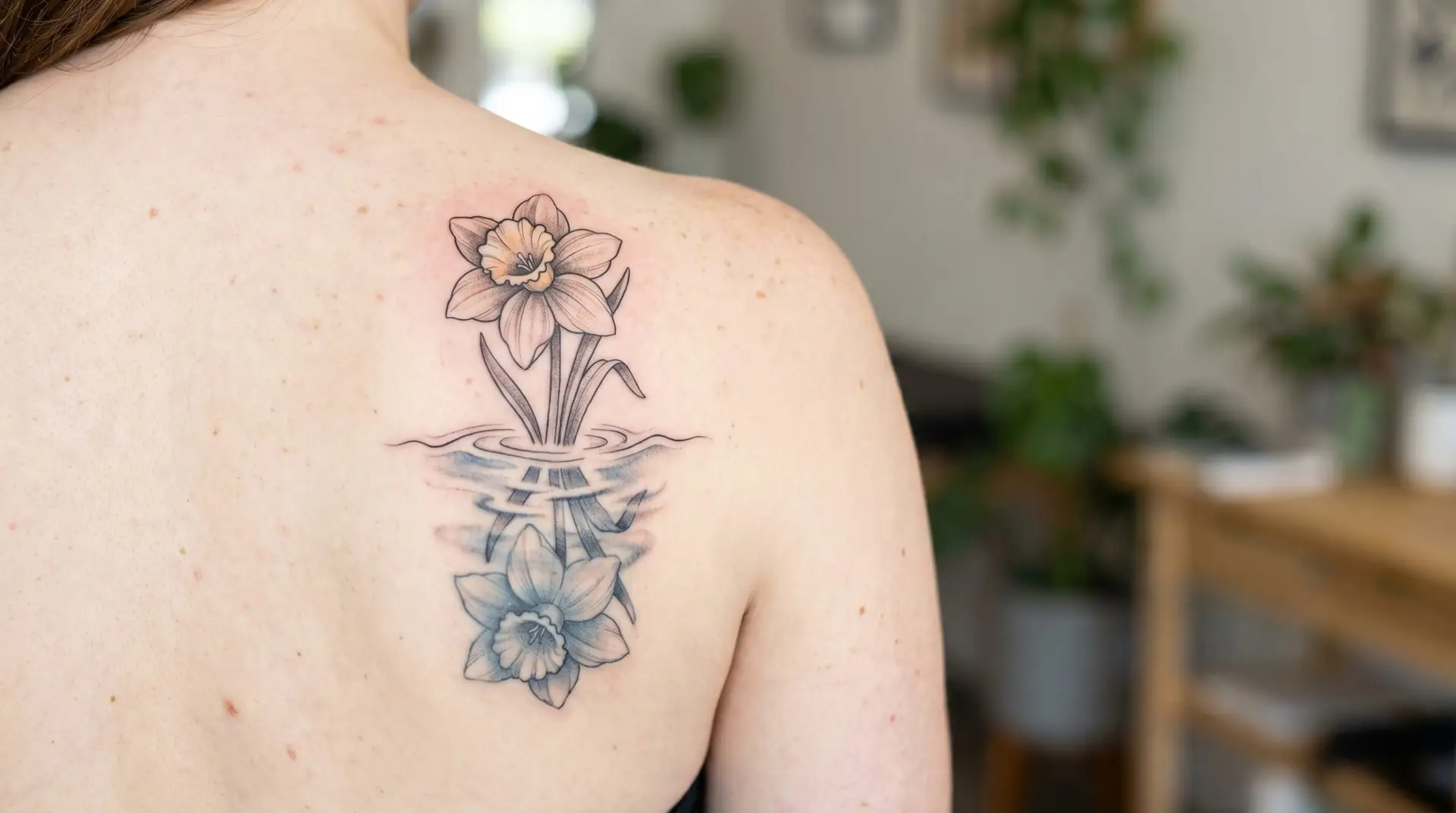
Reflection and water imagery narcissus tattoos use the species’s natural growth habit (bending downward as if looking at reflection in water) as the central visual element. These designs often feature the narcissus alongside a stylized pool or reflection element, directly invoking the Greek myth narrative. Powerful for wearers wanting to emphasize the self-reflection symbolic register.
Black-and-grey realism produces highly detailed photo-realistic narcissus tattoos in black ink with grey-scale shading. Works particularly well for memorial designs where the absence of color gives dignified gravitas suitable for memorial purposes.
Color choices and symbolism
Narcissus tattoo color choice extends the broader narcissus color symbolism into the personal meaning of the tattoo:
White paperwhite narcissus tattoo: the December birth flower color. New beginnings, purity, fresh starts. The most appropriate for December birth flower marker tattoos and for wearers wanting the specific paperwhite reference rather than broader narcissus.
Yellow daffodil/narcissus tattoo: sunshine, rebirth, friendship. The yellow color is more strongly associated with March birth flower tradition (daffodil) than December (paperwhite), but works for wearers wanting the warm sunshine register or the broader narcissus reference.
White-and-yellow tazetta tattoo: balance, fresh joy, the combination of purity (white tepals) with warmth (yellow corona). Common color choice for paperwhite-style narcissus tattoos preserving both color elements.
Black-and-grey narcissus tattoo: dignified memorial, classical elegance, refined gravitas. Works particularly well for memorial designs and for wearers wanting formal symbolic register without color complications.
Orange-cup or split-corona narcissus tattoo (daffodil cultivars): dramatic affection, vibrant renewal. Less common but striking when chosen, suiting wearers wanting bold floral statement.
Watercolor pastel narcissus tattoo: dreamy contemplation, soft renewal. Suits wearers wanting gentle artistic register rather than bold symbolic content.
Color saturation choice significantly affects tattoo longevity. Yellow tattoo colors fade faster than darker colors and need touch-ups sooner to maintain the original intensity. Black-and-grey designs maintain their visual integrity longest.
Placement guide
Narcissus tattoo placement choice depends on the design scale, the desired visibility, and the wearer’s aesthetic and professional considerations.
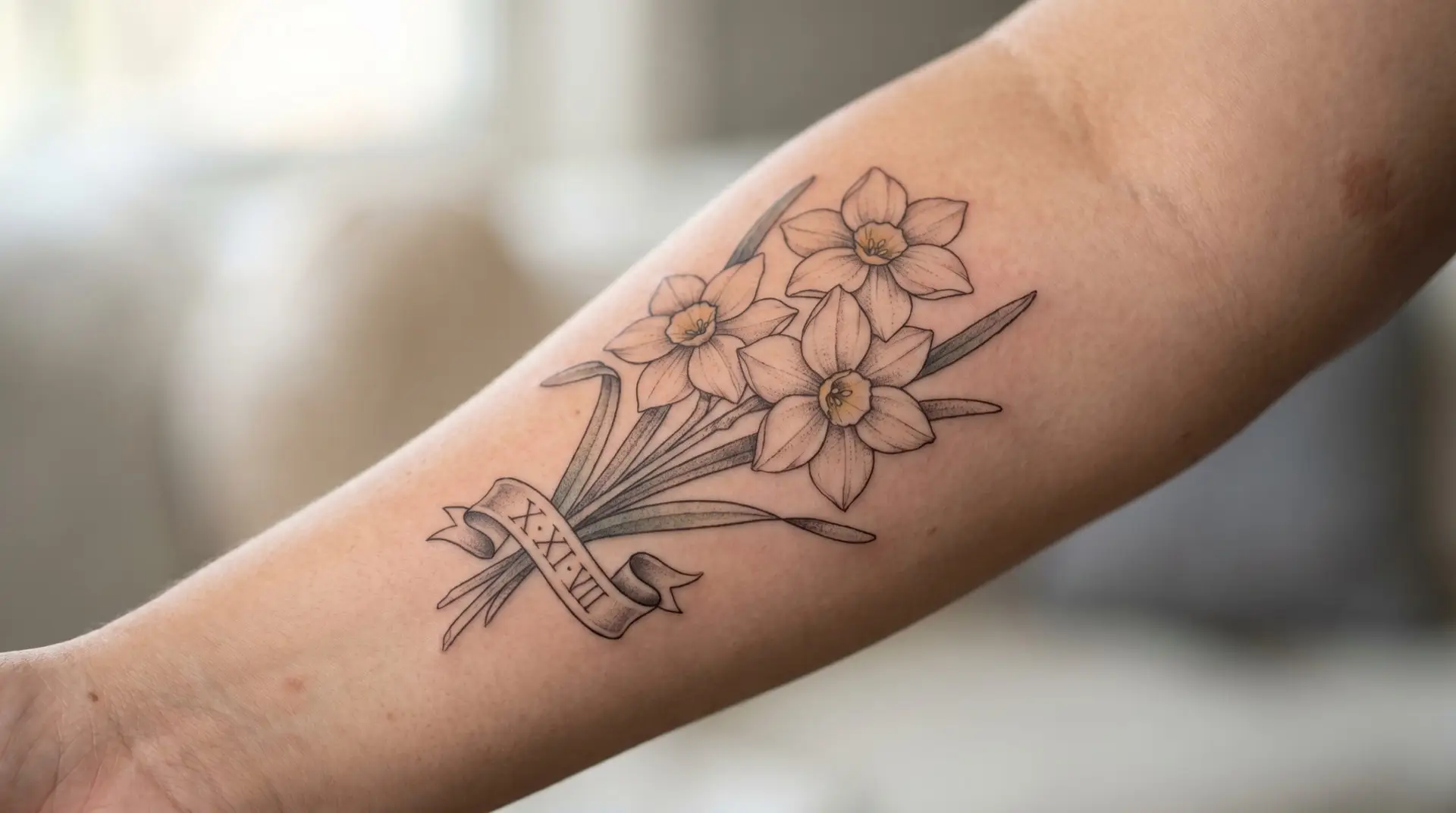
Forearm: the most popular narcissus tattoo placement. The forearm provides comfortable canvas for both single-bloom designs (3 to 5 inches) and small cluster designs (5 to 7 inches). Inner forearm placement gives a more private feeling; outer forearm placement creates more visible statement work.
Shoulder blade: narcissus cluster tattoos work well on the shoulder blade where the body provides ample canvas space for medium-scale designs (5 to 9 inches). The placement allows substantial floral detail while remaining naturally covered by clothing.
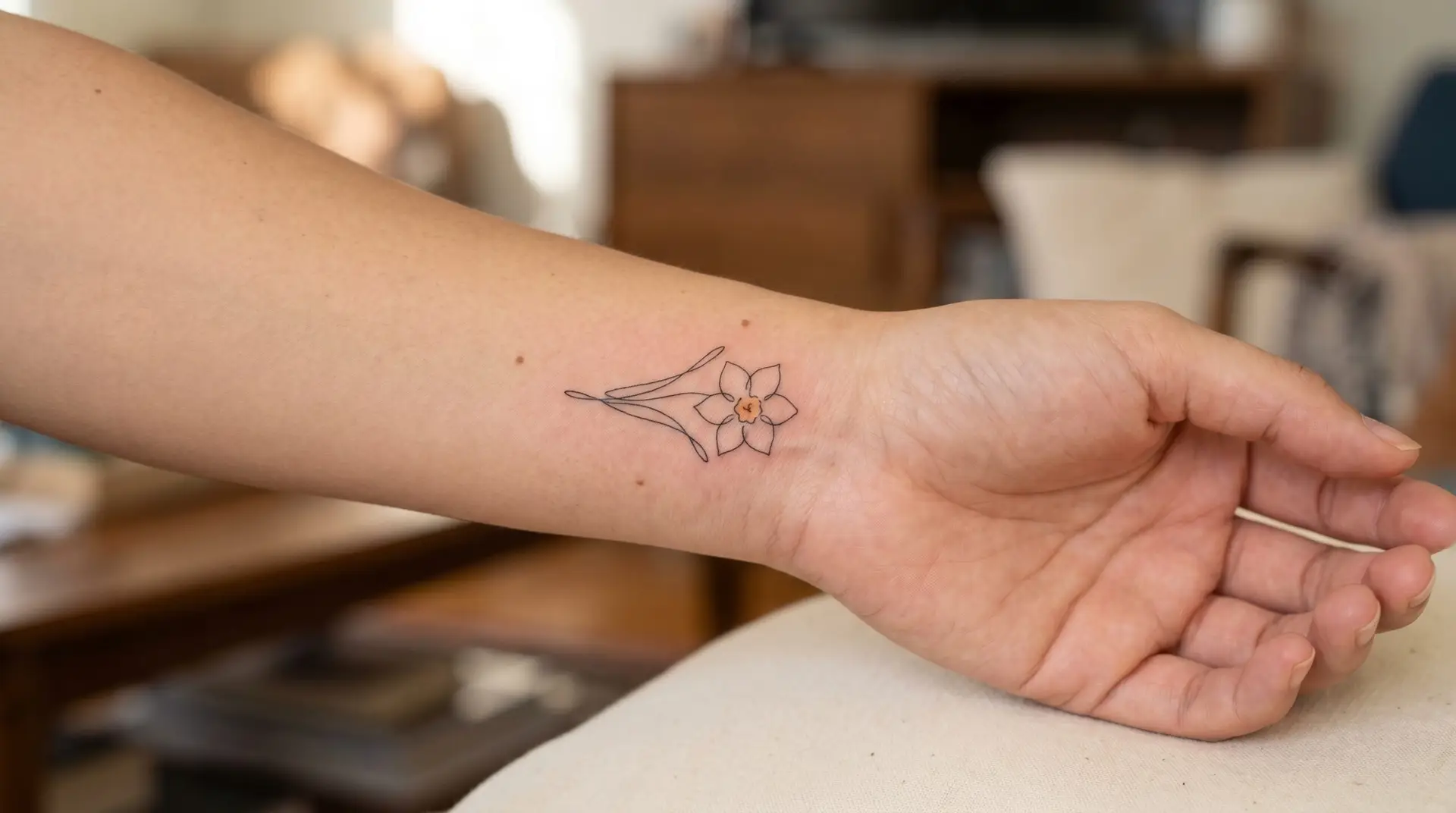
Wrist: small delicate single-bloom narcissus tattoos (2 to 3 inches) work well for wrist placement where subtle elegant imagery matches the compact visual space. Common for wearers wanting birth flower symbolism without bold statement work.
Behind ear and neck: very small minimalist single-bloom narcissus tattoos (1 to 2 inches) work for behind-ear and neck placement. The placement is unconventional and reads as personal aesthetic choice.
Ankle: small to medium narcissus tattoos (2 to 5 inches) work on the inner or outer ankle. The placement suits wearers wanting feminine elegant imagery in a more private location.
Sternum and ribs: larger narcissus cluster designs work along the sternum or down the ribs, taking advantage of the natural vertical line of the upper torso. Particularly suitable for designs incorporating water/reflection imagery that benefits from vertical composition.
Spine: vertical narcissus designs along the spine work for wearers wanting dramatic large-scale statement work. The placement allows 10 to 18 inches of detailed botanical work, particularly suitable for botanical illustration designs showing the full plant including bulb.
Thigh and hip: medium to large narcissus designs (5 to 12 inches) work on the thigh where the body provides ample canvas space.
Example design concepts
Several design concepts demonstrate effective ways to combine narcissus imagery with other symbolic elements:
Narcissus with reflection in water. A narcissus flower rendered alongside a stylized pool or water reflection (showing the flower’s reflection below the bloom) directly invokes the Greek Narcissus myth narrative. Powerful for wearers wanting to emphasize the self-reflection symbolic register and the classical mythological depth.
Narcissus with date or name. A narcissus tattoo with a small date (memorial date or birth date) or initials provides specific personal commemorative content alongside the symbolic floral imagery. Common for memorial designs honoring deceased loved ones.
Paperwhite narcissus cluster. A botanical illustration style narcissus tattoo showing the characteristic cluster of multiple small white paperwhite flowers emphasizes the December birth flower variety specifically. The cluster form provides visual rhythm within a single design.
Narcissus with Greek script or mythology reference. A narcissus tattoo with small Greek script (the word “Νάρκισσος” meaning Narcissus, or a chosen Greek phrase) extends the classical mythological heritage symbolism into directly readable script content. Suits wearers with serious interest in classical Greek culture.
Narcissus with butterfly. A narcissus tattoo with a small butterfly suggests transformation and renewal alongside the contemplative narcissus symbolism. The combination softens any negative narcissism associations through the butterfly’s positive transformation register.
Narcissus paired with holly. December-born wearers sometimes combine narcissus and holly (both December birth flowers) in a single design. The combination provides both birth flower references and visual contrast between the elegant paperwhite narcissus and the spiny dark green holly with red berries.
Narcissus with turquoise color accent. A narcissus tattoo with small distinctive blue-green color accents suggesting turquoise (the December birthstone) provides the complete December birth flower and birthstone reference in single design.
Black-and-grey memorial narcissus. A photo-realistic narcissus rendered in black-and-grey provides dignified memorial commemoration. Particularly suitable for memorials emphasizing the new beginnings and rebirth symbolic register without color complications.
Minimalist single paperwhite on wrist. A small fine-line drawing of a single paperwhite narcissus bloom on the wrist provides elegant subtle reference at minimal scale. Suits wearers wanting birth flower symbolism without bold statement work.
Narcissus full plant with bulb (botanical illustration). A botanical illustration style narcissus tattoo showing the complete plant from underground bulb through linear leaves to flowering stem provides scientific accuracy and educational depth. Works particularly well at medium to large scale (6 to 12 inches) on forearm, thigh, or spine.
Aftercare and longevity
Standard tattoo aftercare applies to narcissus tattoos: keep the area clean with gentle unscented soap, apply a thin layer of recommended healing ointment for the first week, avoid direct sun exposure during the initial healing period (2 to 4 weeks), and avoid swimming or full water submersion until fully healed.
Narcissus tattoo longevity depends primarily on the line work quality, the color saturation, and the wearer’s skin and lifestyle factors. The distinctive six-segment tepal structure with central corona requires highly skilled tattoo artists to render at small scale without the detail becoming muddied. Fine-line and colored work generally need touch-ups sooner than bold blackwork to maintain the original line clarity.
Yellow narcissus tattoo colors fade more rapidly than darker colors. Sun exposure is the primary cause of color fading; SPF 50+ sunscreen significantly extends visual longevity. White paperwhite narcissus tattoos in skin tones can become less visible over time as the tattoo white pigment may show changes against the skin background; black-and-grey designs maintain visual contrast better long-term.
Skin changes over time affect narcissus tattoo appearance. Tattoos on areas of skin that stretch significantly (abdomen, hip, thigh, breast) can distort over time. Wearers planning significant body changes should discuss placement with their tattoo artist to choose locations that hold the design well over decades.
At a glance
Questions
Questions
Frequently asked
What does a narcissus tattoo mean?
New beginnings, rebirth, and self-reflection. The Greek mythological connection to the youth Narcissus (who fell in love with his own reflection) provides the symbolic anchor around self-knowledge and reflection. Most narcissus tattoo wearers emphasize the positive flower symbolism (new beginnings, contemplation, rebirth) rather than the pathological psychological narcissism associations.
Is a narcissus tattoo associated with narcissism?
The flower shares its name with the psychological “narcissism” concept (which was coined in the late nineteenth century drawing on the Greek myth). However, narcissus tattoos primarily reference the positive flower symbolism (new beginnings, self-reflection, contemplation) rather than the pathological psychological register. Wearers should consider context but the positive flower symbolism dominates in tattoo cultural reading.
Where is the best place for a narcissus tattoo?
The forearm is the most popular placement for medium-scale designs. Wrist and behind-ear placements work for small delicate single-bloom designs. Shoulder blade, ankle, sternum, and spine placements work for larger or more decorative designs. The placement choice depends on design scale and desired visibility.
Can I get a small narcissus tattoo?
Yes, small narcissus tattoos (1 to 3 inches) work well for wrist, behind-ear, ankle, and finger placements. The challenge with small narcissus designs is the distinctive six-segment tepal structure and central corona that require skilled tattoo artists to render at small scale without losing structural detail.
How long does a narcissus tattoo take?
Session time varies widely by size, detail, style, and artist pace. Small fine-line work is usually completed in a single session, while large detailed designs with mythological elements may require multiple sessions. Your artist can give a realistic time estimate during the design consultation.
Is a narcissus tattoo good for women?
Narcissus tattoos work well for any wearer regardless of gender. The elegant flower form, contemplative symbolic register, and design flexibility (from delicate fine-line to bold botanical) suit a wide range of aesthetic preferences.
Can I combine narcissus with other flowers?
Yes. Common combinations include narcissus with holly (both December birth flowers), narcissus with butterflies, narcissus with reflection/water imagery (invoking the Greek myth), and narcissus with stars or astronomical elements. The combinations layer additional meaning onto the central narcissus symbolism.
How much does a narcissus tattoo cost?
Cost varies widely by artist skill level, geographic region, design complexity, and tattoo size. Larger and more detailed work, including designs with mythological elements, costs more and may span multiple sessions. Ask your chosen artist for a quote based on your specific design.
Does a narcissus tattoo hurt?
Pain level depends on placement. Forearm, upper arm, and outer thigh are typically among the less painful. Spine, sternum, rib cage, ankle, and behind-ear placements are typically among the more painful because of proximity to bone or thin skin areas.
Keep reading
December birth flower: narcissus, holly, and what they mean
December birth flowers by day: the Korean 365-day tradition
Holly flower meaning: Christmas tradition, color, and growing
Birth flower by month: all 12 monthly flowers
Enjoying our flower guides? Add YourFlowersGuide as a preferred source on Google. It helps more readers find us.
Add to Preferred Sources