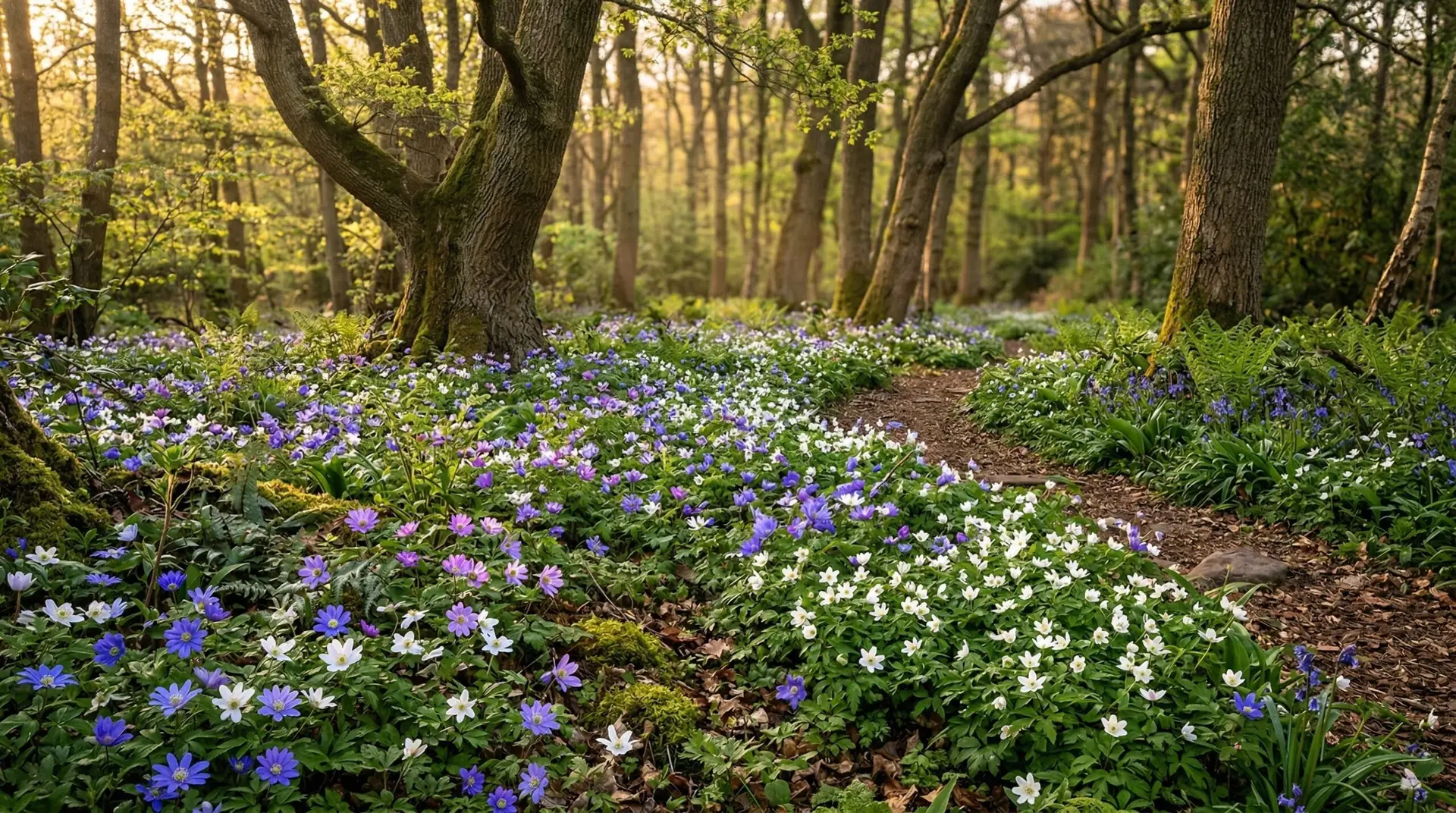
The late April dawn arrives cold and gray under the bare branches of the oak tree. I watch the ground closely where the dead leaves of autumn still lie thick and damp against the soil. Here, a small white woodland anemone pushes through the dark leaf litter. Its stem is thin and pale, curving slightly under the weight of a closed bud that resembles a tiny, nodding pearl. As the sun clears the eastern ridge and strikes the forest floor, the petals slowly hinge outward to catch the light. A solitary native bee, moving sluggishly in the morning chill, lands on the yellow stamens to gather the first pollen of the day. This quiet unfurling happens thousands of times across the forest floor, turning a dormant patch of dirt into a living, breathing community.
This is the narrow window of the spring ephemeral, a brief period when the earth warms but the tree canopy has not yet leafed out to block the sun. Plants like Anemone nemorosa have evolved to seize this exact moment of abundant light and moisture. They grow rapidly, flower, set seed, and then retreat back into the earth before the heavy shade of summer arrives. I find myself kneeling in the damp soil just to look at the delicate veining on their leaves, which sit like ragged green umbrellas below the blooms. The roots are shallow, threading horizontally through the top layer of humus where decaying wood and leaf mold hold water like a sponge. They do not fight the established roots of the ancient oaks but instead occupy the spaces in between. Watching them thrive in this temporary light makes the act of gardening feel less like control and more like bearing witness.
Contents 3 sections
Creating a living ground layer
When we talk about an anemone ground cover, we are talking about a slow, deliberate colonization of the woodland floor. The Greek windflower, Anemone blanda, offers a slightly different rhythm than its native cousins, opening in shades of violet, blue, and stark white. The flowers follow the sun, tracking its arc across the sky, and close tightly again when the afternoon shadows lengthen or when rain threatens. I planted a few dozen of these dry, irregular corms five years ago, scattering them by the handful and burying them exactly where they fell to avoid the artificial look of straight lines. Now, they have multiplied into a dense mat that holds the spring soil in place against heavy rains. Early emerging syrphid flies hover over the blue petals, finding sustenance when little else has dared to bloom. The garden slowly becomes a self-sustaining system where my intervention is no longer required.
The process of naturalizing anemones requires a specific kind of patience that runs counter to our desire for immediate results. When the hard corms arrive in the fall, they look like nothing more than small pieces of dried gravel or bits of dark bark. Soaking them in a bowl of water overnight plumps them up, waking the dormant tissue before they go into the cold ground. Digging through the autumn leaves to plant them feels like an act of blind trust. You press them into the soil, cover them with compost, and then wait through the freezing months of winter, wondering if they survived the frost or the foraging mice. The first spring often brings only a sparse showing of foliage and a handful of blooms. It takes years for the underground rhizomes to stretch out and find their neighbors, gradually knitting together into a continuous carpet of green and blue.
Companions in the dappled shade
A healthy woodland floor is never a monoculture, and anemones look most at home when they share the earth with other early risers. Long before the anemones open, the white bells of a snowdrop patch break through the frozen ground to signal the end of winter. As the snowdrops fade and their green leaves begin to gather energy for the next year, the anemones rise to take their place in the succession of blooms. They are soon joined by the pink and blue clusters of Virginia bluebells, which stand taller and provide a loose, structural canopy over the low-growing windflowers. The roots of these plants intertwine in the leaf mold, sharing the same fungal networks and drawing from the same temporary pools of spring rain. I sometimes add a drift of forget-me-not seeds to the edges of the path, letting their tiny azure flowers mingle with the white anemone petals. Together, they create a layered ecosystem that supports early insects and feeds the soil as their foliage eventually decays.
Managing this wilder kind of garden means changing how we view maintenance and order. There is no deadheading here, no neat edging, and no spreading of sterilized wood mulch. The anemones need the fallen autumn leaves to protect their shallow roots from the deep winter freezes and the drying winds of early spring. I leave the leaf litter exactly where the wind deposits it, allowing it to break down naturally into the dark, crumbly humus that feeds the woodland. When weeds appear, I pull them carefully by hand, making sure not to disturb the fragile anemone stems that break easily under clumsy fingers. Gardening in this way is a quiet practice of observation, learning to distinguish the serrated edge of a young anemone leaf from the aggressive creeping of a wild blackberry vine. The goal is not to conquer the space but to gently tip the balance in favor of the flowers.
The quiet retreat into summer
By late May, the canopy above has closed completely, casting the forest floor into a deep, permanent shade. The oak leaves are fully expanded, and the soil begins to dry out as the trees pull hundreds of gallons of water from the earth each day. The anemones understand this shift perfectly and begin their orderly retreat back into dormancy. Their green leaves turn a pale, translucent yellow before drying into brown husks that dissolve into the soil. It is always a little sad to watch them go, leaving bare patches of earth where so much life recently thrived. But this disappearance is a necessary part of their survival, a brilliant adaptation to an environment that only offers briefly hospitable conditions. They leave behind small, hard seeds that ants will carry away and bury, slowly expanding the colony year by year.
We spend so much of our lives trying to hold onto things, trying to make the fleeting moments last just a little longer. The woodland garden teaches a different lesson entirely, asking us to appreciate the intense, temporary beauty of the spring ephemeral and then let it pass. The anemones do not mourn the closing of the canopy, and they do not fight the encroaching summer heat. They simply gather the energy they need, store it deep in their fleshy roots, and wait in the dark for the earth to tilt back toward the sun. Walking through the woods in August, you would never know that a river of blue and white flowers sleeps just inches beneath your boots. The ground holds its secrets quietly, promising nothing, but preparing for the inevitable return of spring.
More About Anemone
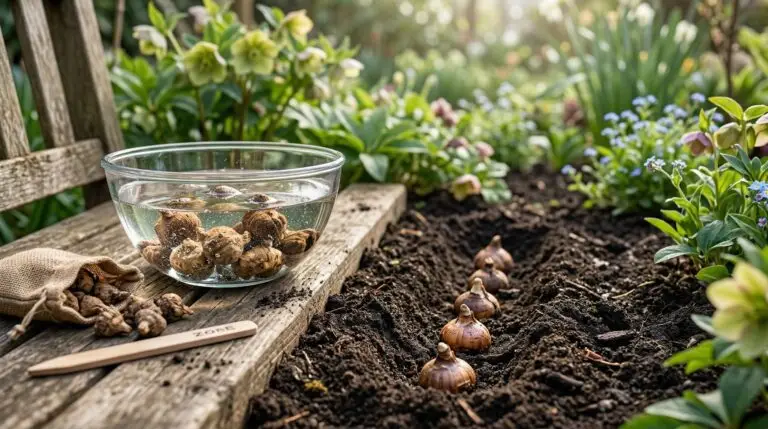
How to plant anemone corms in fall for a spectacular spring flower display
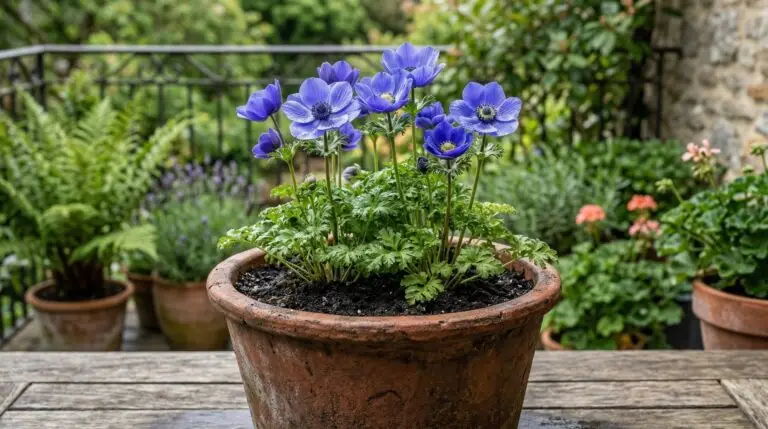
How to grow anemones in containers for a colorful spring balcony garden
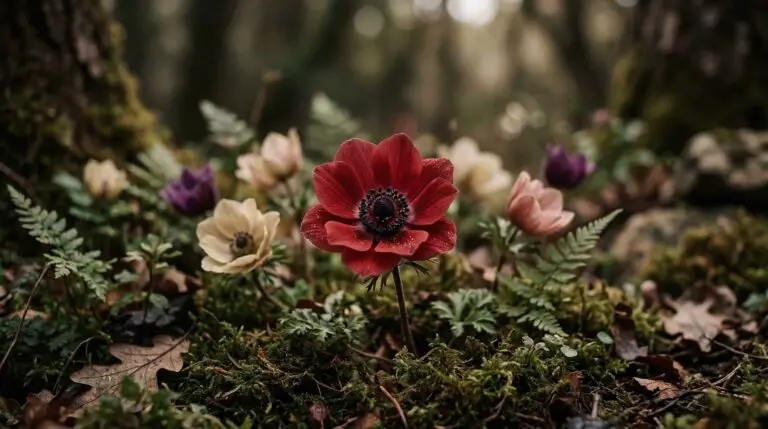
Anemone flower meaning and the mythological story behind the windflower
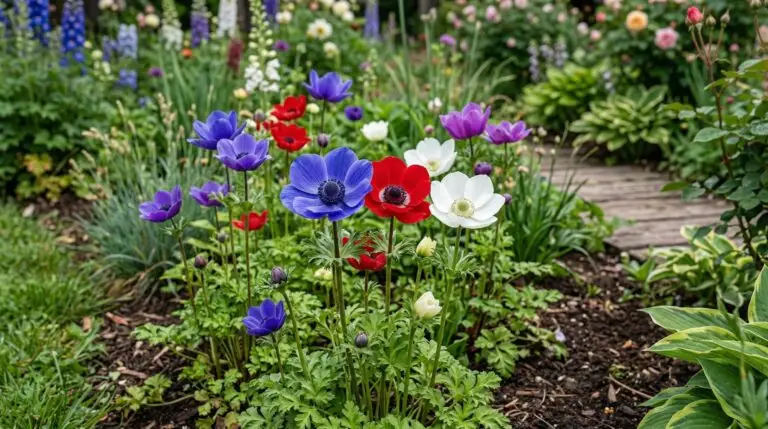
Growing anemones as cut flowers for endless spring and fall arrangements
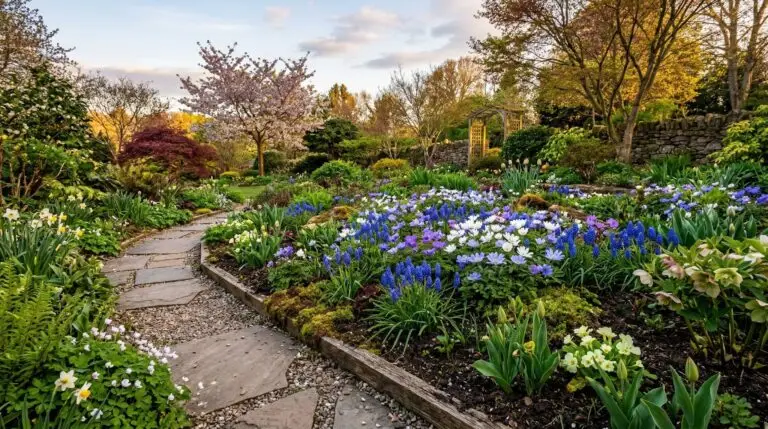
Anemone and ranunculus planted together for the ultimate spring flower garden
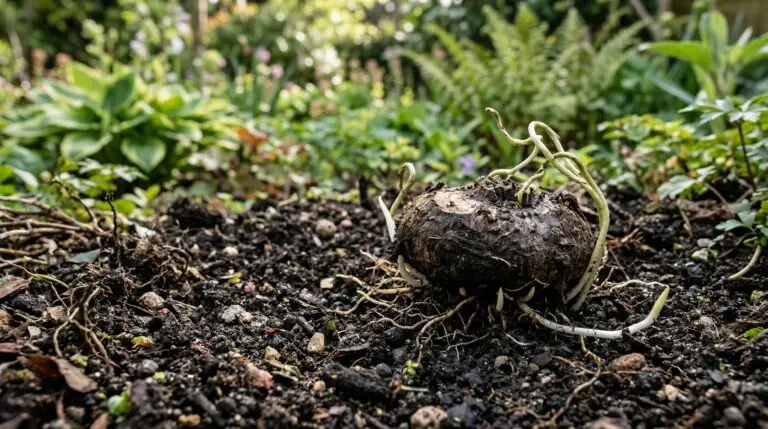
Why your anemone corms did not sprout and how to succeed next time

Anemone meaning, from anticipation and protection to forsaken love

Anemone wedding bouquets that bring effortless romance to any ceremony
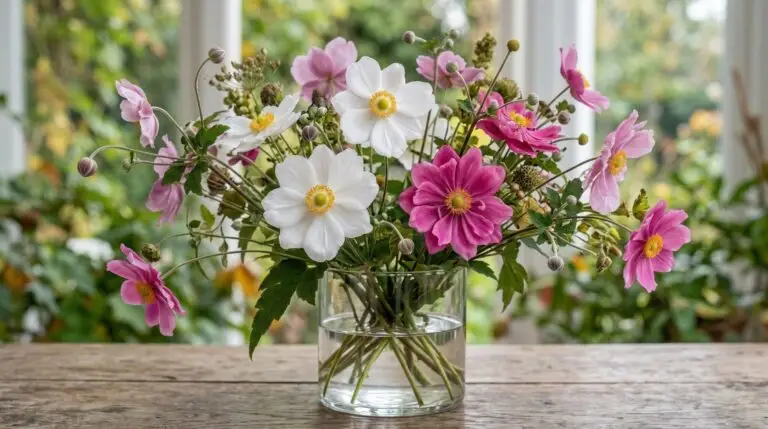
Japanese anemones for fall gardens that bloom when everything else fades
Enjoying our flower guides? Add YourFlowersGuide as a preferred source on Google. It helps more readers find us.
Add to Preferred Sources