Rose is June’s primary birth flower and the single most-tattooed flower in human history. The flower symbolizes love in its many forms, with the specific meaning shifting by color. Additional symbolic layers come from Persian classical poetry (Khayyam, Rumi, Sa’di, Hafez), Roman cultivation history, Christian Marian symbolism, Tudor English political iconography, the Bulgarian Damask rose tradition, and modern global cut-flower culture. No other flower has comparable depth across multiple unrelated civilizations.
Rose is the most popular flower tattoo subject, with steady interest across related queries (rose tattoo ideas, rose tattoo meaning, small rose tattoo, traditional rose tattoo, and similar). The flower’s combination of universal cultural recognition, flexible stylistic interpretation, and continuing romantic associations explains its enduring tattoo dominance across age groups, geographic regions, and tattoo culture subgroups.
In this guide
Why rose dominates the tattoo world
Rose holds the strongest position in tattoo culture of any flower for several converging reasons. The visual structure of the rose (layered petals around a central core) reads well at all sizes, from a 0.5-inch wrist piece to a full-back composition. The color symbolism is unusually rich (eight distinct color meanings, each with its own established reading), giving wearers flexibility in matching the tattoo to their specific intention. The cultural recognition is universal across Western culture and most world cultures, which means the rose tattoo reads symbolically wherever the wearer travels.
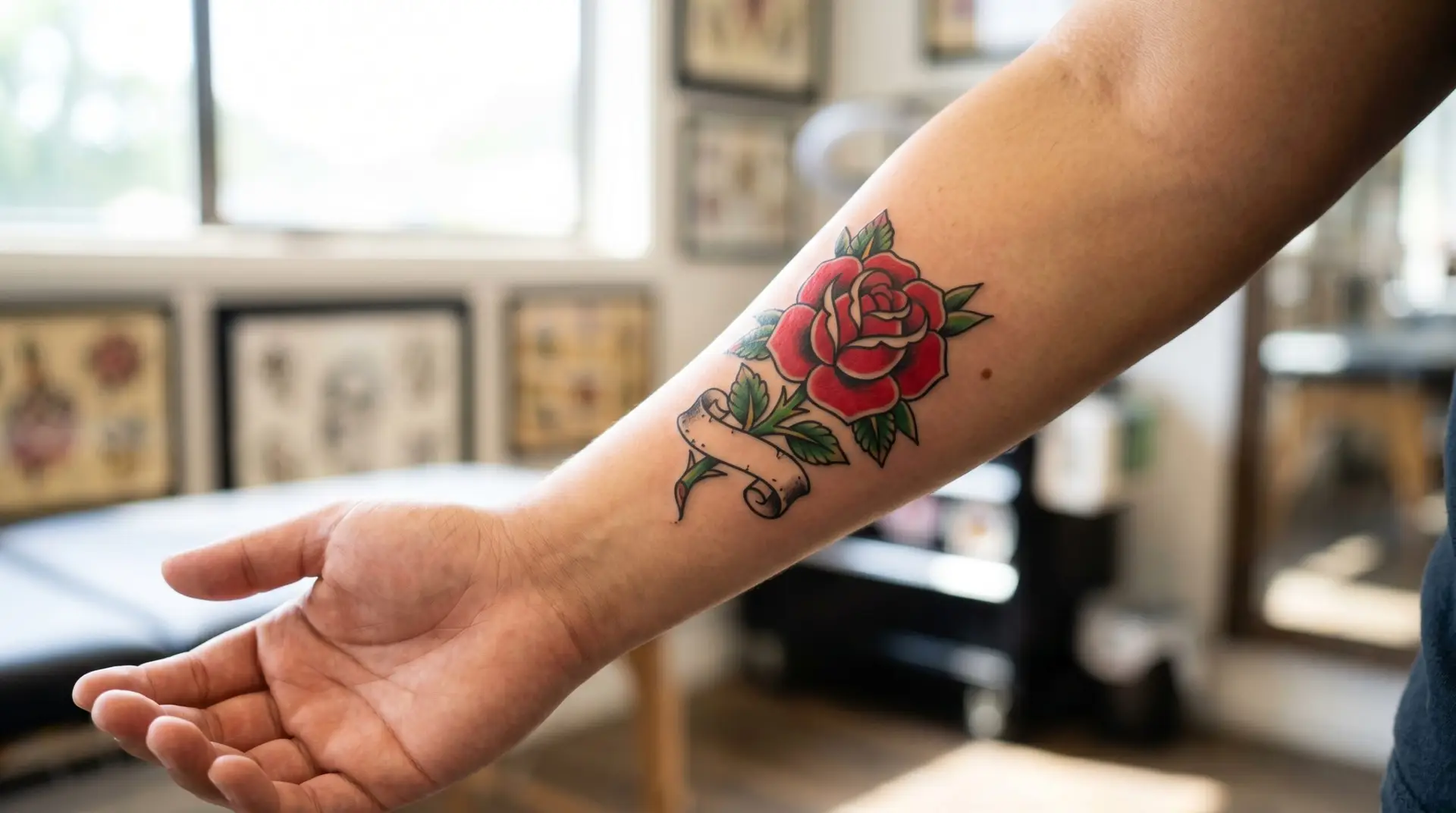
The tattoo tradition of American traditional or “old school” tattooing puts rose at its center. The classic American traditional rose (heavy black outline, saturated red petals, green leaves, often paired with a banner, sword, or other element) is one of the foundational designs of American tattoo art. Sailor Jerry Collins, the most famous mid-twentieth-century American tattoo artist, made rose central to his catalogue, and the style spread globally through American military presence during World War II and subsequent decades.
The flower has no controversial political or religious associations across most modern cultures, which makes rose tattoos broadly socially acceptable. Most rose tattoos read positively across family, work, and social contexts. The combination of artistic depth, symbolic richness, and social acceptability explains why rose remains the most-requested flower in tattoo studios from urban specialist shops to small-town traditional studios across the world.
Style options for rose tattoos
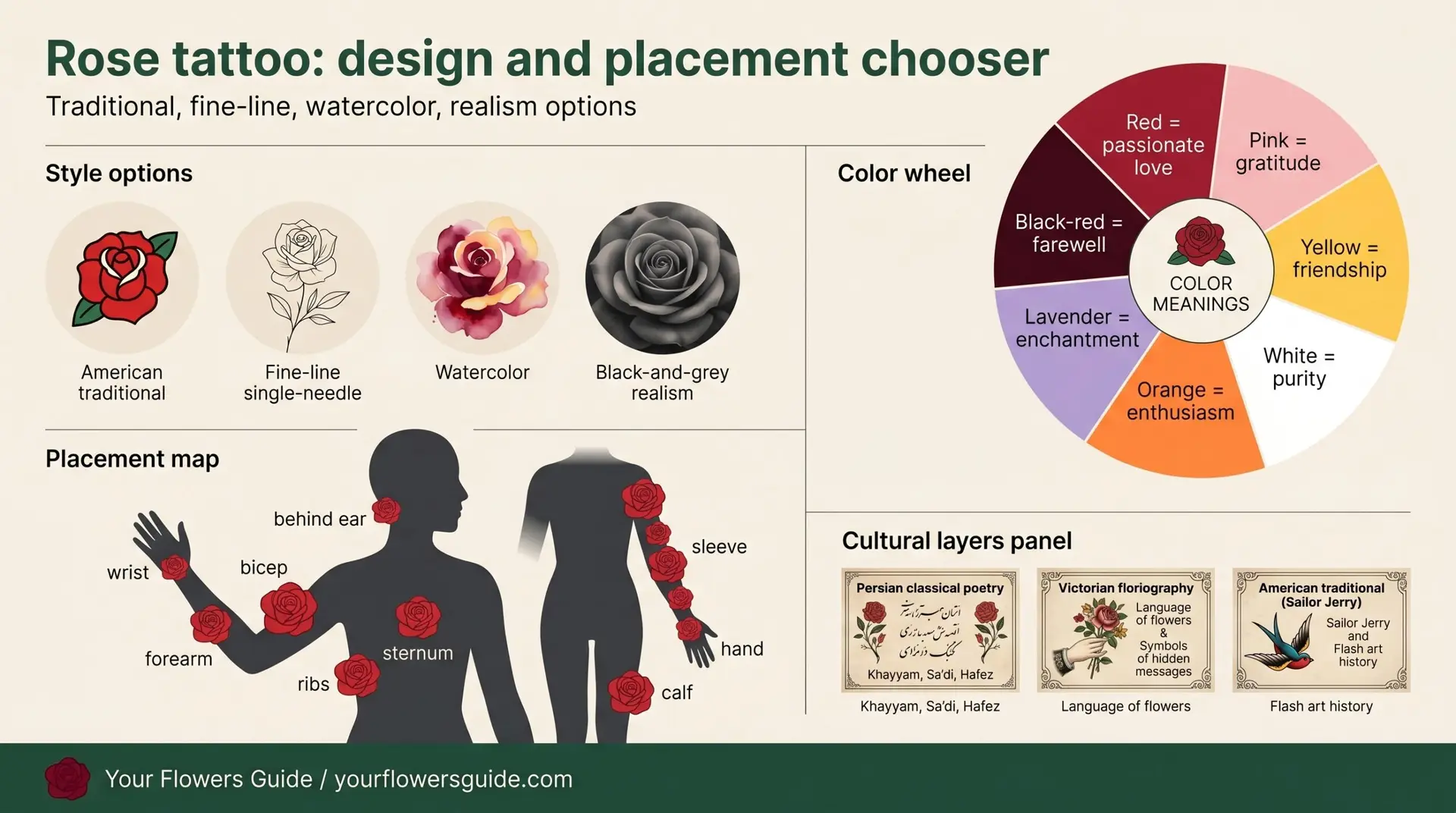
Rose tattoo styles offer perhaps the broadest range of any single flower subject. Main options include the following.
American traditional (old school). Heavy black outline, saturated red petals, green leaves, classic Sailor Jerry aesthetic. Works at medium scale (3 to 5 inches). Holds visible color for 20+ years due to thick outline and saturated fill. The classic style for forearm, calf, chest, and bicep placements.
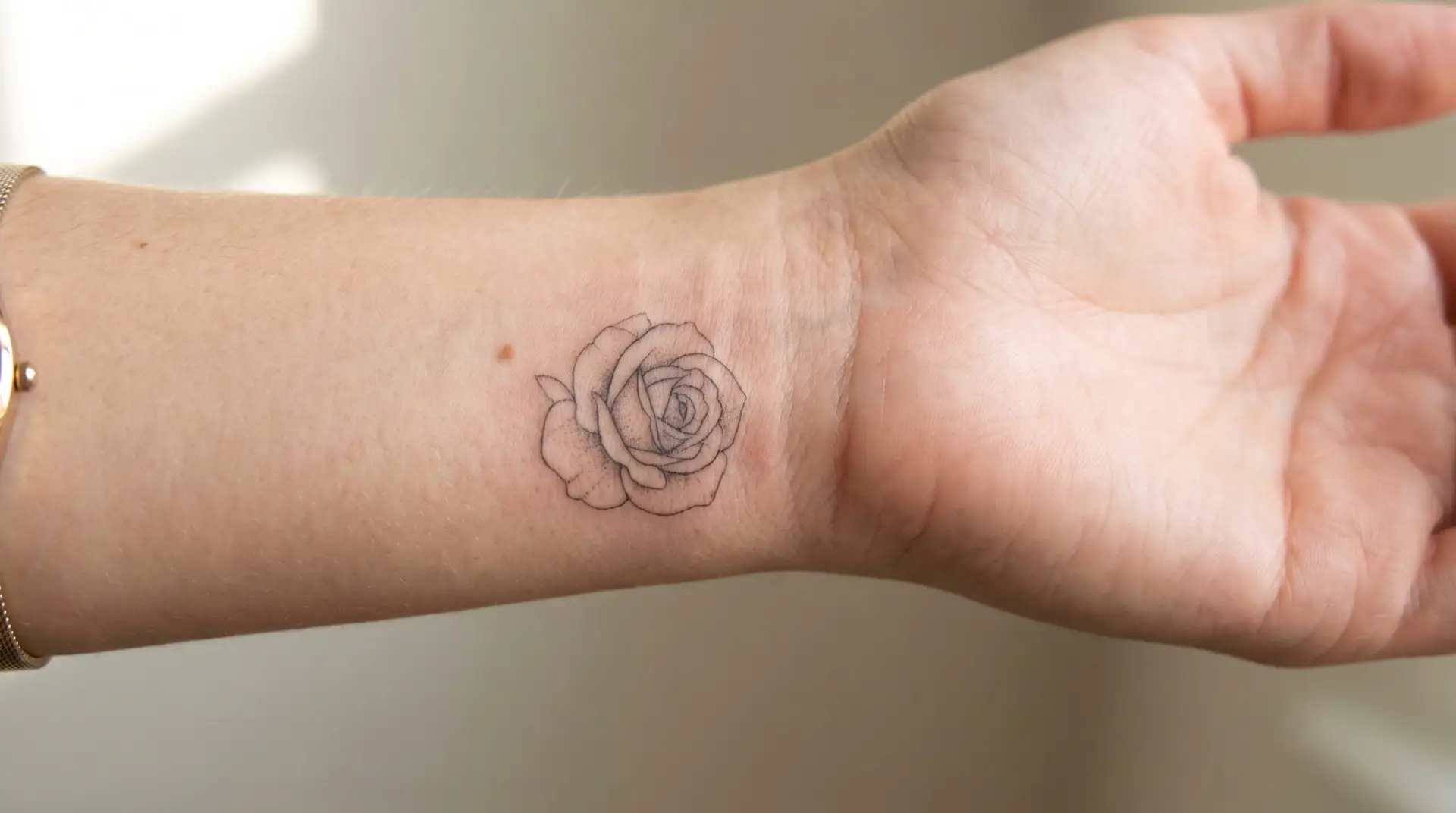
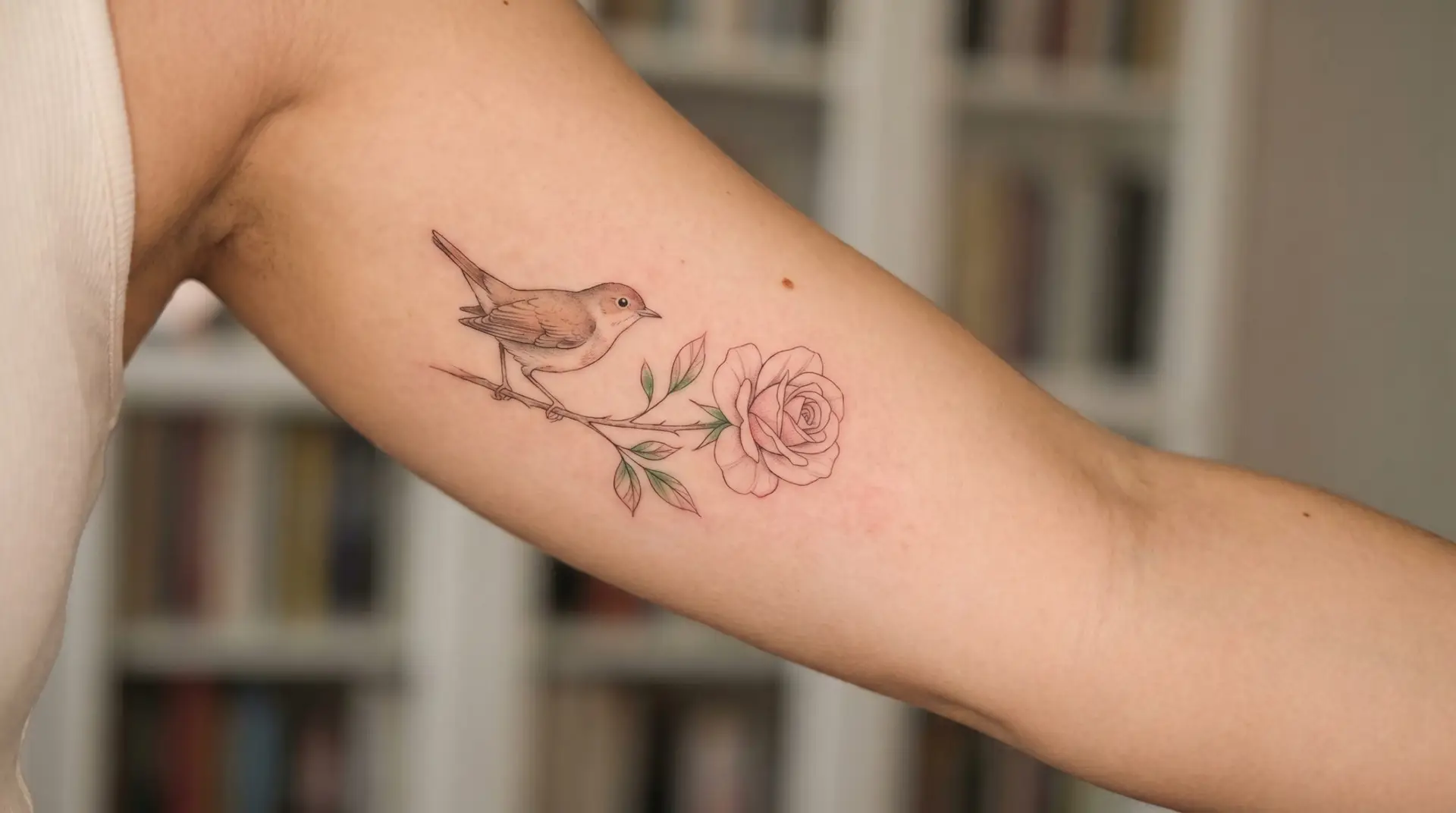
Fine-line single-needle. Delicate thin lines render rose petal structure with precision. Works at small to medium scale (1 to 4 inches). Suits wrist, behind ear, collarbone, and rib placements. Touch-ups every 5 to 10 years.
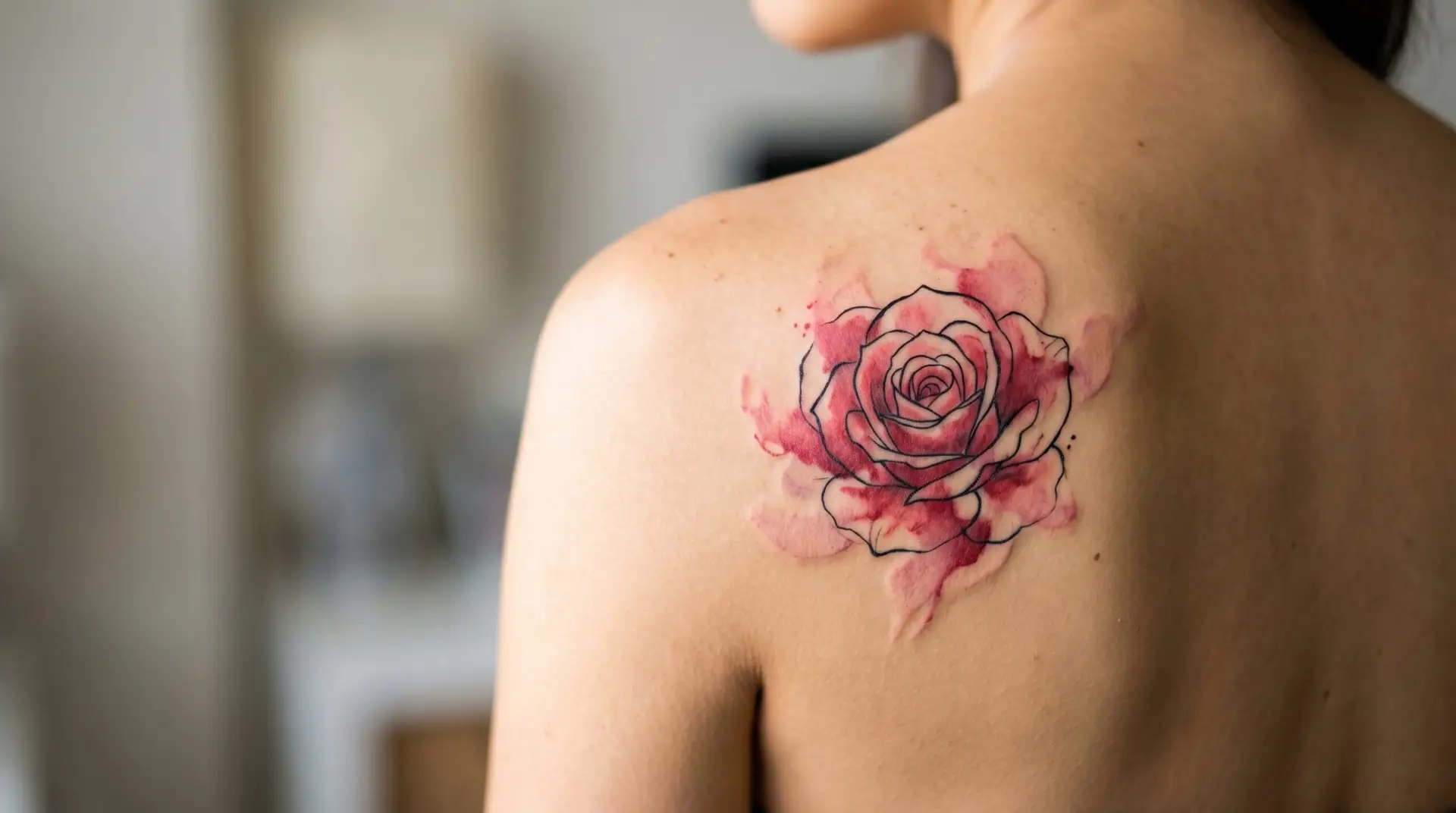
Watercolor. Soft color bleeding outward from central rose outline. Creates artistic dreamy effect. Works at medium to large scale (3 to 6 inches). Requires touch-up every 3 to 5 years due to ink fade.
Botanical illustration. Vintage scientific drawing aesthetic with stem, leaves, sometimes Latin label (Rosa with species name). Suits forearm, ribs, back placements at medium to large scale.
Photorealism (3D realism). Photo-realistic rose with detailed petal texture and dimensional shading. Requires large canvas (5 to 10 inches minimum) and master-level artist. Holds detail for 10 to 15 years with proper care.
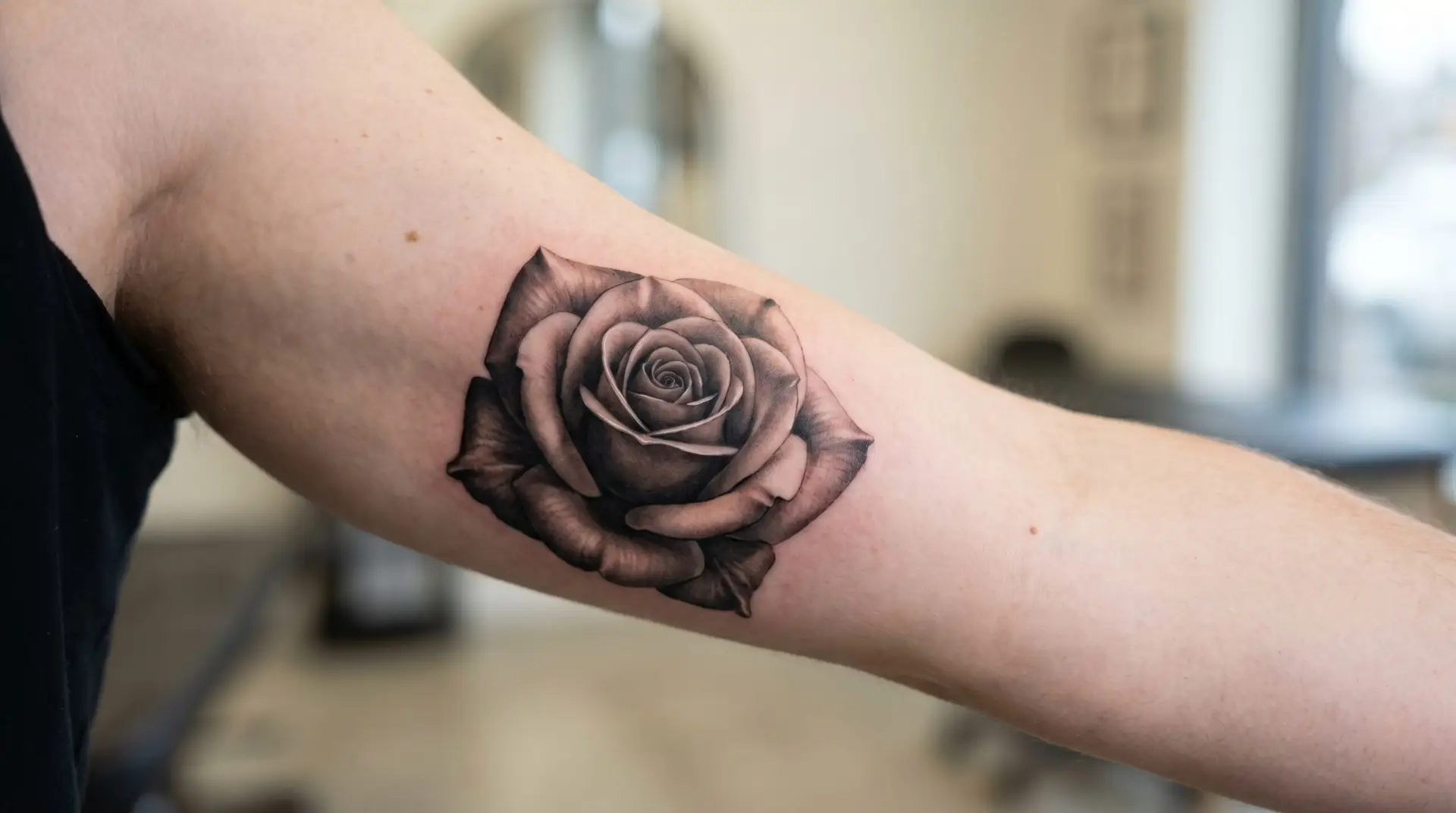
Black and grey. Greyscale rose without color, using black ink with shading variation. Versatile and ages exceptionally well. Suits readers who prefer monochromatic aesthetic.
Neo-traditional. Modern reinterpretation of American traditional with expanded color palette and more refined line work. Works at medium to large scale.
Geometric / blackwork. Rose stylized into geometric pattern or solid black blocks. Modern aesthetic.
Dotwork (pointillism). Texture built from small dots rather than lines. Creates soft fuzzy character. Medium scale (3 to 4 inches).
Japanese (irezumi-influenced). Rose integrated with Japanese-style elements (water, wind, foo dogs, dragons). Large scale (full sleeve or back piece). Requires Japanese-style specialist.
Color choices and symbolism
Rose color has the strongest single-flower color symbolism in tattoo work:
Red rose tattoo: passionate romantic love. The most-given color and the default symbolic reading. Suits anniversary, romantic, and milestone-relationship tattoos.
Pink rose tattoo: gentle love, gratitude, and admiration. Pale pink reads as sweetness; deeper pink reads as appreciation. Suits family member tributes and friendship tattoos.
Yellow rose tattoo: friendship and joy in modern reading. The Victorian “jealousy” reading is effectively obsolete. Suits friendship tattoos and birthday celebrations.
White rose tattoo: purity, new beginnings, innocence. Also used for memorial tattoos honoring deceased family. The white-on-skin tattoo design requires careful ink choice (off-white or pale grey often works better than pure white).
Orange rose tattoo: enthusiasm, fascination, creative energy. Less traditional but increasingly popular for vibrant modern designs.
Lavender or purple rose tattoo: enchantment and love at first sight. Suits early-relationship commemorative tattoos.
Peach rose tattoo: gratitude, modesty, sincere appreciation. The “thank you” rose color in floriography. Less common as a tattoo color but suits readers wanting subtler symbolism.
Black-red (“black”) rose tattoo: farewell, mourning, the end of something. True black roses do not exist; the “black” rose tattoo uses very deep crimson ink to achieve the dark register. Suits memorial tattoos for deceased loved ones.
Black-and-grey rose tattoo: versatile, ages well, suits virtually any other tattoo work the wearer already has. The monochromatic aesthetic without color symbolism.
Multi-color rose bouquet tattoo: layered meaning, abundance of feeling. Combination tattoos with two or three different rose colors (e.g., red and yellow for friendship deepening into love) express combined symbolic readings.
Persian, Victorian, and modern cultural layers
Rose tattoos can draw on three documented cultural traditions for additional symbolic depth beyond the basic color reading.
Persian classical poetry tradition. The rose appears extensively in Persian classical poetry from Omar Khayyam (eleventh century) through Hafez (fourteenth century). For tattoo integration, common designs include rose paired with nightingale (the classic Persian symbolic pair from Hafez’s ghazals), rose with a short Persian-poetry quote in script (often from FitzGerald’s Rubaiyat translation: “A Book of Verses underneath the Bough…”), or rose with subtle Persian calligraphic stylization. The Persian layer suits readers with Iranian cultural heritage, students of comparative literature, or readers drawn to the rose-poetry tradition specifically.
Victorian floriography tradition. The rose anchors the Victorian flower language vocabulary that codified the modern Western birth flower system. For tattoo integration, common designs include rose with a small Victorian-era romantic phrase in script (“forever yours,” “with love,” “in remembrance”), rose with a date in Victorian-style numerals, or rose integrated with other Victorian-era flowers (forget-me-not, sweet pea, daisy) in a small bouquet composition. The Victorian layer suits readers drawn to nineteenth-century aesthetics and the formal symbolic register of the era.
Modern tradition: Sailor Jerry and American military. The American traditional rose tattoo connects directly to the Sailor Jerry Collins legacy and the mid-twentieth-century American military tattoo culture that spread globally. For tattoo integration, the American traditional rose with banner (containing a name, date, or motto) is the iconic design. This style suits readers honoring military service, family military tradition, or the broader American working-class tattoo heritage that the style continues.
Placement options
Rose tattoos work at virtually any placement on the body. Common placements include:
Inner forearm: the most popular rose placement. Medium scale (2 to 4 inches) fits perfectly. Low pain, easy to show or cover.
Outer forearm: similar to inner forearm but more visible to others. Works at medium to large scale.
Bicep: classic American traditional rose placement. Works at medium to large scale (3 to 5 inches).
Calf: medium to large scale (3 to 6 inches), low pain, visible when wearing shorts or skirts.
Shoulder blade: larger scale (3 to 7 inches), low pain, low daily visibility.
Chest (over heart): small to medium scale (2 to 4 inches), suits memorial and romantic tattoos.
Inner wrist: small (1 to 2 inches), low to moderate pain, easy to show or cover.
Behind ear: very small (0.5 to 1 inch), moderate pain, discreet placement.
Ribs: medium to large scale (3 to 6 inches), high pain due to thin skin over bone and breath movement.
Sternum: small to medium (2 to 4 inches), intimate placement, high pain.
Thigh (outer): large scale (4 to 8 inches), low to moderate pain, hideable under clothing.
Hand (back or finger): very small (0.5 to 1.5 inches), highest fade rate due to constant friction; touch-ups every 2 to 3 years.
Sleeve (full arm): very large scale (multiple sessions, often 15 to 25 hours total), high commitment design.
Back piece: very large scale (full back), highest commitment, master-level artist required.
Design pairings
Common rose tattoo pairings include the following.
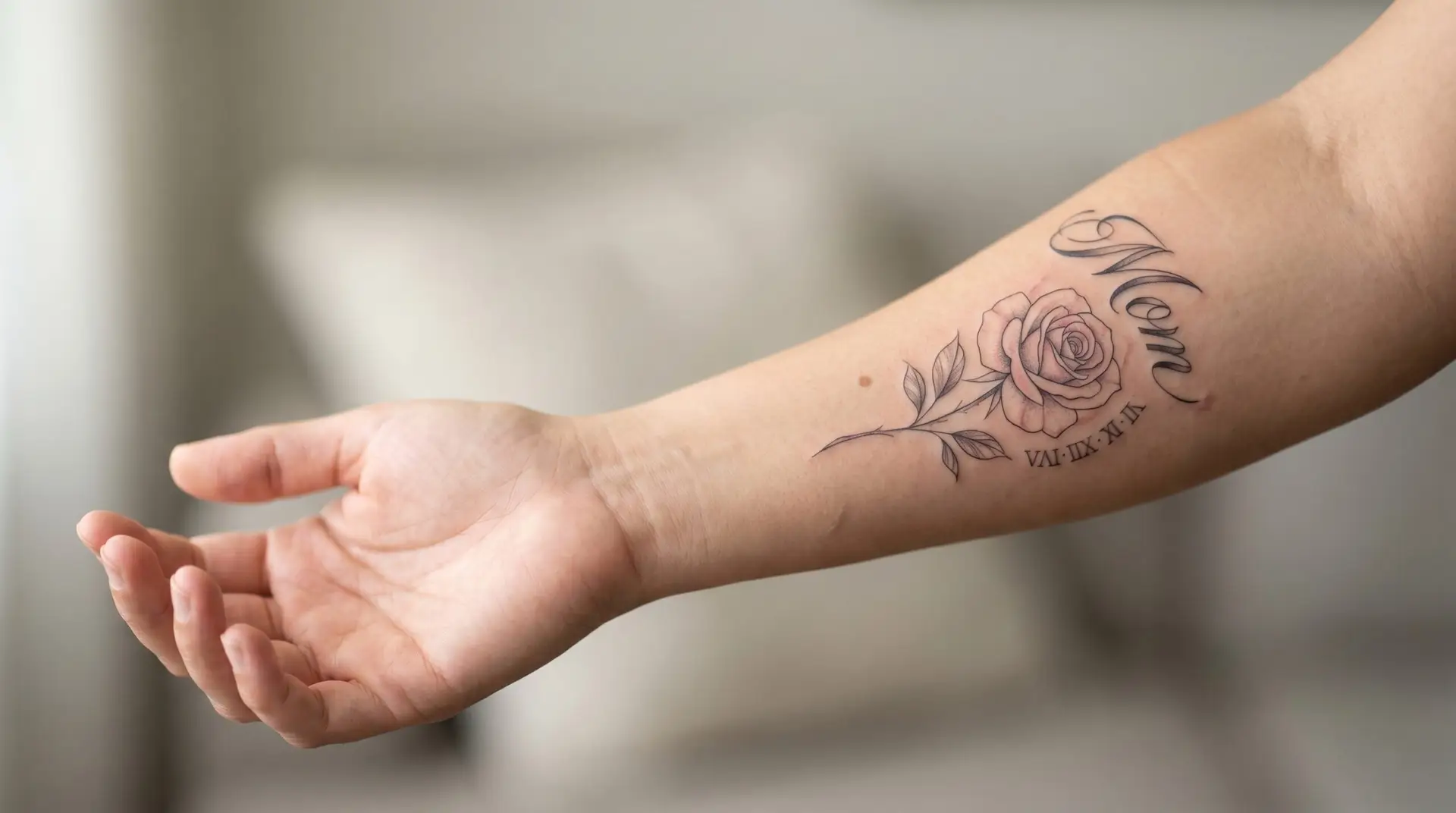
Rose plus name: script name flowing around or beneath the bloom. The most popular pairing for memorial and romantic tattoos.
Rose plus date: birth date, anniversary date, or memorial date in Roman numerals or modern numerals. Roman numerals age better than modern numerals due to consistent letterform structure.
Rose plus banner (American traditional): a banner scroll containing text wrapping around or below the rose. The iconic American traditional composition.
Rose plus skull (memento mori). Connects rose to the Persian Khayyamic memento mori tradition. Suits readers drawn to the brevity-of-beauty symbolism.
Rose plus dagger: classic American traditional design. Suits readers drawn to old school tattoo aesthetic.
Rose plus heart: doubled romantic symbolism. Sailor Jerry-era classic.
Rose plus zodiac: Gemini (May 21 to June 20) or Cancer (June 21 to July 22) symbol paired with rose.
Rose plus pearl: June birthstone with June birth flower. Often rendered as rose with pearl droplet integrated.
Multi-rose composition: several roses representing family members, significant relationships, or multiple memorial subjects.
Rose plus nightingale (Persian tradition): classic Persian poetic pair from Hafez.
Rose plus thorns emphasized: thorns drawn prominently to emphasize protection or defensiveness alongside the love symbolism.
Watercolor rose plus splash effect: modern aesthetic with color bleeding outward from rose outline.
Aftercare for rose tattoos
Standard tattoo aftercare applies: keep the tattoo clean and moisturized for the first two weeks, avoid direct sunlight and chlorinated water during initial healing, follow your tattoo artist’s specific recommendations. Full healing takes 4 to 6 weeks for the surface and up to 6 months for deeper layers. The American Academy of Dermatology aftercare guide (linked in Sources) covers the protocol in detail.
Rose-specific considerations follow. Heavy color saturation (American traditional red, deep crimson, deep purple) ages well; expect touch-ups every 15 to 20 years for traditional bold-line rose tattoos. Fine-line and watercolor styles fade faster (5 to 10 years and 3 to 5 years respectively). Black-and-grey rose tattoos hold detail longest of any style.
Red ink can fade faster than darker pigments on UV-exposed placements. For readers wanting their red rose to hold saturation for 15 to 20 years, request deeper crimson rather than bright red during design consultation. Black-and-grey work avoids the red-fade question.
UV protection matters for rose tattoos with color work. Use mineral sunscreen daily on tattooed areas during the first summer after the tattoo. Visible-placement color rose tattoos (forearm, calf, hand) particularly benefit from continuing daily SPF use for long-term color preservation.
At a glance
Questions
Questions
Frequently asked
What does a rose tattoo mean?
Love in its many forms, with specific meaning shifting by color. Red rose reads as passionate love. Pink rose reads as gentle love and gratitude. Yellow rose reads as friendship and joy. White rose reads as purity and new beginnings. Black-red (“black”) rose reads as farewell and mourning. Additional cultural layers include Persian poetry tradition, Victorian floriography, and American traditional tattoo heritage.
What is the most popular rose tattoo design?
A red rose in American traditional style on the inner forearm or bicep is the most-tattooed flower design in modern Western tattoo culture. Fine-line rose on the inner wrist is the most popular small-scale option. Both designs hold their position as the default rose tattoo choices.
Are rose tattoos still trendy?
Yes. Rose has remained the most-tattooed flower across virtually every era of modern tattoo culture from the early twentieth century to the present. The flower’s universal cultural recognition, flexible stylistic interpretation, and continuing romantic associations make rose unlikely to fall out of tattoo fashion in any foreseeable period.
What does a black rose tattoo mean?
Farewell, mourning, and the end of something. True black roses do not exist in nature; the “black rose” tattoo uses very deep crimson ink to achieve the dark register. The design typically suits memorial tattoos for deceased loved ones, the end of significant life chapters, or commemorations of difficult experiences that the wearer has moved through.
What is the Persian rose nightingale reference?
A classic Persian poetic pair from Hafez’s ghazals (fourteenth century). The nightingale (bolbol) loves the rose with longing that the rose cannot fully reciprocate, figuring the longing of the human soul for divine union. For tattoo integration, rose paired with nightingale signals the Persian classical literary tradition and suits readers drawn to the rose-poetry heritage.
What’s the difference between American traditional and neo-traditional rose tattoo?
American traditional uses bold black outline, saturated primary colors, classic Sailor Jerry-era aesthetic. Neo-traditional uses similar heavy outline but with expanded color palette, more refined line work, and modern compositional flexibility. Neo-traditional roses look more painterly than the strictly classical American traditional version.
How long does a rose tattoo last?
American traditional bold-line rose tattoos hold visible detail for 20+ years before requiring significant touch-up. Fine-line rose tattoos hold for 5 to 10 years. Watercolor rose tattoos hold for 3 to 5 years. Black-and-grey rose tattoos hold detail longest of any style.
Where should I place a rose tattoo?
Inner forearm and bicep are the most popular placements for medium-scale rose tattoos. Inner wrist and behind ear work for small-scale designs. Ribs, sternum, and chest work for intimate placements. Calf, thigh, and shoulder work for larger designs. Hand and finger placements have shorter touch-up intervals due to friction fading.
Are rose tattoos appropriate for memorial tattoos?
Yes, the combination of romantic love symbolism and the rose’s broader cultural weight makes rose particularly suitable for memorial tattoos. Black-red (“black”) rose specifically has memorial symbolism. White rose works for memorial tattoos honoring purity and respect. Multi-rose compositions can honor multiple deceased loved ones in a single design.
Sources
Keep reading
June birth flower: rose, honeysuckle, and what they mean
June birth flowers by day: the Korean 365-day tradition
Honeysuckle flower meaning: Victorian bonds of love, fragrance, and growing
Birth flower by month: all 12 monthly flowers
Enjoying our flower guides? Add YourFlowersGuide as a preferred source on Google. It helps more readers find us.
Add to Preferred Sources