When you watch a blue flax plant in early summer, you see a constant rotation of sky blue petals opening in the morning and dropping by the afternoon. By the time you finish reading, you will understand exactly how those fleeting blossoms transform into sturdy seed capsules, and how you can capture that future growth for your own garden. Learning the rhythm of seed production gives you a completely different perspective on your plants. You stop seeing the dropped petals as the end of the show and start recognizing them as the beginning of a fascinating reproductive cycle. Saving seeds from your own garden connects you directly to the seasons in a way that buying packets from a store simply cannot match. You will learn to read the visual cues of the plant, letting the stems and pods tell you exactly when they are ready to yield their harvest.
Contents 4 sections
Understanding how blue flax produces seeds
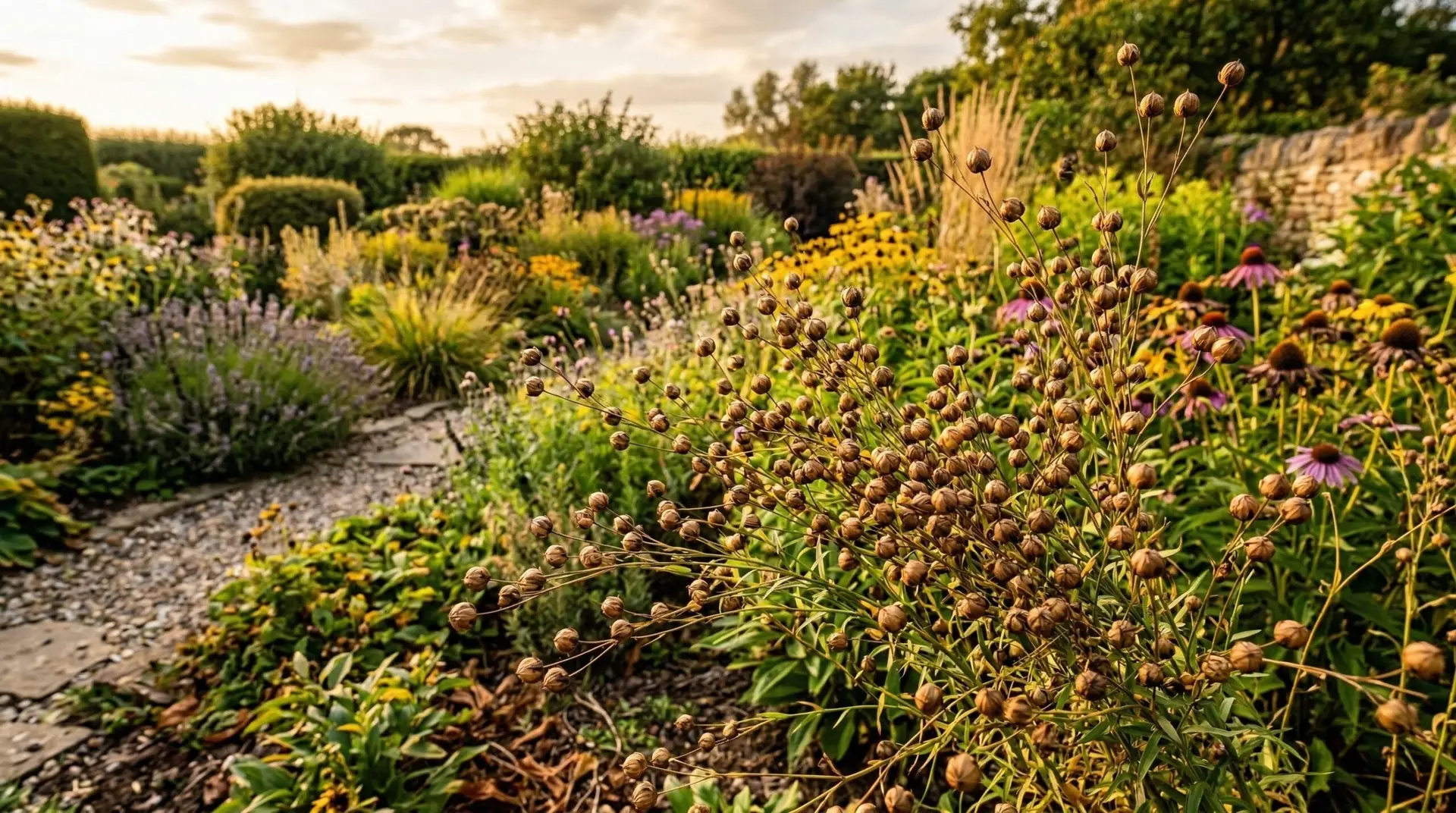
To successfully harvest blue flax seeds, you need to know what happens immediately after the flower drops its petals. The base of the flower, called the ovary, remains attached to the stem and begins to swell into a small spherical capsule. Think of this green capsule as a tiny incubation oven where the plant is pumping all its solar energy to mature the seeds inside. During this green stage, the seeds are soft, pale, and entirely dependent on the mother plant for moisture and nutrients. You might be tempted to pick these pods while they are plump and green, but doing so cuts off the food supply before the seeds have finished developing. The plant needs several weeks to complete this baking process, slowly drawing moisture out of the capsule as the seeds harden and turn dark. Watching this transition from a soft green orb to a crisp brown shell is the first step in learning the language of seed saving.
Identifying and harvesting ready seed pods
The timing of your harvest is the single most important factor in saving linum seeds successfully. You want to wait until the blue flax seed pods have turned a papery, golden brown color and the stems supporting them have also begun to dry out and turn yellow. If you gently shake a mature stem, you should hear a faint rattling sound, much like a miniature maraca. This rattle tells you that the seeds have detached from the internal walls of the capsule and are fully mature. Always plan your harvest for a dry, sunny afternoon after the morning dew has completely evaporated from the garden. Moisture is the greatest enemy of seed collection, as damp pods can quickly harbor mold that will ruin your entire harvest. You can simply snip the dry stems a few inches below the pods using clean scissors, letting them drop into a paper bag. The process of gathering these dry capsules is very similar to collecting the papery lanterns of love-in-a-mist, requiring the same patience to wait for complete dryness.
The drying and extraction process
Even when the pods feel completely dry in the garden, they usually hold a tiny amount of residual moisture that needs to evaporate before long term storage. Bring your paper bag of harvested stems indoors and leave it open in a warm, well ventilated room out of direct sunlight for about a week. Think of this indoor resting period as a curing phase, ensuring the seeds go into deep dormancy without any trapped humidity. Once the curing week is over, you can begin the satisfying process of extracting the seeds from their protective shells. Place a handful of the dry pods into a wide bowl and gently crush them between your fingers. The brittle outer shells will easily break apart, releasing the smooth, flattened, dark brown seeds into the bottom of the bowl. You will notice the seeds are quite glossy and slippery, which helps them slide out of the broken plant material. Just like when you separate the needle-like seeds of cosmos from their dried flower heads, you will be left with a mix of good seeds and crumbled plant debris known as chaff.
Cleaning your harvest and managing future plants
Separating the clean seeds from the broken chaff requires a gentle technique called winnowing, which relies on the difference in weight between the two materials. The blue flax seeds are relatively heavy, while the crushed pod fragments are light and papery. If you take your bowl outside on a day with a very slight breeze, you can gently toss the mixture a few inches into the air and catch it again. The breeze will catch the lightweight chaff and blow it away, while the heavier seeds fall straight back into your bowl. This takes a season or two to get a feel for, and that is completely normal. Once your seeds are clean, place them in a small paper envelope and store them in a cool, dark, and dry place until you are ready to plant them. Heat and moisture are the signals that tell a seed to wake up and grow, so keeping them cool and dry ensures they remain asleep in storage. If you choose to leave some pods on the plants in your garden, they will eventually split open and scatter their contents, naturally managing the self-sowing cycle for a continuous patch of blue flowers year after year.
The practice of saving seeds fundamentally changes how you interact with your garden from one season to the next. You move from being a consumer of plants to an active participant in their ongoing lifecycle. By understanding that a seed is a living organism in a state of suspended animation, you realize that your job is simply to provide the right conditions for it to finish maturing on the plant and stay dormant in storage. You learn to read the physical changes in the stems and pods, trusting the plant to signal when its reproductive work is done. Gathering, cleaning, and storing these small brown packets of potential energy gives you a profound sense of self reliance. The ultimate reward comes the following spring, when you place the seeds you carefully preserved into the warm soil and watch the familiar blue flowers return.
More About Blue Flax
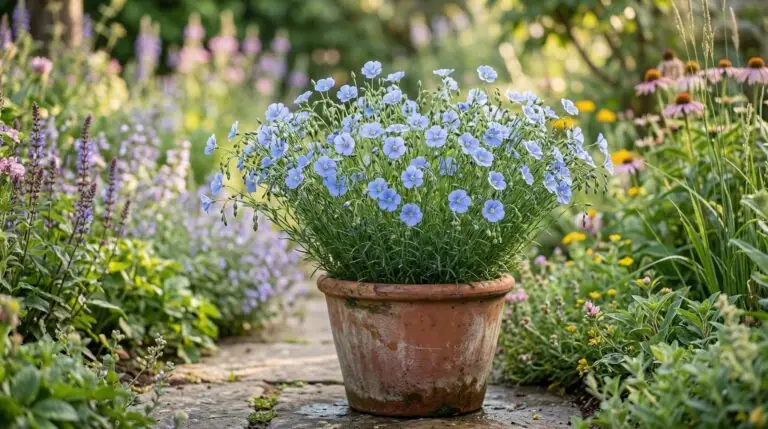
Growing blue flax in containers and window boxes for sky-blue summer color
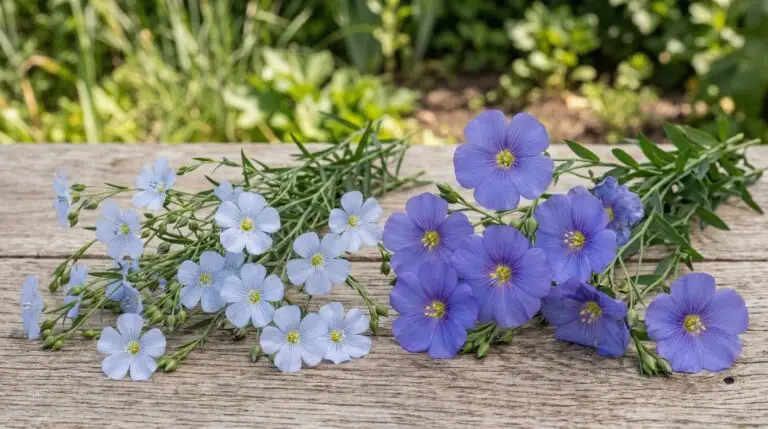
Lewis flax versus perennial blue flax and which native species to grow
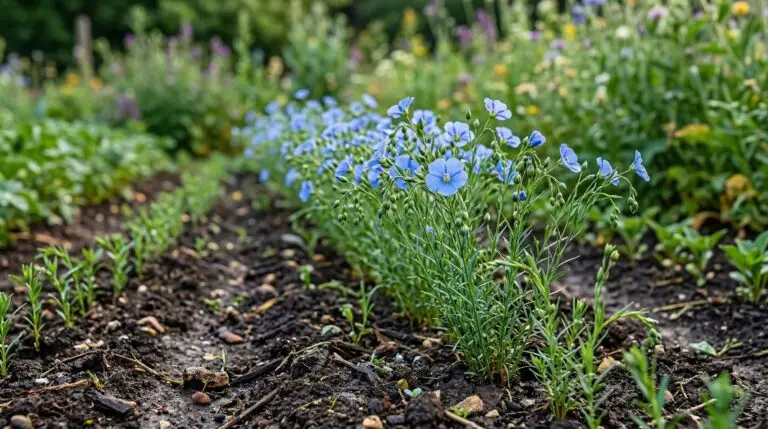
How to grow blue flax from seed for a low maintenance wildflower meadow
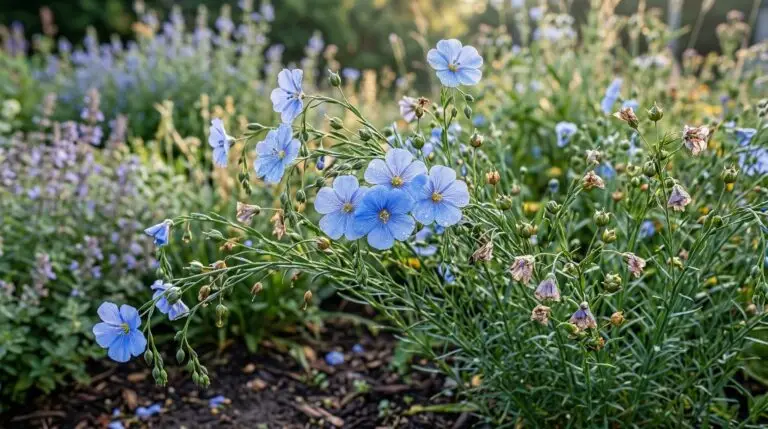
Why blue flax flowers only last one day and why that is actually a good thing
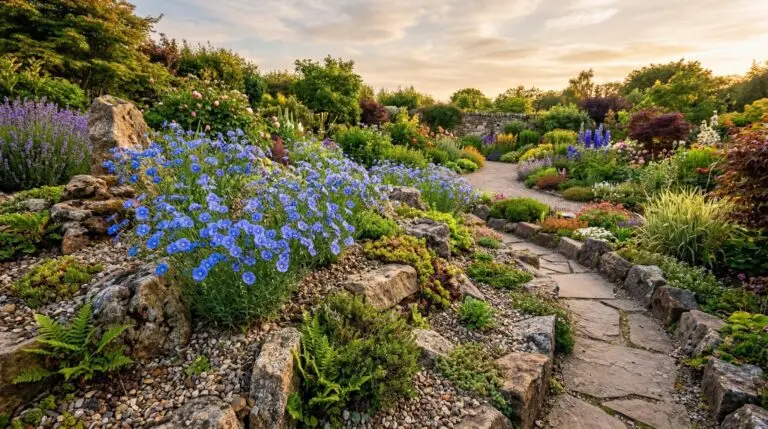
Blue flax in rock gardens and gravel pathways for a natural alpine look
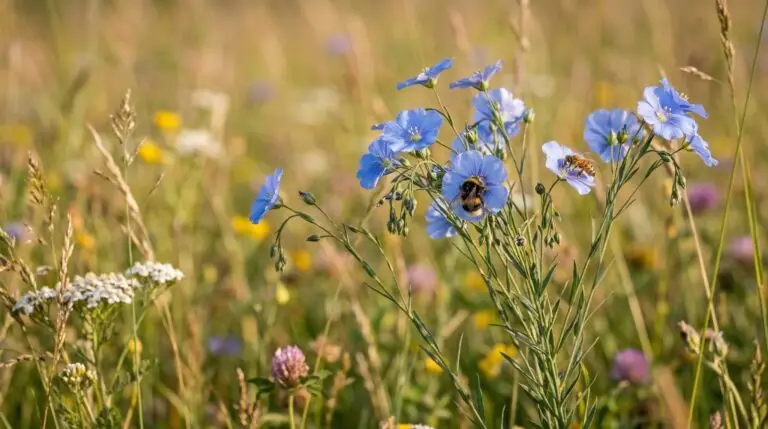
Blue flax for pollinator gardens attracting native bees and beneficial insects
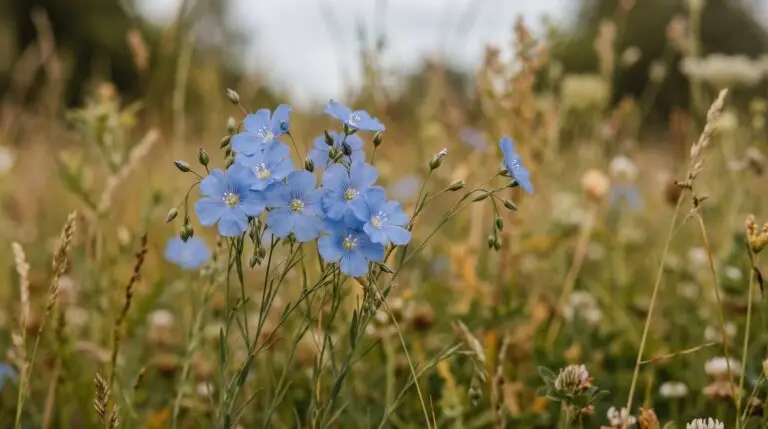
The history of flax from ancient linen production to ornamental garden flower
Blue flax for xeriscaping and drought-tolerant gardens that still look beautiful
Blue flax companion plants: what to grow and what to avoid
Enjoying our flower guides? Add YourFlowersGuide as a preferred source on Google. It helps more readers find us.
Add to Preferred Sources