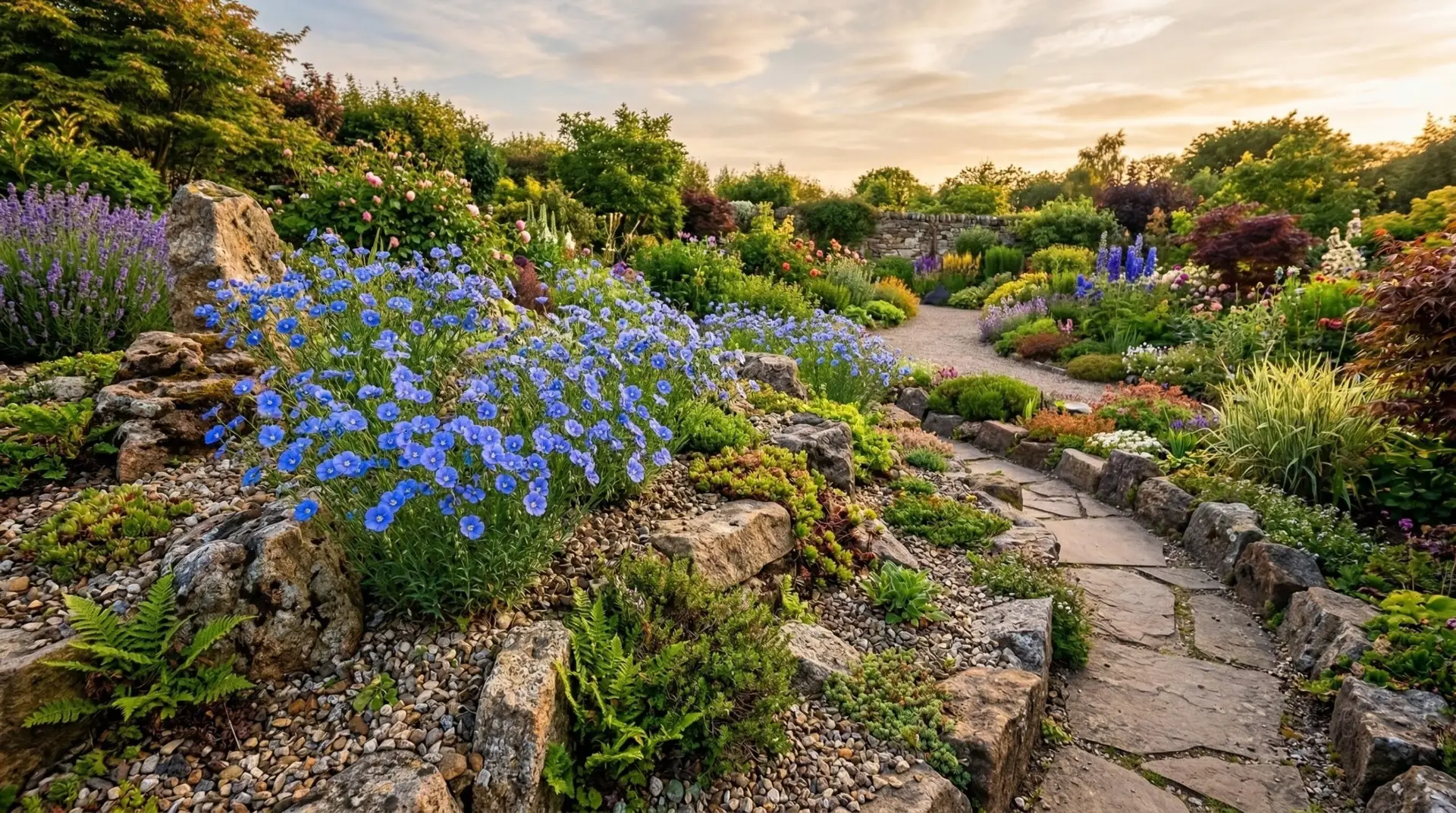
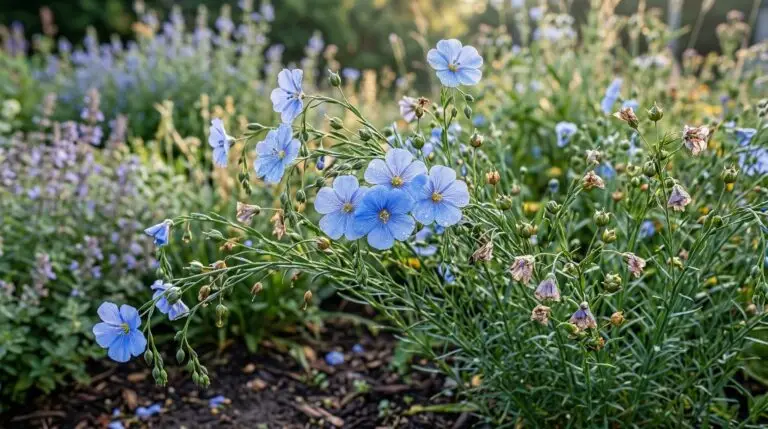
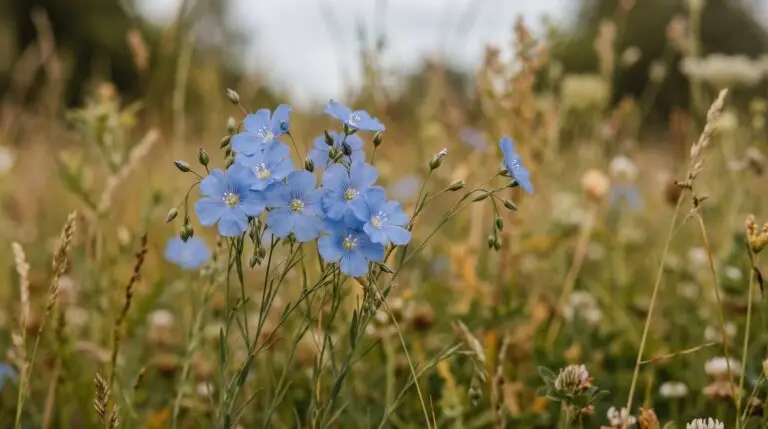
I wish you could stand beside me right now as the early morning sun crests the eastern wall of the garden. The light catches the dew resting on the wiry, almost invisible stems of the blue flax, making the blossoms appear as if they are floating entirely unsupported in the cool air. The color is not a heavy, saturated hue, but rather the exact translucent wash of a clear spring sky just after a rainstorm. When the morning breeze moves through the yard, these papery, saucer-shaped petals flutter with a restless energy that brings the entire space to life. You would notice immediately how the slender, gray-green foliage practically disappears against the rough texture of the surrounding stones. This is a plant that refuses to look heavy or burdened by the earth beneath it. Instead, it dances above the ground, offering a daily display of delicate beauty that feels perfectly suited to the rugged environment of a dry, sun-baked slope.
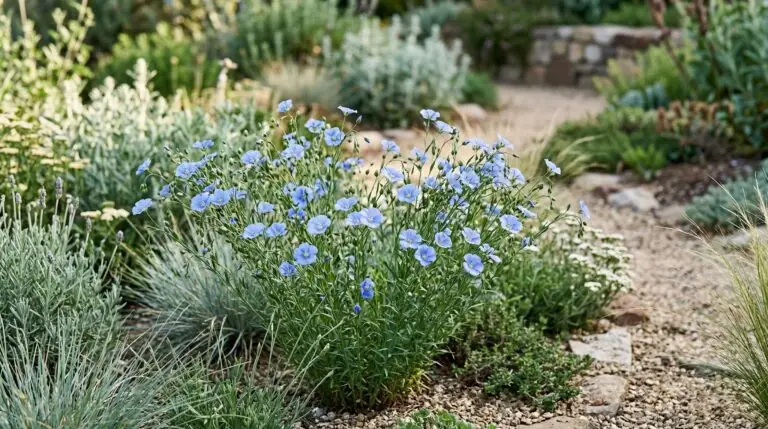
To truly appreciate this diaphanous flower, you have to see it planted exactly where it wants to grow, right where the soil turns lean and unforgiving. A blue flax rock garden creates a visual tension between the hard, unyielding edges of granite and the soft, fleeting nature of the petals. The sharp angles of the stones provide a steady backdrop that makes the round, open faces of the blossoms stand out with startling clarity. By mid-morning, the heat rising off the rocks releases a faint, dusty scent of warm earth mixed with the sharp tang of nearby resinous herbs. The flax leans over the warm stones, casting faint, shifting shadows across the pale gray surfaces. It is a scene that evokes a quiet Mediterranean hillside, where plants survive by adapting to harsh light and fast-draining slopes rather than relying on deep, rich loam. You can feel the heat radiating from the rocks while the cool blue of the flowers offers a visual relief to the eye.
Contents 4 sections
Finding the right stone and soil
You will know you have found the perfect spot for a linum rock garden when you run your hands through the earth and feel more grit than soft dirt. The ideal soil for these deep-rooted perennials slips through your open fingers like coarse sugar, leaving almost no dark residue on your skin. When you water this patch of ground, the moisture should disappear instantly, pulling straight down into the earth without ever pooling on the surface. Blue flax demands this kind of rapid drainage, as their crowns will rot if left sitting in wet, heavy clay during the cold winter months. I like to mix crushed gravel and coarse builder’s sand directly into the planting holes, creating a rough, jagged bed that mimics the sharp drainage of a high mountain scree slope. The foliage responds to this lean diet by growing tight and compact, with leaves that feel slightly waxy to the touch, a natural defense against moisture loss. When planted in these austere conditions, the stems grow stronger, holding their bright blue cups high above the jagged rocks.
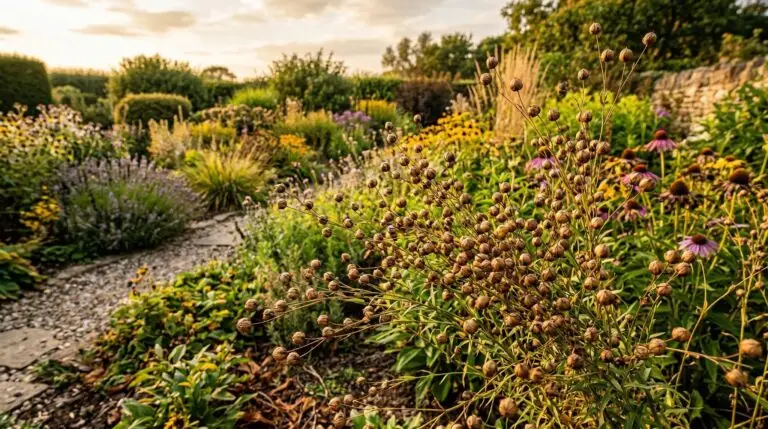
Creating a natural alpine garden blue flax display requires a careful observation of how water moves across your yard during a heavy downpour. You want to tuck these plants into the high, dry crevices where the rain washes past rather than settles. I often place them near large, heat-absorbing boulders that warm up quickly in the morning sun and slowly release that stored temperature into the cool night air. The contrast between the smooth, pale blue petals and the rough, lichen-crusted surface of a weathered fieldstone is a sight you would absolutely love. As the season progresses, the seed pods develop into perfectly round, smooth spheres that rattle softly against the dry stems when the wind blows. These pods eventually turn papery and brown, splitting open to scatter small, flat seeds across the gravel, ensuring a new generation of plants will find their way into the narrowest cracks between the rocks. It is a self-sustaining cycle that requires almost no intervention once you establish the right balance of stone and sand.
Edging the gravel pathways
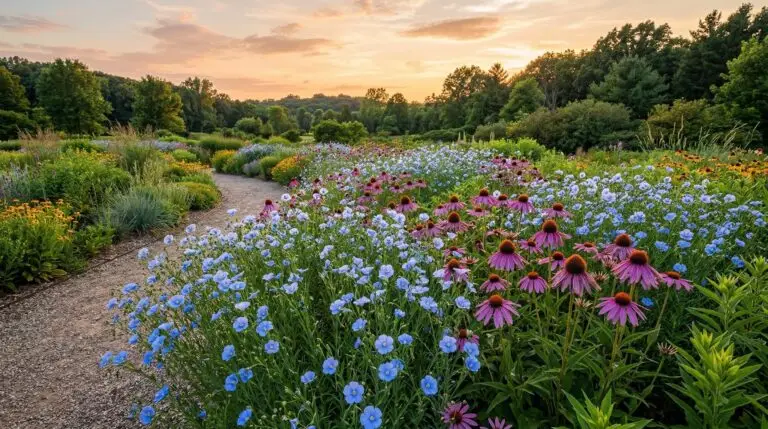
Walking down the main path of the garden is a completely different sensory experience when blue flax lines the edges of the crushed gravel. The sound of your footsteps crunching against the loose stones creates a rhythmic background noise that contrasts with the absolute visual silence of the delicate blue blooms. The plants naturally spill outward from their planting pockets, softening the harsh, straight lines of the walkway with a cloud of wiry stems. Because the foliage is so sparse and needle-like, the plants never feel overgrown or messy, even when they lean entirely across the path. You can brush right past them, feeling the smooth, cool petals grazing your ankles without worrying about damaging the resilient stems. On a bright afternoon, the pale gray gravel acts as a reflector, bouncing light up into the undersides of the flowers and making them glow with an almost translucent luminosity. The entire pathway takes on the relaxed, unstudied feel of a wild mountain trail rather than a manicured suburban walkway.
The way the light interacts with the gravel and the flax changes dramatically as the sun moves across the sky. In the early morning, the path is cool and shadowed, and the newly opened blossoms look deeply blue, almost like pieces of washed denim scattered over the ground. By noon, the overhead sun washes out the color slightly, turning the petals a pale, silvery azure that perfectly matches the dusty white of the crushed stone. This is when the heat of the day is at its peak, and you can smell the dry, baked scent of the stones rising up around you. The flax seems to thrive in this intense, reflective heat, never wilting or drooping the way softer border plants might. I love to watch how the individual blossoms drop their petals by late afternoon, leaving a faint dusting of blue confetti across the pale gray gravel. By evening, the path is quiet again, waiting for the tightly furled buds to open and start the entire display over the following morning.
Companions in the alpine garden
To build a truly convincing mountain scene, you have to surround the flax with companions that share its love for dry winds and sharp drainage. I often plant low, creeping thymes nearby, so that every time you accidentally step on the edges of the path, a sharp, herbal fragrance rises into the warm air. The soft blue of the flax pairs beautifully with the intense, saturated tones of a gentian, whose deep, almost electric blue trumpets provide a grounding visual weight against the floating flax blossoms. When you see these two plants growing side by side among the rocks, the contrast in their textures is striking. The gentian hugs the ground with thick, glossy leaves that feel cool to the touch, while the flax reaches upward with stems so thin they disappear against the sky. The soil here remains dry and coarse, exactly what both plants need to survive the wet transitions of spring and autumn. Together, they create a layered display of blues that changes in intensity depending on where the clouds sit in the sky.
You can also introduce other rock-loving perennials to break up the color palette and add different structural shapes to the gravel bed. A low-growing bellflower tucked into a nearby crevice offers a lovely visual echo, its nodding, cup-shaped blooms catching the morning dew just like the flax. The pale violet hues of the bellflower soften the transition between the bright blue flax and the harsh gray tones of the surrounding boulders. I like to run my fingers over the rough, scalloped edges of the bellflower leaves, feeling the tiny hairs that protect them from the drying sun, and then touch the smooth, almost slippery foliage of the linum. The combination of these textures makes the garden feel rich and complex, even though the growing conditions are remarkably harsh. When the wind picks up, the bellflowers nod slowly on their sturdy stalks while the flax whips around in a frantic, joyful dance. It is a constant play of movement and stillness that keeps your eyes moving across the stones.
Watching the light change
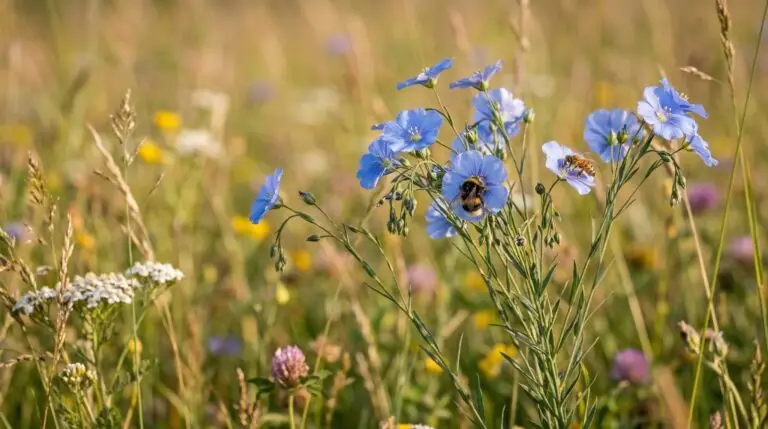
The most captivating thing about blue flax is how it marks the passage of time through its daily cycle of blooming and shedding. Each blossom lasts for only a single day, opening wide in the cool morning air to catch the first slanted rays of the sun. If you stand close enough, you can see the delicate, darker blue veins radiating from the center of each petal, guiding tiny native bees toward the pale yellow anthers. By the time the afternoon heat settles heavily over the rock garden, the petals begin to loosen their grip on the stems. A strong gust of wind or even a heavy shadow passing over the plant is often enough to send the petals drifting down to the ground. They fall silently, catching in the rough crevices of the rocks and resting lightly on the surface of the gravel path. It teaches you to appreciate the garden exactly as it is in the present moment, knowing that the exact scene you are looking at will be gone by nightfall.
Even in the dead of winter, when the clear blues have long faded, the garden holds a quiet, structural beauty that is entirely its own. The slender stems of the flax turn a pale, golden tan, standing stiffly against the cold wind and catching the frost on their tiny, dried seed capsules. When the morning sun hits these frosted spheres, they sparkle like crushed glass against the dark, dormant rocks. The gravel path, now washed clean by winter rains, provides a stark, monochromatic background that highlights the architectural bones of the planting. You can see exactly how the plants have woven themselves into the stones, their deep taproots anchored firmly in the frozen earth. I often walk out in the early morning cold just to hear the dry, papery rustle of the empty seed pods scraping together in the breeze. It is a sound that carries the promise of spring, reminding you of the countless blue blossoms waiting quietly beneath the snow to wake up the stones once again.
More About Blue Flax
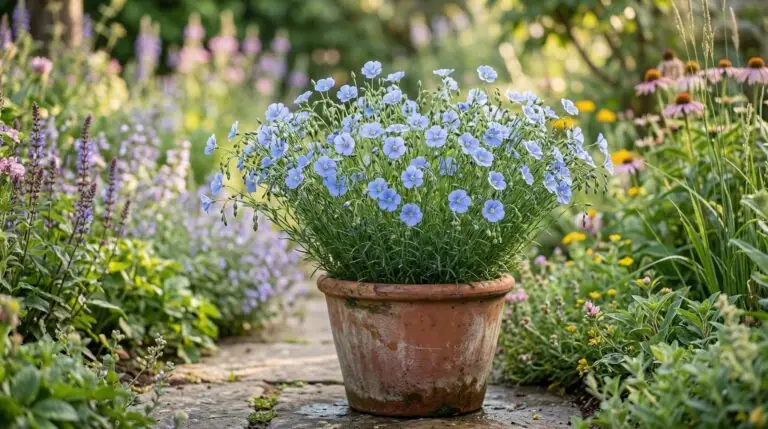
Growing blue flax in containers and window boxes for sky-blue summer color
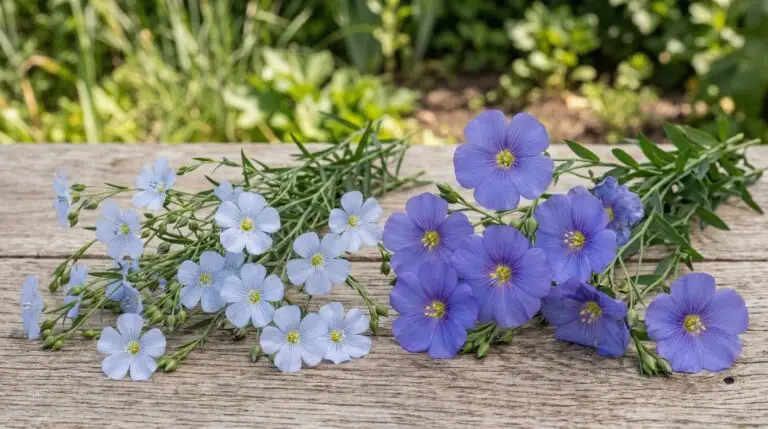
Lewis flax versus perennial blue flax and which native species to grow
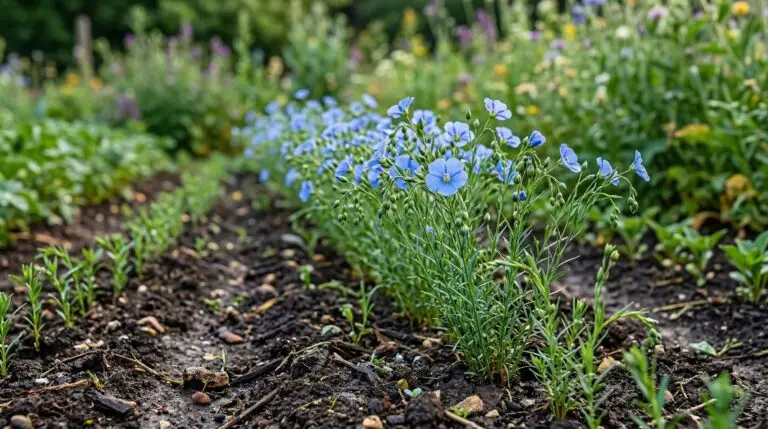
How to grow blue flax from seed for a low maintenance wildflower meadow
Why blue flax flowers only last one day and why that is actually a good thing
How to collect and save blue flax seeds for planting next season
Blue flax for pollinator gardens attracting native bees and beneficial insects
The history of flax from ancient linen production to ornamental garden flower
Blue flax for xeriscaping and drought-tolerant gardens that still look beautiful
Blue flax companion plants: what to grow and what to avoid
Enjoying our flower guides? Add YourFlowersGuide as a preferred source on Google. It helps more readers find us.
Add to Preferred Sources