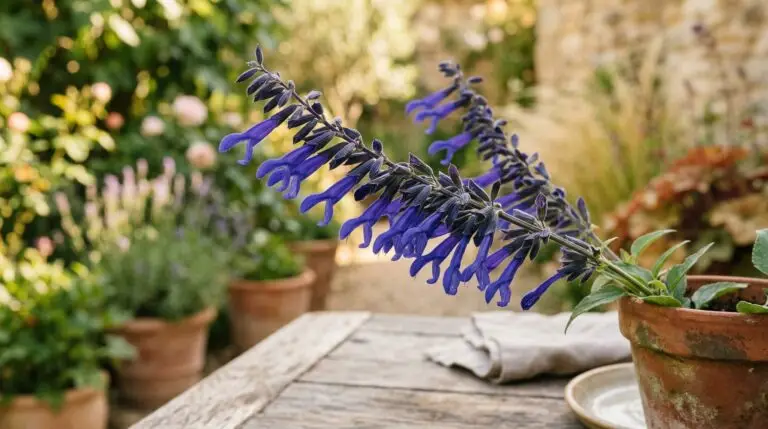
Walking out onto a south-facing patio in the middle of July often feels like stepping into an oven. Most delicate patio flowers crisp up around the edges by noon, leaving behind sad, drooping foliage that demands a hose twice a day. Finding a plant that actually thrives in that baking heat takes a lot of trial and error with wilted casualties along the way. Growing blue salvia in pots solves the problem of finding resilient color for those punishing full-sun spots. These tough spikes of blue hold their shape and color long after softer annuals have surrendered to the afternoon heat. The intense blue hue also brings a cooling visual effect to a space that is otherwise radiating thermal energy.
Choosing the right pot and potting mix
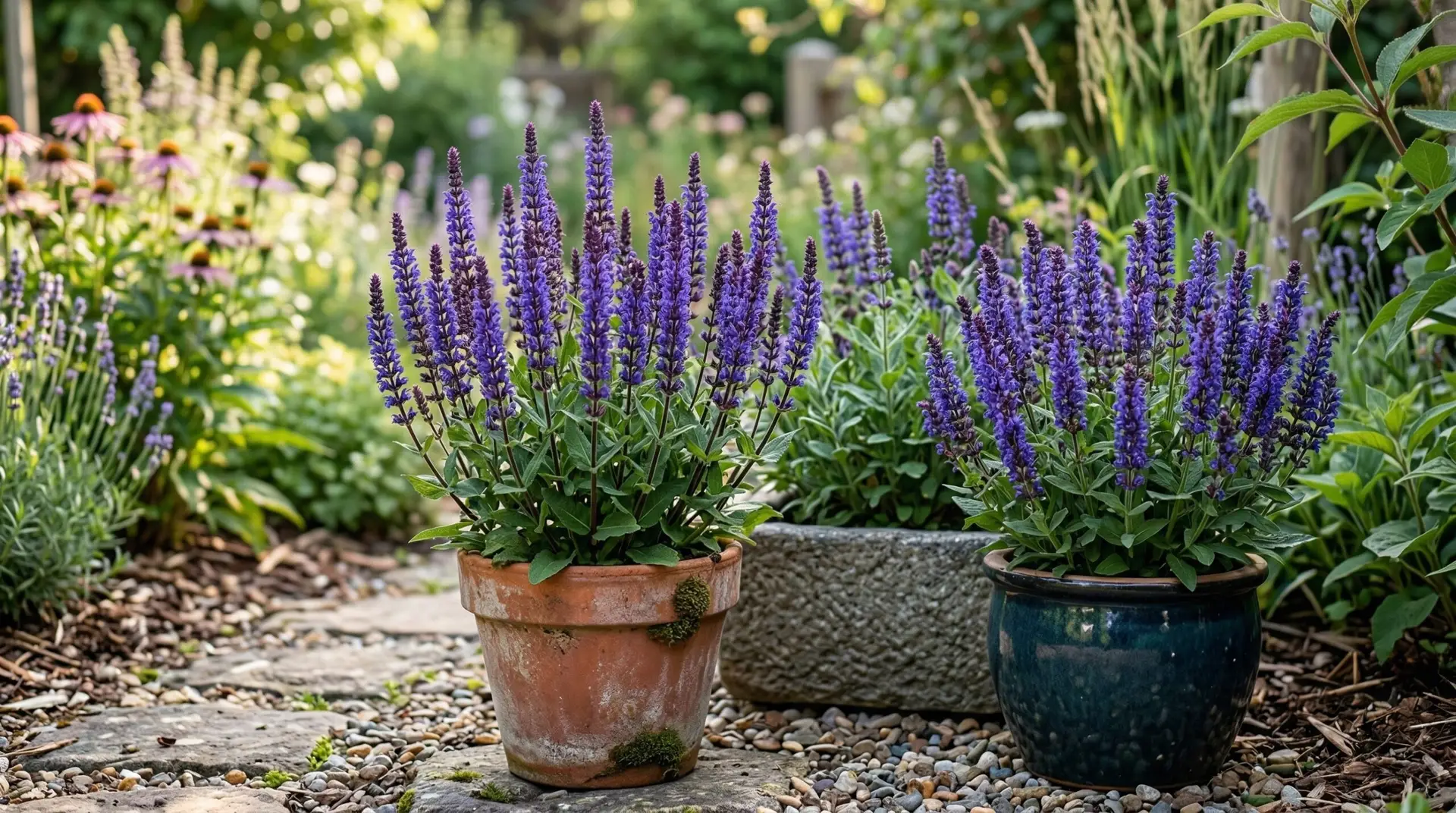
The foundation of successful salvia container growing starts with the container itself, and drainage is the single non-negotiable factor. A standard twelve-inch terracotta pot works exceptionally well because the porous clay breathes, preventing the roots from sitting in stagnant moisture. Plastic or resin pots hold water much longer, which means drilling extra holes in the bottom is usually necessary before adding any dirt. A cheap bag of standard potting soil needs a little help to keep these plants happy through the summer. Mixing in a few handfuls of perlite or coarse sand ensures the water runs through the pot quickly rather than turning the bottom half into mud. Salvia roots will rot entirely if they sit in a swampy environment, so the soil must drain within a minute of watering.
Picking compact varieties for tight spaces
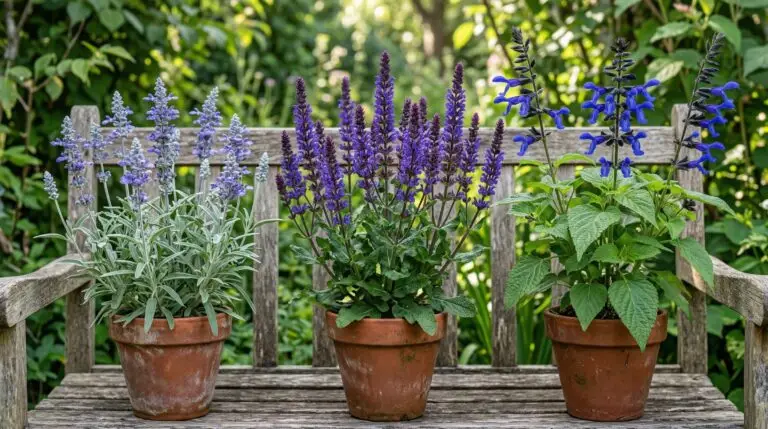
Buying the first blue salvia found at the garden center often leads to a disproportionate mess by late August. Many perennial garden varieties grow three feet tall and wide, which will quickly overwhelm a standard patio planter and flop over the edges. For containers, the compact annual types like Victoria Blue or the various dwarf mealycup sages are much better behaved. These smaller types top out around eighteen inches tall and maintain a tidy, upright posture even when the summer wind picks up. Gardeners in the South may find that even the compact types stretch out a bit more because of the long growing season, requiring an occasional trim to keep them bushy. Pinching the top leaves off the seedlings right after planting feels counterproductive, but it forces the plant to branch out into a dense mound rather than a single tall stalk. The seedlings look dead for about two weeks after transplanting, but they are simply focusing energy on root growth below the soil.
Sun requirements and watering habits
These are true sun worshipers that need at least six hours of direct, unfiltered sunlight to produce tight, saturated flower spikes. If placed in partial shade, the stems will stretch weakly toward the light and the flowers will be sparse and pale. In northern zones, putting the pots in the absolute hottest, brightest spot on the driveway or patio is the best approach to mimic their native environment. The rules change slightly for southern gardeners dealing with extreme August heat and heavy humidity. In those hotter climates, providing a little shade during the late afternoon prevents the foliage from looking exhausted by the end of the day. The watering routine requires a careful balance, as the soil surface should feel completely dry to the touch before reaching for the watering can.
When it is time to water, soak the pot thoroughly until water pours out of the bottom drainage holes. Giving the plant a shallow splash every day encourages weak, shallow roots that dry out immediately when a heatwave hits. Deep, infrequent watering builds a resilient root system that can handle a missed day or two without collapsing. The leaves will often droop slightly when the plant is genuinely thirsty, providing a reliable visual cue that it needs a drink. Salvia patio plants bounce back remarkably fast from a dry spell, usually perking up within an hour of a good soaking. Overwatering is far more dangerous than underwatering, as a completely dried-out plant can be revived, but a rotting root system cannot be saved.
Feeding schedule and deadheading
Because frequent watering washes nutrients out of the potting soil, these plants need a consistent feeding schedule to keep blooming. A heavy dose of granular fertilizer often pushes the plant to grow massive amounts of green leaves at the expense of the blue flowers. Mixing a weak, half-strength liquid bloom fertilizer into the watering can every two weeks provides a steady, manageable diet. This gentle approach keeps the flower production steady without burning the roots or causing floppy, weak stem growth. If the lower leaves start turning a pale yellow, it is usually a sign that the nutrients have run out and the feeding schedule needs a slight bump. Affordable water-soluble tomato fertilizers actually work wonderfully for this application because they are formulated to promote blossoms rather than just leafy green growth.
Keeping the plant looking tidy requires regular deadheading, which is a chore that makes a massive difference in late-season performance. Once a flower spike fades, it turns brown from the bottom up and starts producing seeds, signaling to the plant that its reproductive job is done. Snapping off that spent stalk right down to the next set of healthy leaves forces the plant to push out new buds. By mid-summer, the entire plant might look a bit ragged and woody, no matter how carefully it was watered and fed. Taking a pair of sharp shears and cutting the whole plant back by a third feels drastic, but it is the best way to rejuvenate it. Within two weeks, a fresh flush of green growth will appear, followed by a thick second wave of blue flowers. This late-season trim keeps the patio looking fresh right up until the first frost.
Companion planting for patio impact
A pot filled entirely with blue salvia is beautiful, but mixing it with the right companion plants elevates the whole patio display. The upright, spiky habit of the salvia creates a perfect central pillar for a mixed container arrangement. Surrounding the base with bright yellow or orange blooms creates a sharp, classic color contrast that catches the eye from across the yard. Tucking a few marigolds around the edges of the pot provides that necessary pop of warm color while sharing the exact same heat and sun requirements. The sturdy nature of the salvia stems also provides physical support for neighboring plants that might otherwise flop over in the wind.
To soften the hard edges of a terracotta or plastic rim, trailing plants are the perfect addition to the container base. Adding a vigorous trailing plant like a petunia allows color to spill down the sides of the pot while the salvia shoots straight up. If the patio gets extremely hot, substituting a tough, drought-tolerant verbena will ensure the trailing element survives the afternoon bake just as well as the center spike. When packing multiple plants into one container, always choose a pot that is at least sixteen inches wide to give the competing root systems enough room to breathe. Crowding too many heavy feeders into a small space simply results in stunted growth and a daily battle to keep the soil moist.
Growing these blue spikes in containers requires accepting that potted plants live a fast, hard life compared to those in the ground. The soil will eventually run out of nutrients, the roots will hit the sides of the plastic or clay, and the plant will eventually exhaust itself by October. Recognizing this natural cycle prevents a lot of unnecessary frustration when the plant starts slowing down in the autumn chill. Pulling the spent plants at the end of the season and dumping the exhausted soil into the compost bin is just part of the yearly routine. The reward for that summer of watering and deadheading is a patio filled with reliable, structural color during the hottest months when most other plants have given up.
More About Blue Salvia
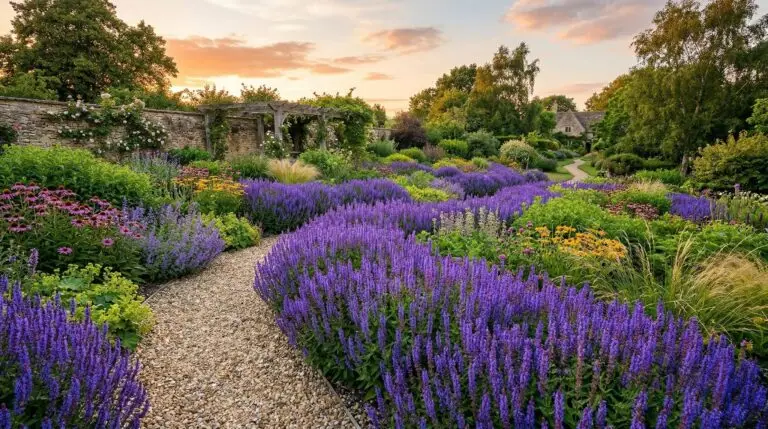
Blue salvia in mass plantings for dramatic sweeps of color in large gardens
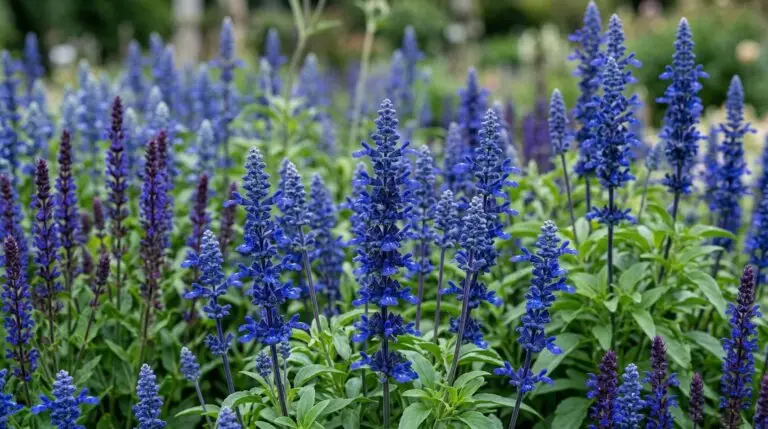
Best blue salvia varieties for non-stop color from late spring through first frost
Perennial salvia versus annual salvia and how to choose the right one