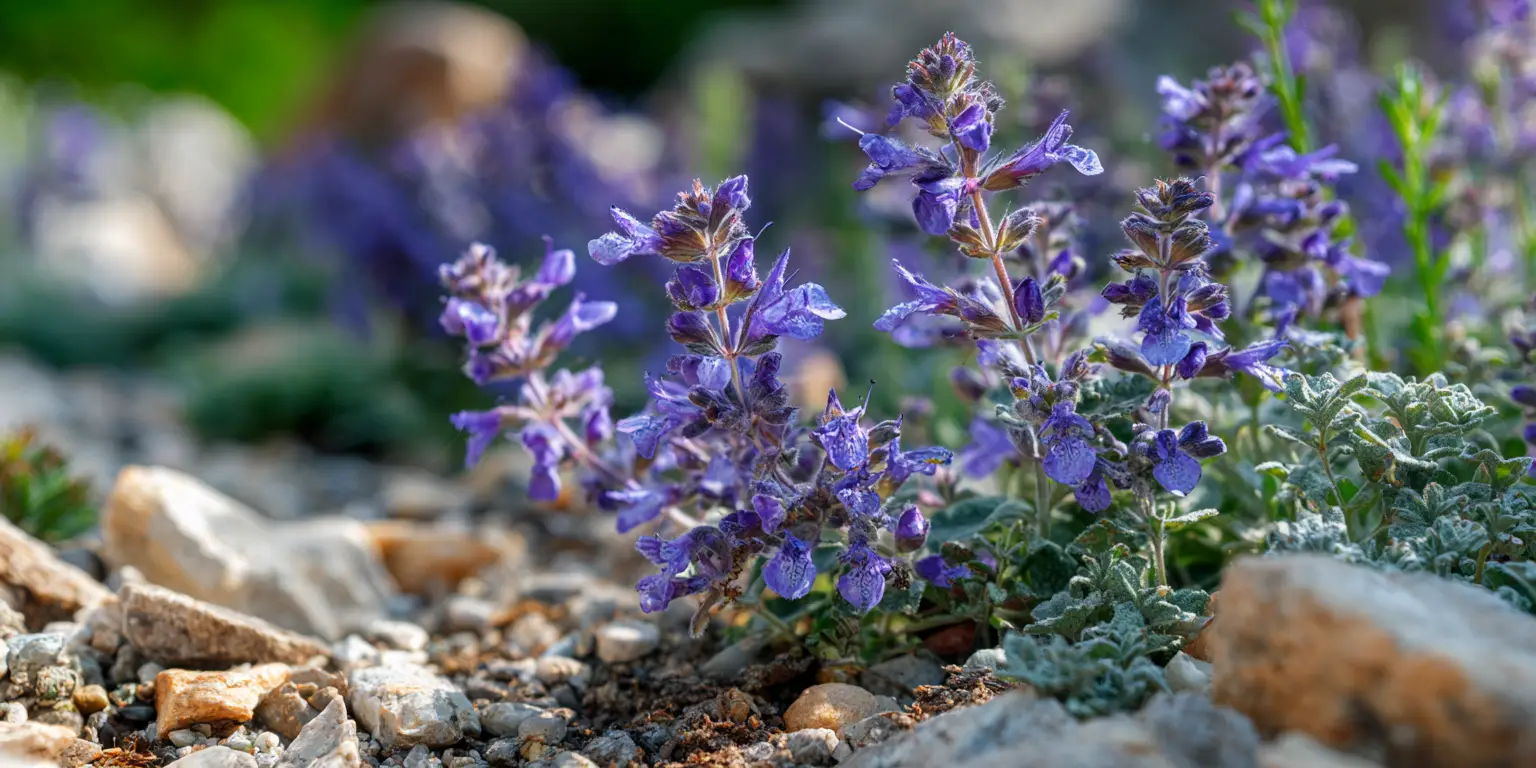
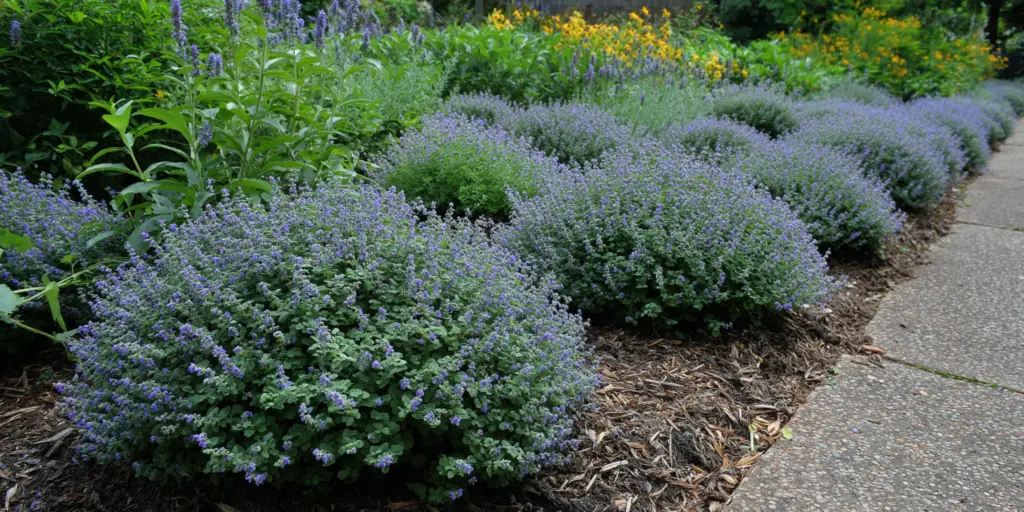
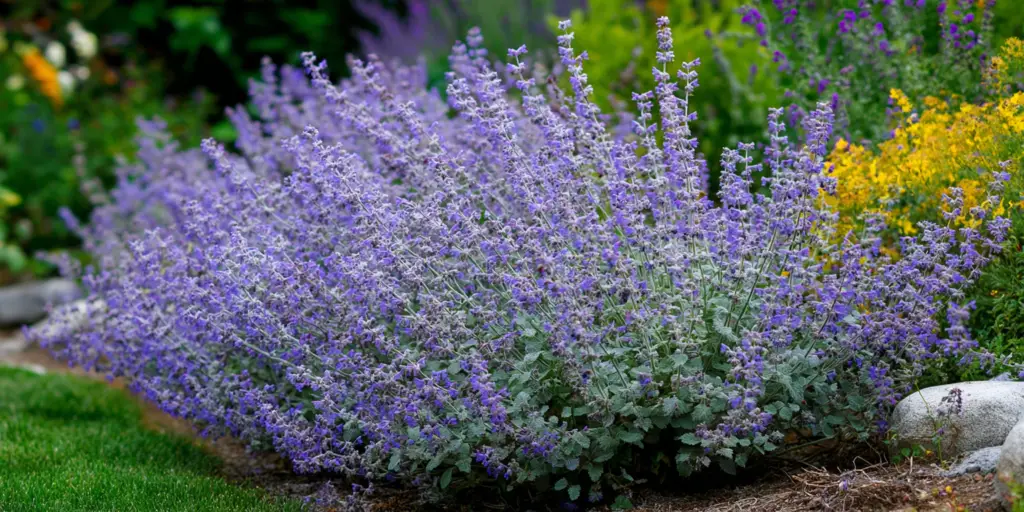
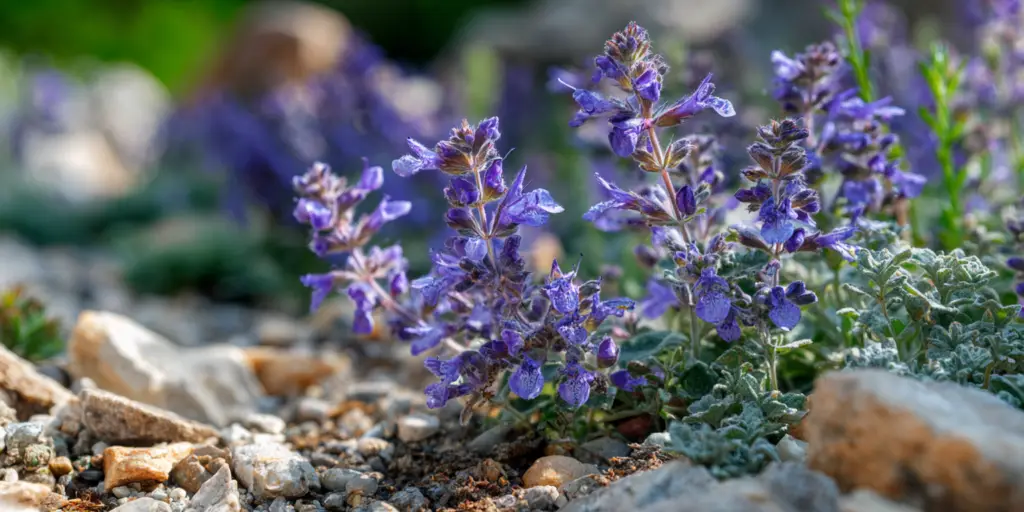
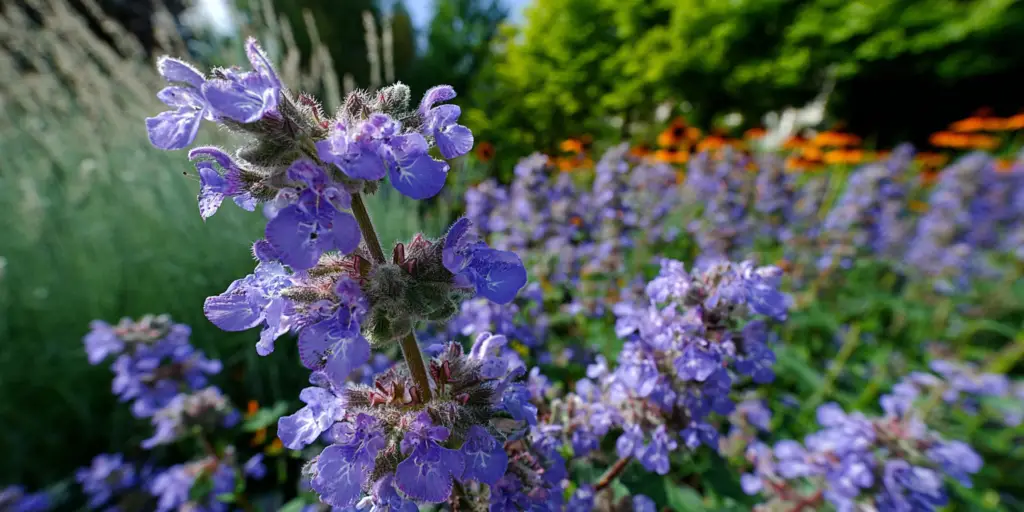
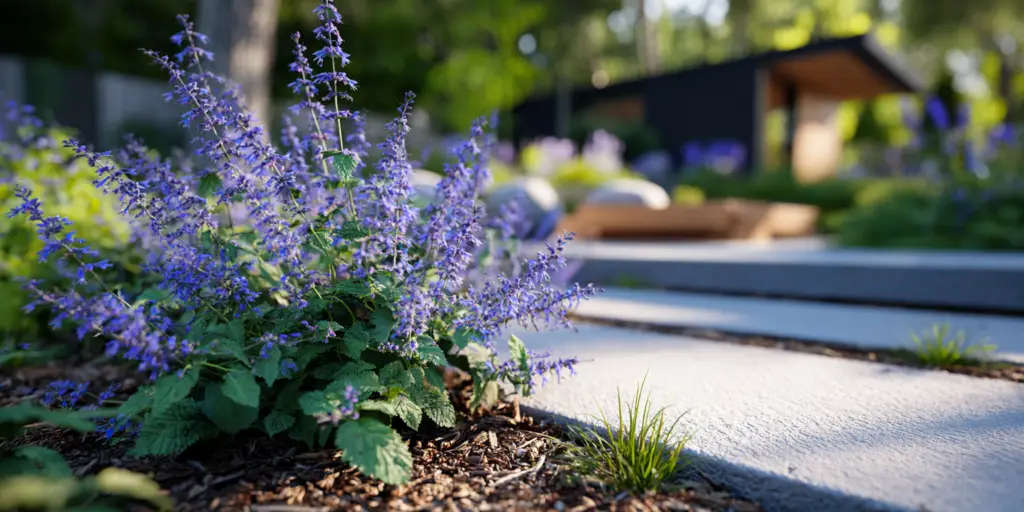
This species catmint forms a compact clump with aromatic gray green leaves. It blooms from late spring into early fall when plants are sheared after the first flush. It prefers full sun and well drained soils and tolerates drought once established. Plants are deer resistant and useful at the front of borders and along paths. The species is native to the Caucasus and northern Iran.
At‑a‑glance
Group/Class: species catmint
Height × spread: 9 to 12 in × 12 to 18 in (22 to 30 cm × 30 to 45 cm)
Bloom window: May to September
Color & flower form: pale lilac to deep violet two lipped flowers
Fragrance: 2 noticeable
USDA hardiness: zones 4 to 8
Breeder / Year / Origin: unknown, native to the Caucasus and northern Iran
Pet safety: sources differ; see References
How it differs
Lower and tighter than many hybrid catmints.
Best for edging and front of border placements.
May reseed in ideal conditions.
Holds bloom with light shearing after peak.
Strengths
Compact habit for small spaces.
Deer resistant and drought tolerant once established.
Extended bloom window with shearing.
Care in one minute
Provide full sun in most regions; offer light afternoon shade where summers are hot and humid.
Set in well drained soil; neutral to slightly alkaline pH is acceptable.
Water to establish; then water deeply but infrequently.
Shear spent blooms to extend flowering.
Divide clumps as they age to refresh growth.
Watch‑outs
May self seed in favorable sites.
Heat and humidity can stress plants in the Deep South.
Avoid chronically wet soils.
Best uses (tags)
edging; front-of-border; pollinators; rock gardens; water-wise
Provenance note
A species of the Caucasus and northern Iran grown in gardens for its compact form and long bloom.
Written by: Your Flowers Guide editorial team We are a small independent group of flower lovers who research and review each guide using trusted horticultural and educational sources. Learn more about us