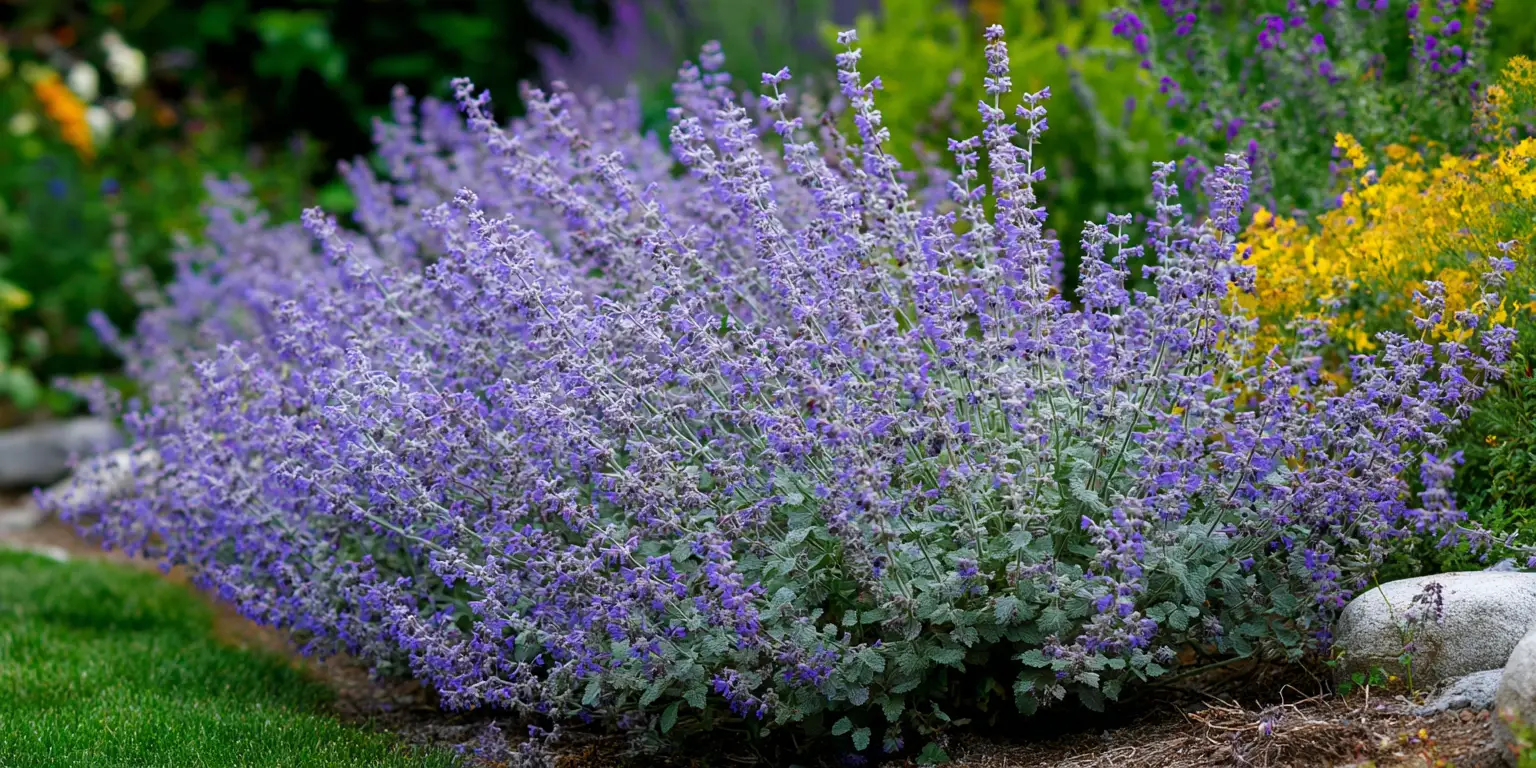
in bloom
now
through Aug
Bloom calendar
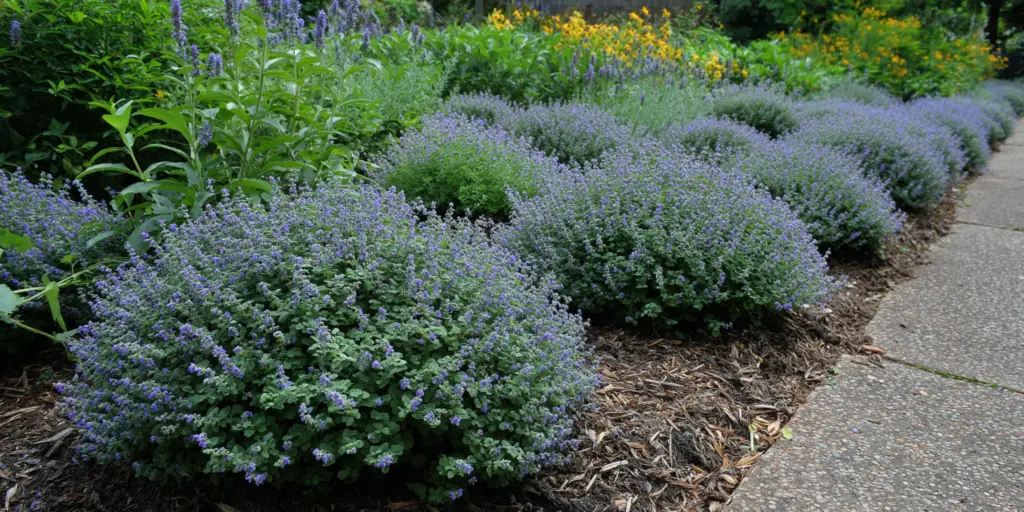
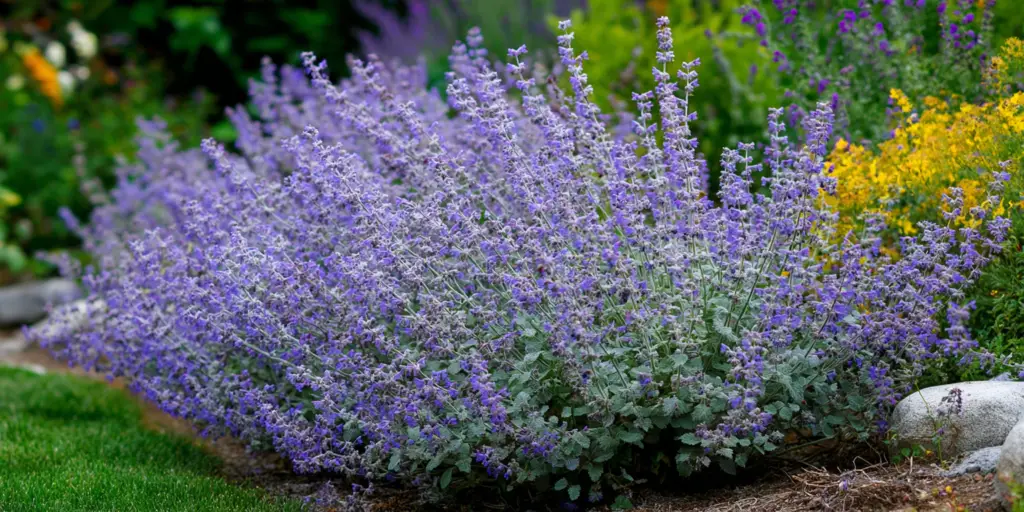
Six Hills Giant
hybrid catmint cultivar
At‑a‑glance
- Group/Class: hybrid catmint cultivar
- Height × spread: 24 to 36 in × 24 to 48 in (60 to 90 cm × 60 to 120 cm)
- Bloom window: June to September
- Color & flower form: lavender blue spikes with two lipped flowers
- Fragrance: 2 noticeable
- USDA hardiness: zones 4 to 7
- Breeder / Year / Origin: unknown, unknown, United Kingdom
- Awards/registration: RHS Award of Garden Merit
- Cut-flower notes: stems are usable fresh and dry; dries well
- Pet safety: sources differ; see References
How it differs
- Taller and broader than many catmints, making large drifts easy to read from a distance.
- Peak bloom typically starts in early summer rather than mid spring.
- May need light staking or timely shearing to prevent reclining on rich soils.
- Often used where a bolder catmint is desired.
Strengths
- Bold size and presence for borders.
- Drought tolerant after establishment.
- Good pollinator value and deer resistance.
- Recognized by the RHS for garden worthiness.
Care in one minute
Provide full sun and well drained soil.
Water to establish; then water deeply and infrequently.
Shear after the first flush to keep plants tidy and encourage rebloom.
Stake lightly if needed in rich soils or exposed sites.
Cut back low in late fall or early spring.
Watch‑outs
- Tall stems can relax or flop without timely shearing.
- Powdery mildew may appear in dry summers.
- Avoid overly moist or poorly drained soils.
Best uses (tags)
Provenance note
A long cultivated selection attributed to the UK; commonly classified within Nepeta × faassenii.
References
- Missouri Botanical Garden – Nepeta ‘Six Hills Giant’
- RHS – Nepeta ‘Six Hills Giant’ details
- Chicago Botanic Garden – A Comparative Study of Catmints
- RHS – Perennial cut flowers: Nepeta ‘Six Hills Giant’
Similar Flowers

Enjoying our flower guides? Add YourFlowersGuide as a preferred source on Google. It helps more readers find us.
Add to Preferred Sources