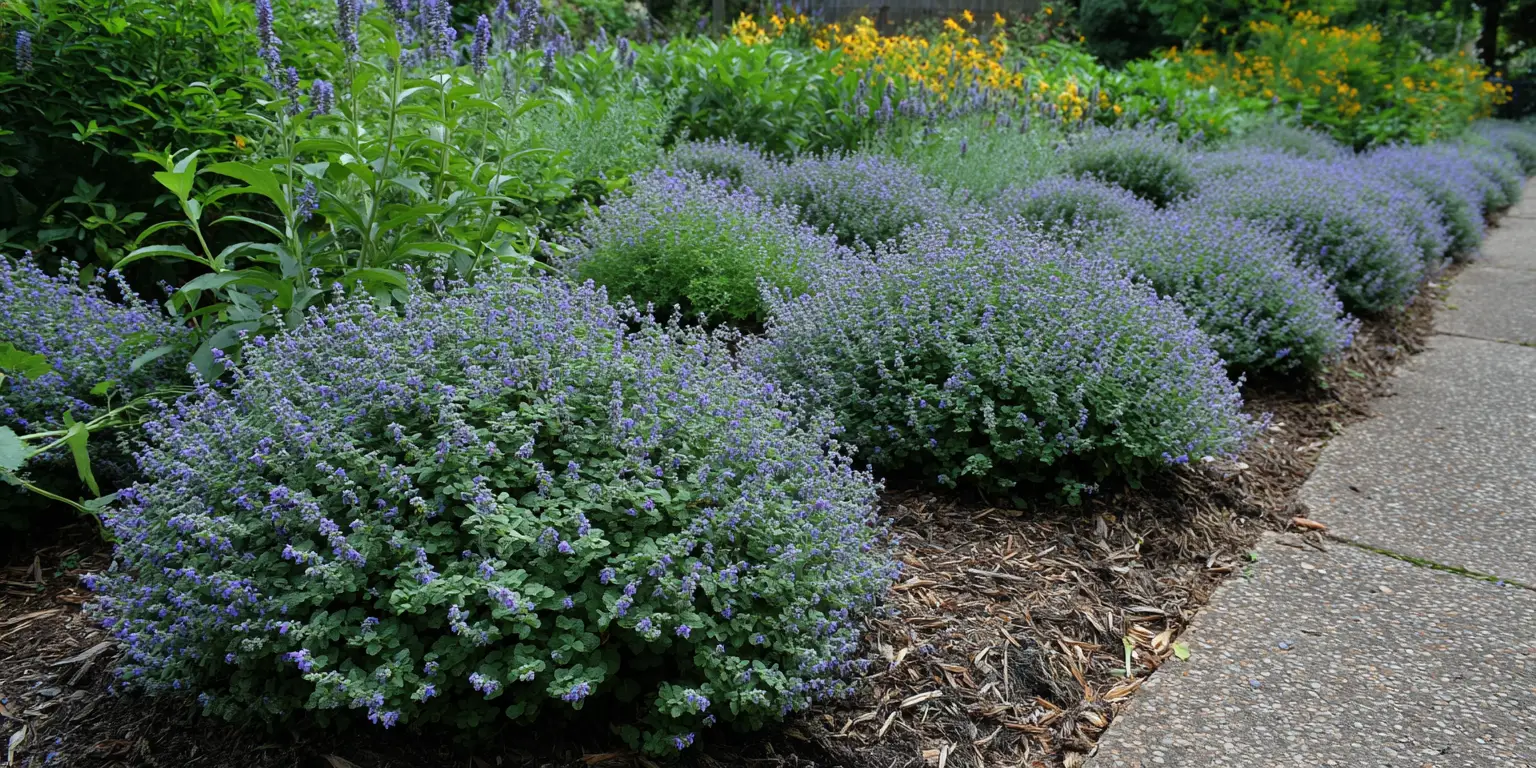
in bloom
now
through Aug
Bloom calendar
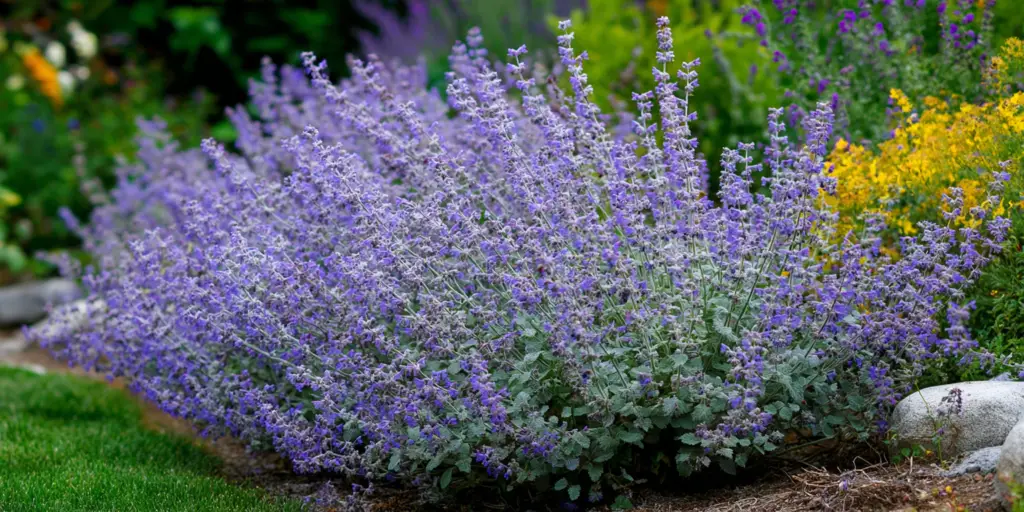
Nepeta × faassenii
hybrid catmint
At‑a‑glance
- Group/Class: hybrid catmint
- Height × spread: 12 to 24 in × 18 to 36 in (30 to 60 cm × 45 to 90 cm)
- Bloom window: May to September
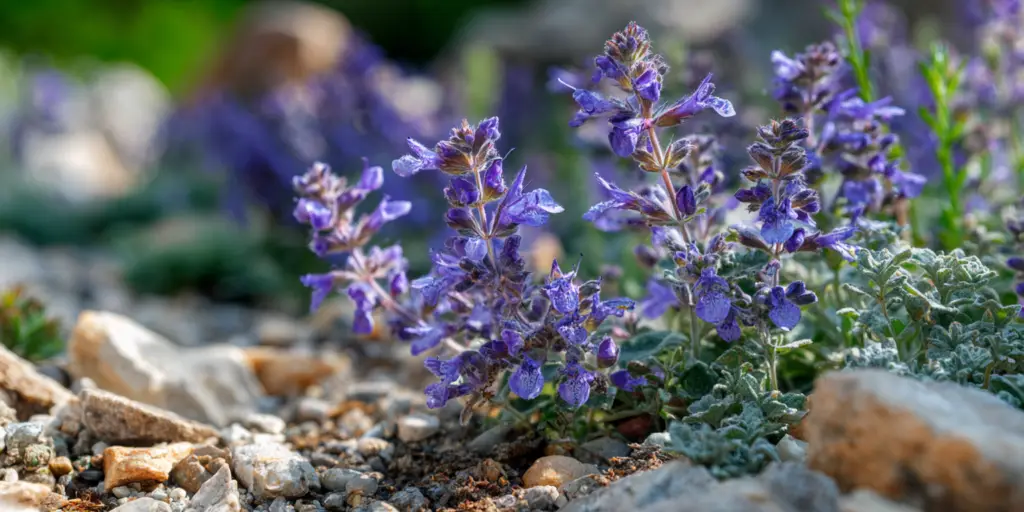
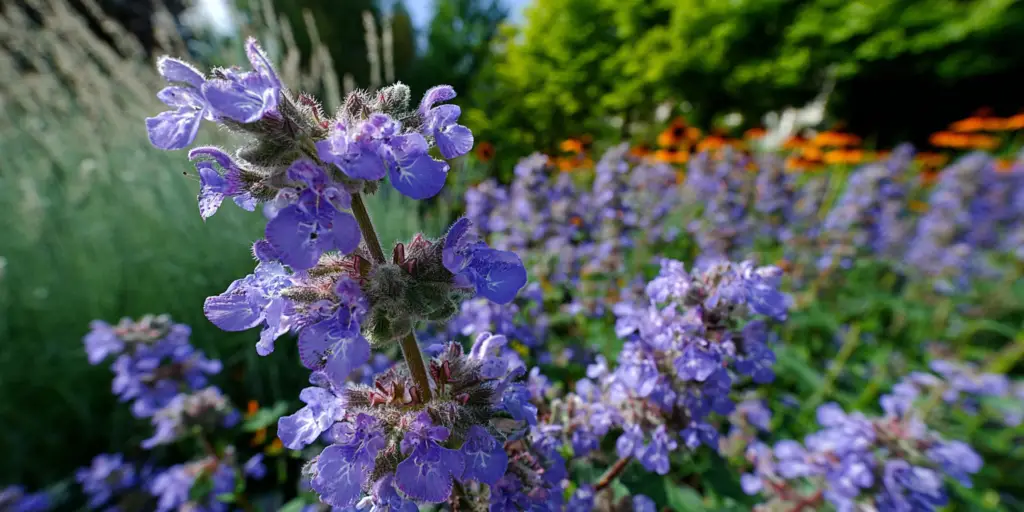
- Color & flower form: lavender blue to violet tubular flowers in loose whorls
- Fragrance: 2 noticeable
- USDA hardiness: zones 3 to 8
- Breeder / Year / Origin: H. Faassen, unknown, Netherlands
- Pet safety: sources differ; see References
How it differs
- Produces little to no seed and spreads mainly by clumping.
- Blooms over a long season with shearing after the first flush.
- Slightly less drought tolerant than some species catmints.
- Benefits from afternoon shade in hot, humid regions.
Strengths
- Long season of color with low upkeep.
- Fragrant foliage and good pollinator value.
- Deer and rabbit resistant.
- Tolerates dry, well drained soils.
Care in one minute
Choose full sun in cool climates and give light afternoon shade where summers are hot and humid.
Plant in well drained soil with neutral to slightly alkaline pH.
Water regularly the first season; then water deeply but infrequently.
Feed lightly in spring only if soil is poor.
Shear spent stems after the first flush to promote rebloom.
Divide mature clumps every few years to keep plants vigorous.
Watch‑outs
- Can relax or flop in rich soil or shade.
- Not as drought tolerant as some Nepeta.
- High humidity can reduce vigor.
- Wet or poorly drained soils can cause crown rot.
Best uses (tags)
Provenance note
A horticultural hybrid between Nepeta racemosa and N. nepetella selected at the Dutch nursery of J. H. Faassen.
References
- Missouri Botanical Garden – Nepeta × faassenii
- NC State Extension – Nepeta (Catmint, Catnip)
- Illinois Extension – Catmint (Nepeta × faassenii) at a glance
Similar Flowers


Enjoying our flower guides? Add YourFlowersGuide as a preferred source on Google. It helps more readers find us.
Add to Preferred Sources