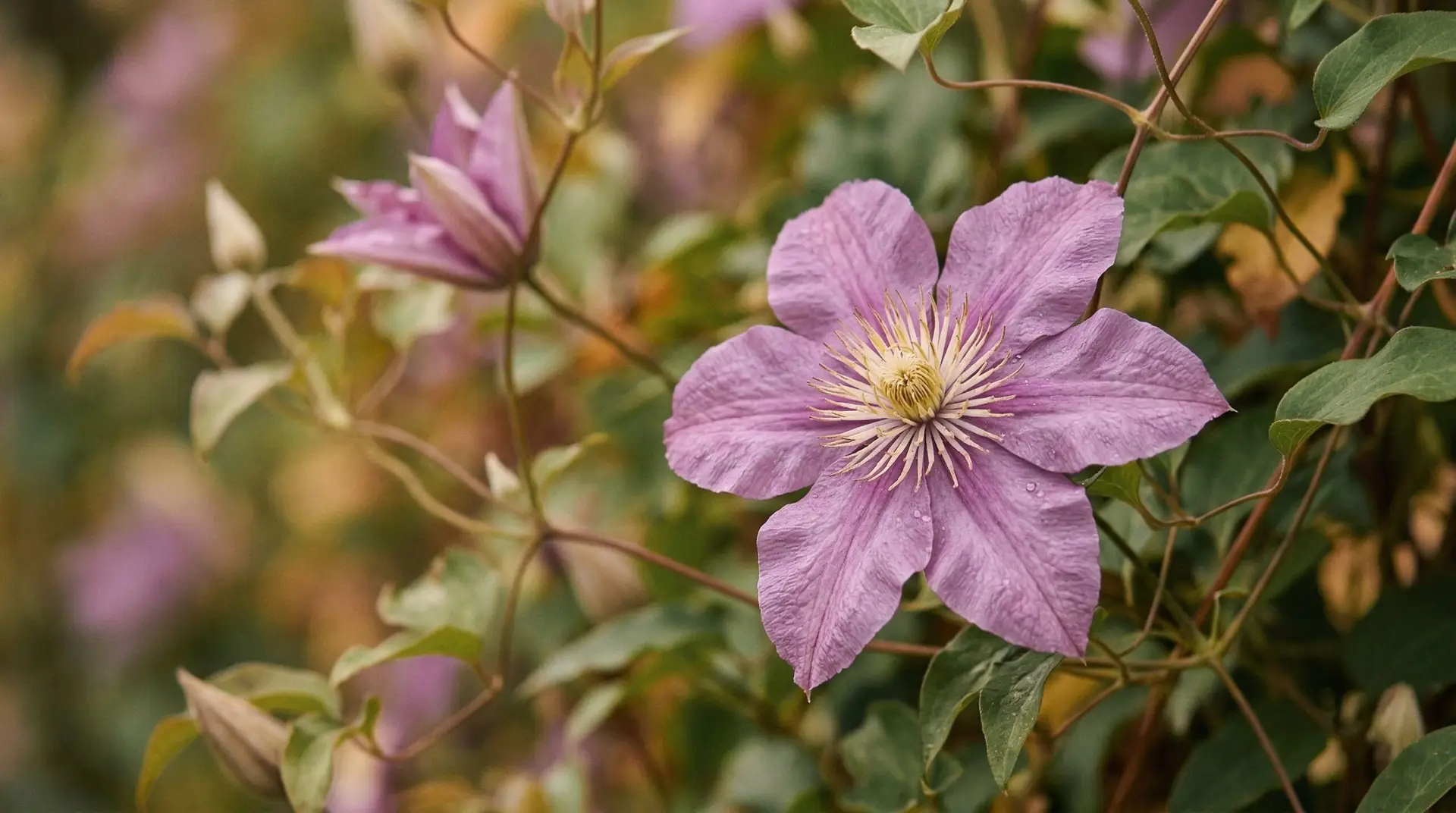
In the late sixteenth century, the English botanist John Gerard walked along the chalky hedgerows of southern England and observed a wild, scrambling vine covered in feathery white seed heads. In his famous 1597 publication “The Herball,” Gerard gave this wild species of clematis a name that would last for centuries: traveller’s joy. He noted that the plant draped itself over bushes and fences along the country highways, offering a beautiful sight to weary people making long journeys on foot or horseback. This wild European native, botanically known as Clematis vitalba, established the foundational cultural identity of the plant long before the large, colorful hybrids arrived in Western gardens. The sprawling habit of the vine, which finds clever ways to climb over any obstacle in its path, gave rise to the primary clematis meaning of ingenuity and mental beauty. People saw the plant’s ability to adapt to its environment as a botanical representation of a quick, resourceful human mind. Modern observers walking along rural roads experience the same sense of comfort and discovery that Gerard documented over four hundred years ago when they encounter this wild vine.
Contents 5 sections
The Victorian language of mental beauty
When the rigid social codes of the nineteenth century popularized the language of flowers, the clematis symbolism of mental beauty became officially codified in dictionaries of floriography. Victorian society relied heavily on these floral dictionaries to send subtle messages that strict etiquette rules prevented them from speaking aloud. A suitor presenting a bouquet containing clematis was praising the recipient’s intellect rather than just their physical appearance. The specific association with mental beauty stemmed directly from the physical characteristics of the vine itself. Unlike many climbing plants that use sticky pads or twining stems to ascend, the clematis uses its leaf stalks to wrap around supports, displaying a unique biological mechanism that Victorian naturalists viewed as highly intelligent. This clever adaptation made the plant a perfect metaphor for a sharp, flexible mind that could grasp complex ideas and elevate itself through learning. Writers of the era frequently contrasted the intellectual symbolism of the clematis with the more romantic meanings attached to sweet-scented vines like jasmine, which often meant amiability and attachment.
Rural folklore and the devil’s darning needle
Before the large hybrids captured the attention of high society, the wild clematis held a complicated reputation among rural farming communities across Europe. The mature stems of the wild vine are incredibly tough and fibrous, leading country people to harvest them for practical uses like binding sheaves of grain or weaving rough baskets. However, the plant also earned a variety of sinister regional nicknames, including the devil’s darning needle and old man’s beard. The association with the devil stemmed from the plant’s aggressive growth habit, which could quickly smother important timber trees or agricultural crops if left unchecked. The feathery, grey seed heads that appear in late autumn gave rise to the old man’s beard moniker, creating a ghostly appearance in the winter hedgerows that inspired numerous folk tales. Some rural superstitions warned against bringing the flowers indoors, believing that the twisting vines would bring bad luck or cause quarrels within the household. This darker folklore provides a fascinating contrast to the refined clematis flower language adopted by the urban upper classes during the same historical period.
Plant hunters and the Asian horticultural tradition
While Europeans were attaching meanings of intellect to their small-flowered native vines, gardeners in East Asia had already spent centuries cultivating spectacular, large-flowered clematis species. During the Edo period in Japan, horticulturists developed an intense appreciation for Clematis patens, selectively breeding plants to produce enormous blossoms in shades of deep purple and pure white. In traditional Asian flower language, these climbing plants meant moral purity and the ability of a virtuous person to rise above worldly corruption. The cultural trajectory of the flower shifted dramatically in the 1830s when European plant hunters like Philipp Franz von Siebold began sending these large-flowered Asian specimens back to Western nurseries. The arrival of these exotic species triggered a horticultural sensation in Europe, completely transforming how the plant was used in garden design. Nurserymen immediately began crossing the hardy European species with the glamorous Asian imports to create the large, colorful hybrids that dominate garden centers today. The resulting plants combined the vigorous, adaptable nature of the native traveller’s joy with the refined aesthetic traditions of Japanese and Chinese imperial gardens.
Artistic interpretations and spiritual connections
The flowing, sinuous growth habit of the clematis vine made it a central motif in the Art Nouveau movement at the turn of the twentieth century. Artists and architects of this period sought to break away from rigid, historical forms by incorporating the organic, asymmetrical lines of climbing plants into their designs. Stained glass windows, wrought iron gates, and ceramic tiles frequently included the distinct, star-shaped blossoms and curling leaf stalks of the clematis. Beyond decorative arts, the plant held specific spiritual symbolism in various folk traditions across Europe and North America. The vine’s constant upward movement toward the light was often interpreted as a visual representation of spiritual aspiration and the human desire for divine connection. Some indigenous cultures in North America utilized their native clematis species in traditional medicine to treat nervous system disorders, viewing the plant’s complex network of stems as a mirror of the human body’s own neural pathways. This combination of artistic utility and spiritual resonance sets the clematis apart from other fast-growing climbers like morning glories, which were more commonly associated with the fleeting nature of life and affection.
Cultivation history in the modern garden
The sophisticated breeding techniques developed by nineteenth-century European nurserymen established the foundation for the clematis vines that grow in contemporary gardens. Modern hybridizers still use variations of the same approach when crossing different species to achieve new colors, varied bloom times, and improved disease resistance. Every time a gardener trains a new clematis hybrid up a wooden trellis or allows it to scramble through a climbing shrub, they are participating in a horticultural tradition that spans multiple continents and centuries. The plant requires careful attention to its roots, which prefer cool shade, while its upper vines demand bright sunlight to produce abundant flowers. This dual nature requires the gardener to think creatively about placement, echoing the plant’s historical association with cleverness and ingenuity. The lasting appeal of the flower rests on this perfect balance of wild vigor and cultivated beauty. The legacy of the traveller’s joy remains alive in every garden where these remarkable vines continue their slow, intelligent climb toward the sun.
More About Clematis
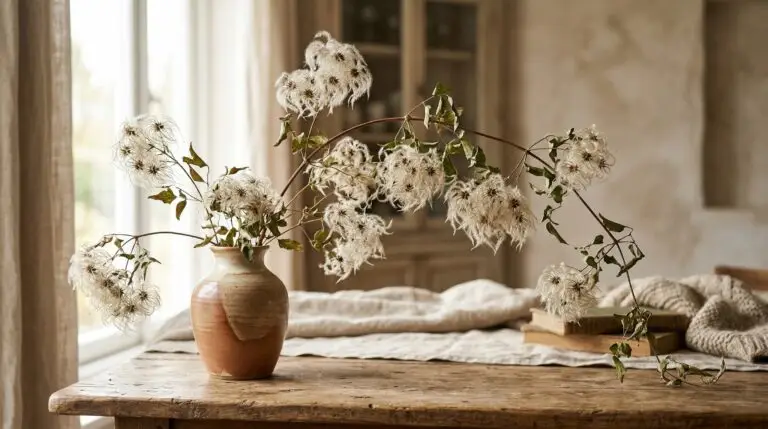
Clematis seed heads as winter garden interest and dried flower arrangements
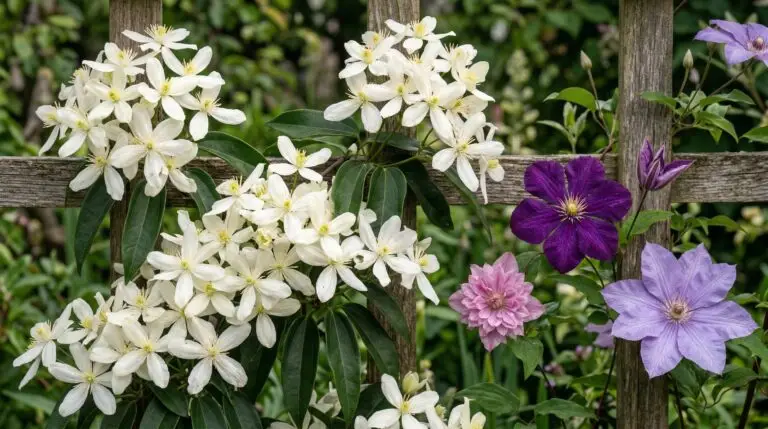
Evergreen clematis varieties that keep your garden looking alive through winter
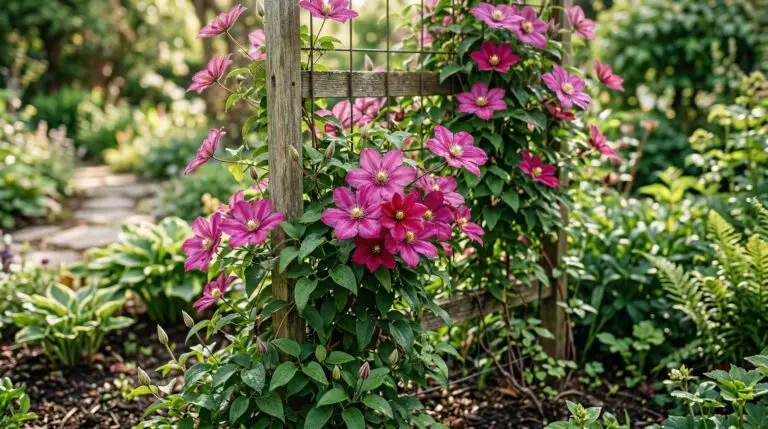
Small-space clematis varieties perfect for containers mailboxes and small trellises
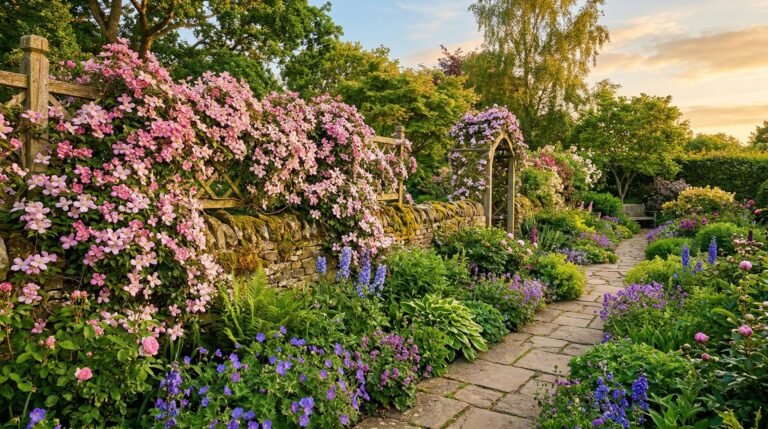
Understanding clematis pruning groups so you never accidentally cut off your blooms
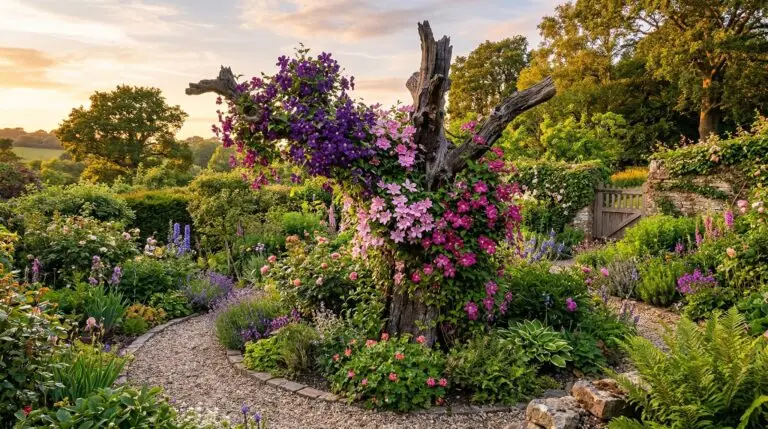
Growing clematis on trees for a naturalistic look inspired by woodland climbing vines
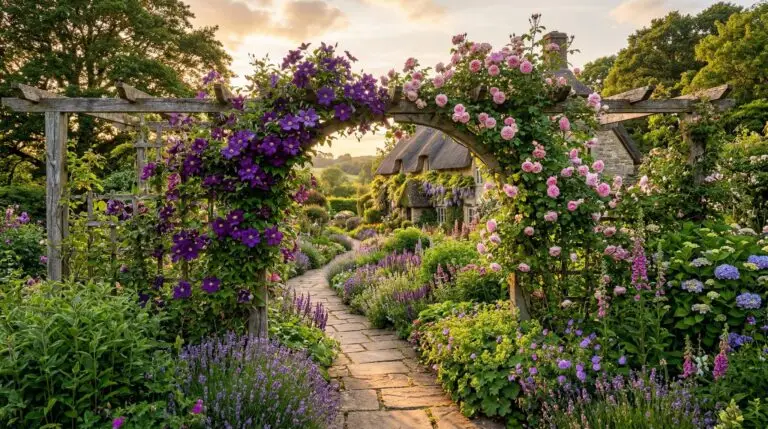
How to grow clematis and roses together on the same trellis for a stunning combination
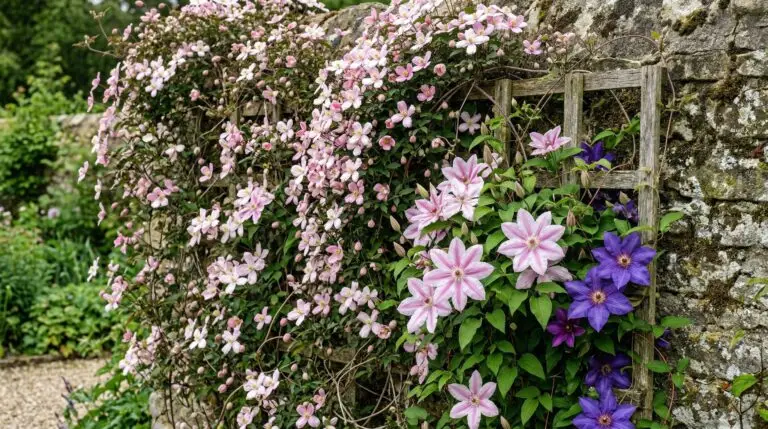
Best clematis varieties for covering fences and trellises with walls of flowers
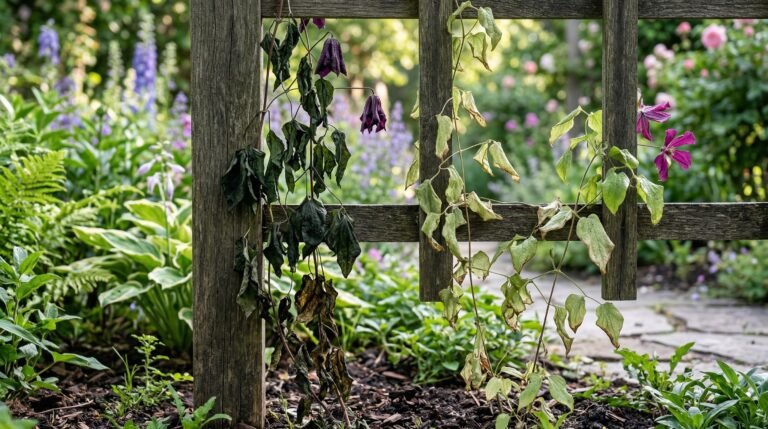
Why clematis is wilting and how to diagnose and treat clematis wilt disease
Enjoying our flower guides? Add YourFlowersGuide as a preferred source on Google. It helps more readers find us.
Add to Preferred Sources