
Clematis bloom time across the US
Interactive map
 See the interactive map
Drag the date and the bloom moves north across the country. Every point has its own window, and the map says where it has no records rather than guessing. Free, with nothing to sign up for. Open the clematis map.
City by city
Typical window, earliest first. Cultivars of the same flower can open days or weeks apart.
Taxonomy and origin
Clematis belongs to the family Ranunculaceae, the buttercup family, alongside anemones, delphiniums, and buttercups themselves. The genus runs to nearly 400 species, most of them woody climbers with a scattering of herbaceous and shrubby types, and they grow across most of the temperate world, with the richest diversity in eastern Asia and further species native to Europe, North America, Australia, and Africa. The name comes from the Greek klematis, a word for a climbing or trailing shoot, a nod to the long flexible stems. Several older common names still attach to particular species: the European Clematis vitalba is traveler's joy or old man's beard for the smoky mass of seed heads it leaves in fall, North American natives are called virgin's bower, and thick-petaled species go by leather flower. Clematis has been grown in gardens since at least the sixteenth century, and while the modern hybrids number in the thousands, nearly all share the same twining habit and the same open, many-sepaled flower that makes the genus recognizable at a glance.
The three pruning groups, and the one that forgives everything
Clematis is the rare genus where the label decides how the plant must be cut, and cutting it wrong costs a season of flowers rather than the plant. Five extension services, University of Delaware, Clemson, Illinois, Kansas State and Iowa State, all structure their clematis guidance around this same three-way split before they mention a single pest, which is itself a measure of where the real trouble is. Illinois labels the same three groups A, B and C rather than 1, 2 and 3, with identical content. The grid below is the group, what it flowers on, and what a pruner is allowed to do to it.
One number in this system has no agreed value, and it is the one people most want. For the Group 3 hard cut, University of Delaware Extension and Iowa State both give 6 to 12 inches above ground, Illinois Extension gives 8 to 12 inches, and Clemson HGIC gives 2 to 3 feet. Three of the four cluster low, and Clemson's figure is carried here rather than quietly dropped, because the instruction all four actually share is the one that matters: cut back to a viable pair of buds, in late winter, before growth starts. There is also a named alternative to the whole system, reported rather than endorsed. Kansas State's Johnson County horticulture agent Dennis Patton writes that after years of experience and confusion growing clematis he prunes when new growth first appears in early spring, removing deadwood and cutting to live buds, or more radically simply cuts all of last season's growth to the ground whatever the group. That is a real extension-published position for a gardener who will not track three calendars, and on a Group 1 or Group 2 vine it costs most or all of that year's flowers, which is the trade being made.
Bloom time
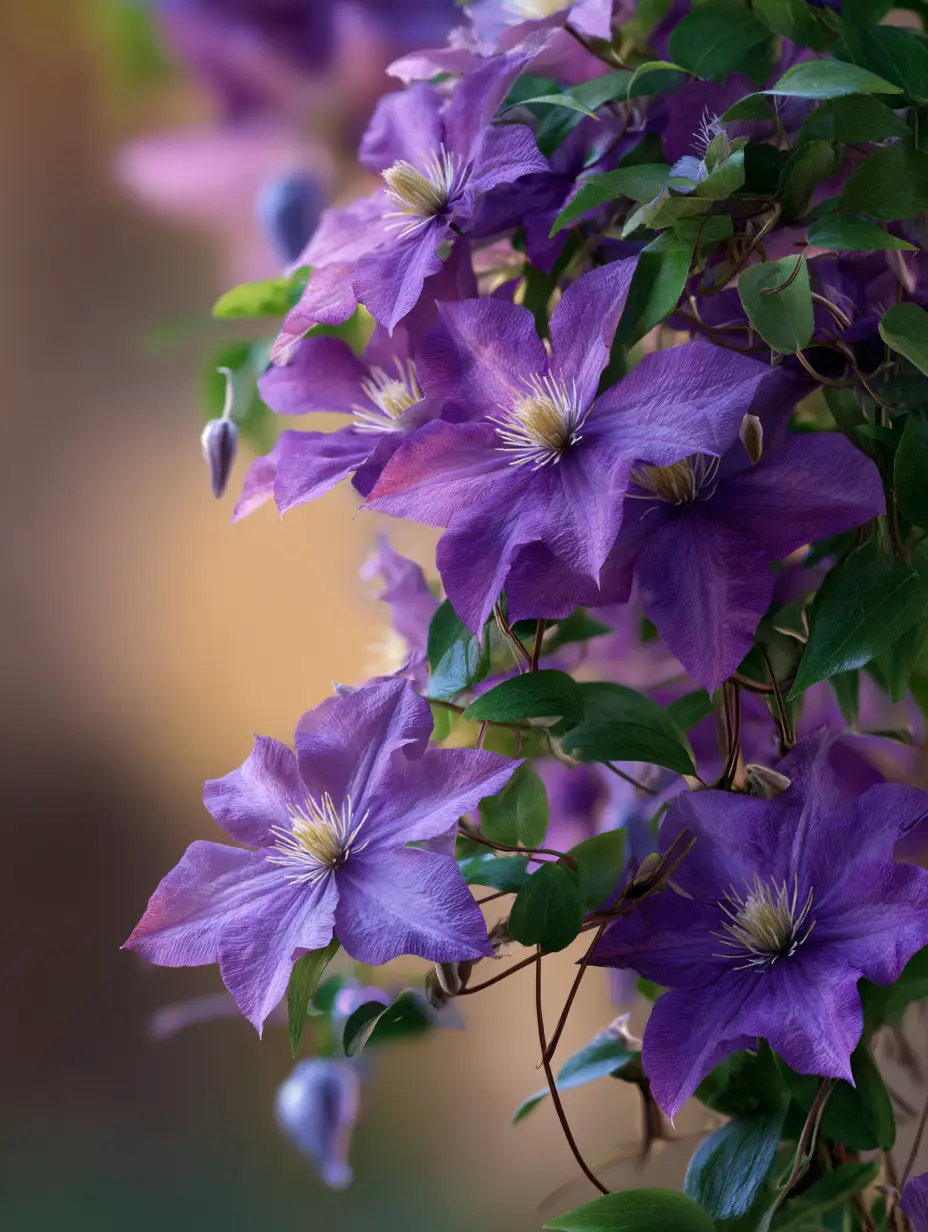
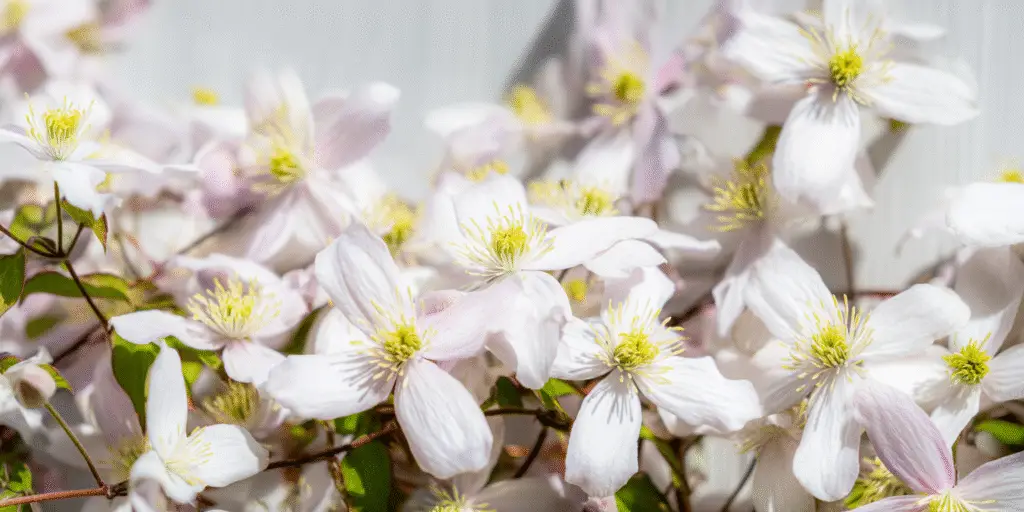
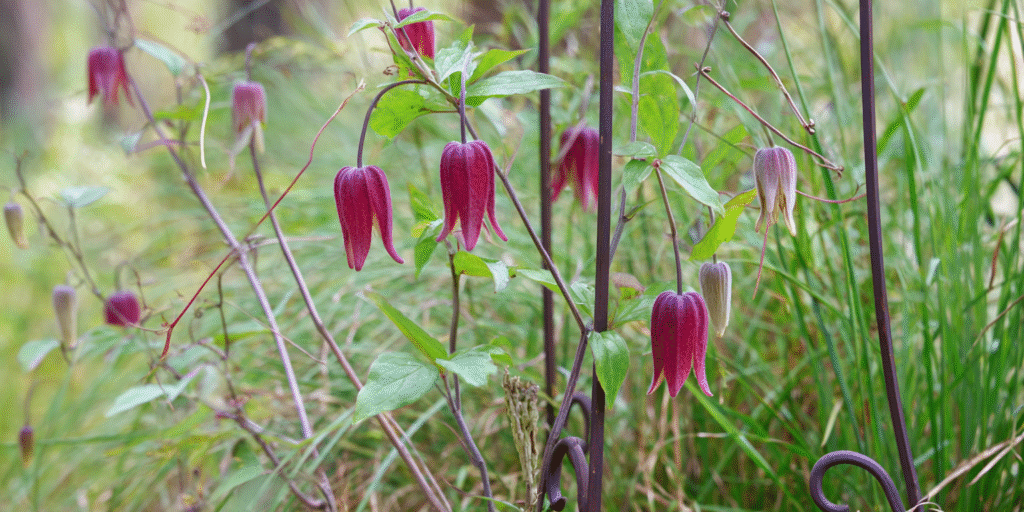
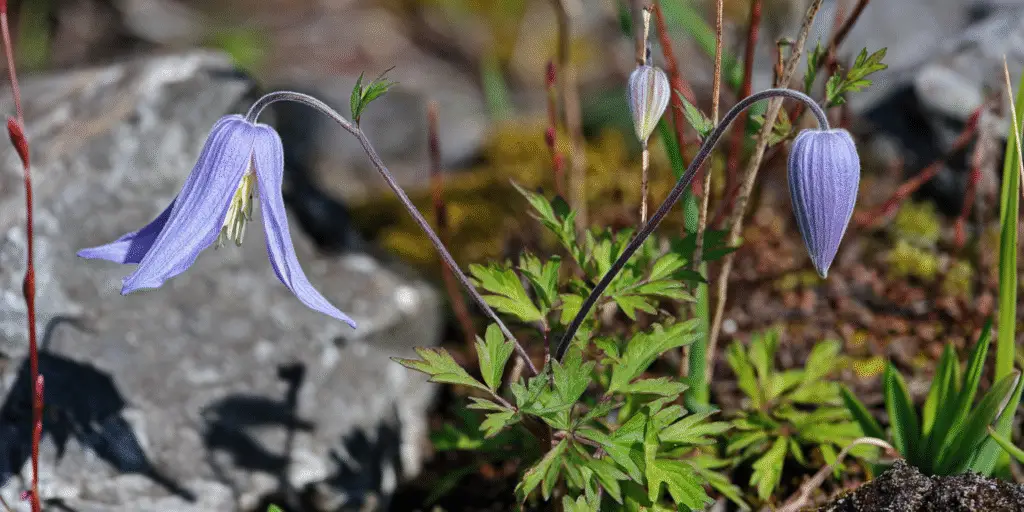
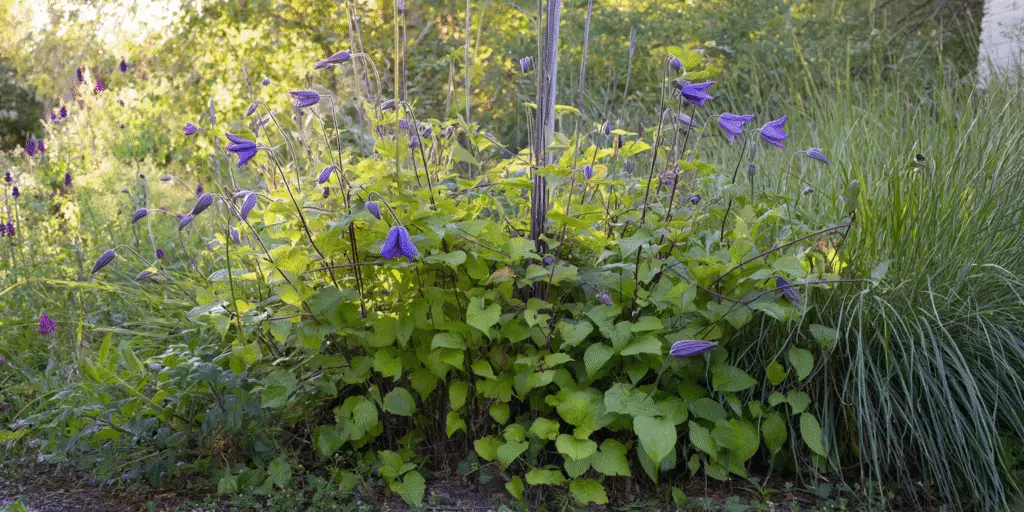
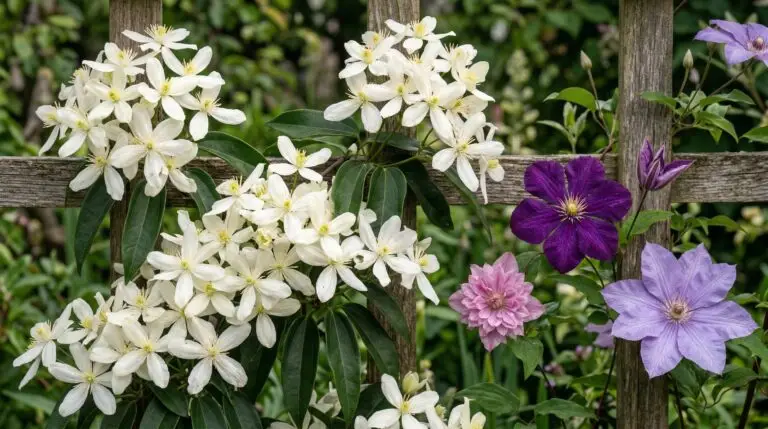
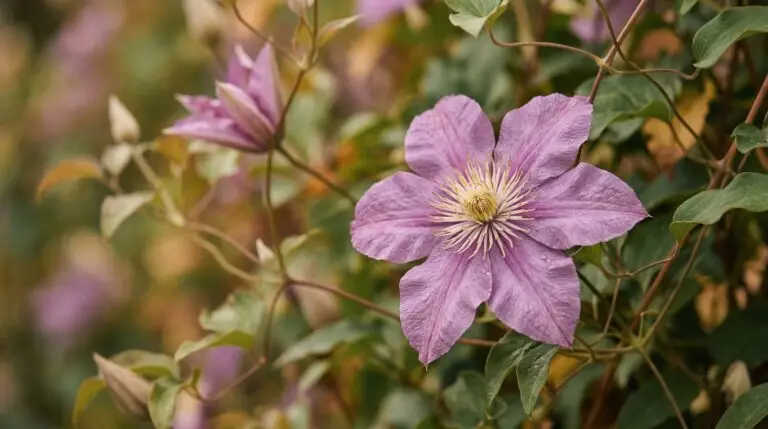
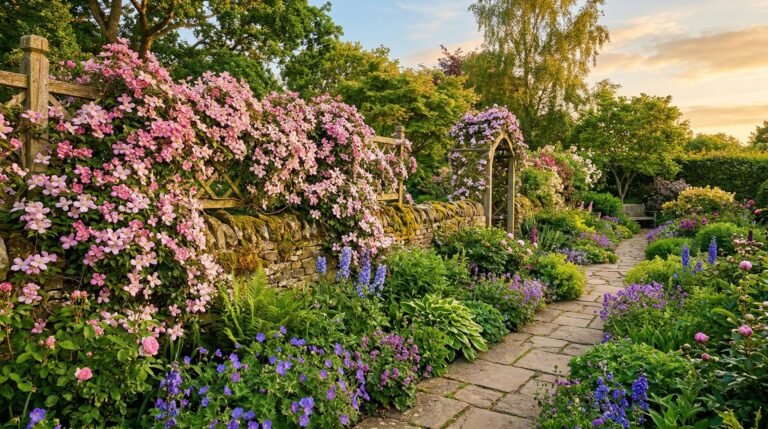
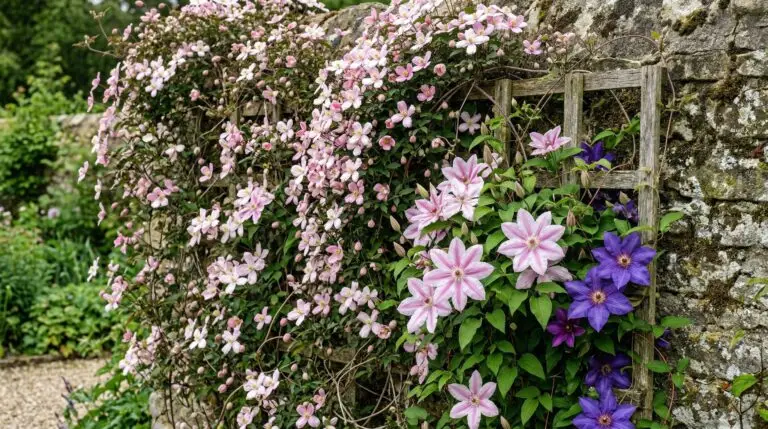
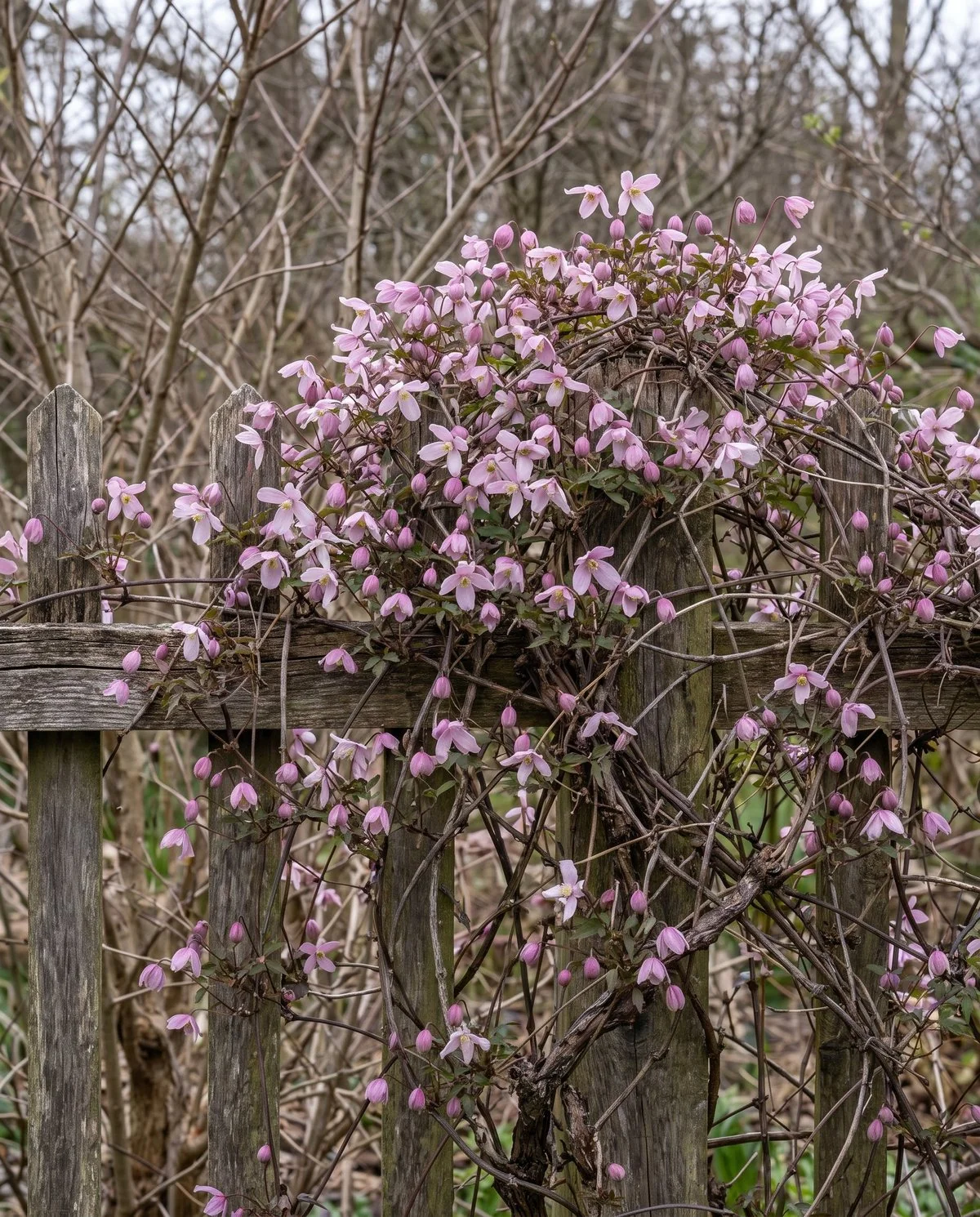
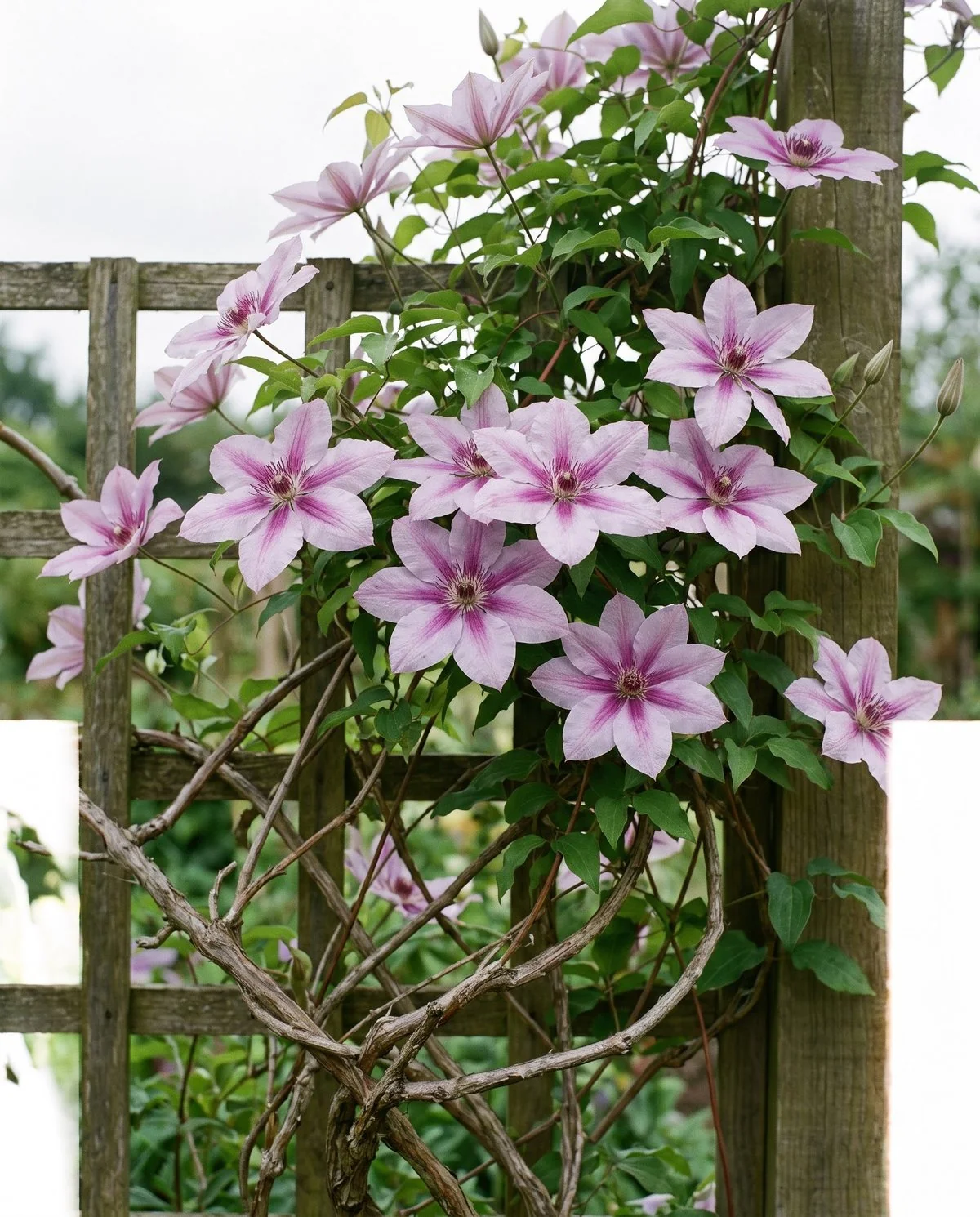
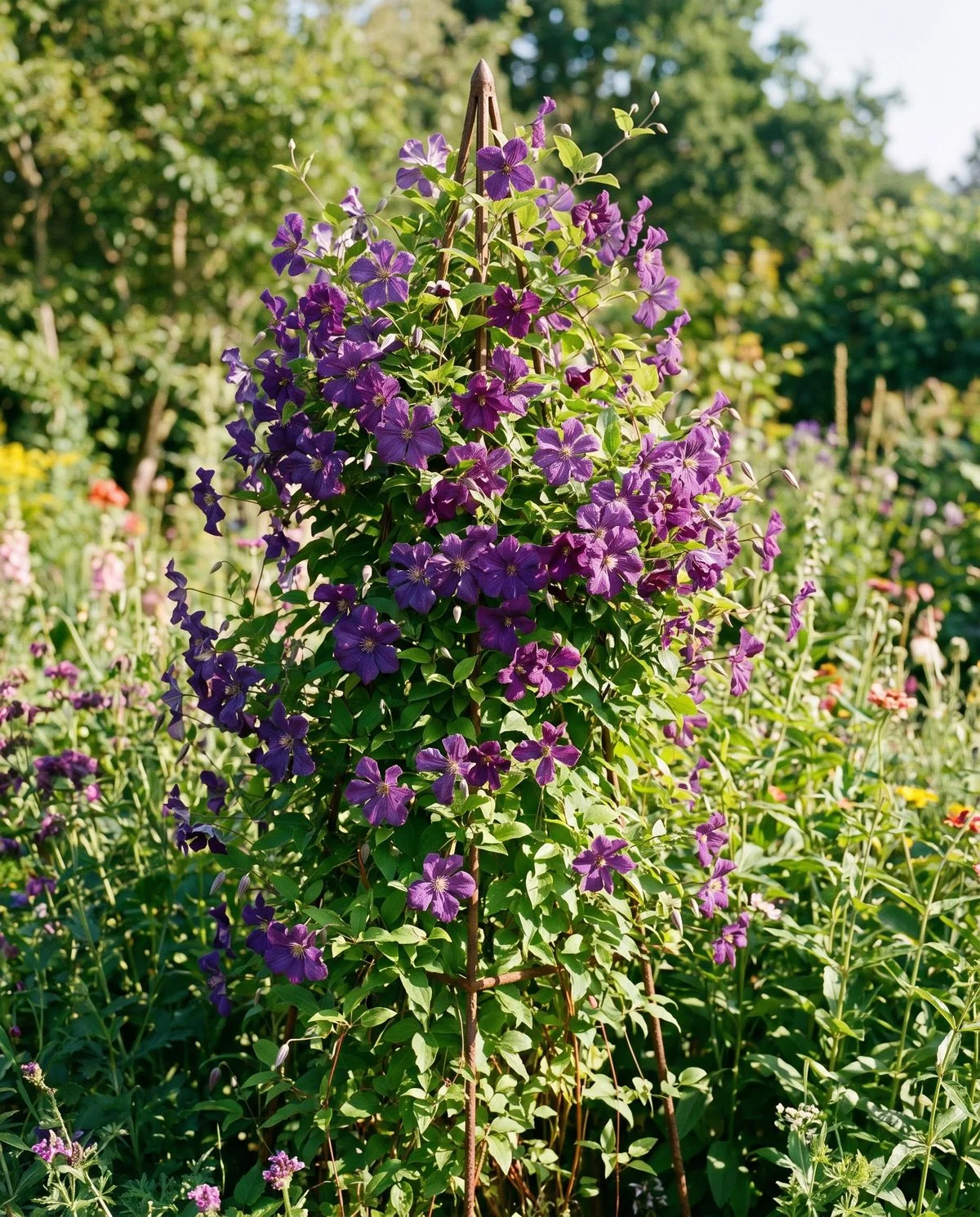
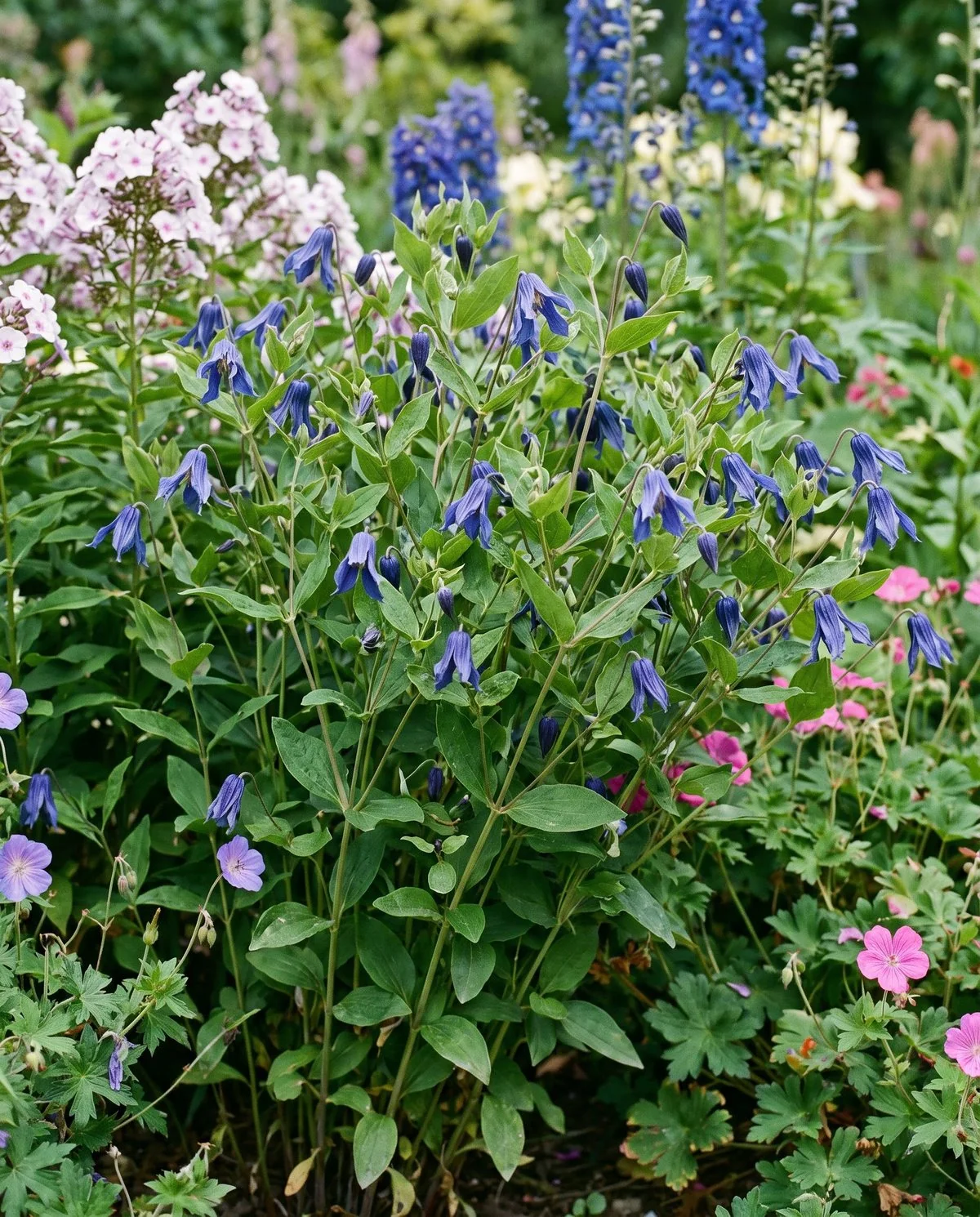
The single most useful thing to know about a clematis is when it flowers, because bloom season sorts every clematis into one of three pruning groups, and the group decides how and when to cut it. Taken together the genus flowers from late winter to early fall, but any one plant keeps to its window. Early types, mostly small-flowered species like montana and alpina, open in spring on wood they grew the previous year. The large-flowered hybrids that most people picture bloom in late spring and early summer, roughly May into June, often on old wood with a second lighter flush later on new growth. Late clematis, including jackmanii, the viticellas, and sweet autumn clematis, wait until midsummer and carry on into fall on growth made the same season. Each individual flower lasts a couple of weeks, and on many kinds the spent blooms turn into the silvery seed heads that stretch the interest well past the flowering itself. The table below turns bloom season into a pruning decision.
If a plant's label is long gone, one season of watching settles the group: flowers only in spring on last year's stems mean Group 1, big flowers in early summer with a scattered repeat mean Group 2, and nothing until midsummer on fresh growth means Group 3. When in doubt, prune lightly and wait to see where the buds form, because the penalty for a wrong cut is a lost season of bloom rather than a dead plant. Cutting a Group 1 or Group 2 clematis to the ground in late winter is the classic mistake: it strips off the old wood that was about to flower, which is why a healthy vine can go a year with nothing to show. For the full walk-through of matching each cut to its group, the guide to clematis pruning groups takes it plant by plant.

Three claims worth pinning down
The myth: All clematis are pruned the same way.
The reality: This is the mistake the whole page exists to prevent, and five extension services structure their guidance around avoiding it: University of Delaware, Clemson, Illinois, Kansas State and Iowa State. Pruning a Group 1 or Group 2 vine as though it were a Group 3 removes the wood that was going to flower, and the cost is measured in seasons. University of Delaware adds a second, subtler penalty for Group 2: double-flowered varieties in that group, pruned too heavily, will only produce single flowers. The most extreme real case in this research is not a hypothetical, it is a gardener who thought he was getting the fertilizer wrong and posted that his clematis bloomed again after nineteen years, the first year he did not prune it hard.
The myth: Clematis wilt always kills the plant.
The reality: The International Clematis Society states it directly: wilt is rarely fatal to the plant. Plants typically recover within a year by sprouting new shoots from underground, and Clemson HGIC gives the condition that makes that possible, which is depth: if the clematis was planted with two buds below the ground, it will usually grow back from the base the following year. That is why the planting depth and the wilt prognosis are the same fact seen twice, and why writing off a collapsed vine before it has had a full season is the more common mistake than losing one to the disease.
The myth: You have to identify your vine's group before you are allowed to prune it.
The reality: There is a published alternative, and it belongs on the record rather than in the footnotes. Kansas State's Johnson County horticulture agent Dennis Patton writes that after years of experience and confusion growing clematis, he prunes when new growth first appears in early spring, removing deadwood and cutting back to live buds, or more radically simply cuts all of last season's growth to the ground regardless of group. It is a real extension-published position for somebody who will not track three calendars, and it comes with a real cost that the group table above makes explicit: a Group 1 or Group 2 vine cut to the ground every spring loses most or all of that year's flowers. The alternative is a trade, not a shortcut.
Height and spread
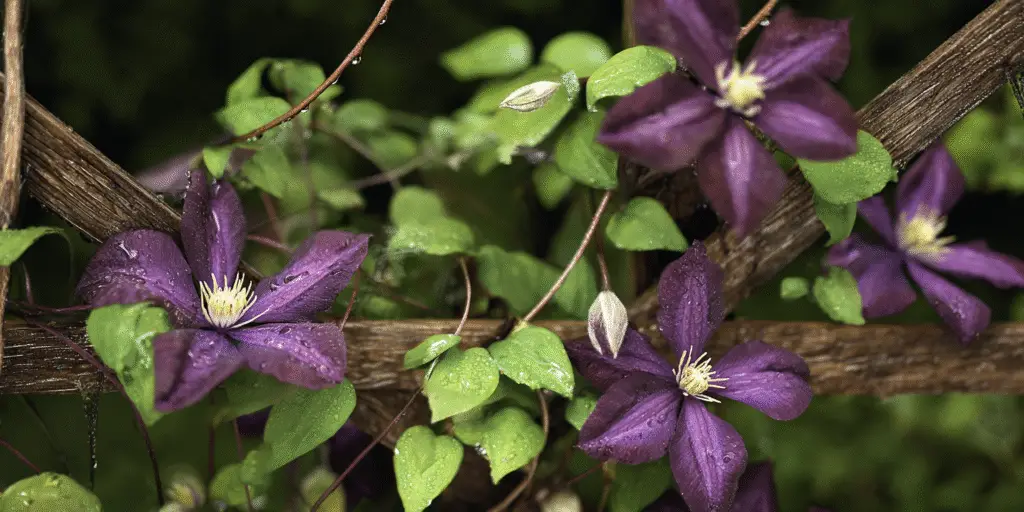
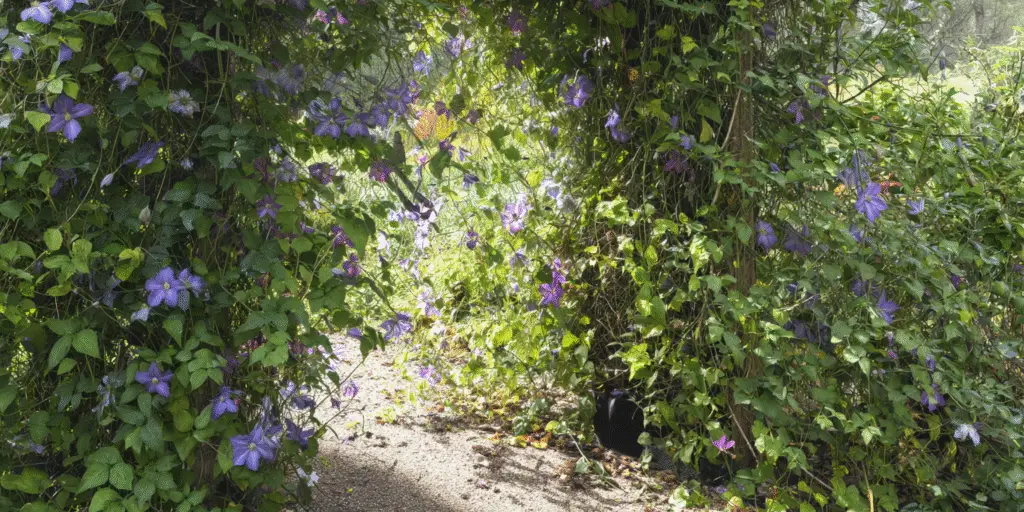
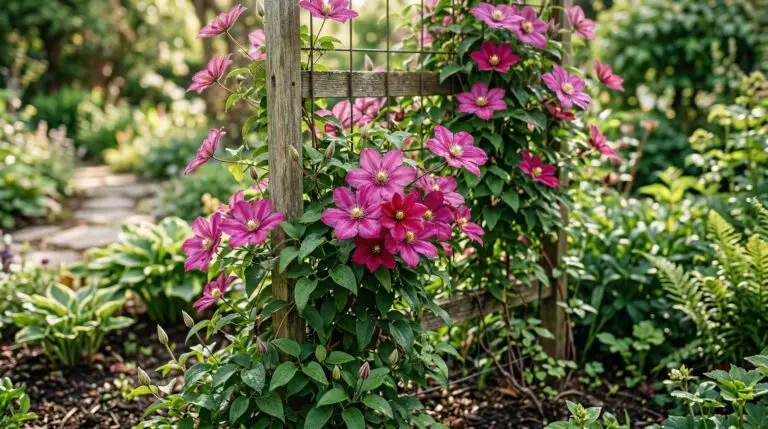
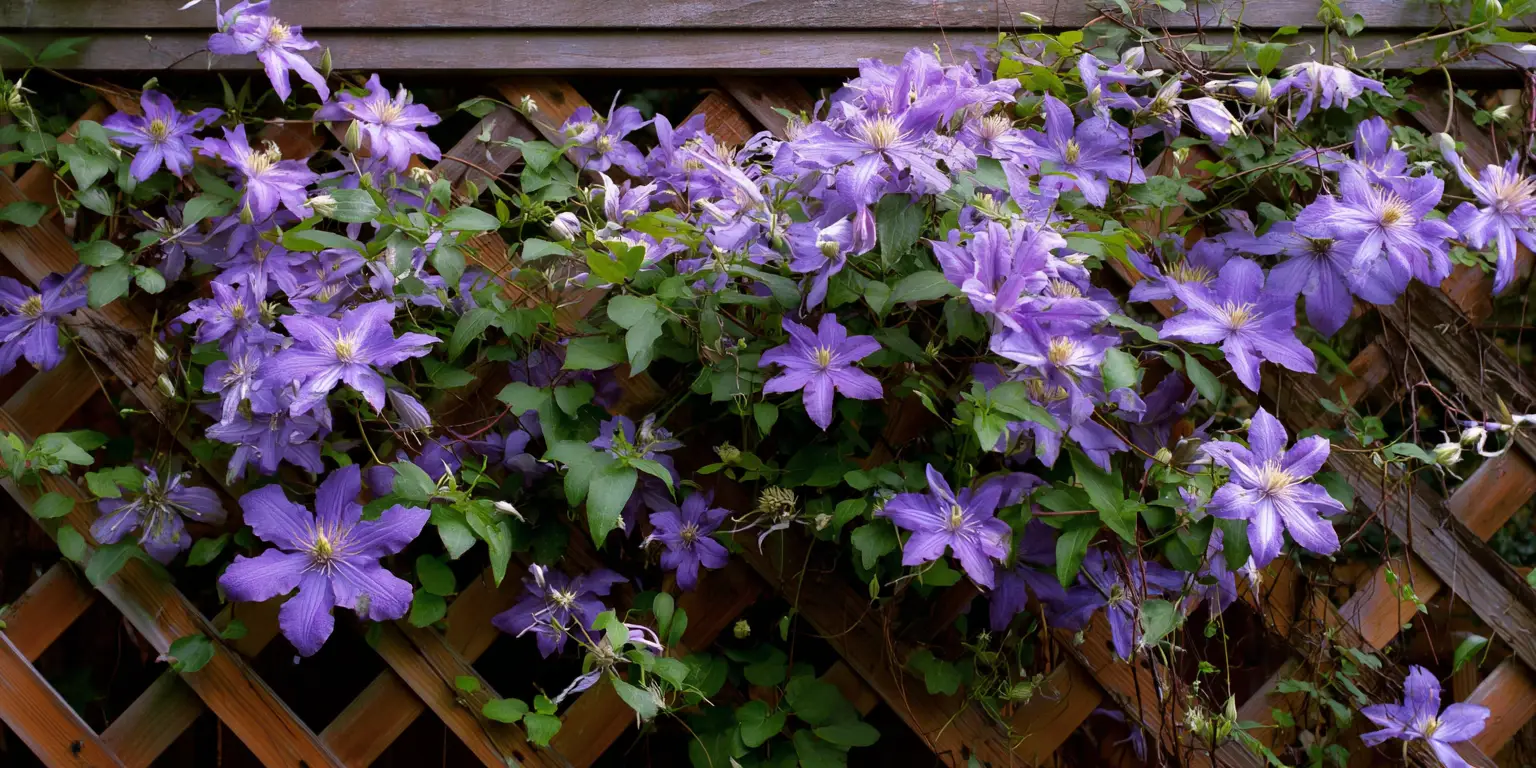
Size is a property of the type, not the genus. Most garden clematis reach 8 to 12 feet on a support when mature, which suits a trellis, an obelisk, or a fence panel. The vigorous species run far larger: a montana can top 20 feet and climb into a small tree, while at the other end the compact hybrids stay near 4 to 6 feet and the non-vining herbaceous clematis form loose 2 to 3 foot mounds that lean on their neighbors rather than climb. Spread is mostly a question of how much support you give, since the vine will fill whatever frame it is offered. The part that catches new growers out is how clematis actually climbs. It has no tendrils or clinging roots; instead each leaf twists its stalk around a support, and those leaf stalks can only grip something thin, roughly up to pencil thickness. A clematis will scramble happily up wire, netting, twine, thin twigs, or the stems of another plant, but it slides straight off a fat trellis slat, a downpipe, or a smooth post unless you first run wire or mesh over it for the leaf stalks to catch. Give a new plant about 2 to 3 feet of clear room from its neighbors so the roots can spread, and expect the vine to cover its frame steadily once it settles in.
Light
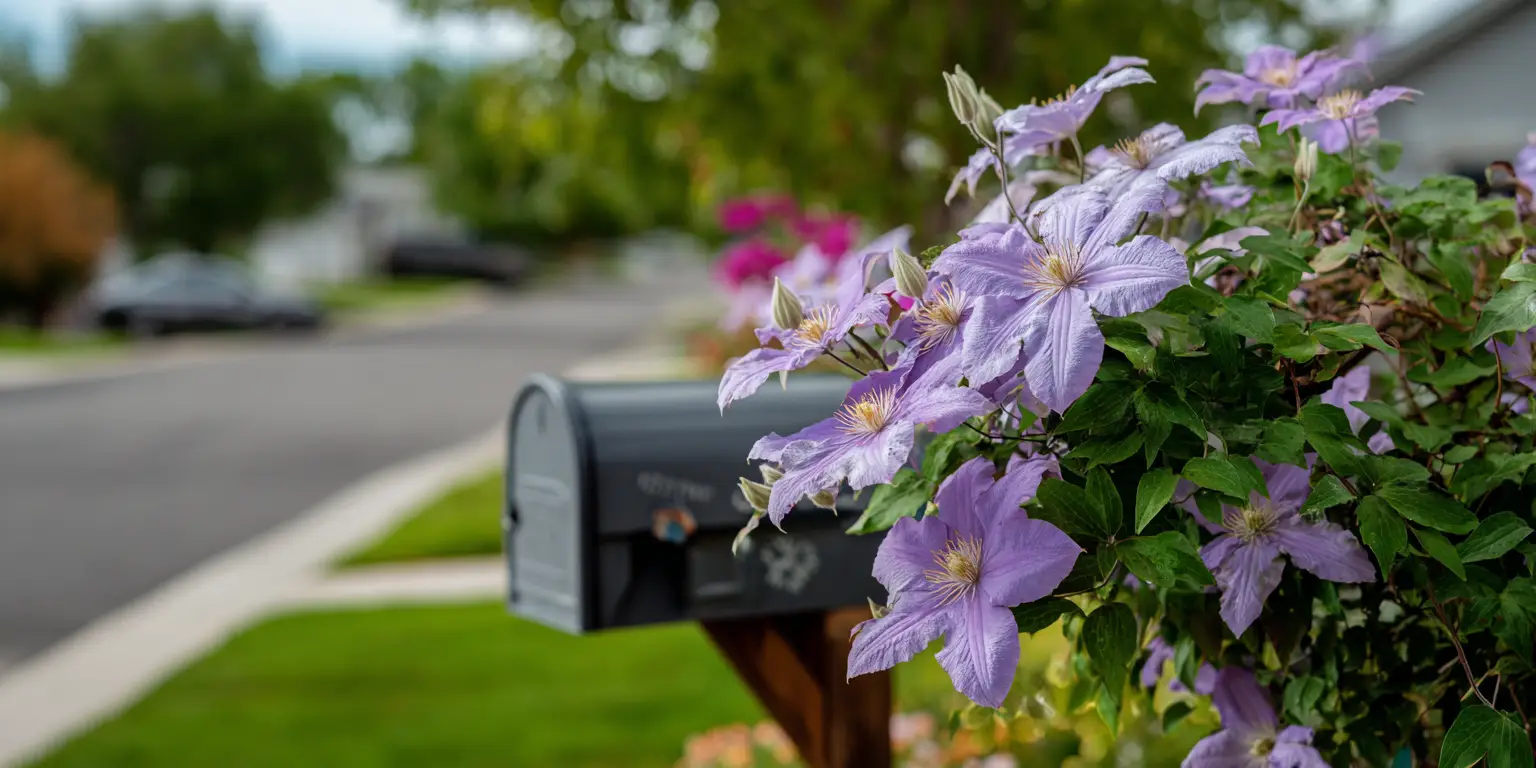
Clematis flowers best in full sun, meaning at least six hours of direct light a day, and a vine in a bright spot carries more blooms on sturdier growth than one struggling in shade. The complication is the root zone, which wants the opposite. The old gardening rule sums it up: head in the sun, feet in the shade. The top of the plant should reach up into the light while the base and the soil over the roots stay cool and shaded, because clematis roots resent baking. The practical way to manage this is not a paving slab over the crown, which traps heat, but a few inches of organic mulch kept back from the stems, or a low, shallow-rooted planting of perennials or annuals set around the base to shade the ground. Where summers are hot, an east-facing site that gives morning sun and afternoon shade protects both the roots and the flowers, since strong midday sun bleaches the color out of the darker purple and red cultivars. Small-flowered and pale varieties hold up better in full exposure. A clematis that grows plenty of leaf but few flowers is very often simply too shaded, so light is the first thing to check on a shy bloomer.
Water
Clematis wants steady moisture and does not like to dry out, which follows from a root system that reaches down several feet in search of water. Aim for about an inch a week from rain or the hose, delivered as a deep soak rather than a daily splash, so the water reaches the depth the roots occupy. A newly planted clematis needs the most attention: keep its soil evenly moist through the first two or three seasons while it builds that deep root system, and it will handle short dry spells far better afterward. Drought shows up as limp foliage and a shortage of flowers, so wilting leaves on a hot afternoon are the plant asking for a drink. The opposite extreme matters just as much, because roots left standing in cold, soggy soil rot, and waterlogging can bring on collapse that mimics disease. A two to three inch mulch over the root area does double duty here, holding moisture in the soil and keeping the roots cool at the same time, though it should sit a little clear of the stems rather than piled against them.
Soil and pH
Clematis is a hungry plant with a large root system, and it does best in deep, fertile, well-drained soil rich in organic matter. Working a couple of shovels of compost or well-rotted manure into the planting hole pays off for years, and heavy clay or fast sand both improve with the same treatment, clay opening up to drain and sand gaining body to hold moisture. A loam or loamy clay that stays moist without turning to a bog is close to ideal. On pH, clematis is relaxed: it grows well anywhere from slightly acidic to slightly alkaline, roughly 6.5 to 7.5, and only genuinely extreme soils need adjusting, with a little lime raising a very acidic bed toward neutral. Feeding supports the heavy flowering: a balanced slow-release fertilizer as growth begins in spring, followed by a lighter feed lower in nitrogen once buds are forming, keeps the blooms coming without pushing the soft leafy growth that a high-nitrogen feed encourages at the flowers' expense. The one thing to avoid throughout is compacted or waterlogged ground, which suffocates the roots the plant depends on.
USDA hardiness
Part of the appeal of clematis is how wide a climate range the genus covers, from roughly USDA zone 3 through zone 9 once you account for all the species and hybrids. The large-flowered hybrids most nurseries stock are generally hardy in about zones 4 to 8 and shrug off hard winters down toward minus 30 degrees Fahrenheit once established. Some of the toughest small-flowered species and North American natives, alpina among them, push into zone 3. At the mild end, evergreen species such as Clematis armandii prefer zones 7 to 9 and want shelter from cold winds. Gardeners in the hottest zones do best with heat-tolerant or evergreen types given afternoon shade. In the colder part of the range, a heavy mulch over the root zone in late fall adds insurance through winter. The deciduous clematis die back above ground in a freezing winter and look dead by spring, but the roots ride it out below the soil and push up fresh shoots when the weather warms, so a clematis that looks dead in early spring is most often just slow to break, with new growth still to come.
The numbers five extension services actually publish
There is no zone-by-zone clematis calendar to quote, and this block does not invent one. What exists is a set of measurements and windows from University of Delaware, Clemson, Illinois, Iowa State and Kansas State, plus one genuinely unresolved figure and one caution this research could not confirm, both of which are left visible.
Propagation and longevity
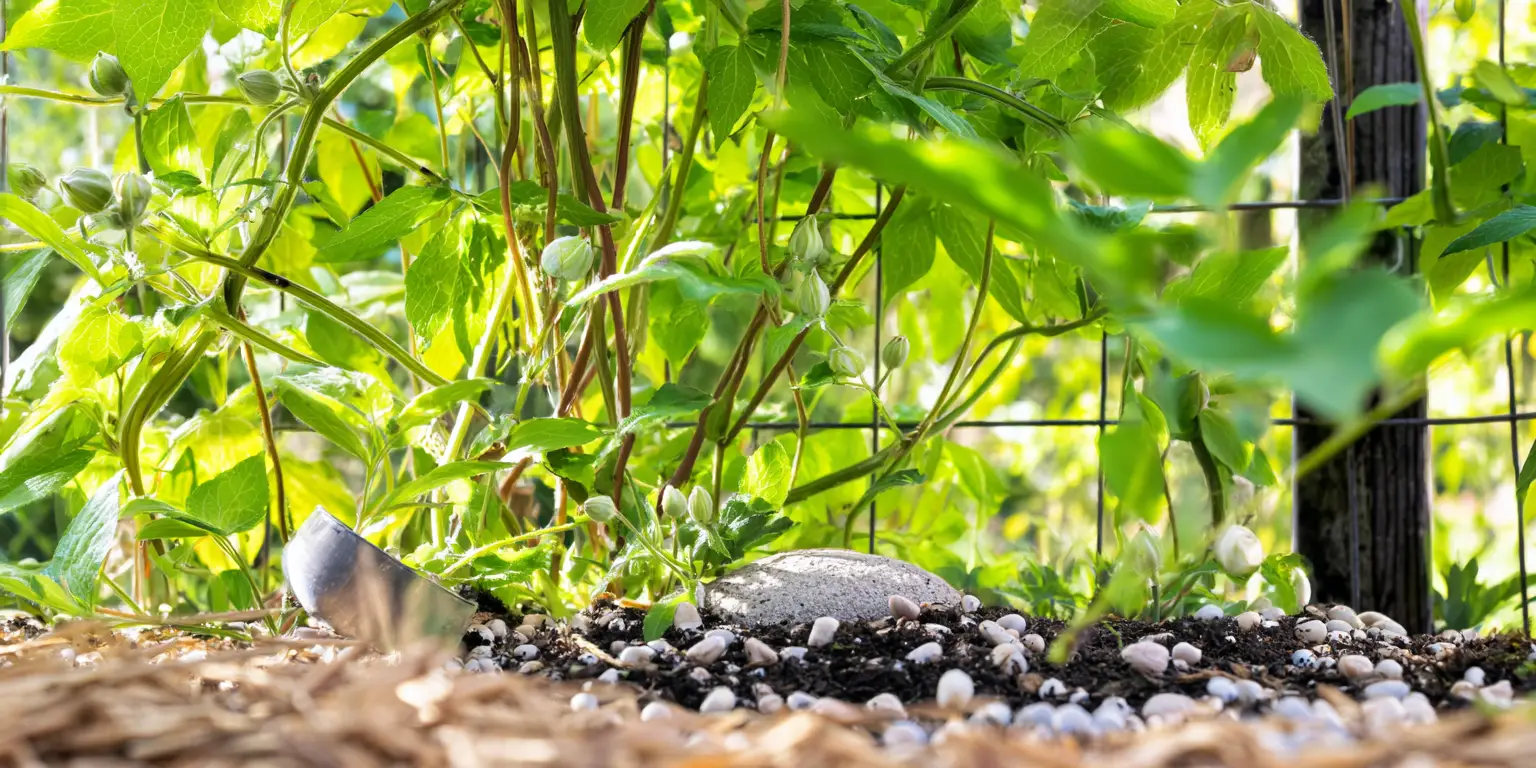
The easiest way to make more clematis is layering. Bend a low, flexible stem down to the ground in spring or early summer, nick the underside lightly, pin it into the soil with a metal garden staple or a stone, and leave the leafy tip poking out; over the following months roots form at the buried nodes, and the next season the rooted section can be cut free and moved. Cuttings work too, from soft green shoots taken in early summer and treated with rooting hormone under humid cover, though they root slowly and unevenly, so starting several at once improves the odds. The herbaceous and clumping types can be divided at the crown in early spring, and species clematis can be raised from seed, but seed is slow and unpredictable and named hybrids never come true from it.
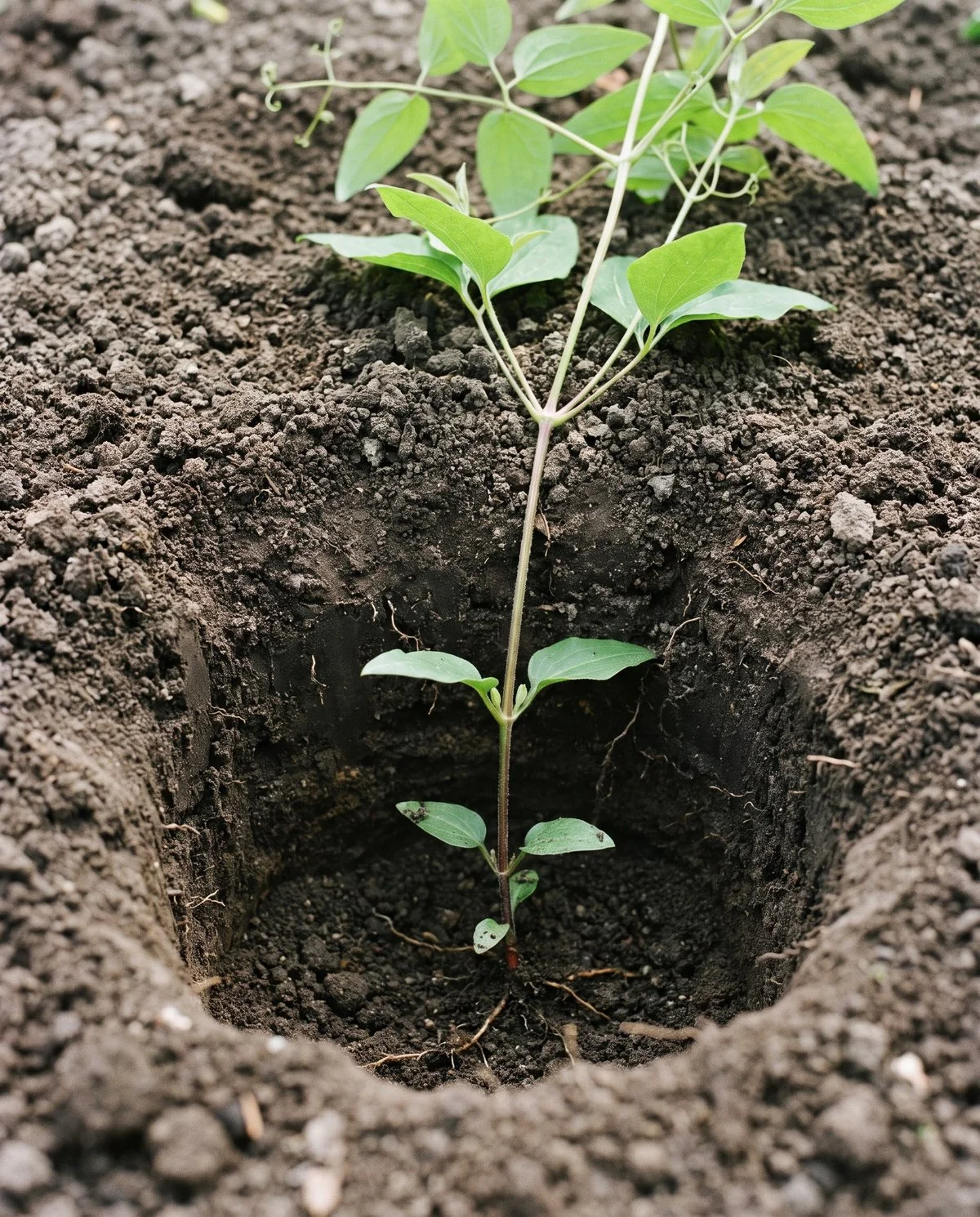
How you plant a clematis decides how long it lives, and clematis can live a very long time, commonly 25 years or more and steadily more free-flowering with age. The one planting rule worth following is to set the crown, where the stems meet the roots, about 2 to 3 inches deeper than it sat in the nursery pot, so at least one pair of leaf buds is buried. Those buried buds are the plant's insurance policy: if wilt or a mower or a hard winter takes out the top growth, new shoots can break from below the soil and rebuild the vine. Expect a slow start whatever you do, summed up in the old line that a clematis sleeps the first year, creeps the second, and leaps the third, spending its early energy on roots before it throws real growth. While a young vine is still finding its feet, a fast annual climber such as morning glories can fill the bare support for a season without crowding it. After that, a yearly pruning matched to the group and a spring topdressing of compost will keep an old clematis flowering for decades.

Sleep, creep, leap, and the one pattern that is not about establishment
The old adage turns up on an actual extension page, which is worth knowing before treating it as folklore: Clemson HGIC writes that the first year they sleep, the second year they creep, and the third year they leap. Iowa State Extension gives the mechanism underneath it and a number, telling readers to expect limited first-year growth while plants establish deep root systems, and putting establishment at up to three years before significant top growth. So year one is meant to look like nothing much, and 1.6 percent of the forum sample is a gardener worried by exactly that. Year two is visibly stronger without yet being impressive, and the sample has a clean example: a vine that reached about two feet with a few blooms in its first year and grew substantially more in its second. From year three the plant's energy shifts from root building to top growth and flowering. The pattern worth separating out from all of this is the one that has nothing to do with establishment. The most extreme case in this research is a vine that did not bloom well for nineteen years because it was pruned too aggressively every single spring, and finally flowered the one year it was left alone. That is not a slow curve, it is the same wrong-group cut repeated indefinitely, and it looks identical to a plant that has simply never got going. The other real reset is mechanical: the sample's most upvoted establishment post, at 252 upvotes, is a gardener whose vine was cut through mid-establishment, which starts the whole sleep, creep, leap clock again rather than pausing it.
Fragrance
Most of the big showy hybrids have little or no scent, since breeders chasing flower size and color rarely got perfume in the bargain, so anyone buying a large-flowered clematis for fragrance is likely to be disappointed. The scent in the genus lives mainly among the smaller-flowered species. Clematis montana carries a light sweet fragrance often compared to vanilla or almond and throws it across a warm spring day, the evergreen Clematis armandii scents the late-winter air where it is hardy, and sweet autumn clematis smothers itself in tiny white flowers with a strong honeyed perfume in late summer. That last one comes with a warning worth heeding: the common sweet autumn clematis, Clematis terniflora, seeds itself freely and has naturalized as an invasive weed across much of the eastern United States, so gardeners there are better served by the native virgin's bower, Clematis virginiana, which gives a similar late froth of fragrant white bloom without the ecological cost. Where scent matters, choose one of the fragrant species by name rather than hoping a hybrid will surprise you.
Toxicity and pet safety
Every part of a clematis is mildly toxic if eaten, by people and animals alike. The active irritant is a compound called protoanemonin, released when the plant's tissue is crushed or chewed, and it produces a burning sensation and blistering in the mouth and along the digestive tract. The ASPCA lists clematis as toxic to cats, dogs, and horses, with drooling, vomiting, and diarrhea the usual signs in a pet that has chewed a vine. The saving grace is the taste, which is bitter and caustic enough that few animals or children swallow much, so serious poisoning is rare and a curious nibble tends to punish itself; even so, a pet that has eaten a quantity of the plant is worth a call to the veterinarian. The same irritant sap can raise a rash on sensitive skin, which is reason enough to wear gloves when pruning or taking cuttings. The flip side of that chemistry is a real garden advantage: deer and rabbits find clematis just as distasteful and generally leave it alone, so it holds up in gardens where browsing animals wreck softer plants. For a fuller picture of which climbers and blooms are safe to keep around animals, see the guide to flowers safe for cats and dogs.
Vase life
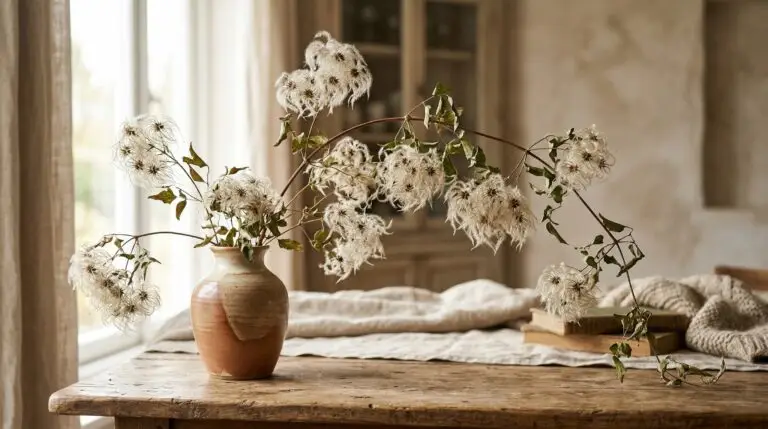
Clematis is a specialty cut flower rather than a florist staple, and the reason is the stem, which can flag quickly if the flower is cut too young or handled roughly. Cut for the house, though, it earns its place. Take stems in the cool of the morning when the flowers are about half open, with the color showing but the sepals not yet fully spread, and get them into water at once, ideally with a floral preservative. Handled that way the blooms hold for roughly a week, and florist strains bred for cutting can stretch that toward two weeks in cool water changed often. The flowers open a little further over their days in the vase and then fade, dropping their sepals fairly cleanly rather than shattering into a mess. There is a second harvest to be had from the same plant: leave some flowers on the vine and they ripen into the feathery silver seed heads that dry beautifully and bring texture to a winter arrangement. Clematis mixed into a bouquet has a light, floating quality that suits loose, romantic styles, which is why cut-flower growers have taken more interest in it lately.
Pests and diseases
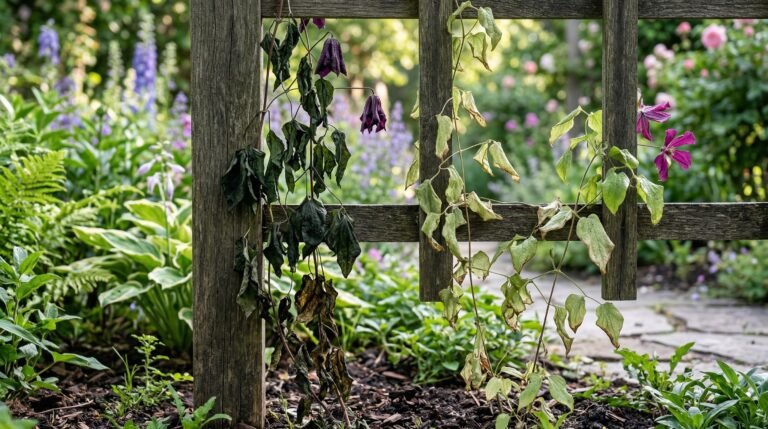
The disease that gives clematis its fearsome reputation is clematis wilt, and understanding it is the difference between panicking and pruning. It strikes mainly the large-flowered hybrids, and it looks catastrophic: a healthy vine, often just as it is about to flower, has one or more stems suddenly droop, blacken from the tip down, and collapse within a few days, as if the plant had died overnight. It is a fungal infection, caused by Calophoma clematidina, that attacks the stems rather than the roots, and that distinction is the good news. Cut every affected stem back to clean, healthy tissue, following it down even below soil level if the blackening runs that far, and clear the debris away; the root system usually survives, and a deeply planted vine sends up fresh shoots from the base or from below ground, sometimes within weeks and sometimes the following spring. A severe infection can take a whole plant, but writing one off before it has had a season to resprout is the more common mistake. The small-flowered species and the viticella hybrids are largely resistant, which is worth remembering when choosing a replacement or a first plant. The full diagnosis-and-recovery routine is laid out in the guide to clematis wilt.
Beyond wilt the problems are ordinary. Aphids cluster on soft new shoots and buds and wash off with a jet of water or a spray of insecticidal soap; slugs and snails chew the tender low growth of young plants and respond to barriers or bait around the base in spring; scale and, in hot dry spells, spider mites turn up occasionally. On the fungal side, powdery mildew coats leaves in a white film where air is humid and still, and good spacing plus watering at the base rather than overhead keeps it down. The table below pairs the common complaints with what to do about them.
| Problem | What you see | Cause | Fix |
|---|---|---|---|
| No flowers on a healthy vine | Plenty of leaf, few or no blooms | Wrong-group pruning, too much shade, plant too young, or too much nitrogen | Identify the group and prune to match, give 6 or more hours of sun, wait for year three, feed lower in nitrogen |
| Sudden wilting, blackened stems | Stems droop and turn black in days, often near bloom time | Clematis wilt, a stem fungus, mainly large-flowered hybrids | Cut affected stems to clean tissue, even below soil; roots usually resprout; replace with viticella types |
| Vine will not climb | Stems flop and slide off the support | Support too thick for leaf stalks to grip | Add wire, netting, or twine no thicker than a pencil |
| White powder on leaves | Powdery coating, yellowing, distorted growth | Powdery mildew in humid, still air | Improve spacing and airflow, water at the base |
| Chewed shoots near the ground | Ragged holes, young shoots bitten off low | Slugs and snails on tender growth | Barriers or bait around the base in spring |
| Sticky, curled new growth | Small insects massed on buds and shoot tips | Aphids | Wash off with water or treat with insecticidal soap |
What clematis owners actually ask about, ranked by frequency
881 unique posts from r/gardening and r/plantclinic, 762 and 119 respectively, spanning July 2018 to July 2026, deduplicated by post id and filtered to posts that actually name clematis. Themes overlap and do not add to 100. Two honest caveats belong with the numbers: 412 of the 881 posts, 46.8 percent, matched no keyword category at all, mostly photograph-led posts asking what is wrong with no diagnostic text, and a further 95 posts were pure bloom admiration and are excluded from the ranking entirely.
What the leaf stalks have to grip. This is a mixed bucket reported as such, half pre-purchase planning and half real failure, and both halves point at the same gap: Iowa State describes clematis climbing by twisting its petioles around a support, so anything too thick to be curled around leaves the vine wrapping itself instead.
Season, then soil, then the stem. This is the largest bucket of posts where something is wrong and the poster cannot name it, and it is where the 46.8 percent uncategorised residual mostly lives too.
Which of the three groups the vine belongs to, since on manual inspection a large share of these posts are that question in disguise. Two posts carry the theme: one gardener had been cutting several different varieties back to the ground every year and noticed they stopped blooming well, and another found a vine flowering again after nineteen years once the hard pruning stopped.
The inside of a split stem, because the outside will not settle it. This is the flower's most feared failure and RHS states plainly that fungal infection and environmental stress can look the same from outside.
Whether tissue is bitten or blackened. Earwigs are named in the sample as the cause of an entire vine's loss over time, which is a slow accumulation of chewing rather than a sudden systemic collapse.
Whether the spots are progressing and whether the stems are involved, since the leaf spot that matters here is part of the same wilt organism's damage rather than a separate cosmetic problem.
The height of the damage on the plant. Ragged low damage on tender young growth reads differently from browsing at the top of a mature vine.
Last winter's cut, before anything else. This figure is a floor and not a measurement, and it is the clearest case of under-counting in this whole sample: a wrong-group prune produces no flowers rather than a dramatic photograph, so it lands in a search box rather than on a photo-driven forum. The true demand for it is meaningfully larger than either this row or the pruning row above shows.
Bloom month first. An identification request on this plant is usually a pruning question underneath, since the name is what tells the owner which group they are holding.
The plant's age against the sleep, creep, leap pattern. Several of these posts are, on inspection, a reader in a completely normal year one or year two who does not know that it is normal, and one of the highest-engagement posts in the sample, at 252 upvotes, is a gardener asking how to get there without waiting another four years.
Whether water stands around the crown, which is the one condition that turns the deep-planting insurance policy into a liability.
Whether the site is shaded, because unlike most fungal problems this one does not need moisture to spread and shaded planting sites favour it.
Where on the plant it appeared. Small in count and not a problem at all: the flowers develop into clusters of achenes, each with a long feathery style, which is a normal and for many varieties a deliberately attractive part of the cycle.
Two paths, worked in order
The first path is the one this plant is really about, because a wrong-group cut produces an absence rather than a symptom and nothing about the plant will tell you afterwards. The second is the collapse everybody fears, ordered so that the checks that cost nothing come before the ones that cost a stem.
Photo pairs for the clematis look-alikes
The pairs that turn on pruning, structure, season or chewing carry photographs. The wilt-disease side does not, and for an unusual reason: its definitive test cannot be photographed from outside the plant at all. RHS puts the whole difficulty in one sentence, that symptoms of fungal infection and environmental stress can be similar, so the check has to be a cut rather than a look.
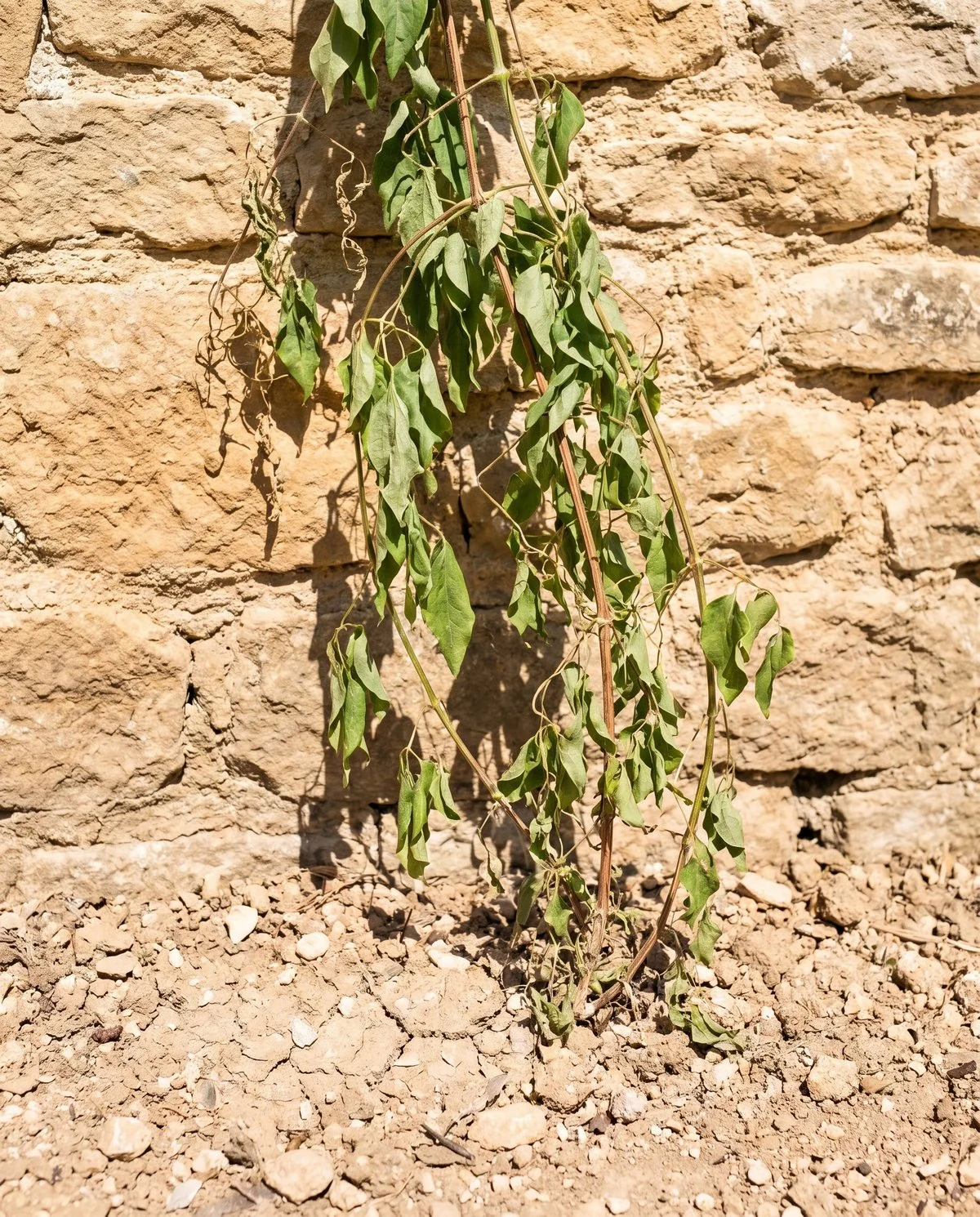
Split the stem. RHS's definitive sign is black discolouration of the tissue when a freshly affected stem is split open, and Illinois IPM adds small pinhead-sized black fungal specks in stem lesions near the soil line as a further confirmation. Environmental collapse mimics the same outward drooping and leaves the inside of the stem clean, and RHS names the conditions that produce it: clematis prefers deep fertile soil with a moist shaded root zone, and gardens with shallow dry soils in exposed sites produce wilt-like symptoms with no fungus involved. The fungus has three names in the literature for one organism, Ascochyta clematidina, then Phoma clematidina, and now Calophoma clematidina in RHS's usage. Only the environmental side is photographed, because the disease side lives inside the stem.
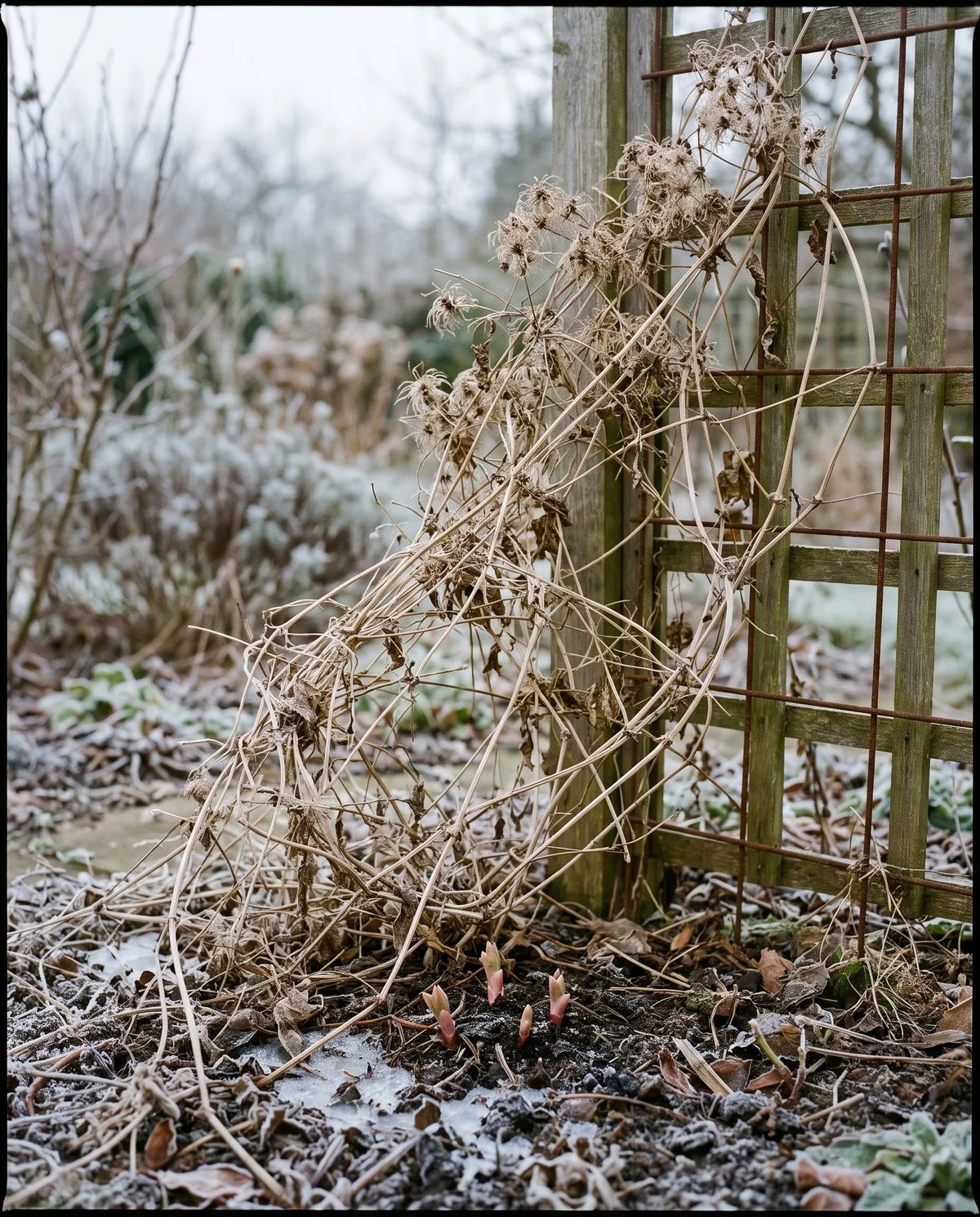
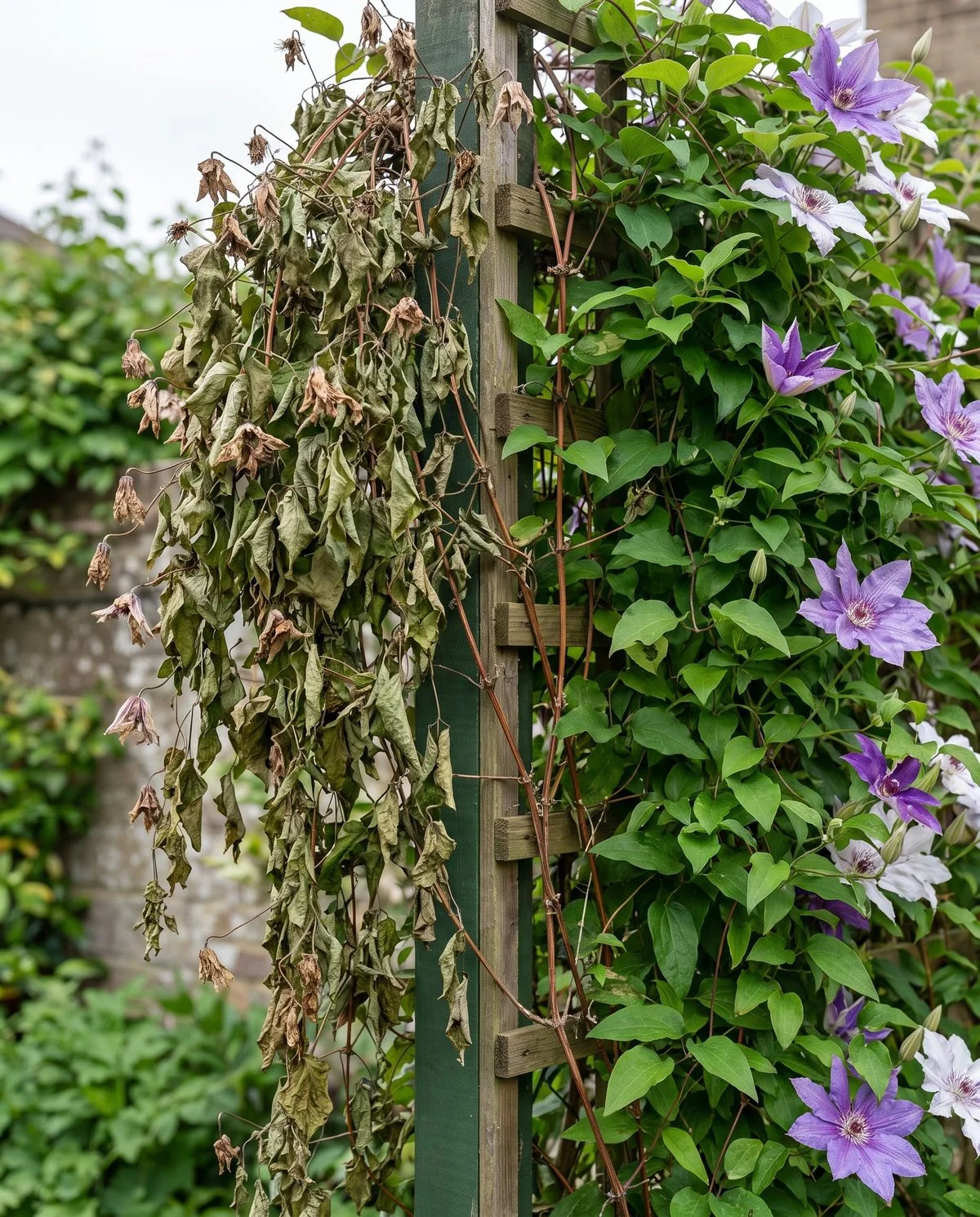
The calendar, and whether anything is resuming from the base. Group 3 and the herbaceous types brown off and collapse to the ground on a predictable autumn and winter schedule, with healthy new shoots coming from the base the following spring, which is why a clematis that looks dead in early spring is usually just late. Wilt collapses out of season, during active spring or summer growth, and it often takes part of the plant while the rest stays green. One poster asked exactly this about a vine that had died back and shown no regrowth, which is the right question at the wrong time of year.
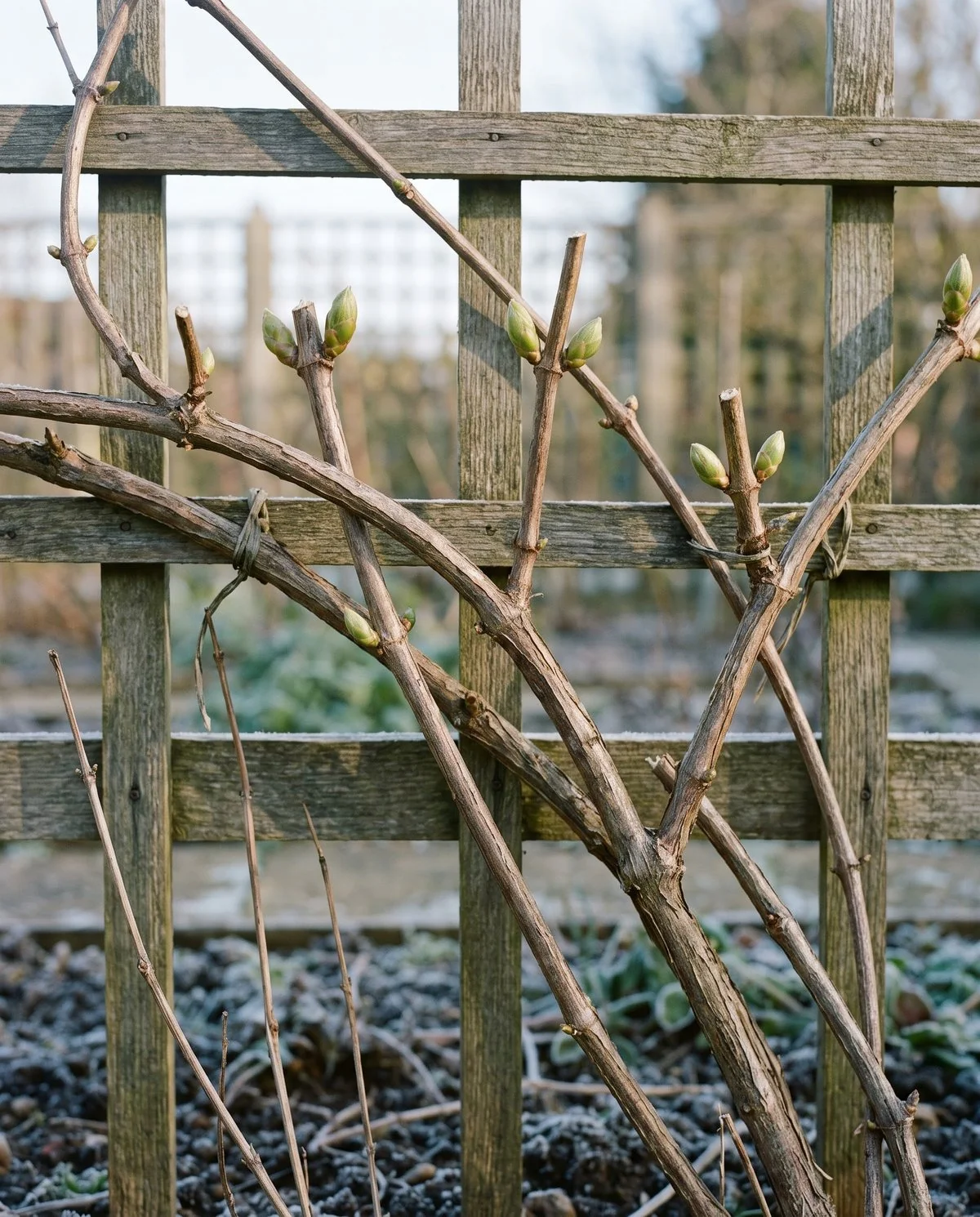
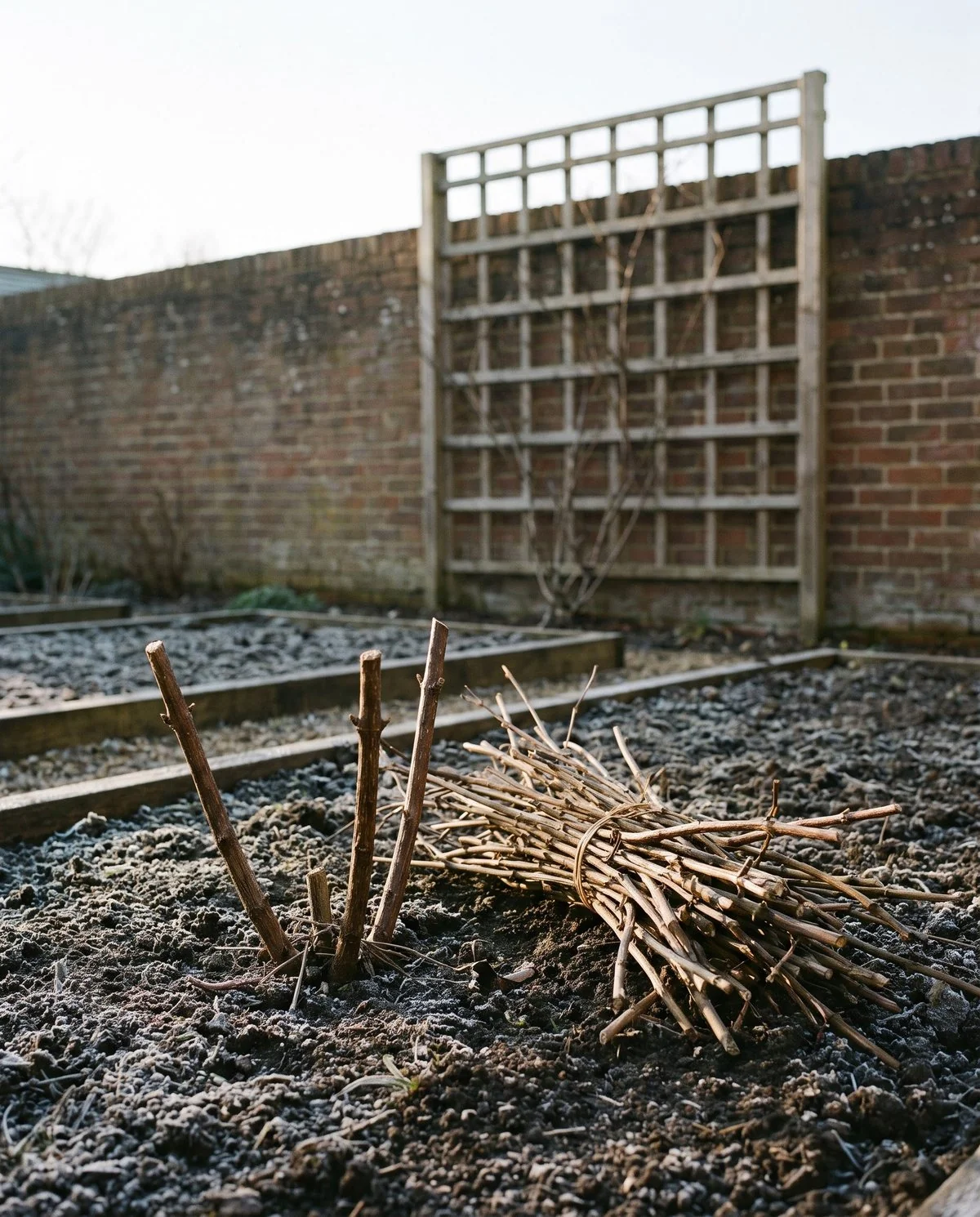
How much old wood is left standing before spring. A correctly pruned Group 2 keeps most of its previous season's live wood and is cut back only to the topmost pair of plump green buds, so it goes into spring as a substantial branching structure. The same vine cut to a few inches, as if it were a Group 3, has none of the old wood that would have carried the first and larger flush. Both ends of this pair are real posts in the sample: a vine cut down to the soil by accident, and a vine that bloomed again after nineteen years once the owner stopped pruning it hard every spring.
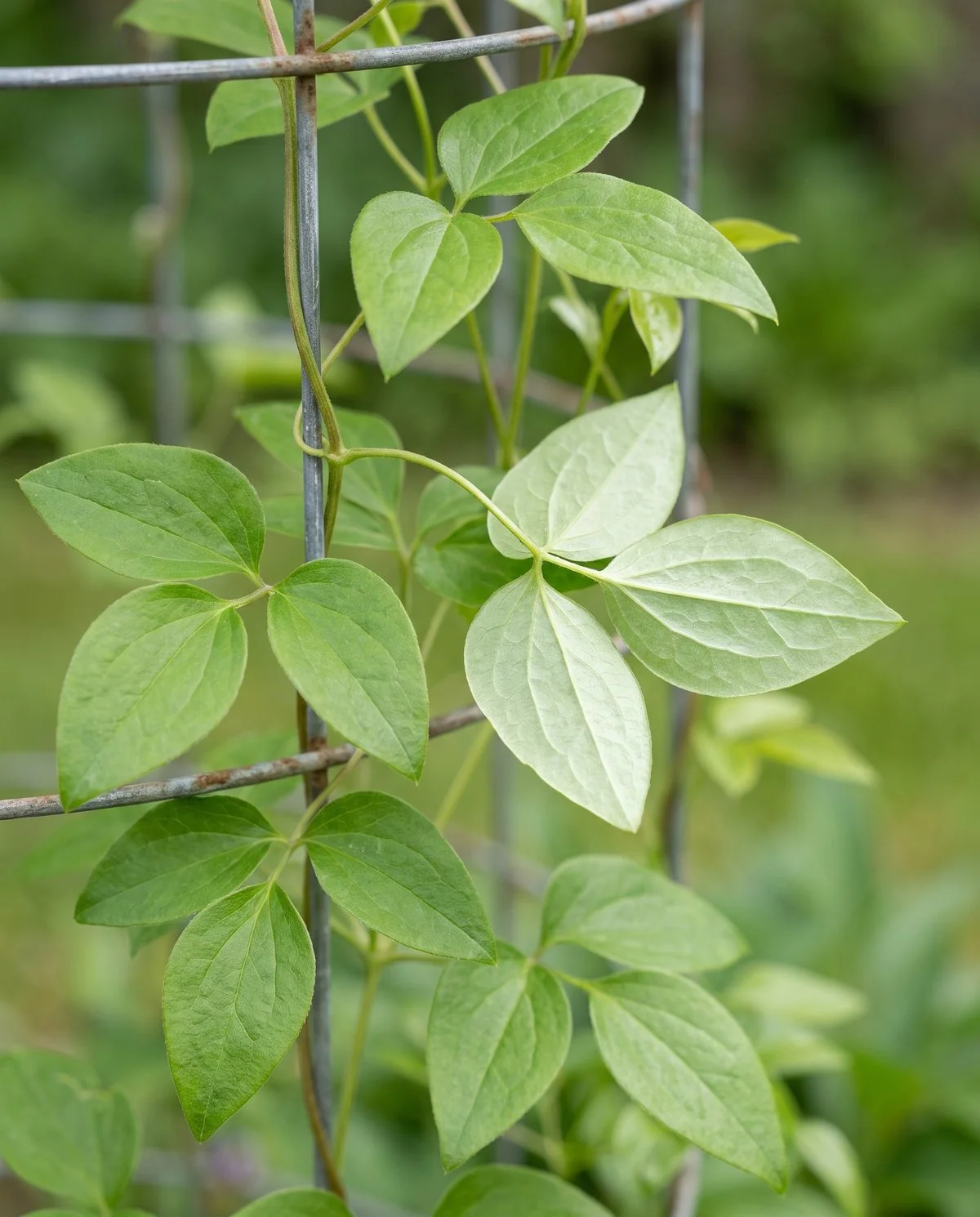
Whether the coating is powdery and where the plant is sited. The Pacific Northwest Pest Management Handbook, published jointly by Oregon State, Washington State and the University of Idaho, describes white powdery patches on leaves, petioles and stems that can cover a whole leaf surface, with small dark specks that look like pepper developing inside the powdery areas late in the season, and leaves becoming dwarfed, curled or distorted in advanced cases. Two details matter for diagnosis: shaded sites favour it, and unlike most fungal diseases it does not need moisture to spread. Its temperature behaviour comes from a real peer-reviewed paper the handbook cites, Xu and Robinson, 2001, in the Journal of Phytopathology. Only the clean side is photographed.
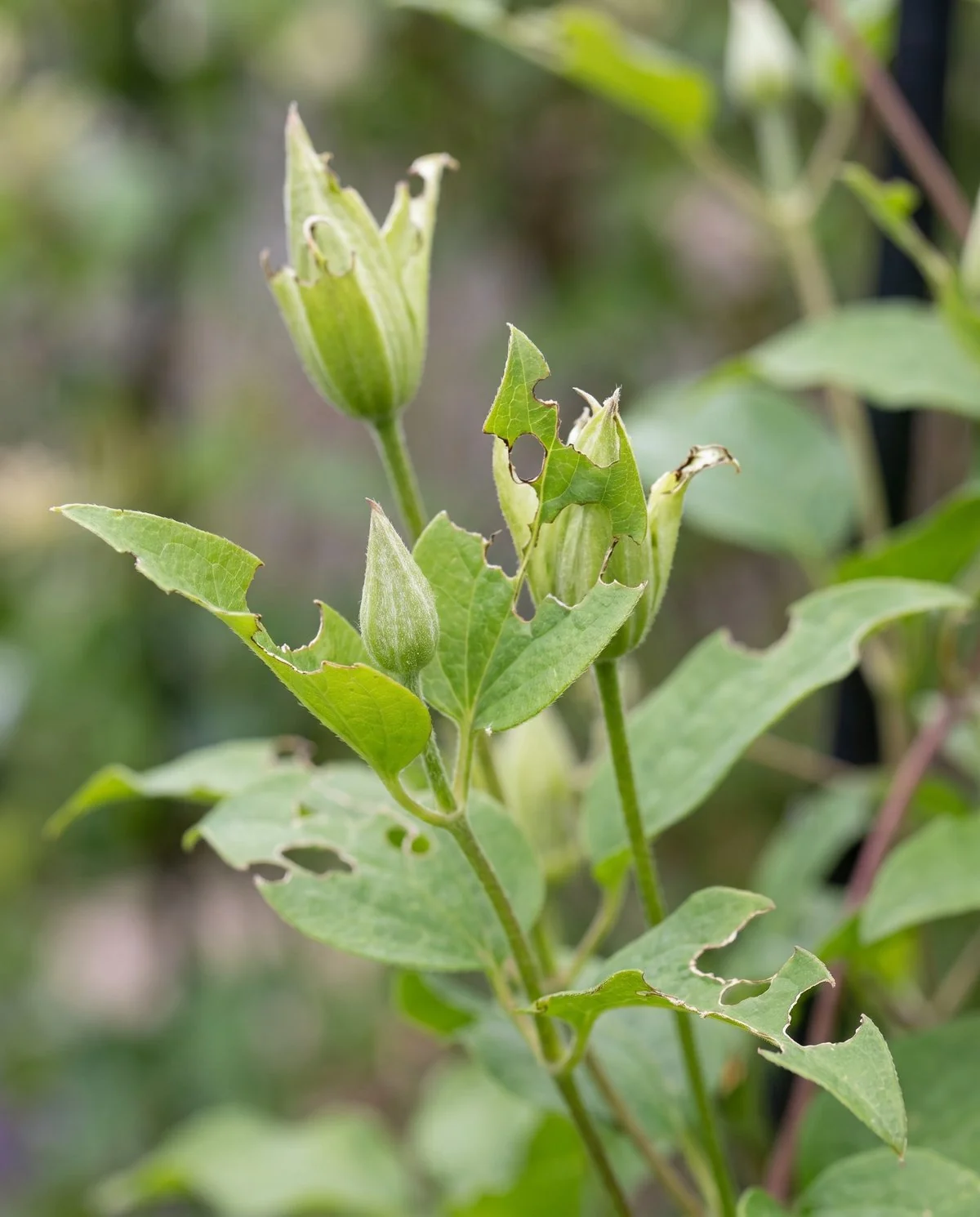
Whether the tissue is bitten or blackened. Chewing leaves irregular ragged margins and holes with no internal stem discolouration, and it accumulates over weeks rather than dropping a vine in days. One poster in the sample lost an entire clematis to earwigs over time, which is what that slow accumulation looks like at the end. Wilt blackens the tissue itself and shows internal discolouration when a stem is split, which is a process rather than a feeding pattern. Only the chewing side is photographed.
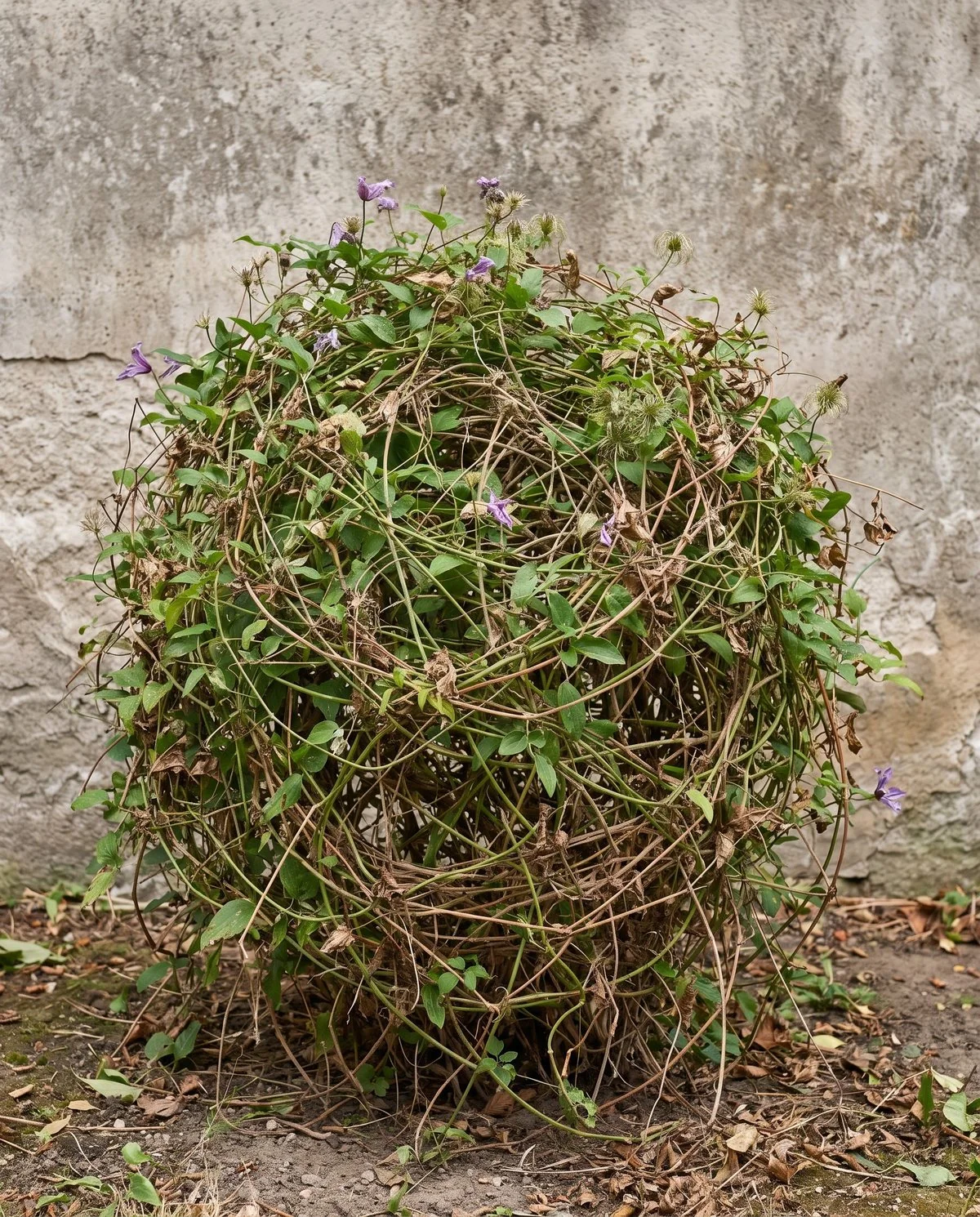
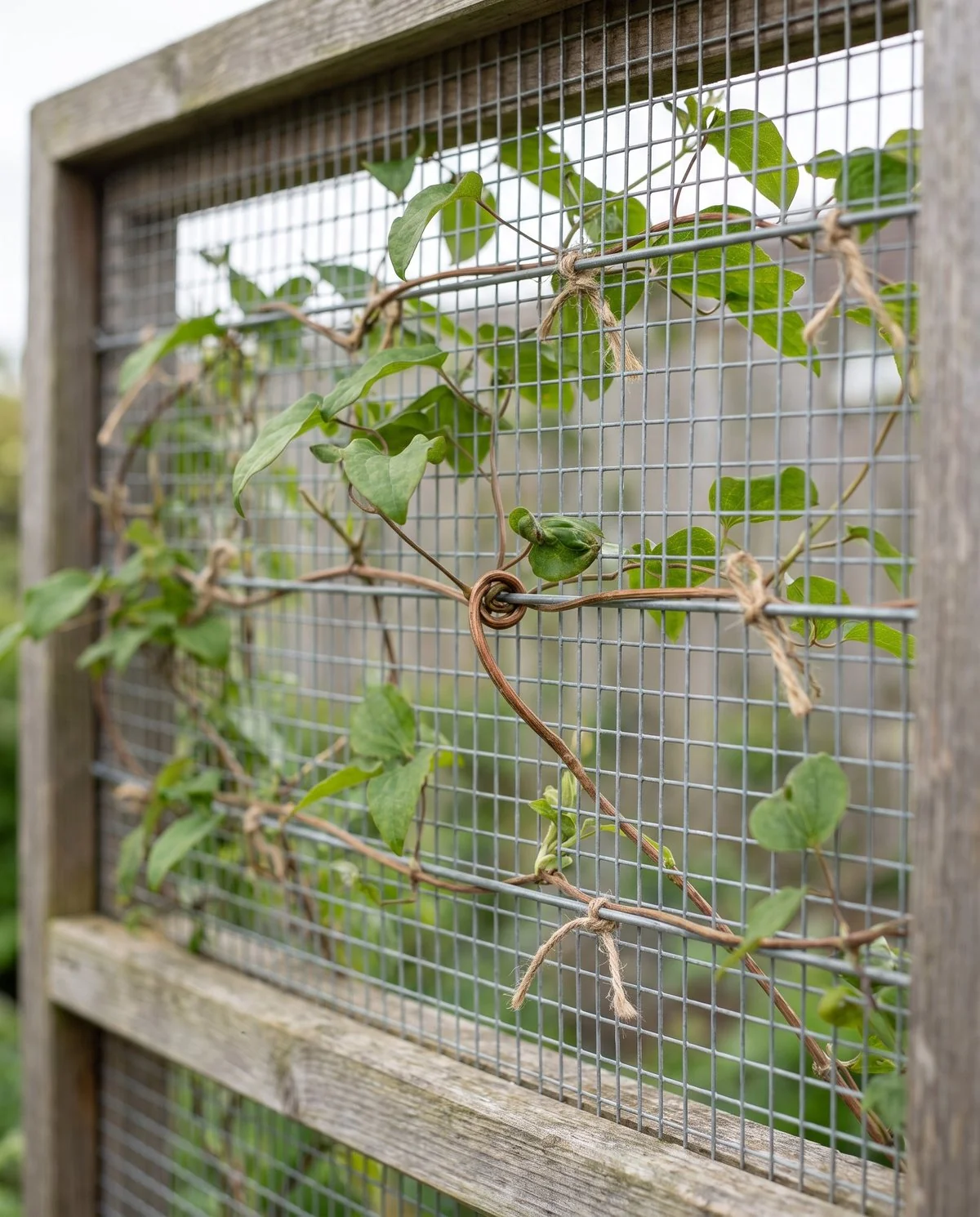
What the leaf stalks are wrapped around. Iowa State describes clematis climbing by twisting its petioles around a support, which means it needs something narrow enough to grip and will otherwise wrap around itself. A correctly trained vine is spread across a trellis, fence or wire with the petioles curled around individual support elements. The tangled version is the real pattern behind the sample's largest theme, and one poster inherited exactly it: a previous owner removed the garden structure and left a ball of clematis behind.
Flower photos
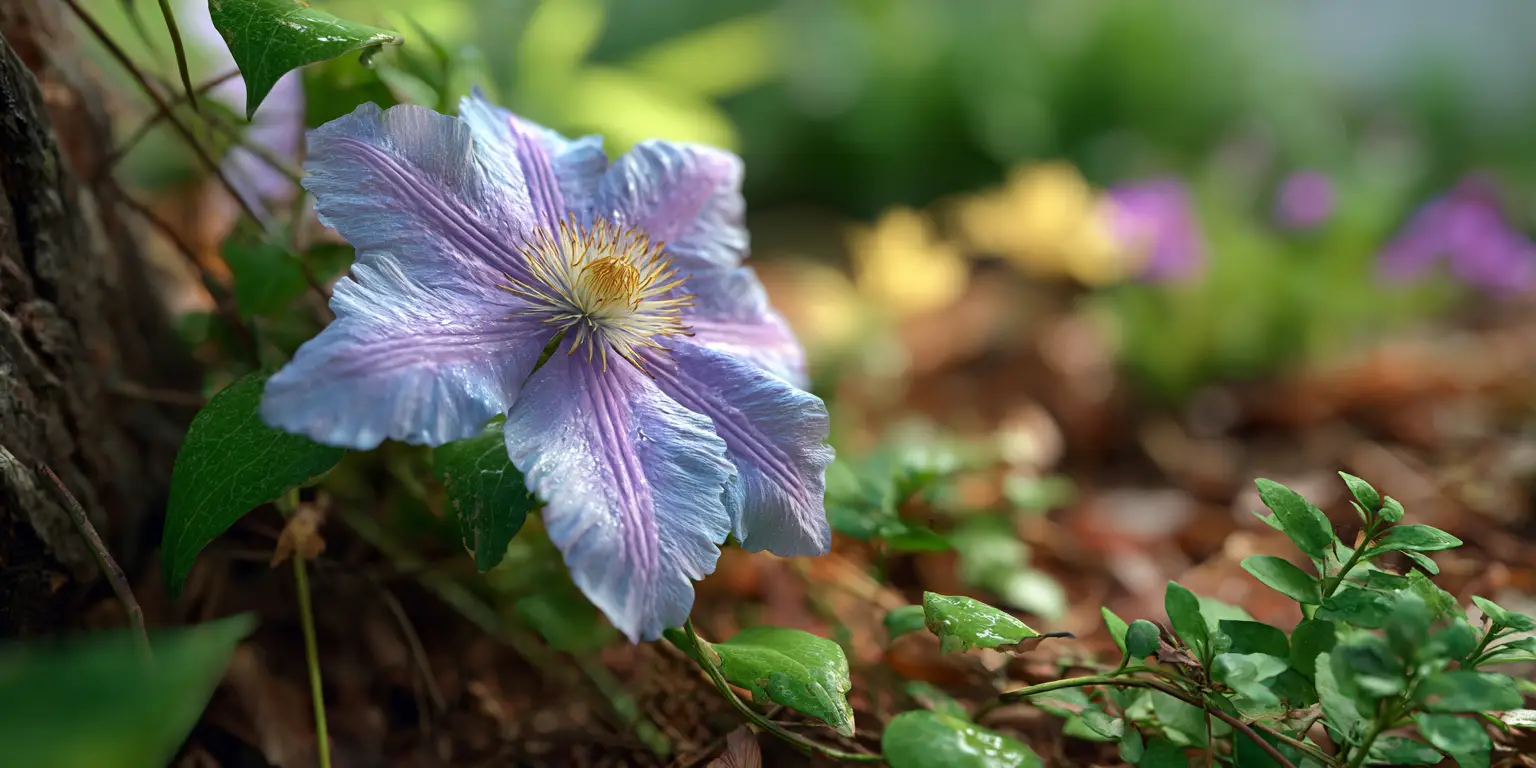


FAQ
How do I know which pruning group my clematis is in, and how do I prune it?
Go by when it blooms. A clematis that flowers only in spring on last year's stems is Group 1 and needs no more than deadheading and a light tidy right after it flowers. One that flowers in late spring or early summer, often with a lighter repeat later, is Group 2: in late winter cut out dead and weak stems back to a strong pair of buds, and leave the rest. One that does not flower until midsummer or later, on the current season's growth, is Group 3 and gets cut hard in late winter down to about 12 to 18 inches. If you do not know the group, prune lightly and watch where the buds form before doing more.
Why isn't my clematis flowering?
The most common cause is pruning at the wrong time and cutting off the wood that was about to bloom, so confirm the group first. After that, check the light, since a vine in too much shade grows leaves and few flowers and wants at least six hours of sun. A young plant may simply not be old enough, as clematis often takes until its third year to bloom well. High-nitrogen feeding pushes foliage over flowers, so switch to a lower-nitrogen or bloom-type feed. Drought stress and a recent bout of wilt or pests can also cost a season's flowers.
My clematis suddenly wilted and went black. Is it dead?
Probably not. Clematis wilt attacks the stems, not the roots, so even when a large-flowered hybrid collapses overnight the plant usually lives. Cut the affected stems back to healthy tissue, right down below the soil if the blackening reaches that far, and dispose of the cuttings. A vine planted a few inches deep usually resprouts from the base or from below ground, sometimes within weeks, sometimes the next spring. A severe case can kill a plant outright, but it is worth giving one a full season before digging it up. Small-flowered and viticella types rarely suffer it at all.
How deep should I plant a clematis?
Deeper than it grew in the pot. Set the crown about 2 to 3 inches below the soil surface so at least one pair of leaf buds is buried. Those buried buds let the plant regrow from below ground if wilt, cold, or an accident takes out the top, and deep planting is the single best insurance a clematis can have.
Can I grow clematis in a container?
Yes, in a large pot at least 18 to 24 inches across with good drainage. Keep the roots cool by shading the pot or underplanting the surface, give the vine a trellis or obelisk to climb from the start, and water often, since pots dry out fast and may need daily water in summer. Feed through the growing season, and in cold zones move or wrap the pot in winter, because roots above ground are more exposed than roots in open soil.
Is clematis poisonous to pets and children?
It is mildly toxic to cats, dogs, horses, and people if eaten, causing mouth irritation, drooling, and stomach upset, but the taste is bitter enough that serious poisoning is uncommon. Wear gloves when pruning, since the sap can irritate skin, and call a veterinarian if a pet eats a real quantity. The same bitterness means deer and rabbits leave clematis alone.
How can I propagate my clematis?
The easiest way to propagate a clematis at home is by layering. In spring or early summer, select a healthy, flexible vine stem that is near ground level. Gently bend it down to the soil (or to a pot of soil placed next to the plant) and bury a section of the stem in the soil, leaving the leafy end of the stem above ground. You can scrape the buried portion lightly and apply rooting hormone to encourage roots, and use a landscape staple or rock to keep the stem section firmly in contact with the soil. Keep that area moist. Over many months, roots should form at the nodes of the buried stem, often by the next season. At that point, you can cut the new plant free from the parent and transplant it. Another method is taking cuttings: in early summer, snip a 4-to-6-inch piece of a green growing tip, remove the lower leaves, dip it in rooting hormone, and insert it into a pot of moist propagation mix. Cover the pot with plastic to retain humidity and place it in a shaded, warm spot. It can take several weeks to a few months for cuttings to root. Success rates vary, so you might try a few cuttings at once. Be patient and keep the medium just damp, not wet, to prevent rot. With either method, once you have rooted baby clematis plants, let them grow on until they have a strong root system before planting them out in the garden.
My aunt told me there are three different pruning groups, but I don't know which kind I have.
Go by the month it flowered and the wood it flowered on. Spring only on last year's stems is Group 1, a large-flowered flush from late May into mid-June with a lighter repeat later is Group 2, and nothing until mid-June and then on to frost is Group 3. If the name survives on a label, the published example sets settle it: 'Nelly Moser', 'Henryi' and 'Ramona' are Group 2, jackmanii and viticella are Group 3, alpina and macropetala are Group 1. With no name and no bloom record, Iowa State's own framing makes Group 3 the safest guess for a midsummer bloomer, and the safe move in every other case is to prune lightly and watch one full season, since a light cut can be made harder next year and a hard one cannot be undone this year.
My husband cut my clematis completely down to the soil. Is it gone?
Probably not, and the reason is how deep it was planted rather than how much was cut. Clemson HGIC states that a clematis planted with two buds below the ground will usually grow back from the base the following year, and the International Clematis Society records that even wilt disease is rarely fatal for the same reason. Expect a season or more to rebuild the top growth it lost. This exact accident drew 51 comments in the forum sample, which is a measure of how often it happens.
How deep should I plant it, and does that change by type?
Deeper than it grew in the nursery pot, and the published figures form a range rather than one number: an inch below the soil surface per Iowa State, the first two sets of leaf nodes underground per Illinois Extension, or two to four inches deeper than the pot with at least two sets of opposite buds buried per RHS and the International Clematis Society. There is one flagged exception, and it is worth knowing that it is unconfirmed: UK nursery sources caution that Group 1 types, alpina, armandii, cirrhosa and macropetala, should not go deeper than their pot level because burying the crown risks rot instead of protecting it. No university or society page in this research confirmed that, so it is reported as an open question rather than a rule.
What is this fluffy thing growing where the flowers were?
The seed head. Each flower develops into a cluster of achenes, small dry one-seeded fruits, and each achene trails a long feathery style that catches wind for dispersal, which is what produces the silvery fluff. It is a normal part of the cycle and for many varieties a deliberately attractive one, harvested for dried arrangements once the heads have turned from green to brown or tan and developed their full feathery look, then hung to dry. That handling is grower and gardener practice rather than published research: this research found no university or society postharvest source on clematis at all, which is also why this page does not quote a vase life in days.
How do I get it to climb instead of flopping and tangling?
Give it something thin enough to grip. Iowa State describes clematis climbing by twisting its leaf petioles around a support, so wire, twine or mesh works where a solid post or a wide fence rail cannot, and a vine with nothing narrow to hold wraps around itself instead. That is the mechanism behind the largest single theme in the forum sample at 18.7 percent, including one gardener who inherited a ball of clematis after the previous owner took the garden structure away.
Interesting tips
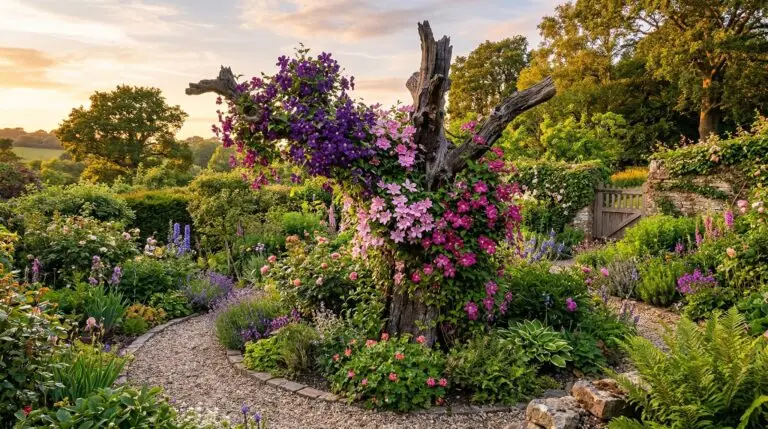
The best return on effort with clematis comes from getting the planting right rather than fussing later. Plant the crown a few inches below the surface, water it deeply through its first summers, and shade the root zone with mulch or a low companion, and the vine largely takes care of itself once it leaps in year three. Choosing the type to fit the job saves the most disappointment: a montana or an armandii to swallow a large structure, a jackmanii or viticella for reliable summer color that gets a simple hard cut every late winter, an alpina for a cold garden and early flowers, or a compact hybrid for a pot. One of the oldest tricks in the book is to grow a clematis through a companion so the two share a frame and flower in turn; threading a summer clematis through climbing roses on one trellis gives the rose a second season of color from the same wall, and a Group 3 clematis suits the pairing because its late hard prune does not disturb the rose. As the vine grows, spread and tie the shoots outward across the support rather than letting them race straight up, since horizontal training breaks more side shoots and turns a bare stem with a topknot of flowers into a full curtain of them. The deep purple hybrids carry the strongest color of all, and pairing them with the paler blooms gathered on the purple flowers hub makes both read from across the garden.
- Plant deep: When planting a new clematis, set the root ball a few inches deeper than it was in the nursery pot, burying at least 2 to 3 leaf buds. This helps the plant produce more stems and protects it if the top is damaged by wilt or cold.
- Support early: Provide a trellis, arbor, or support structure at planting time. Young clematis shoots need something to grab onto immediately, guiding them early prevents tangles and breakage later.
- Mulch and shade the roots: Keep the base of the plant cool by applying a layer of organic mulch over the root area. You can also plant shallow-rooted groundcover or annuals around the base to naturally shade the soil.
- Train for more blooms: As the vine grows, gently spread and tie shoots horizontally along the support. Training clematis laterally encourages more side shoots to form, which means additional flowering points and a fuller display.
- Combine with companions: Clematis often pairs well with other climbers. A classic technique is to grow a clematis vine through climbing roses or alongside other vines. They can share a support, and the clematis will add color when the rose is not in bloom. Just avoid overly vigorous companions that might smother the clematis.
- Patience pays off: Don’t be discouraged if your clematis is slow to establish. It may focus on root growth initially. With each passing year it will typically produce more vigorous vines and increasing numbers of flowers. Once mature, the clematis flower display will be more than worth the initial wait.
Related Guides & Flowers
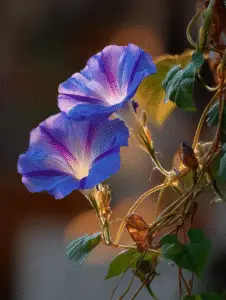
Morning Glories
(Ipomoea) – Fast annual climbers that blanket trellises and arches; great for filling gaps while clematis establishes.
Bellflower (Campanula) – Trailing and upright forms with bell-shaped blooms in cool blues and purples; a soft foil under or near climbers.
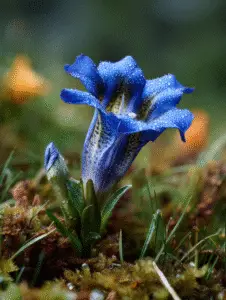
Gentian
Intense cobalt trumpets that echo many blue clematis tones; shines in cooler spots and rockery edges.
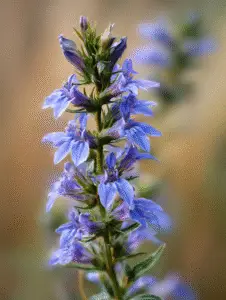
Great Blue Lobelia
(Lobelia siphilitica) – Vertical blue spikes for damp or part-shade edges; pairs well beneath vines to keep roots cool.
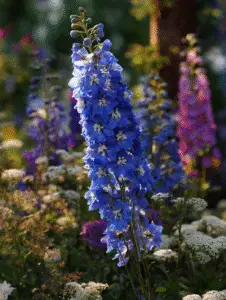
Delphinium elatum
Tall spires for dramatic vertical rhythm behind or beside trellises.
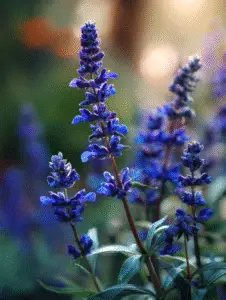
Blue Salvia
(Salvia farinacea) – Long-blooming blue wands that carry color between clematis flushes.
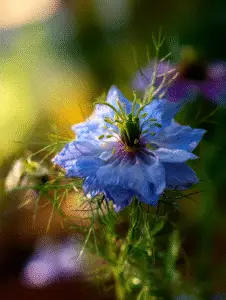
Love-in-a-Mist
(Nigella damascena) – Airy, lacy filler with starry flowers; cottage-garden vibe that complements vine textures.
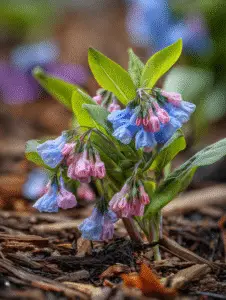
Virginia Bluebells
(Mertensia virginica) – Spring bells for woodland corners; a gentle companion for early-flowering clematis groups.
References
- NC State Extension Plant Toolbox – Clematis (genus page) – Clear botanic overview of the genus, growth habits, and species diversity.
- RHS – Clematis: Pruning Guide – Authoritative explanation of pruning Groups 1, 2, and 3 with timings and technique.
- ASPCA – Clematis Toxicity for Pets – Notes irritant glycosides and symptoms; suitable reference for pet safety sections.
- Missouri Botanical Garden Plant Finder – Clematis (cultivar example) – Cultivar-level cultural notes and use cases you can cite for practical guidance.
- UW-Madison Horticulture – Summer-Flowering Vines (incl. Clematis) – Extension overview listing species and bloom windows.
Enjoying our flower guides? Add YourFlowersGuide as a preferred source on Google. It helps more readers find us.
Add to Preferred Sources