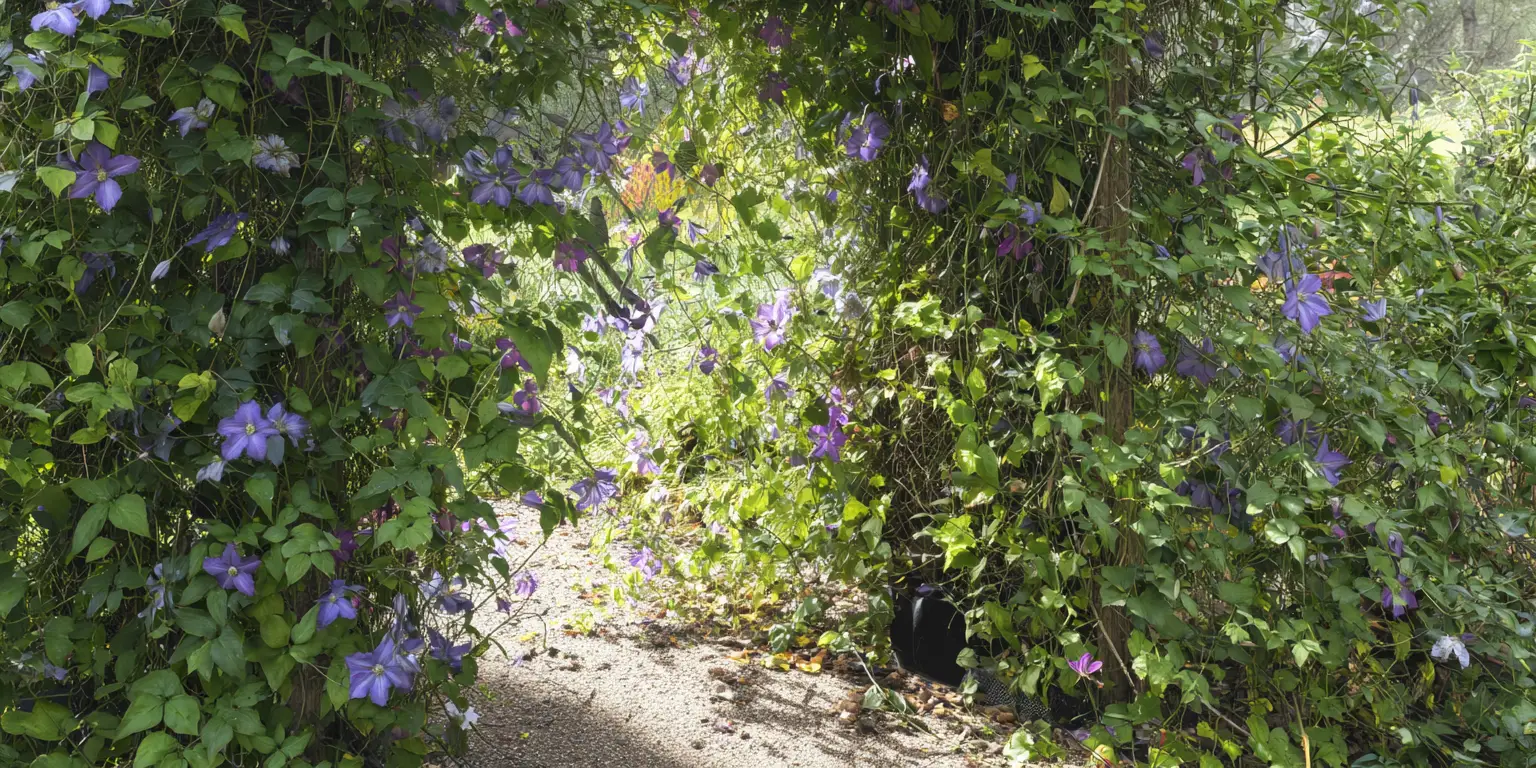
in bloom
now
through Oct
Bloom calendar
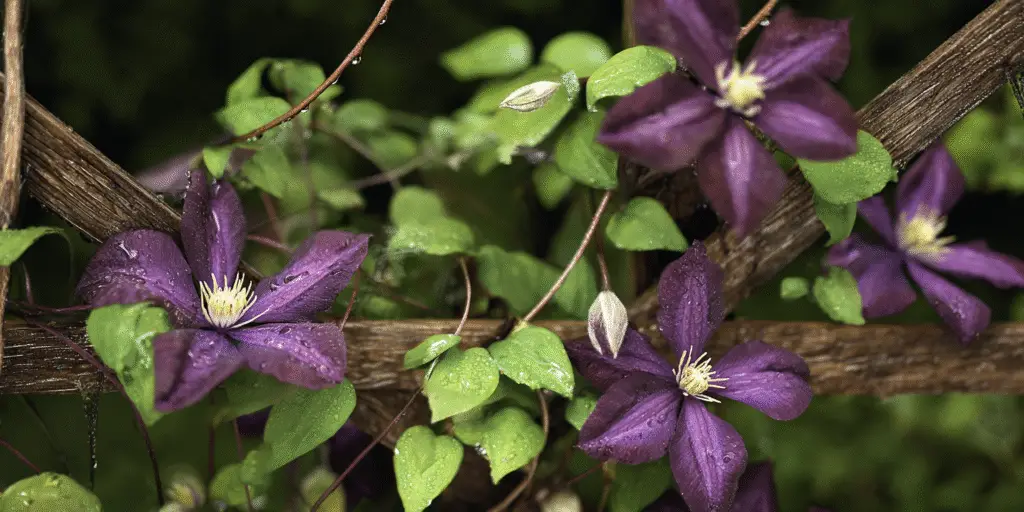
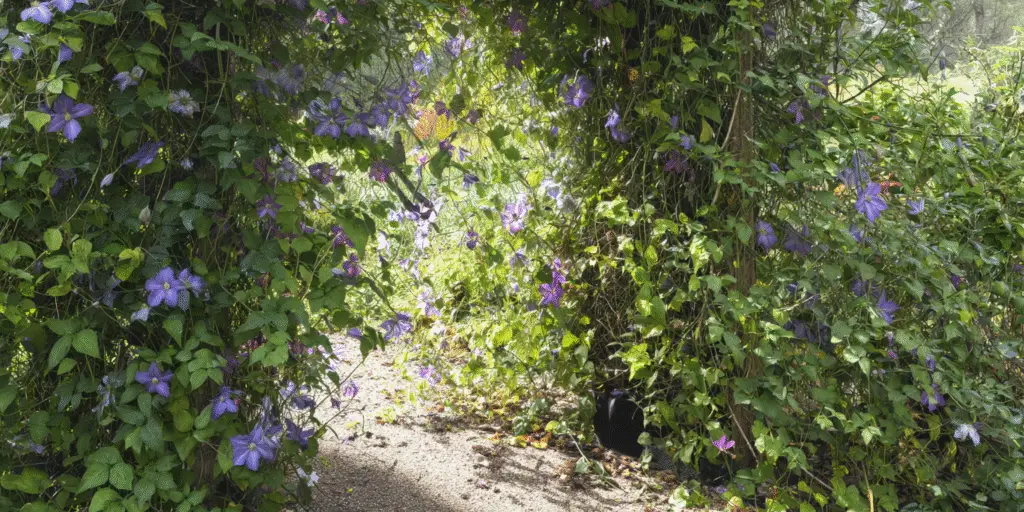
Clematis viticella
Viticella Group; Pruning Group 3
At‑a‑glance
- Group/Class: Viticella Group; Pruning Group 3
- Height × spread: 10–15 ft × 3–5 ft (3.0–4.6 m × 0.9–1.5 m)
- Bloom window: summer to fall
- Color & flower form: Purple to violet, open bell‑shaped flowers, 1–3 in (2.5–7.5 cm)
- Fragrance: 0 none
- USDA hardiness: zones 4 to 8
- Breeder / Year / Origin: unknown, Southern Europe to Asia
- Pet safety: avoid
How it differs
- Flowers later than many spring clematis
- Smaller, bell‑shaped flowers rather than broad star forms
- Generally better wilt tolerance than large‑flowered hybrids
- Strong regrowth after hard spring pruning
Strengths
- Long bloom season in warm weather
- Handles pruning and renovation well
- Good vigor with modest footprint
Care in one minute
Site: full sun to part shade; keep the root zone shaded and cool.
Soil: moist but well‑drained; neutral to alkaline pH.
Water: provide steady moisture during active growth.
Feeding: light, balanced feeding in spring; avoid excess nitrogen.
Pruning: Group 3; cut back hard in late winter to encourage new flowering shoots.
Overwintering: mulch crown in colder sites; otherwise typical protection is sufficient.
Watch‑outs
- Can develop powdery mildew in crowded, dry sites
- Requires regular moisture at the root zone
- Needs support for twining leaf stalks
Best uses (tags)
Provenance note
Species native to southern Europe and into western Asia; widely used in breeding of modern clematis.
References
- NC State Extension – Clematis viticella
- RHS – Clematis viticella profile
- RHS – Clematis: pruning groups
- ASPCA – Clematis toxicity
Similar Flowers
Enjoying our flower guides? Add YourFlowersGuide as a preferred source on Google. It helps more readers find us.
Add to Preferred Sources