in bloom
now
through Oct
Bloom calendar
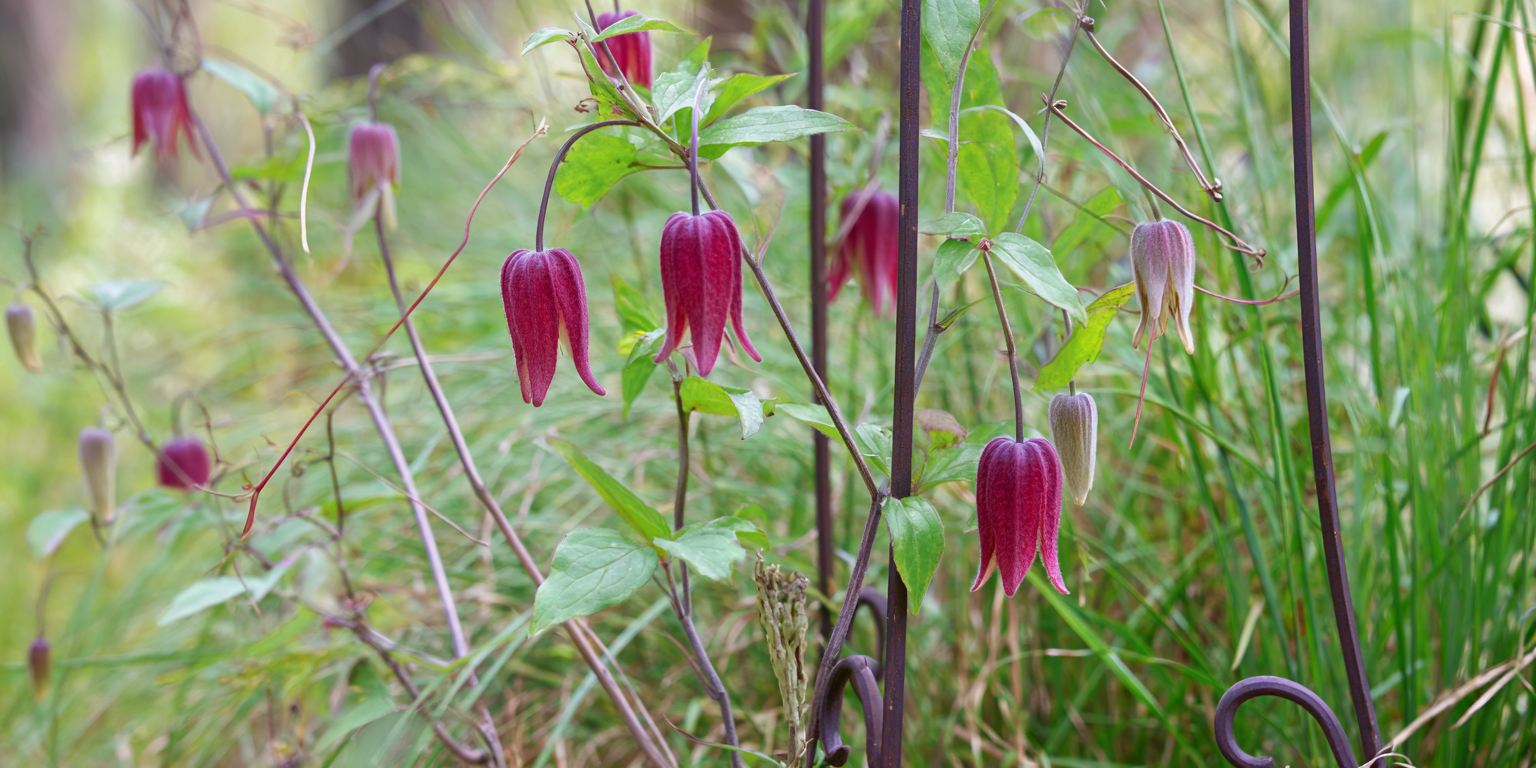
Clematis texensis
Texensis Group; Pruning Group 3
At‑a‑glance
- Group/Class: Texensis Group; Pruning Group 3
- Height × spread: 10–15 ft × 2–3 ft (3.0–4.6 m × 0.6–0.9 m)
- Bloom window: July to September
- Color & flower form: Tulip to bell‑shaped flowers, reddish orange to scarlet, about 1 in (2.5 cm)
- Fragrance: 0 none
- USDA hardiness: zones 4 to 8
- Breeder / Year / Origin: unknown, Texas USA
- Pet safety: avoid
How it differs
- Tulip‑shaped flowers unlike broad star forms of many garden hybrids
- Blooms reliably on new wood
- Moderate vine length compared with ramblers
- Native North American species used in many hybrids
Strengths
- Summer flowers hold color in heat
- Responds well to hard annual pruning
- Good for smaller vertical spaces
Care in one minute
Site: full sun to part shade; shade the crown with mulch or low plants.
Soil: fertile, well‑drained, moisture‑retentive; neutral to slightly alkaline pH.
Water: regular during establishment; avoid waterlogging.
Feeding: spring slow‑release fertilizer; light top‑ups in midsummer if growth is light.
Pruning: Group 3; cut to strong buds 8–12 in above ground in late winter.
Overwintering: mulch in colder zones; avoid late‑season pruning that removes new buds.
Watch‑outs
- Needs consistent moisture at the roots to establish
- May require tying in to supports
- Standard clematis pests and diseases still possible
Best uses (tags)
Provenance note
Species native to Texas; parent of many Texensis Group hybrids cultivated since the late 19th century.
References
- Missouri Botanical Garden – Plant Finder: Clematis texensis
- RHS – Clematis: pruning groups
- ASPCA – Clematis toxicity
Similar Flowers
Enjoying our flower guides? Add YourFlowersGuide as a preferred source on Google. It helps more readers find us.
Add to Preferred Sources