in bloom
now
through Oct
Bloom calendar
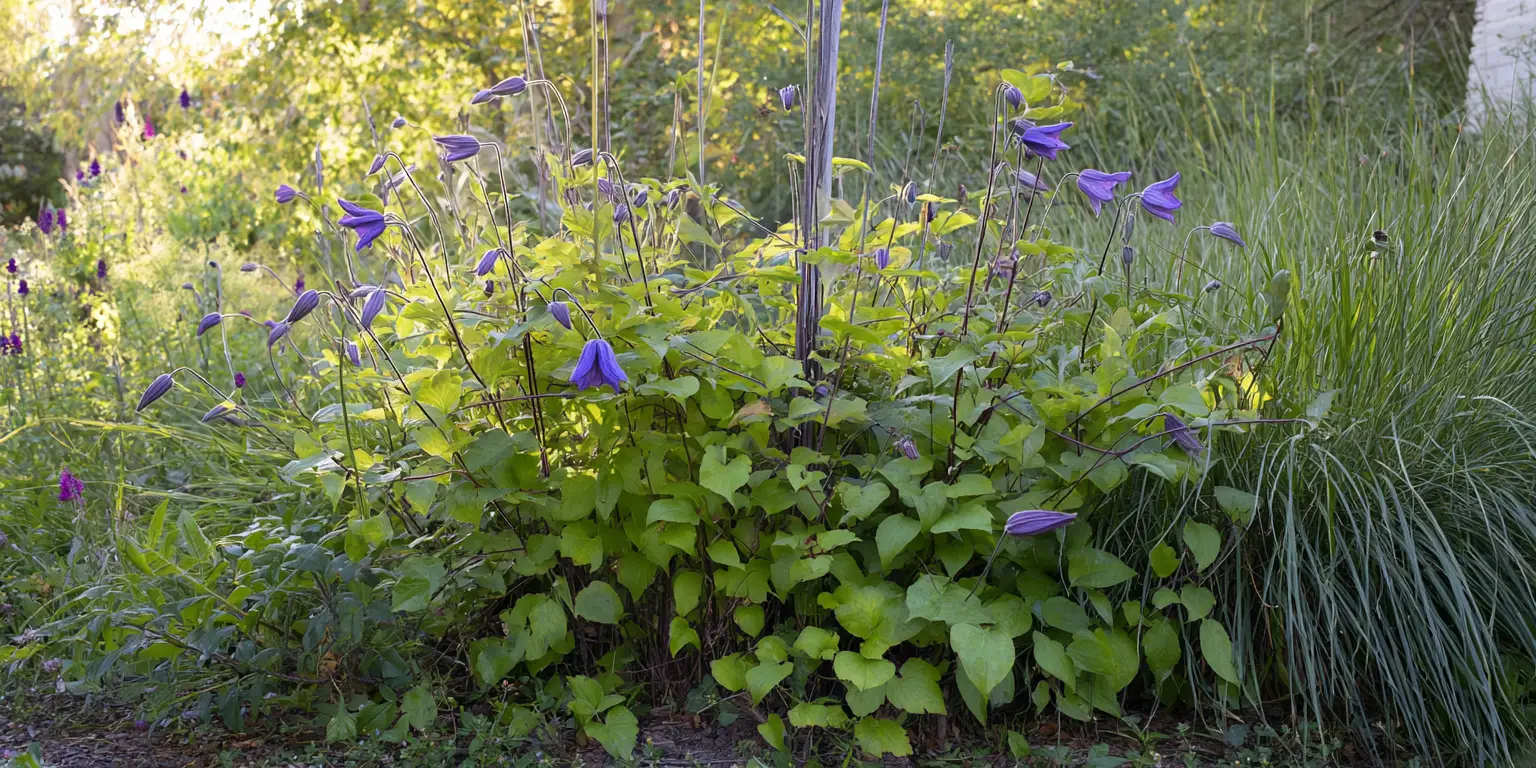
Clematis integrifolia
Herbaceous clematis; Pruning Group 3
At‑a‑glance
- Group/Class: Herbaceous clematis; Pruning Group 3
- Height × spread: 1.5–3 ft × 2–3 ft (0.5–0.9 m × 0.6–0.9 m)
- Bloom window: May to September
- Color & flower form: Nodding urn‑shaped blue flowers, about 1–2 in (2.5–5 cm)
- Fragrance: 0 none
- USDA hardiness: zones 3 to 7
- Breeder / Year / Origin: unknown, Central Europe to Asia
- Pet safety: avoid
How it differs
- Non‑climbing habit compared with typical twining clematis
- Compact height for front of border
- Flowers over a long summer window
- Dies back each winter in cold climates
Strengths
- Cold hardy and durable in zones 3 to 7
- Deer and black walnut tolerant in many gardens
- Attractive seed heads after flowering
Care in one minute
Site: full sun to part shade; protect root zone with mulch.
Soil: fertile, well‑drained, moisture‑retentive; neutral to slightly alkaline pH.
Water: keep evenly moist; do not allow prolonged drought.
Feeding: light spring fertilizer; avoid heavy nitrogen.
Pruning: Group 3; cut stems back to low buds in late winter.
Overwintering: no special care beyond mulch in colder zones.
Watch‑outs
- Can sprawl without light support or neighboring plants
- Needs consistent moisture in summer
- Standard clematis diseases possible in humid weather
Best uses (tags)
Provenance note
Species native from central Europe into Asia; a clump‑forming, woody‑based perennial rather than a twining vine.
References
- Missouri Botanical Garden – Plant Finder: Clematis integrifolia
- RHS – Clematis integrifolia profile
- NC State Extension – Clematis (general culture)
- ASPCA – Clematis toxicity
Similar Flowers
Enjoying our flower guides? Add YourFlowersGuide as a preferred source on Google. It helps more readers find us.
Add to Preferred Sources