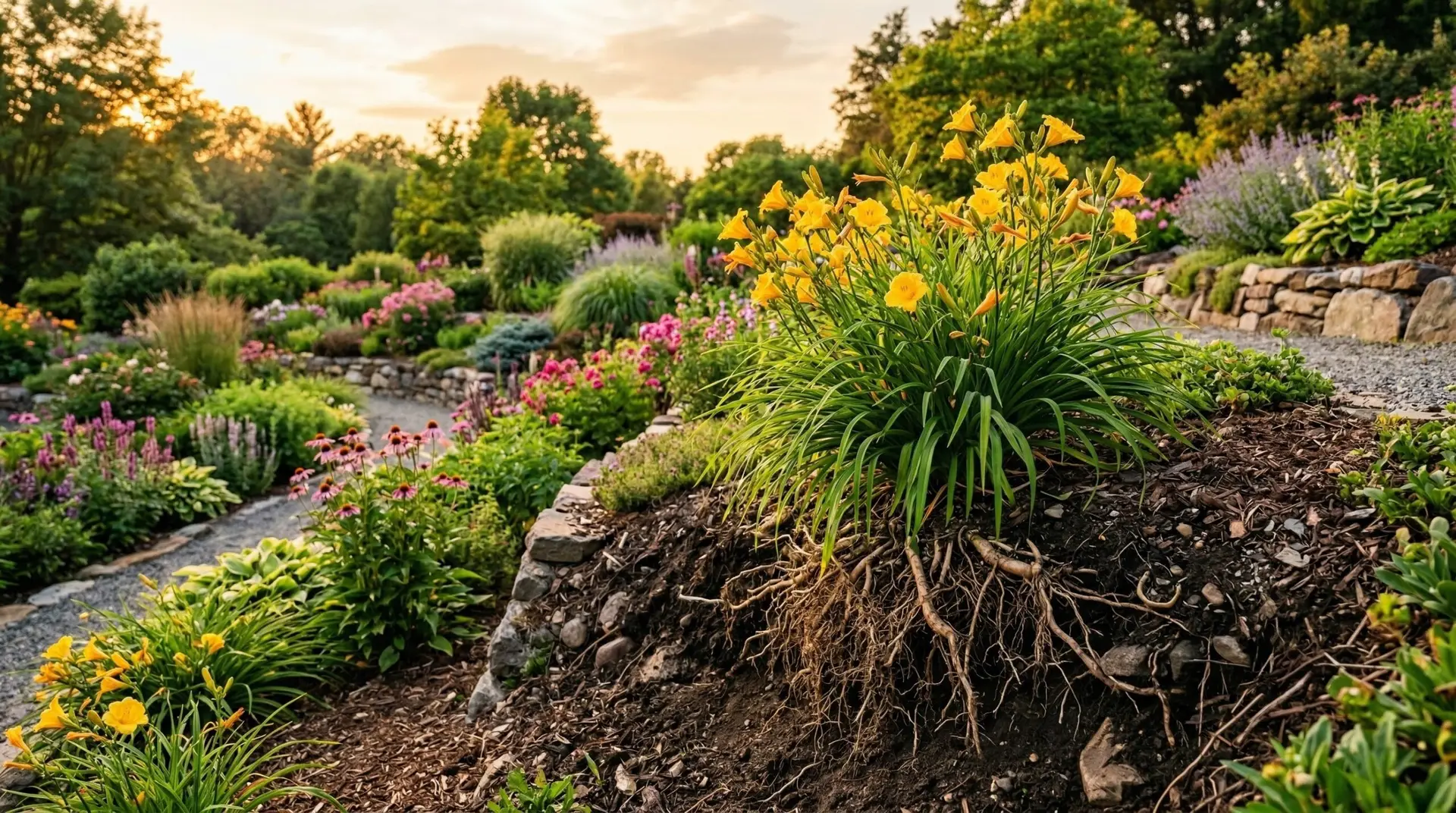
Before you buy flats of ground cover for a steep bank, you need a strategy for plant survival and soil stabilization. Planting on a slope requires a plant with a dense root system that can establish quickly before the next heavy rain washes your work away. Daylilies are highly effective for this specific task because their thick, tuberous roots grab soil tightly and multiply rapidly to form an interlocking underground web. Planning a daylily erosion control project means calculating your spacing, sourcing the right rootstock, and committing to a strict watering schedule during the first year of establishment. You must evaluate the steepness of your bank and determine how you will safely access the area for planting and initial maintenance tasks. A successful project requires accepting that the first twelve months are about root establishment rather than a massive display of flowers. Putting plants in the ground without a plan for irrigation or weed suppression on a difficult slope will only lead to wasted money and washed-out soil.
Assessing your slope and selecting the right daylilies
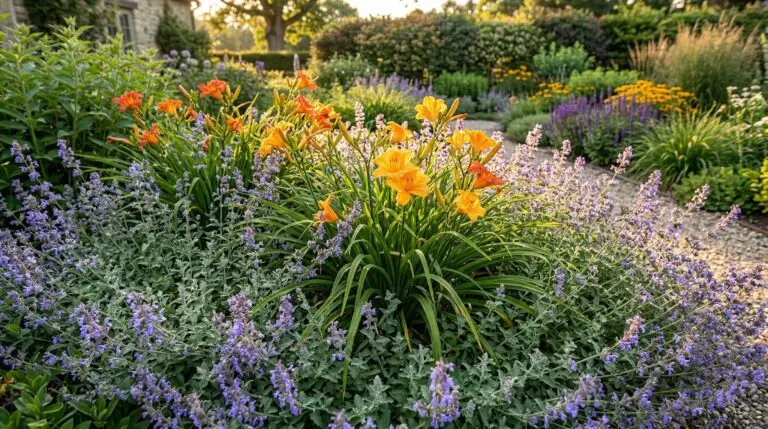
Evaluate your site conditions carefully before choosing any plant material or digging a single hole. Measure the length and width of the slope to determine the exact square footage, which dictates your budget and your time commitment. You need to know how many hours of direct sun the bank receives, as daylilies require at least six hours of direct sunlight to thrive and multiply efficiently enough to stop erosion. While you might be tempted by modern hybrids with ruffled edges and unusual colors, slope stabilization requires older, vigorous varieties that prioritize root growth over delicate blooms. The classic orange ditch lily or the dependable, fast-spreading yellow varieties are excellent choices for daylily slope planting because they tolerate poor soil and periods of drought. You can also mix them with spring-blooming bulbs like daffodils, which utilize the same space early in the season before the dense daylily foliage fully emerges and shades the ground. These older daylily varieties produce the thick, fibrous root mats necessary to hold soil in place against gravity and heavy water runoff.
Preparing the site and calculating your plant budget
Preparing a slope for planting is physically demanding work that requires realistic scheduling and proper tools. Do not attempt to clear and plant a massive hillside in a single weekend, as working on an incline engages different muscles and causes fatigue quickly. Break the project into manageable sections that you can complete in four-hour blocks to prevent exhaustion and ensure proper planting technique across the entire bank. Calculate your plant needs by planning for an eighteen-inch spacing between each daylily, which allows enough room for growth while ensuring the root systems eventually interlock to form a continuous daylily ground cover. Buying individual potted daylilies at retail prices for a large slope will quickly exhaust your budget and leave you with too few plants to do the job right. You should look for bare-root suppliers who sell in bulk quantities of fifty or one hundred fans, or find a local gardener willing to divide their established, overgrown patches. Remove existing weeds and invasive vines from the planting area manually with a digging fork, as leaving root fragments of aggressive weeds will create severe competition for moisture and nutrients.
Executing the planting process on difficult terrain
Planting on an incline requires specific soil-handling techniques to prevent water from washing the dirt away from the roots before they can anchor themselves. Dig each hole slightly deeper than the root mass and create a small terrace or flat shelf on the downhill side of the hole using the excavated soil. This flat shelf catches rainwater and directs it down into the root zone instead of letting it run off the surface and carry your topsoil away. Spread the bare roots over a small mound of soil at the bottom of the hole, keeping the crown of the plant just below the surrounding soil surface. Firm the soil heavily around the roots with your hands to eliminate air pockets, which dry out the roots and severely delay the establishment process. Once a section is planted, apply a two-inch layer of shredded hardwood mulch around the plants to suppress weeds and retain essential moisture during the hot summer months. Do not use pine straw or large bark nuggets on steep inclines, as heavy rains will easily wash these lightweight materials down to the bottom of the bank and leave your fresh plantings exposed.
Managing the timeline for root establishment and ongoing care
The maintenance commitment for a newly planted slope changes drastically between the first and second years of the project. Expect the first year to be entirely about root establishment, requiring consistent watering whenever natural rainfall falls short of one inch per week. Dragging a heavy hose up a steep bank is tedious and dangerous, so you should plan your irrigation method before you put the first plant in the ground. Setting up temporary soaker hoses across the terraces is the most efficient way to deliver water deeply to the root zones without causing surface erosion or washing away your mulch. By the second year, the daylilies will require almost no supplemental watering and will begin to multiply rapidly, filling in the bare spots between your original eighteen-inch plantings. You can introduce drought-tolerant companion plants like coreopsis once the soil is fully stabilized, adding different textures and bloom times to the bank without competing for deep moisture. The only ongoing maintenance required for a mature patch will be an annual late-winter cleanup to remove the dead foliage before the new green shoots emerge in the spring.
Action plan for your slope project
You can start organizing your erosion control project this week by taking precise measurements of your problem area and gathering your initial data. Go outside with a tape measure and calculate the total square footage of the bank you want to stabilize, noting any particularly steep sections or areas with poor drainage. Divide that total square footage number by two to determine roughly how many individual daylily fans you will need to order to achieve the correct spacing for a solid ground cover. Spend an hour researching wholesale bare-root nurseries online to compare bulk pricing for older, vigorous daylily varieties that are bred for multiplication rather than showy flowers. Map out your water source and measure the exact distance to the slope to ensure you have enough hose length to reach the highest point of the bank comfortably. Taking these practical steps now ensures you will have the right materials, an accurate budget, and a clear strategy when planting day finally arrives.