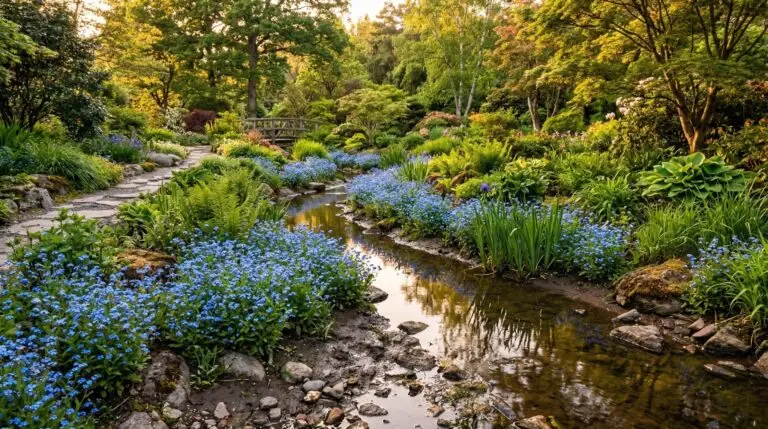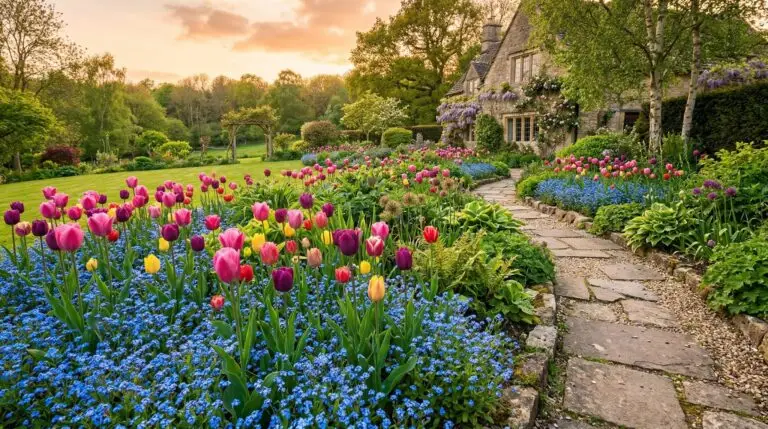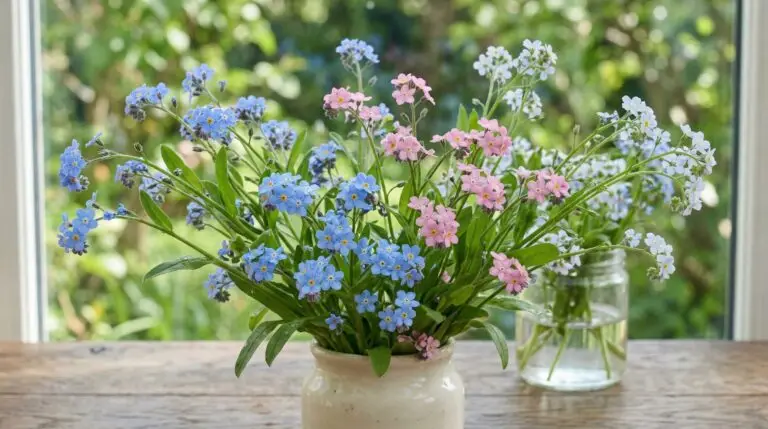
Morning light filtering through a bridal suite catches the dew on a cluster of tiny, pale blue flowers waiting in a glass of water. There is a quiet modesty to Myosotis sylvatica, commonly known as the forget-me-not, especially when placed next to the grander blooms typical of wedding celebrations. These five-petaled blossoms possess a fragile beauty that draws the eye closer rather than commanding attention from across the room. A forget-me-not wedding theme relies on this intimacy, asking guests to notice the small details that make a celebration personal. The soft blue color provides a gentle contrast to the white silk and lace that dominate the morning preparations. Most gardeners discover that these tiny plants spread easily through spring borders, returning year after year with cheerful reliability. When brought indoors for a marriage ceremony, that same persistent nature translates into a quiet symbol of loyalty and lasting affection.
A quiet way to remember absent loved ones
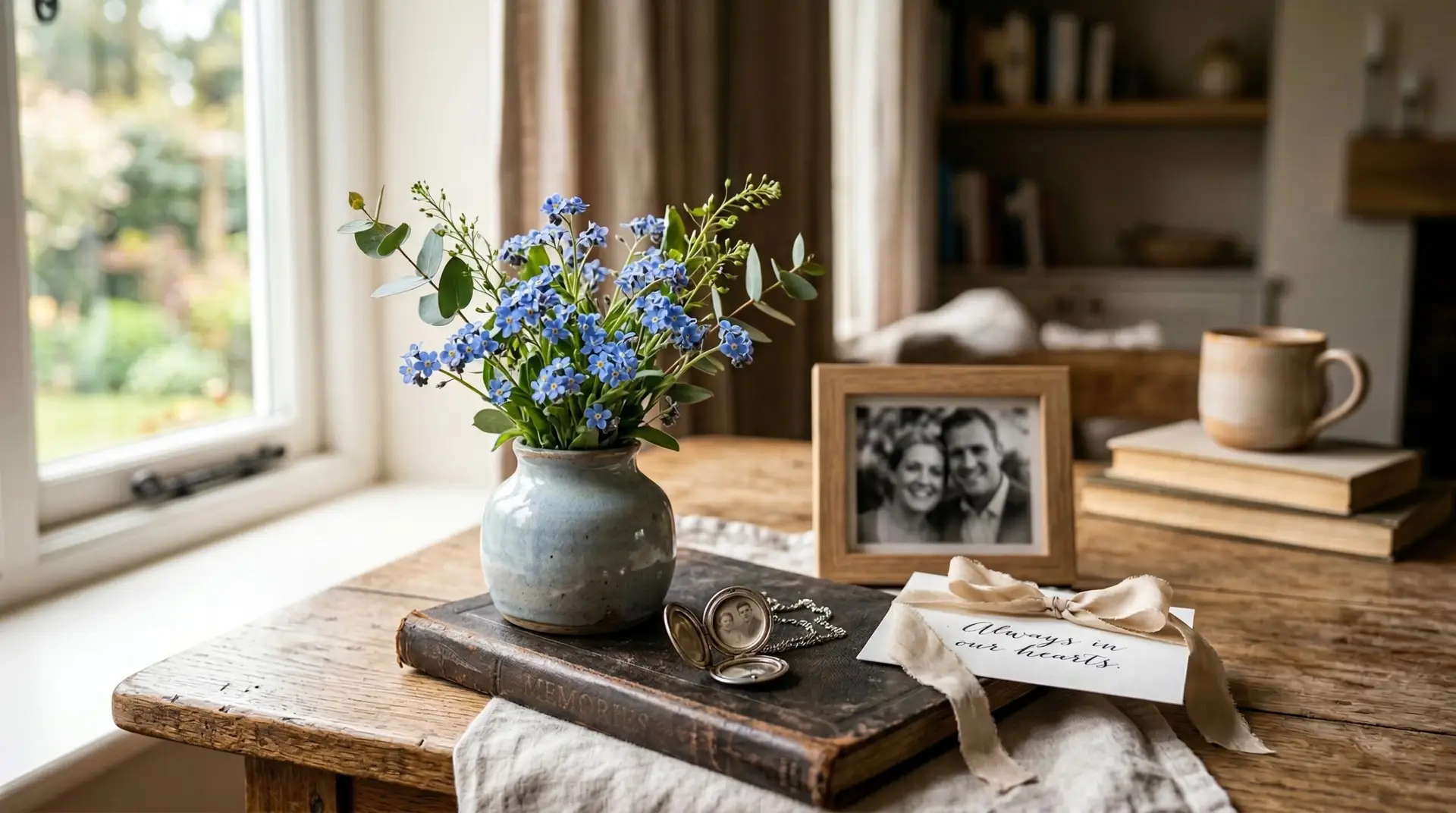
The very name of the flower speaks directly to the heart of many couples planning their vows. Weddings often bring an acute awareness of the people who cannot be there to share the day, whether separated by distance or by passing. Tucking a sprig into a forget-me-not bouquet offers a private, unspoken tribute to a grandparent or friend who is deeply missed. The gesture requires no explanation to the guests, allowing the bride to carry the memory of her loved one down the aisle in a deeply personal way.
Beyond the memorial aspect, these blossoms offer a natural solution to an old wedding tradition. Finding the right “something blue” often leads brides to hidden ribbons or sapphire jewelry, but incorporating blue directly into the floral design brings the custom back to nature. True blue is a relatively rare color in the botanical world, making these tiny blooms highly sought after for spring ceremonies. They provide a wash of sky-blue color that feels organic and soft, rather than dyed or artificial. The yellow eye at the center of each tiny flower adds a spark of warmth that prevents the blue from feeling too cold against white gowns. Florists often appreciate how this specific shade of blue complements a wide range of other colors, from pale blush to deep burgundy. The result is a subtle nod to tradition that feels completely integrated into the overall aesthetic of the day.
Weaving delicate stems into bridal designs
Working with such petite blooms requires a thoughtful approach to floral design so they do not get lost among larger focal flowers. They work naturally as a delicate filler, creating a frothy, cloud-like collar around more structured blossoms. When paired with the classic, swirling petals of a rose, the tiny blue flowers soften the arrangement and add a layer of woodland charm. The contrast in scale between the tiny blue specks and the large, heavy flower heads creates a visually compelling dynamic that keeps the eye moving across the arrangement.
Creating a forget-me-not bridal arrangement does present certain practical considerations for the florist and the bride. These spring ephemerals have thin, delicate stems that drink water rapidly and can wilt if exposed to heat or wind for long periods. Floral designers often keep them hydrated in water tubes hidden within the bouquet structure until the very last moment before the ceremony begins. They pair exceptionally well with the tissue-paper layers of a ranunculus, as both flowers share a soft, romantic quality that suits a garden-inspired wedding. Keeping the bouquet out of direct sunlight during the photography session will help the blue petals maintain their crisp appearance throughout the afternoon. Some brides choose to use the blue flowers only in their own bouquet, leaving the bridesmaids’ arrangements entirely white or green to make the bridal blooms stand out. This careful handling pays off when the bride looks down and sees the fresh, bright faces of the flowers looking back at her.
Extending the blue motif to the wedding party
The groom and his attendants can also wear these meaningful flowers pinned to their lapels. A single sprig of blue bound with floral tape makes a restrained, elegant boutonniere that feels less formal than a traditional white stephanotis blossom. The tiny blue petals pop sharply against the dark wool of a navy or charcoal suit, creating a cohesive visual link between the bride and groom. Because the stems are so fine, they can easily be clustered with a sprig of greenery or a small white bud without feeling heavy or bulky on the jacket.
The sentimentality of these flowers translates easily into the gifts given to departing guests at the end of the night. Packets of seeds, customized with the couple’s names and the wedding date, offer friends and family a way to grow their own memories of the celebration. When those seeds sprout in garden beds or window boxes the following spring, the resulting blue haze grows into a living reminder of the vows exchanged. Some couples choose to press the flowers from their own arrangements after the wedding, framing the dried, flattened stems as a permanent keepsake for their home. The pigment in the petals holds up surprisingly well to the pressing process, retaining that signature blue hue for years if kept out of direct sunlight. There is something satisfying about knowing a flower chosen for a single day can continue to bloom in the gardens and memories of the people who gathered there. Long after the cake is eaten and the music fades, the quiet plea of the flower’s name remains fulfilled.