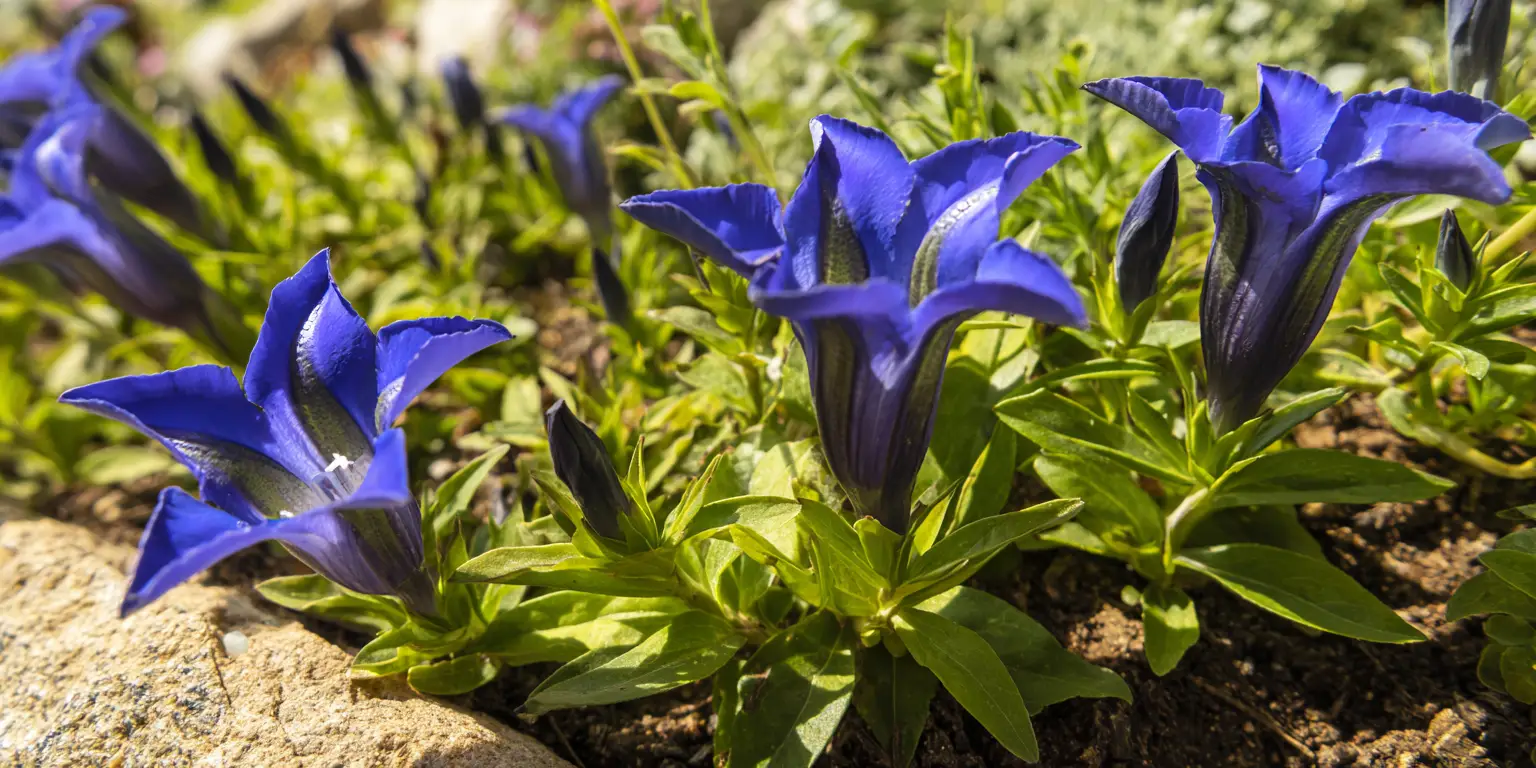
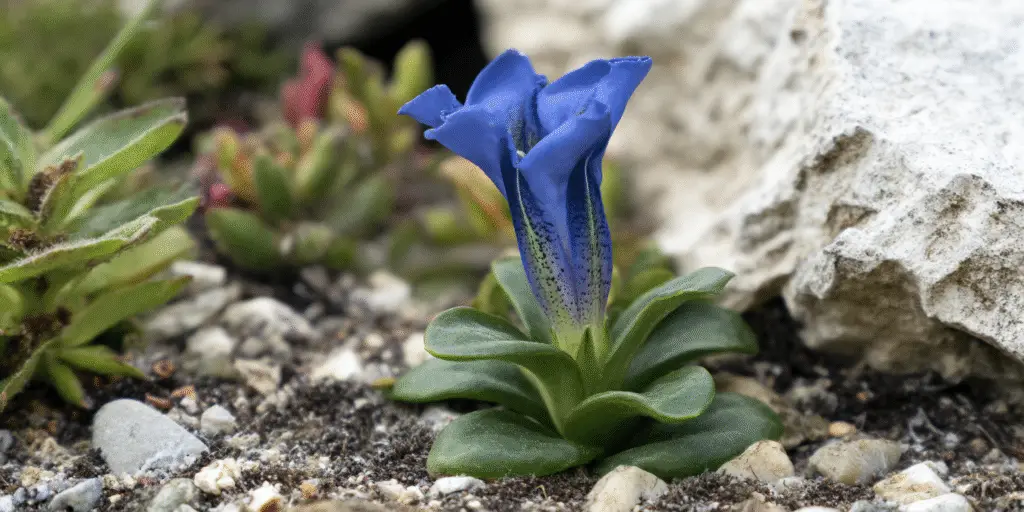
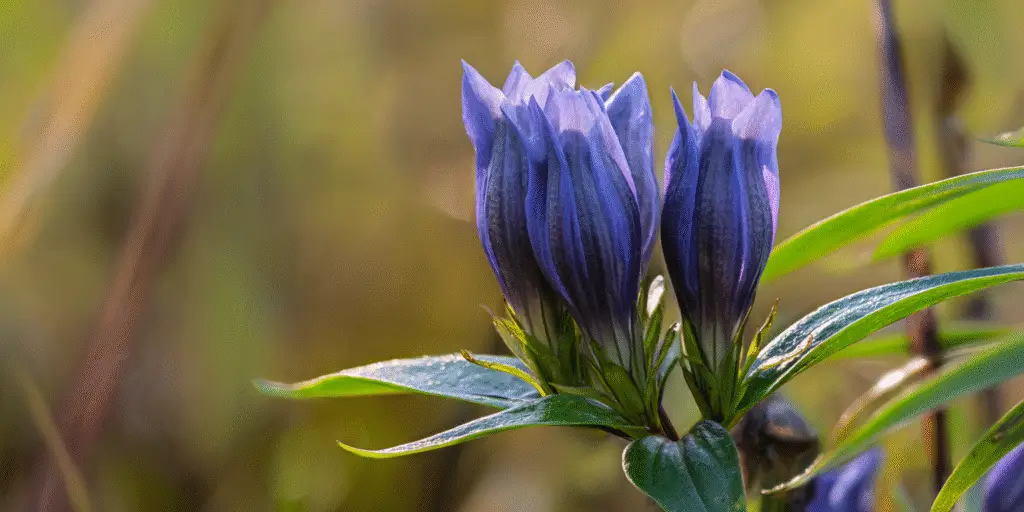
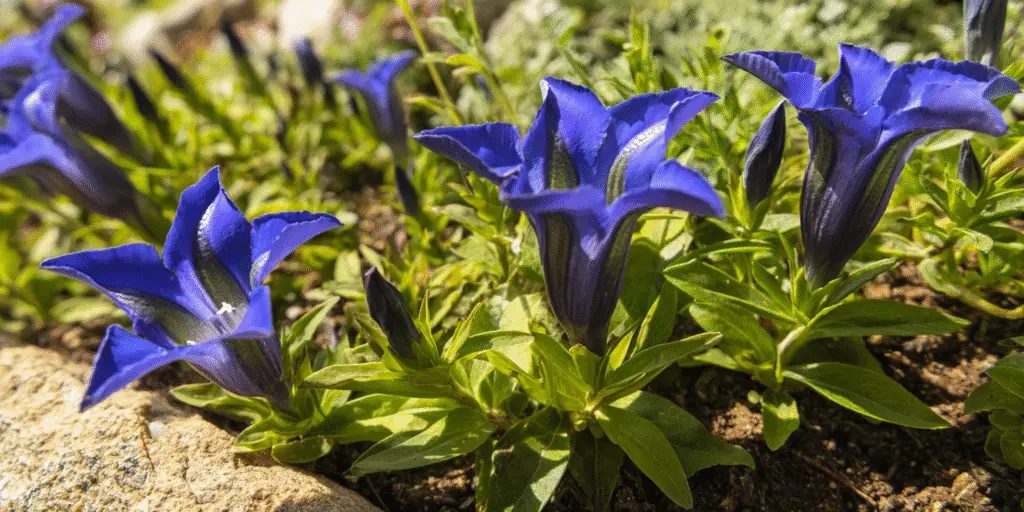
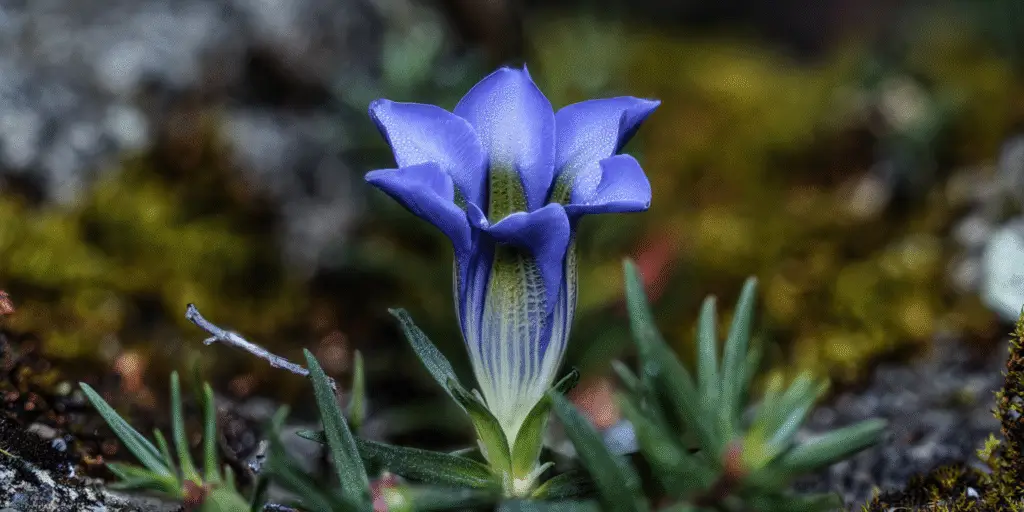
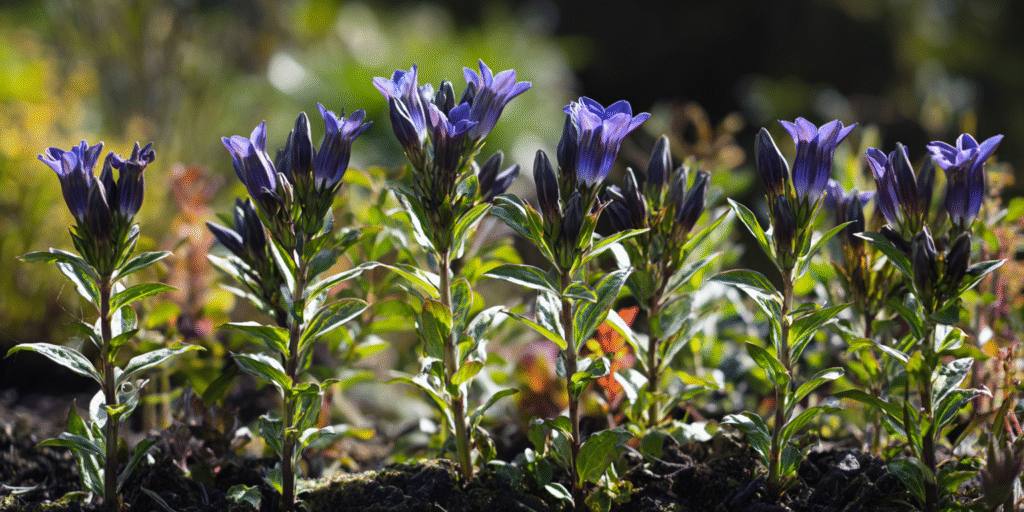
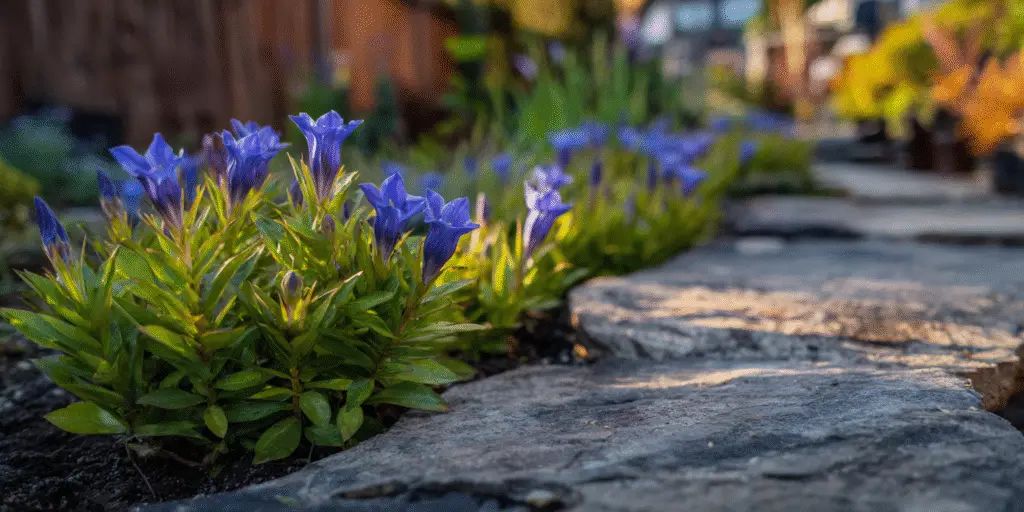
A summer‑flowering, mat‑forming gentian from western and central Asia. Trailing stems carry clusters of mid‑blue trumpets that open in late summer. Plants prefer moist but well‑drained, humus‑rich soils and full sun in cool regions. It is among the easier gentians for rock gardens where summers are not extreme.
At‑a‑glance
Group/Class: crested or summer gentian
Height × spread: 6-10 in (15-25 cm) × 12-18 in (30-45 cm)
Bloom window: late summer
Color & flower form: mid‑blue trumpets in small clusters
Fragrance: 0 none
USDA hardiness: unknown / varies by climate
Breeder / Year / Origin: Pallas, 1776, W and C Asia
Awards/registration: RHS Award of Garden Merit
Pet safety: unknown
How it differs
Summer bloom earlier than many autumn Chinese gentians.
Low, trailing habit instead of upright border form.
Reported tolerance of a wider soil pH range than lime‑hating autumn types.
Often easier to establish than high‑alpine species.
Strengths
Reliable summer blue color in cool climates.
Compact habit for front of border and rock work.
Recognized with RHS AGM for garden merit.
Care in one minute
Grow in full sun in cool regions; provide light afternoon shade where summers are hot.
Use humus‑rich, evenly moist, free‑draining soil; avoid waterlogging.
Water during dry spells to keep soil from drying out.
Apply a light spring feed; do not overfertilize.
Divide clumps in spring if needed and replant promptly.
Watch‑outs
Can be prone to root rot in poorly drained soil.
Susceptible to slugs, snails, and aphids in damp summers.
Flowering may pause in prolonged heat.
Best uses (tags)
rock gardens, edging, borders, containers
Provenance note
Native across the Caucasus and adjacent areas of W and C Asia; long in cultivation and selected in many forms.
Written by: Your Flowers Guide editorial team We are a small independent group of flower lovers who research and review each guide using trusted horticultural and educational sources. Learn more about us