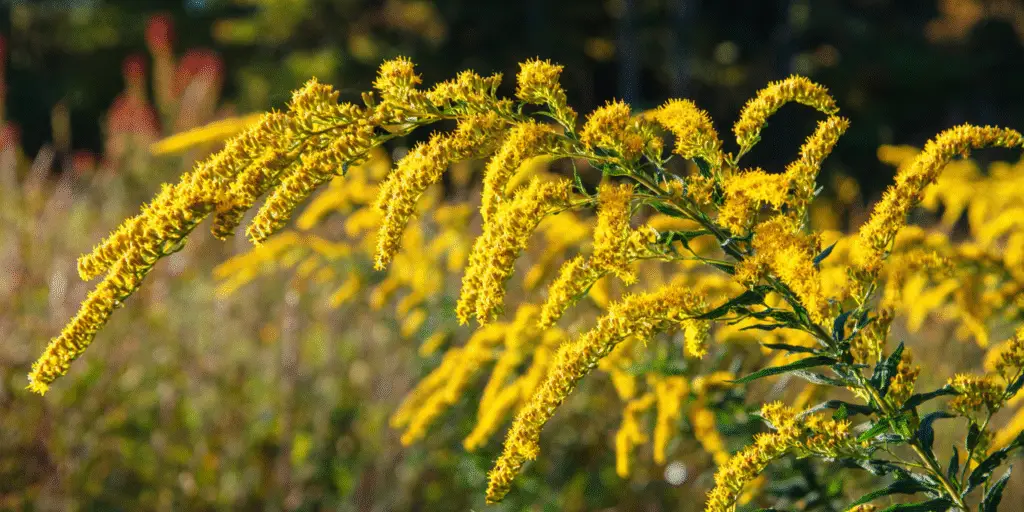
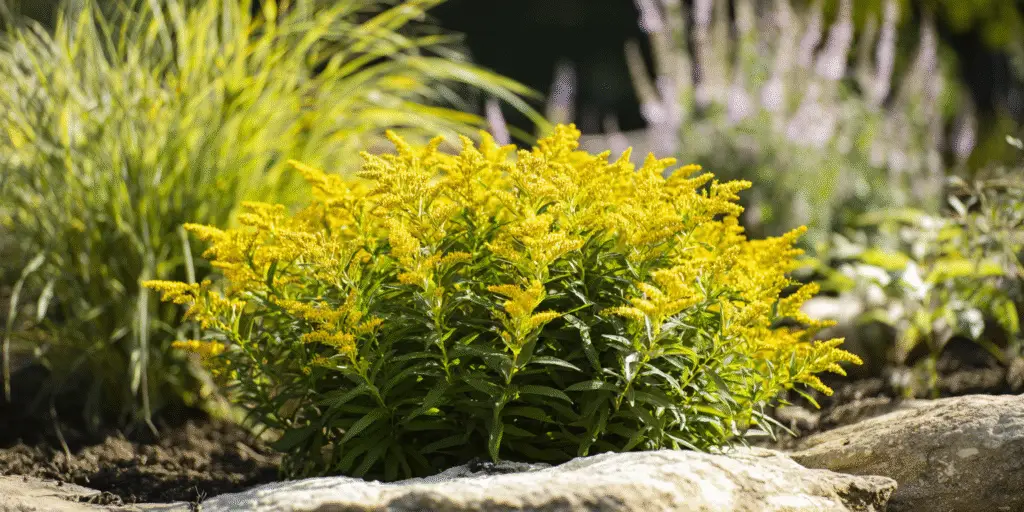
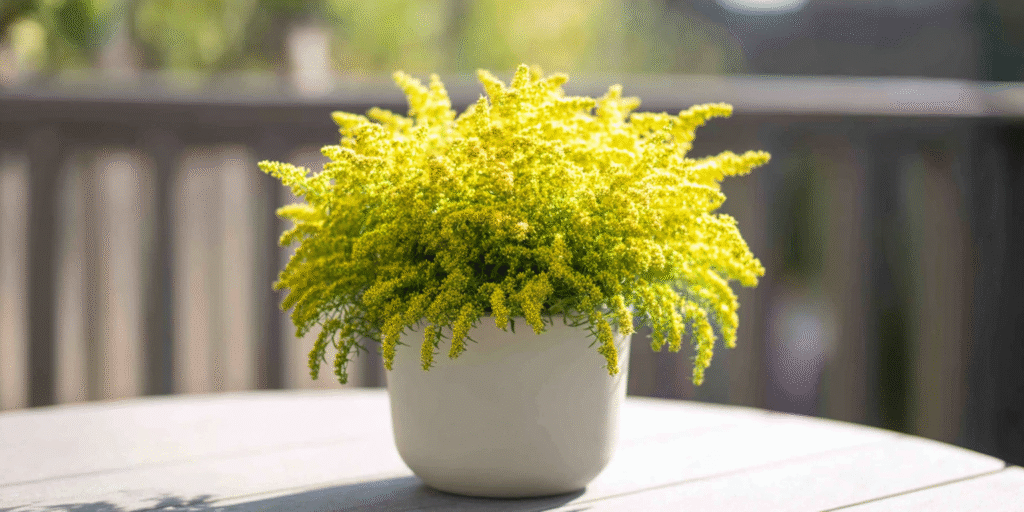
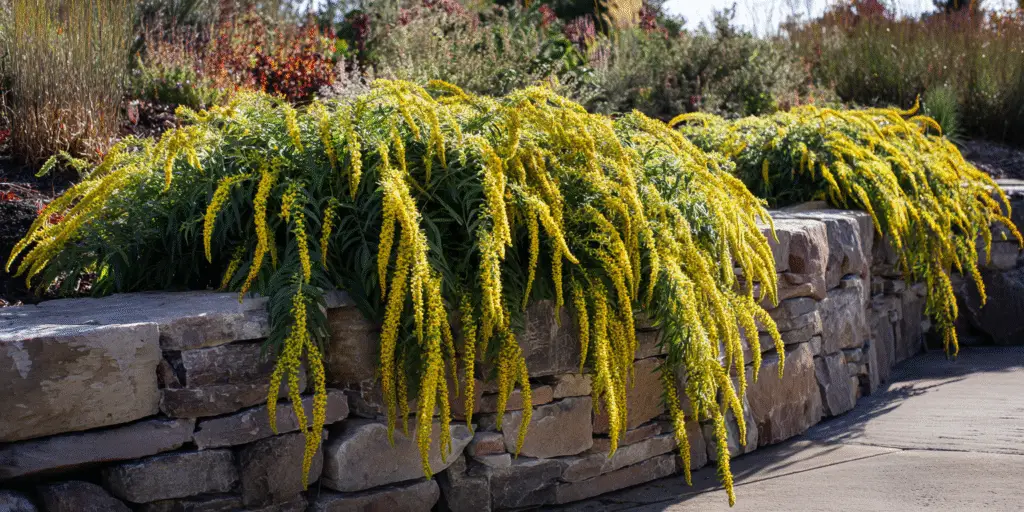
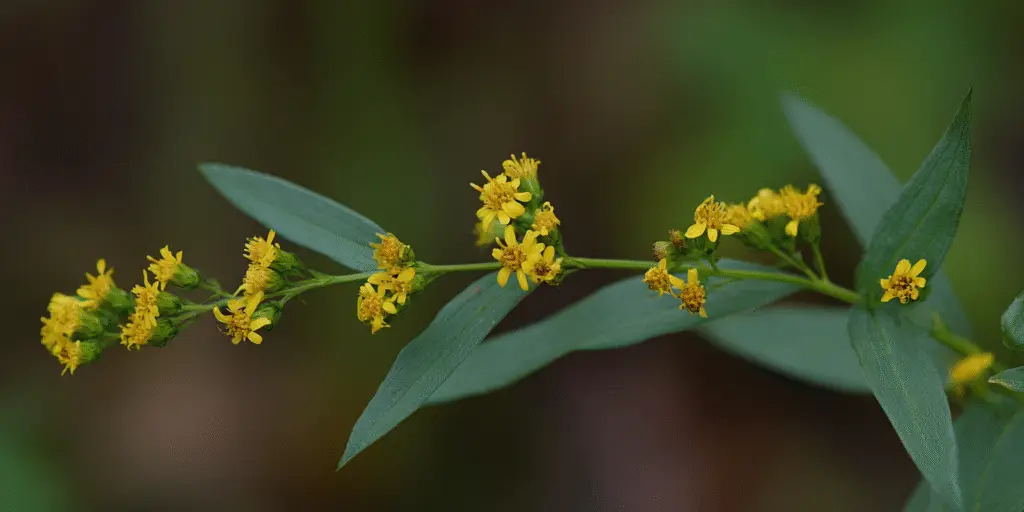
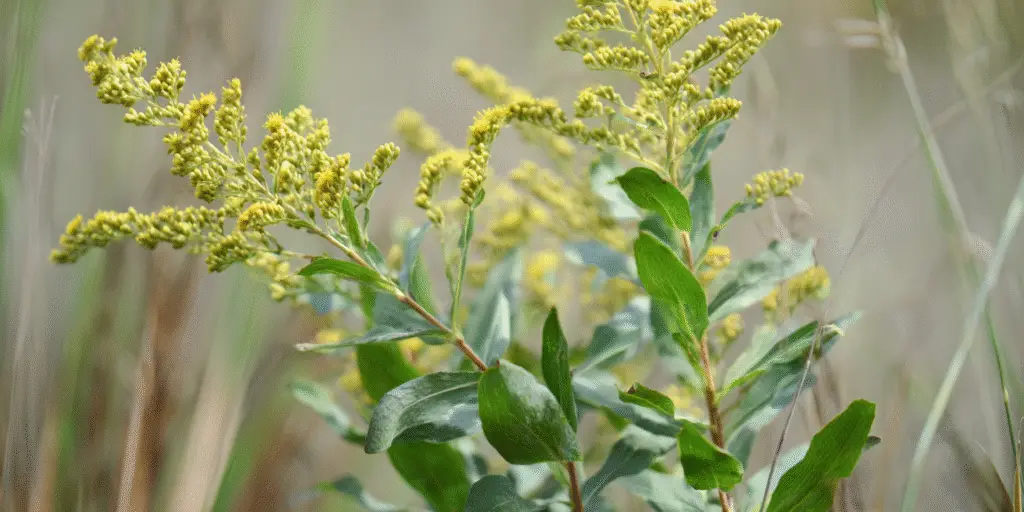
A clump-forming cultivar of rough goldenrod selected for its fine, arching sprays that resemble fireworks. It performs best in full sun and average to moist soils and tolerates clay. Plants reach mid-border height and flower reliably in early fall in much of North America. Stems are sturdy for the height and the habit stays relatively compact compared to tall roadside goldenrods. Flowers support bees and butterflies. In trials it ranked among the strongest garden performers and resists common problems under typical conditions.
At‑a‑glance
Group/Class: Rough goldenrod cultivar
Height × spread: 36-42 in (91-107 cm) × 30-36 in (76-91 cm)
Breeder / Year / Origin: Ken Moore, 1993, USA (selection)
Awards/registration: Plant of Merit (Missouri Botanical Garden)
Pet safety: safe
How it differs
More compact than many tall goldenrods; typical height under 4 ft
Distinct radiating panicles that arch outward rather than dense upright wands
Tolerates heavier soils including clay
Late bloom concentrated in September to October
Strengths
Top-rated in Chicago Botanic Garden goldenrod trial
Good drought and deer tolerance once established
Attractive to pollinators
Low maintenance in full sun with drainage
Care in one minute
Plant in full sun; light shade acceptable in hot summers
Soil: average to moist, well-drained; tolerates clay
Water: weekly until established; then occasional deep watering during drought
Feeding: light spring compost; avoid high-nitrogen fertilizers
No pinching needed; deadhead if you wish to limit self-seeding
Divide clumps every 2 to 3 years if they outgrow space
Watch‑outs
May self-seed lightly in ideal sites
Rust or powdery mildew can appear in humid summers
Spreads slowly by short rhizomes in rich soils
Pet safety note: Solidago species are generally not listed as toxic to cats and dogs; do not confuse with rayless goldenrod (Isocoma), which is toxic to horses.
Best uses (tags)
borders, meadows, pollinators, late season
Provenance note
Selected by Ken Moore at the North Carolina Botanical Garden and introduced in 1993; later cited as top-rated in Chicago Botanic Garden evaluations.
Written by: Your Flowers Guide editorial team We are a small independent group of flower lovers who research and review each guide using trusted horticultural and educational sources. Learn more about us