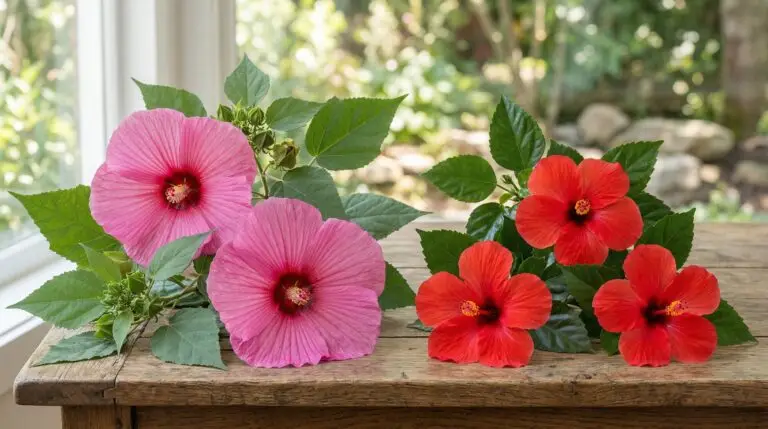
Pruning hibiscus can feel intimidating because you often remove a large amount of plant material. However, hibiscus produces flowers exclusively on new growth. If you leave a hibiscus unpruned, it becomes tall and spindly with flowers only at the very top of the stems. By cutting the plant back, you force it to produce multiple new branches lower down on the main stalks. More branches translate directly to more flowers and a denser, more attractive shape overall. Before making any cuts, you need to know exactly which type of hibiscus you are growing, because tropical and hardy varieties require entirely different approaches to winter and spring care.
Identifying your plant and timing the cut
Hardy hibiscus dies back completely to the ground after a hard freeze, leaving woody stalks that look dead but protect the crown below. Tropical hibiscus retains its glossy green leaves year-round if kept warm, but will suffer severe damage or die if exposed to freezing temperatures. For both types, the best time to prune is in the spring when the danger of frost has passed and daytime temperatures consistently stay above 60F. Pruning too early can trigger tender new growth that a late frost will destroy. Waiting for the soil and air to warm up ensures the plant has the energy to push out new foliage immediately after you make your cuts. Just like when you are pruning a rose in late winter or early spring, timing the cut to coincide with the plant’s natural waking period prevents unnecessary stress.
Executing the spring hard prune
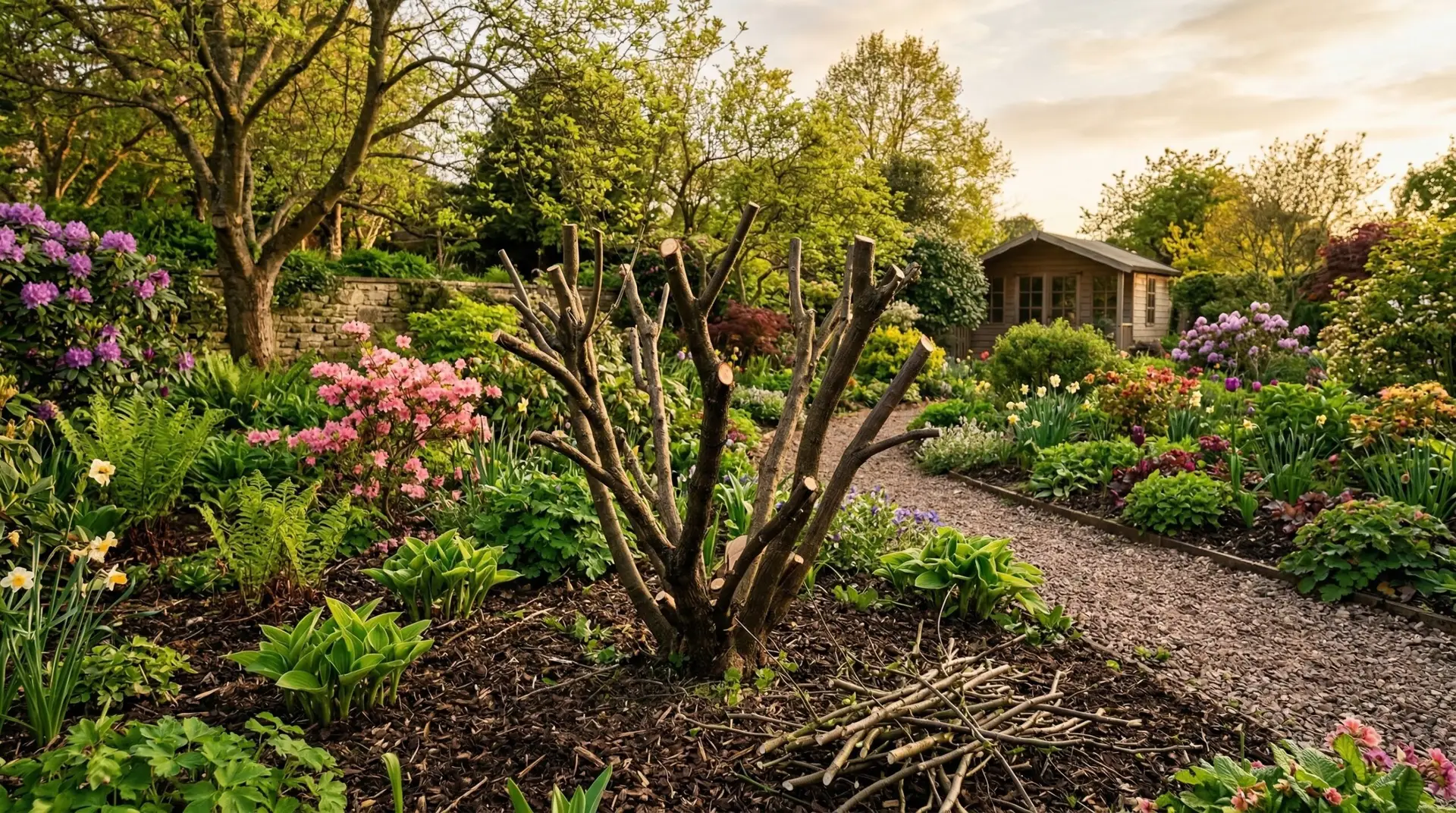
Grab a pair of sharp bypass pruners and wipe the blades with rubbing alcohol to prevent spreading any fungal diseases. For a tropical hibiscus that has spent the winter indoors or in a mild climate greenhouse, you will perform a hard prune to reset its shape. Look at the overall structure and plan to reduce the total height by about one third to one half. Find a leaf node, which is the small bump on the stem where a leaf attaches or previously attached, facing outward away from the center of the plant. Make your cut about a quarter inch above this outward-facing node at a slight downward angle. Cutting above an outward-facing node ensures the new branch will grow away from the center, keeping the middle of the plant open to sunlight and air circulation.
As you work your way around the plant, remove any branches that are completely dead, broken, or crossing over and rubbing against each other. If you are dealing with a hardy hibiscus, your spring pruning task is completely different and much simpler. You will wait until you see new green shoots emerging from the soil at the base of the plant in late spring. Once those new shoots appear, you use your pruners or a small handsaw to cut all the old, dead woody stalks completely down to the ground. The old stems from last year will never sprout leaves again, so removing them makes room for the thick new stalks that will support this year’s dinner-plate flowers. Leaving the old stalks in place until the new growth appears gives you a visual marker so you do not accidentally dig up or step on the sleeping root crown.
Pinching tips for continuous bushiness
Once your tropical hibiscus recovers from the hard prune and starts putting out fresh green stems, you can multiply your flower count through a technique called pinching. When a new branch grows about six inches long and has several sets of leaves, use your thumb and forefinger to snap off the very top tip of that soft green stem. Removing this growing tip interrupts the hormone that tells the branch to grow straight up. In response, the plant will push out two new branches from the leaf nodes directly below your pinch. Every time you pinch a stem, you double the number of branches in that area, creating a densely packed canopy. You can repeat this pinching process every time the new growth extends another six inches, stopping roughly mid-summer so the plant has time to set flower buds.
At this point you might notice the plant dropping a few lower yellow leaves after a heavy pinching session. That is normal and means the plant is redirecting its energy to the top growth points where you just forced it to branch. You also need to keep the plant well watered and fertilized during this active growth phase, because pushing out double the branches requires significant nutrients. Do not worry if your pinched hibiscus seems to take longer to bloom than an unpruned one. You are trading a few early, sparse flowers for a heavy display of blooms that will cover the entire rounded canopy later in the season. This delayed gratification is similar to the patience required when managing Hydrangea macrophylla, where careful attention to growth cycles dictates your eventual flower yield.
Shaping and maintaining tree forms
Many gardeners purchase tropical hibiscus trained as a standard, which means it looks like a miniature tree with a single bare trunk and a round ball of foliage at the top. To maintain this specific shape, you must aggressively remove any new shoots that sprout along the main trunk or from the soil line. These lower shoots are called suckers, and if left attached, they will steal energy from the top canopy and ruin the tree-like silhouette. For the top canopy of the standard, use the same hard pruning and pinching rules described earlier, but aim for a symmetrical globe shape. Cut the top-most branches slightly shorter than the side branches to encourage an even, rounded form rather than a tall, messy spike. You should check the main trunk every few weeks throughout the summer to rub off any dormant buds before they develop into full branches.
After a major pruning session, your hibiscus will look quite bare and woody, which can cause a brief moment of panic. Within two to three weeks of warm weather, you will see tiny green bumps swelling at the nodes just below your cuts. These bumps will rapidly unfurl into fresh, glossy leaves, and the bare stems will soon disappear under a thick layer of green. By mid-summer, the tips of these numerous new branches will develop tightly furled flower buds. Because you took the time to cut the plant back and pinch the new growth, you will end up with a sturdy, compact hibiscus that supports dozens of large flowers simultaneously without flopping over under their weight. Your disciplined approach in the spring pays off with a thick, healthy plant that blooms continuously until the cooler weather returns.