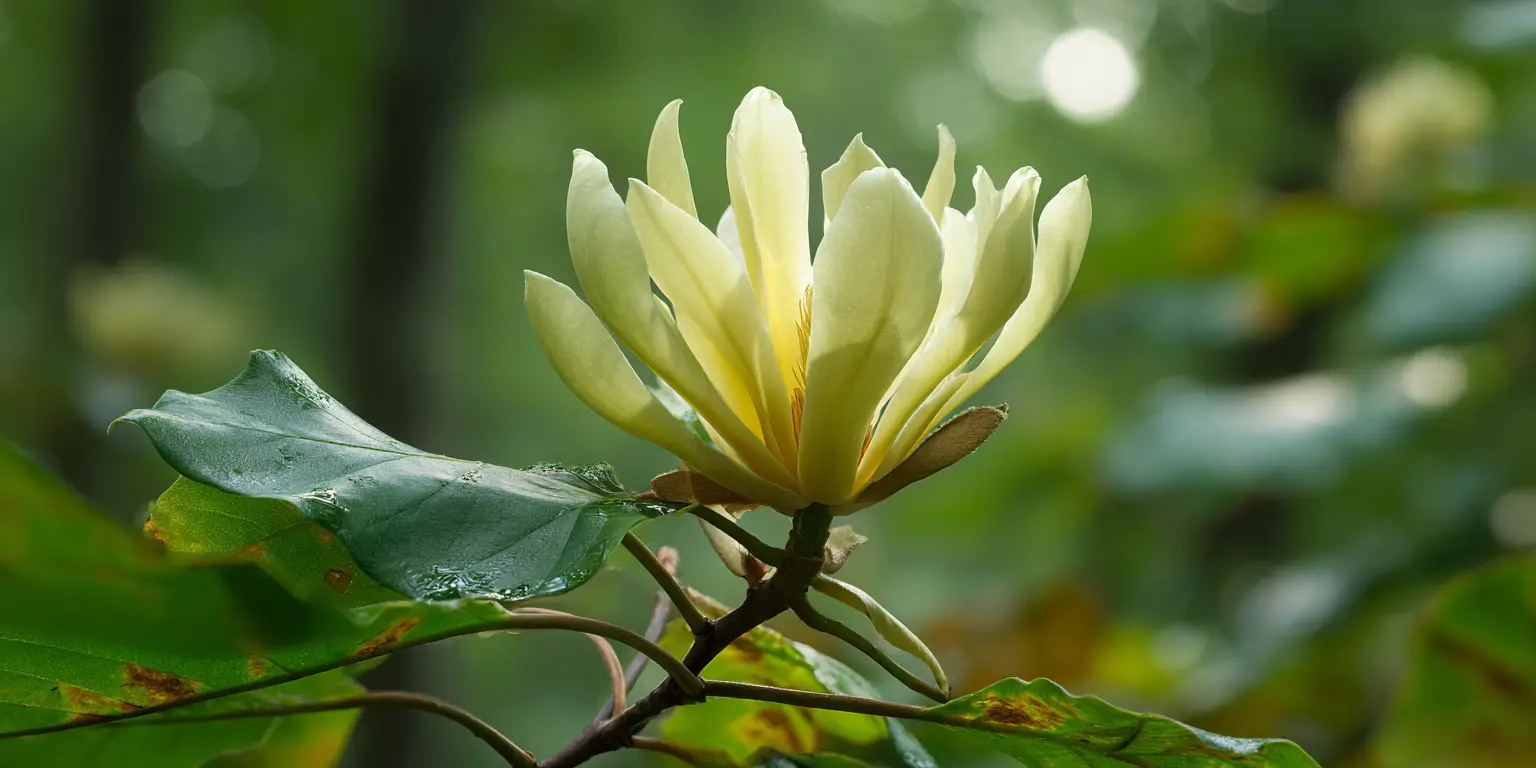
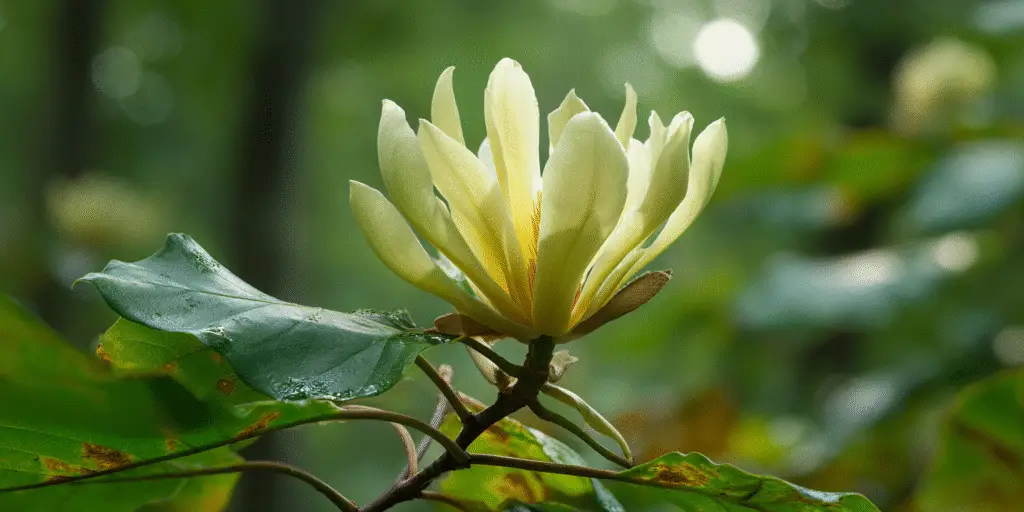
A large, deciduous North American species known as cucumber tree. It is the hardiest tree‑size magnolia and grows into a substantial shade tree. Flowers are greenish to yellow and less showy than other magnolias, appearing in late spring on established trees. Choose this species for parks and big yards where space allows. Plant in deep, moist, well‑drained soil and avoid moving established trees.
At‑a‑glance
Group/Class: Species (deciduous)
Height × spread: 40 to 70 ft × 20 to 35 ft (12 to 21 m × 6 to 10.7 m)
Bloom window: April to May
Color & flower form: Greenish yellow; tulip‑like flowers
Fragrance: 1 trace
USDA hardiness: Zones 3 to 8
Breeder / Year / Origin: unknown
Pet safety: safe
How it differs
Hardiest of the native tree‑size magnolias.
Much larger and more upright than common garden magnolias.
Greenish to yellow flowers are less conspicuous than pink or white species.
Often develops better fall color than many magnolias.
Strengths
Very cold hardy within the genus.
Functions as a durable shade tree.
Tolerates proximity to black walnut.
Native to eastern North America.
Care in one minute
Plant in full sun to part shade in deep, moist, well‑drained, slightly acidic soil.
Irrigate during dry periods the first few years; maintain even moisture thereafter.
Mulch widely to protect shallow roots.
Prune minimally after bloom to remove dead or crossing branches.
Avoid transplanting older specimens; choose the final site carefully.
Watch‑outs
May take a decade or more to begin flowering.
Difficult to transplant once established; plant young and leave in place.
Intolerant of urban pollution and soil extremes.
Needs ample space for mature crown.
Best uses (tags)
shade tree, parks, large landscapes, native
Provenance note
Native to eastern North America; widely used in breeding of yellow‑flowered magnolias.
Written by: Your Flowers Guide editorial team We are a small independent group of flower lovers who research and review each guide using trusted horticultural and educational sources. Learn more about us