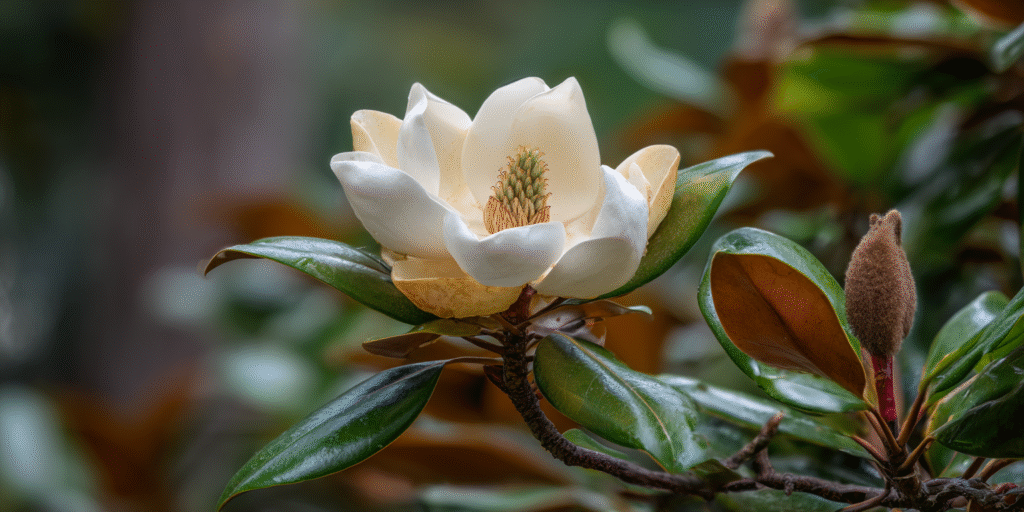
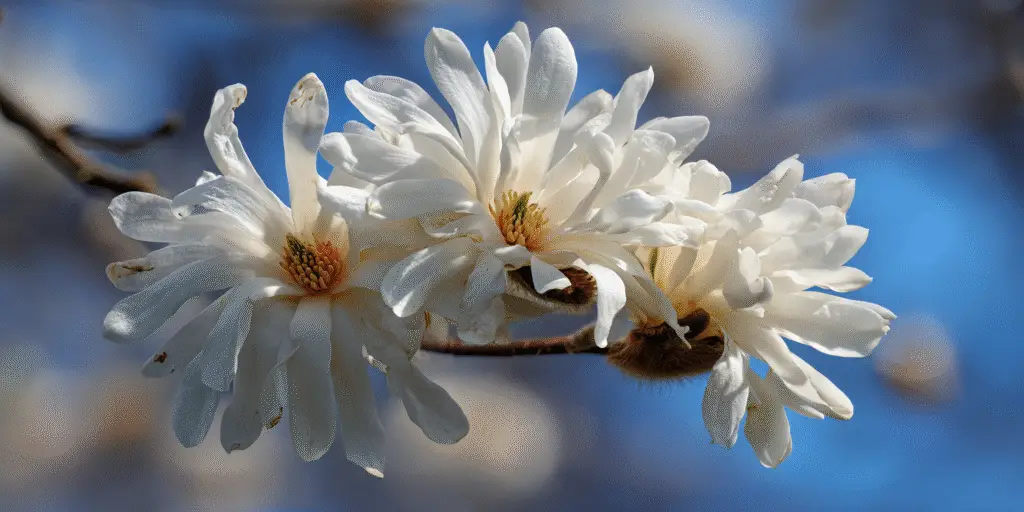
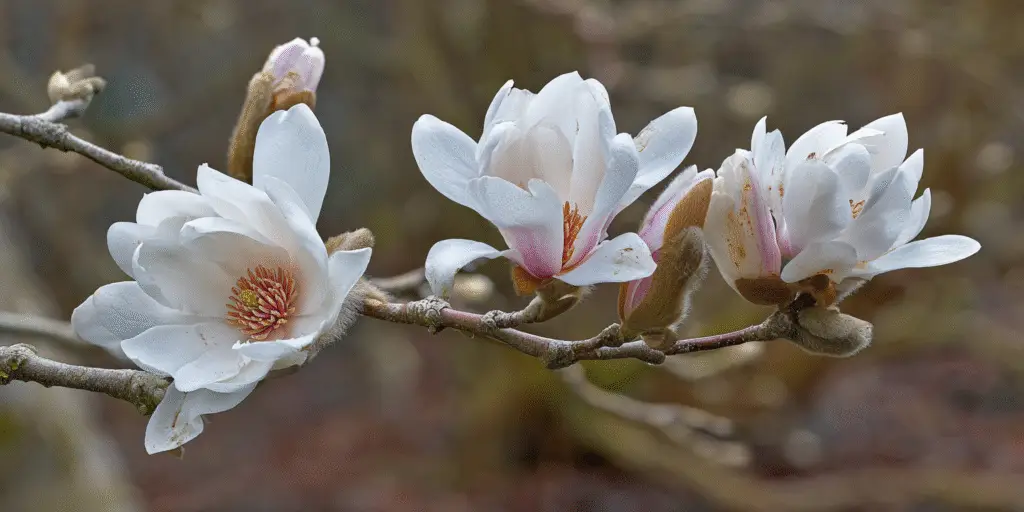
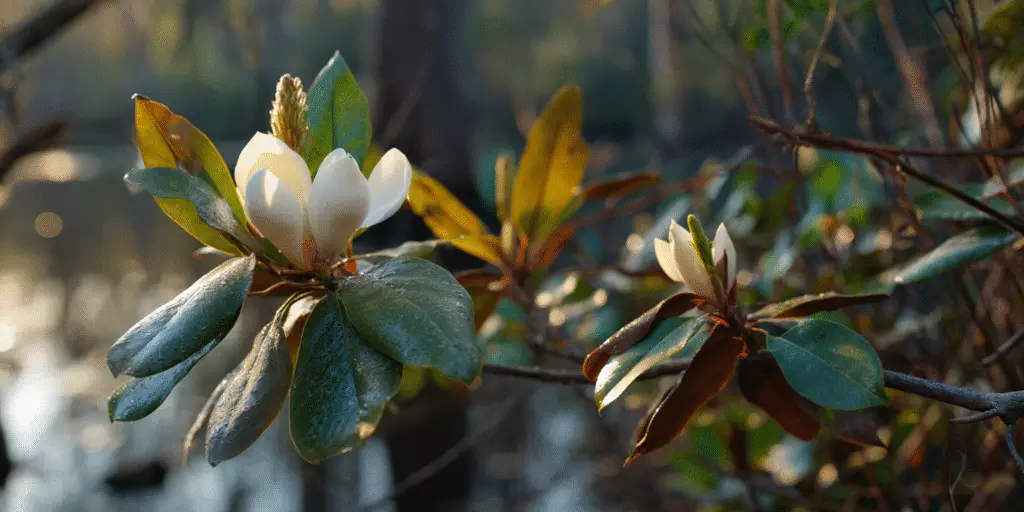
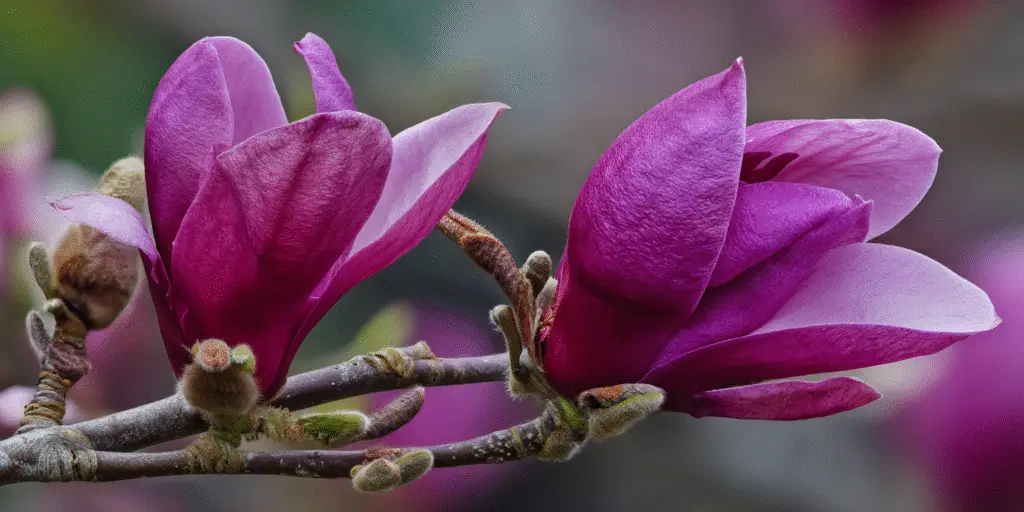
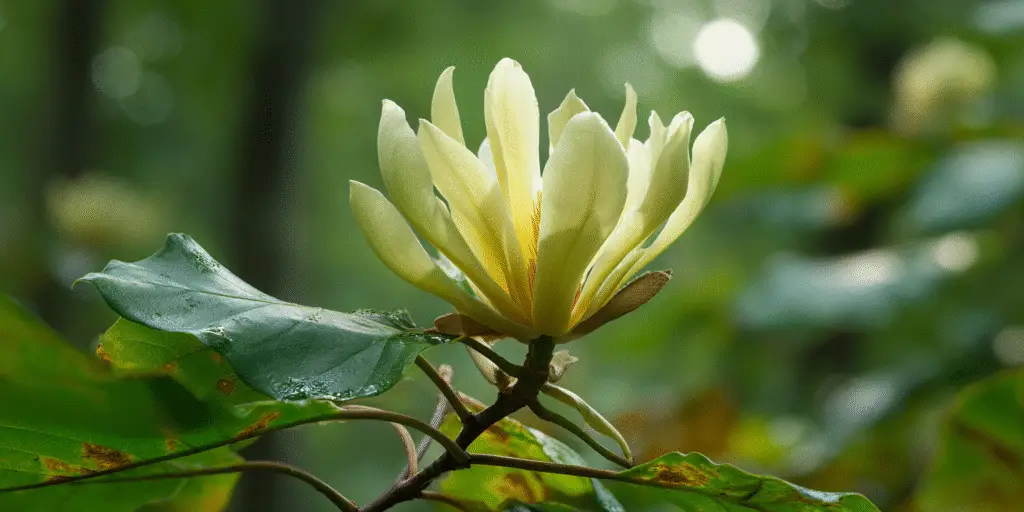
An evergreen species from the southeastern United States, this magnolia is grown for huge, creamy white flowers and lustrous foliage. It forms a pyramidal to rounded tree that suits large properties and parks. Individual blooms can reach 8 to 12 in (20 to 30 cm) across with a rich perfume. It performs best in warm climates with long summers and mild winters in USDA Zones 7 to 9. Give it room to mature because lower limbs often sweep the ground. Plant where soils are moist and well drained and where winter winds are limited.
At‑a‑glance
Group/Class: Species (evergreen)
Height × spread: 60 to 80 ft × 30 to 50 ft (18 to 24 m × 9 to 15 m)
Bloom window: May to June; sporadic into summer
Color & flower form: White; large cup‑shaped flowers
Fragrance: 3 strong
USDA hardiness: Zones 7 to 9
Breeder / Year / Origin: unknown
Pet safety: safe
How it differs
Evergreen canopy and broad stature compared with most deciduous magnolias.
Later bloom than early spring types; flowers continue intermittently through summer.
Leaves are large, leathery, and glossy with tan to rusty undersides.
Better heat and humidity tolerance than most magnolias.
Strengths
Showy, strongly scented flowers.
Evergreen screening and year‑round structure.
Tolerates light shade and some urban air pollution.
Attractive cone‑like fruits with red seeds.
Care in one minute
Plant in full sun to part shade in moist, organically rich, well‑drained, acidic soil.
Water regularly the first two growing seasons; keep an even soil moisture.
Mulch the wide root zone 2 to 3 in deep; avoid soil compaction over roots.
Fertilize lightly in spring only if soil tests indicate need.
Prune minimally right after bloom to raise canopy or remove crossing wood.
In colder areas, site in a protected spot and consider hardier selections.
Watch‑outs
Too large for small yards; needs ample space.
Leaves and spent flowers drop through the season and are slow to decompose.
Can become chlorotic in alkaline soils; prefers acidic conditions.
Scale insects can occur; monitor and manage as needed.
Borderline hardy north of Zone 7; select hardy cultivars if needed.
Best uses (tags)
specimen, evergreen screen, large landscapes, fragrance, wildlife
Provenance note
Native to moist woods of the southeastern United States; long cultivated as a signature tree of the American South.
Written by: Your Flowers Guide editorial team We are a small independent group of flower lovers who research and review each guide using trusted horticultural and educational sources. Learn more about us