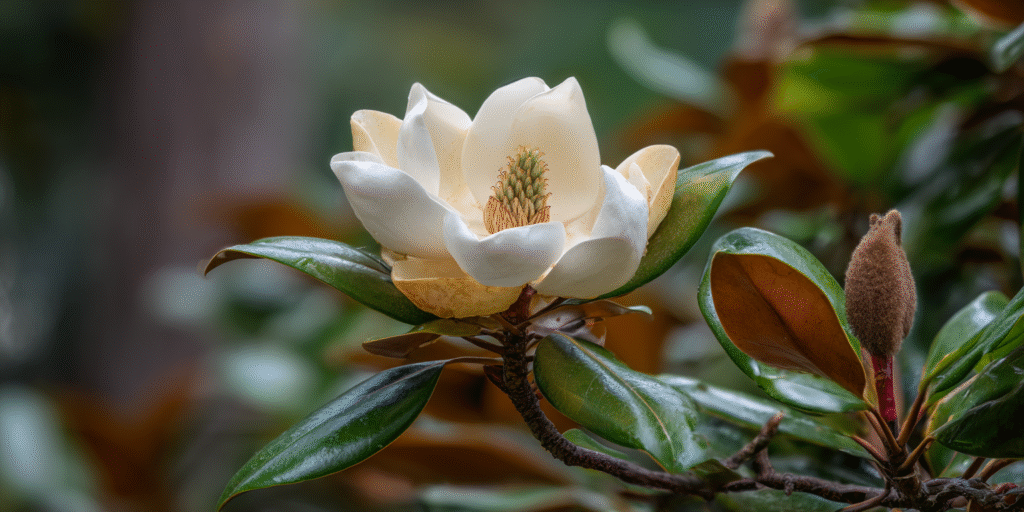
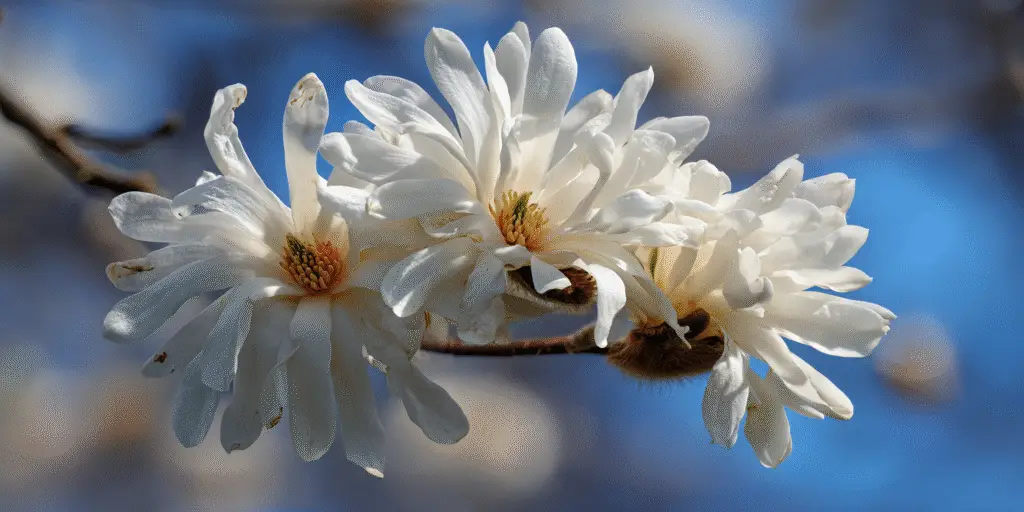
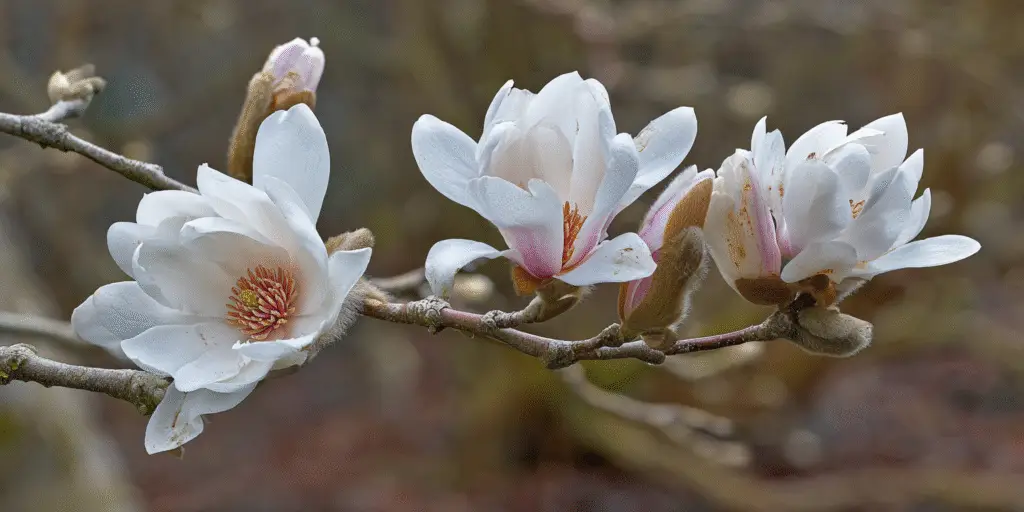
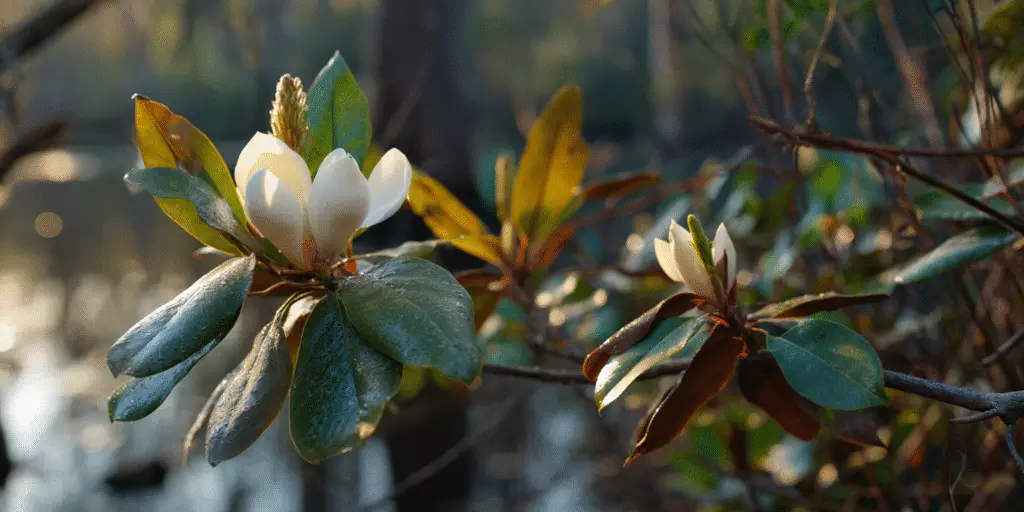
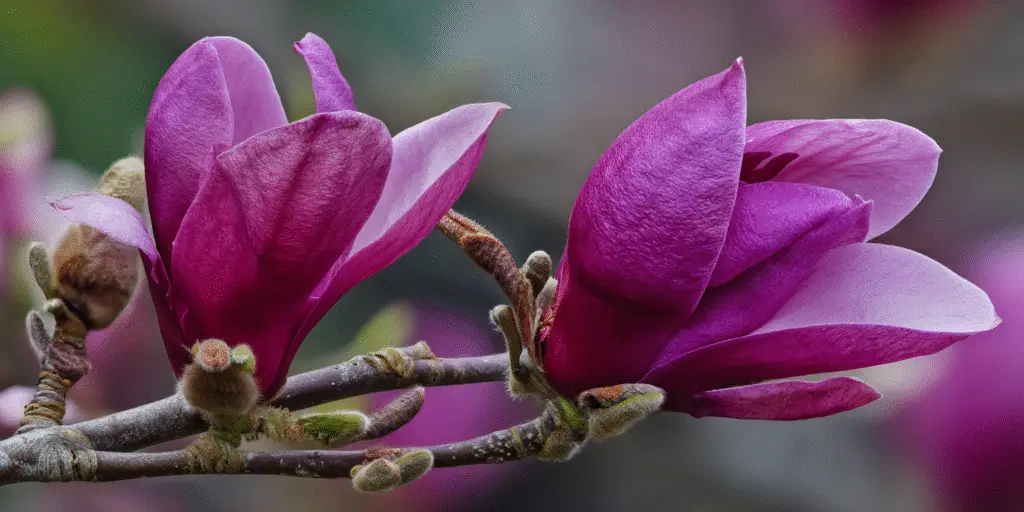
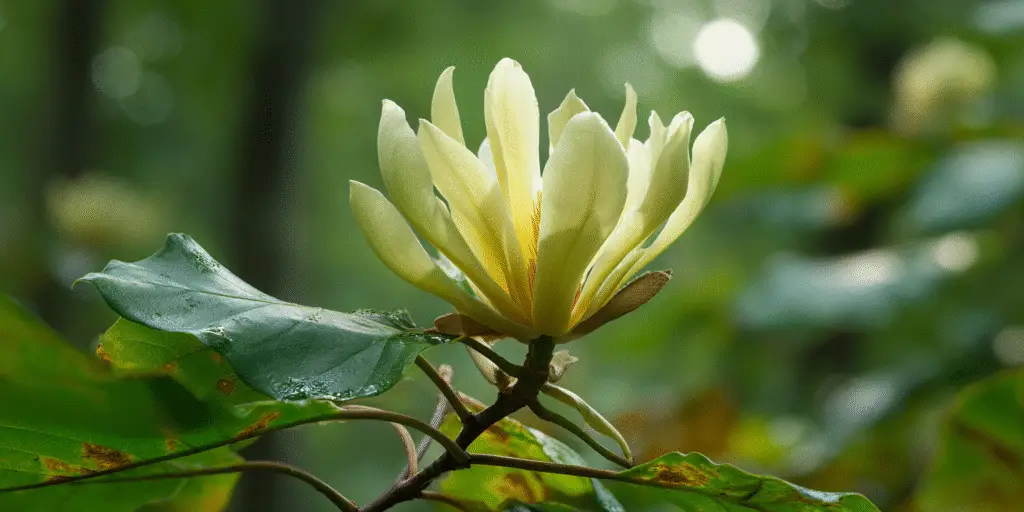
A North American native known as sweetbay magnolia, valued for lemon‑scented white flowers and silvery leaf undersides. In the South it can be evergreen and tree‑like; in colder zones it is semi‑evergreen to deciduous and more shrubby. It blooms in late spring and may continue sporadically into summer. Unusually for magnolias, it tolerates wet or boggy soils and suits rain gardens. Best growth occurs in full sun to part shade with acidic, organic soil. Choose selections suited to your climate; some southern forms are taller and more evergreen.
At‑a‑glance
Group/Class: Species (semi‑evergreen to deciduous)
Height × spread: 10 to 35 ft × 10 to 35 ft (3 to 10.7 m × 3 to 10.7 m)
Bloom window: May to June; sporadic summer bloom
Color & flower form: White; cup‑shaped, waxy petals
Fragrance: 3 strong
USDA hardiness: Zones 5 to 10
Breeder / Year / Origin: unknown
Pet safety: safe
How it differs
Later blooming than early spring magnolias; often flowers into summer.
Tolerates wet, even boggy soils better than most magnolias.
Semi‑evergreen in warmer climates with distinctive silvery leaf undersides.
Typically smaller than Magnolia grandiflora and more cold tolerant.
Strengths
Strong, sweet lemon fragrance.
Handles heavy clay and wet sites.
Low maintenance once established.
Attractive to pollinators and wildlife.
Care in one minute
Site in full sun to part shade; flower count is higher with more sun.
Provide acidic, organic, moist to wet soil with good drainage.
Irrigate during dry spells; do not allow root zone to dry completely.
Mulch annually; avoid disturbing shallow roots.
Prune only to shape after first flush of bloom.
In colder areas, select hardy forms and plant in a protected location.
Watch‑outs
Can become chlorotic in alkaline soils; prefers acidic conditions.
Written by: Your Flowers Guide editorial team We are a small independent group of flower lovers who research and review each guide using trusted horticultural and educational sources. Learn more about us