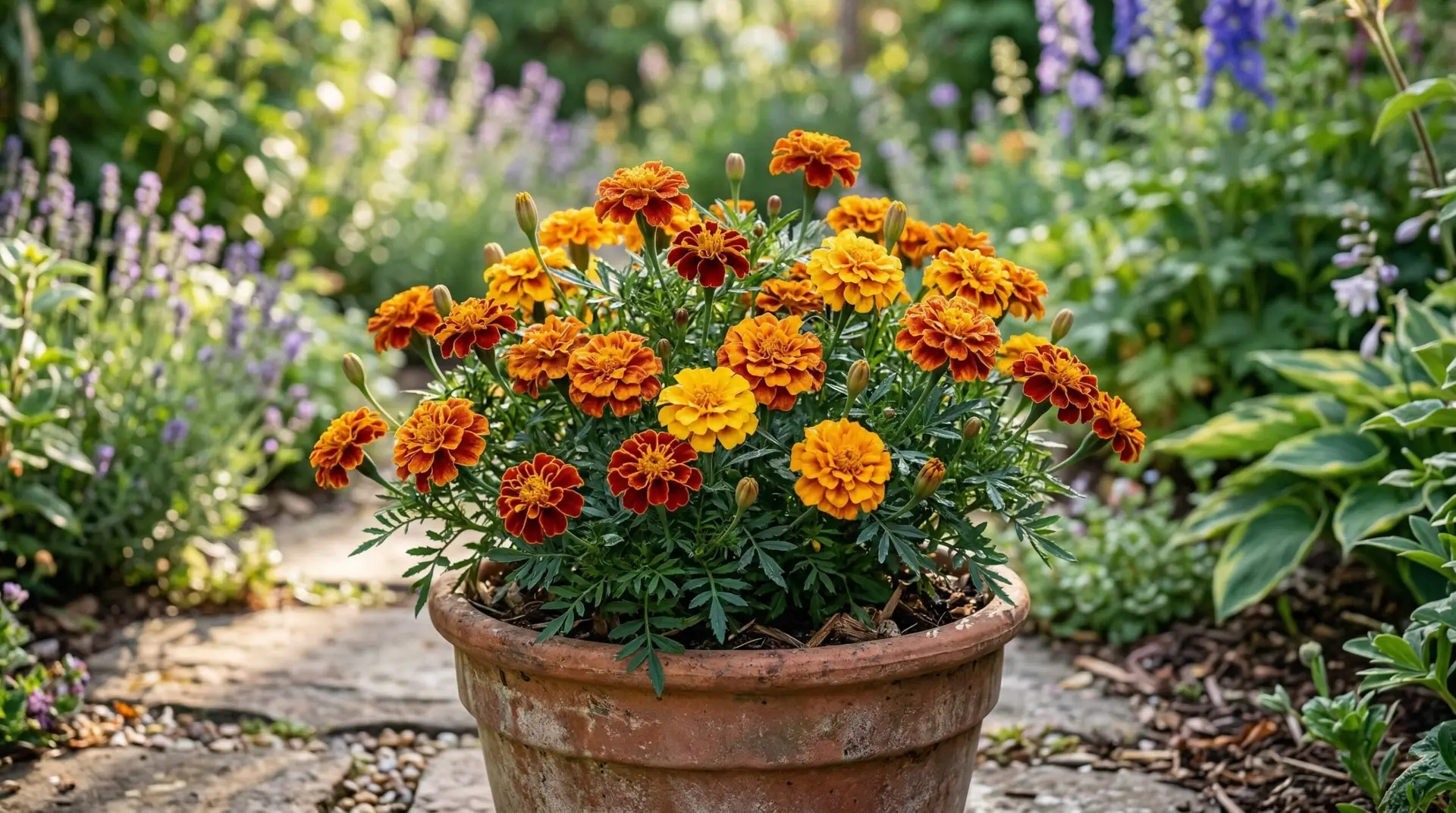
Every spring, there is a moment when the front porch looks completely bare, and the local nursery is charging a small fortune for pre-made planters. Buying flats of basic annuals is the most affordable way to fix this empty space, and nothing fills a pot faster or more reliably than marigolds. Growing a zinnia from seed is rewarding, but when immediate curb appeal is the goal, nursery marigolds are the true workhorses of the summer garden. They take root quickly, forgive missed waterings, and handle the blazing afternoon sun that bakes front steps and balcony railings. After years of experimenting with expensive trailing vines and fussy exotics, the humble marigold in pots remains the most dependable choice for season-long color. The trick is knowing exactly which type to put in which container, because putting the wrong marigold in a shallow box will lead to a tangled, dried-out mess by July.
Contents 5 sections
Choosing between French and African varieties
The biggest mistake beginners make is buying whatever is on sale without checking the plant tag for the specific variety. French marigolds are the compact, bushy plants that usually stay under a foot tall, making them the absolute best choice for a standard marigold container. They have smaller flowers but produce them by the dozens, and their tidy habit keeps them from flopping over the edge of a pot. African marigolds are the giants of the family, growing up to three feet tall with massive blooms that look like bright orange baseballs. These tall varieties need deep, heavy pots to anchor their root systems and keep the wind from snapping their hollow stems. Putting an African marigold in a small plastic pot usually results in a top-heavy plant that tips over every time a summer storm rolls through. Gardeners in northern zones can sometimes get away with crowding them a bit, but in the humid South, they need plenty of air circulation in a large patio planter to prevent powdery mildew from taking hold.
Designing a successful window box
Creating a lasting marigold window box requires balancing the upright marigolds with plants that spill over the edges. Because window boxes dry out faster than any other container, every plant in the mix needs to tolerate drought and high heat. A classic, foolproof combination pairs orange or yellow French marigolds with a trailing white sweet alyssum tucked into the front corners. The alyssum cascades down the front of the box and creates a living mulch, shading the soil and keeping the marigold roots slightly cooler during the hottest part of the afternoon. For a more colorful approach, adding a deep purple petunia creates a sharp, traditional contrast that stands out clearly against brick or siding. When planting the box, space the marigolds about six inches apart, which feels entirely too wide when they are tiny nursery plugs. Within three weeks, they will fill the gaps completely, and packing them too tightly at planting time just leads to stunted growth and yellowing leaves down near the soil line.
Soil, water, and the reality of container maintenance
You do not need expensive, specialized potting soil to grow these plants successfully on a porch or balcony. A standard, affordable potting mix works perfectly well, provided it has enough perlite to drain water quickly after a heavy rain. Marigolds despise sitting in soggy soil, and their stems will rot right at the soil line if the container lacks proper drainage holes. When watering, direct the hose or watering can at the base of the plant rather than spraying the foliage and flowers from above. Wet blooms act like sponges, holding onto water until they turn into mushy, brown clumps that invite disease and attract pests. During the hottest weeks of late July and August, pots sitting on concrete patios or asphalt driveways might need water every single day. The easiest way to check is to lift the edge of the pot, and if it feels light, it is time to soak the soil until water runs out the bottom.
Managing pests and balcony challenges
Growing flowers on an exposed balcony or a hot front porch brings a specific set of challenges that garden beds simply do not have. The radiant heat coming off brick walls and concrete floors creates a microclimate that spider mites absolutely love. These tiny pests weave fine webs under the leaves and suck the sap out of the plant, turning the green foliage a dull, dusty gray. The easiest and cheapest way to fight them off is to spray the undersides of the leaves with a strong blast from the garden hose every few days. Chemical sprays are rarely necessary and often end up killing the beneficial ladybugs that naturally keep the mite population under control. Balcony gardeners also have to deal with high winds that dry out pots quickly and batter delicate plants. Marigolds have sturdy, flexible stems that handle wind gusts much better than taller, top-heavy annuals, making them an excellent choice for high-rise containers.
Keeping the blooms coming until frost
The single most important task for keeping container marigolds productive is removing the old, fading flowers before they go to seed. This process, known as deadheading, takes about five minutes a week but makes the difference between a plant that blooms all summer and one that quits in August. Simply pinch off the dead flower head right where the stem meets the next set of leaves, which signals the plant to push out new buds instead of producing seeds. Container plants also need a steady supply of nutrients because daily watering washes away the natural food in the potting soil. A basic, inexpensive liquid fertilizer applied every two weeks keeps the foliage dark green and the flower production high. Sometimes, newly transplanted seedlings look completely dead for about two weeks after moving them into their permanent pots. They are usually just focusing their energy on growing roots, so give them time and consistent water before pulling them out in frustration. By late autumn, when the night temperatures drop and the first frost hits, these tough plants will finally give up, leaving behind a long season of reliable, bright color.
More About Marigolds
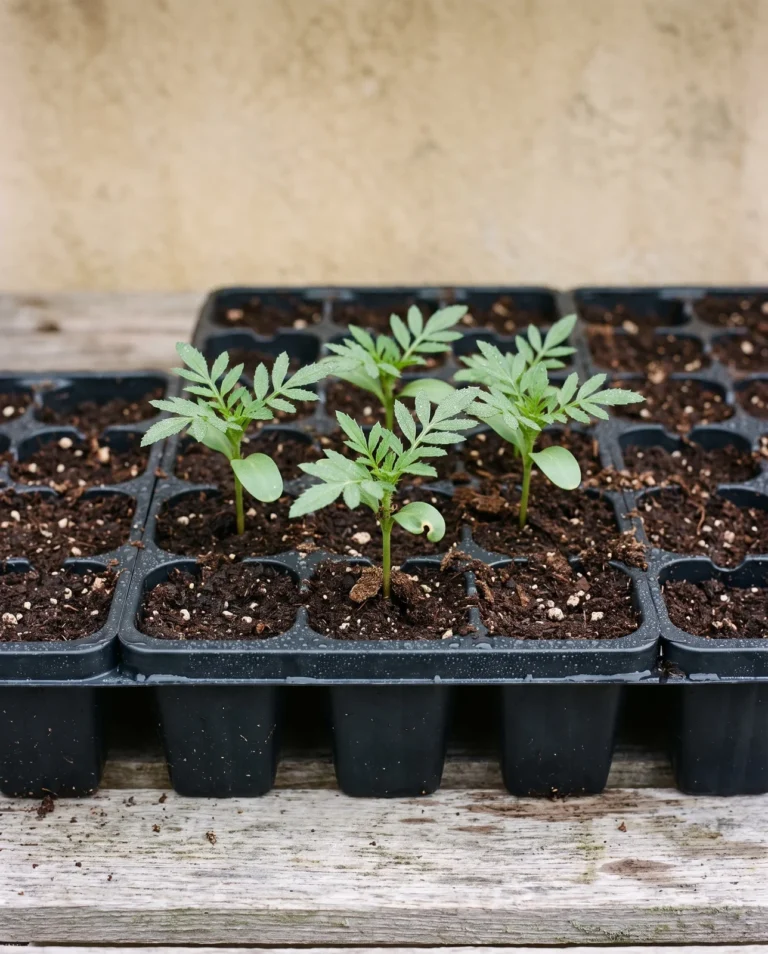
Cempasúchil marigolds: growing them for Día de los Muertos
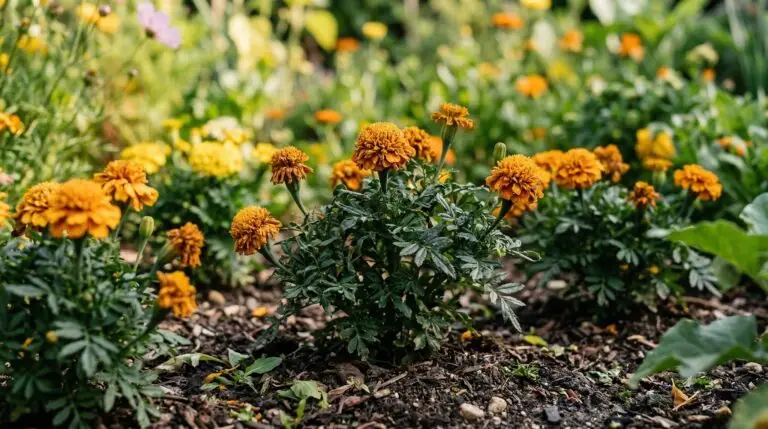
Why marigolds stop blooming in midsummer heat and how to get them flowering again
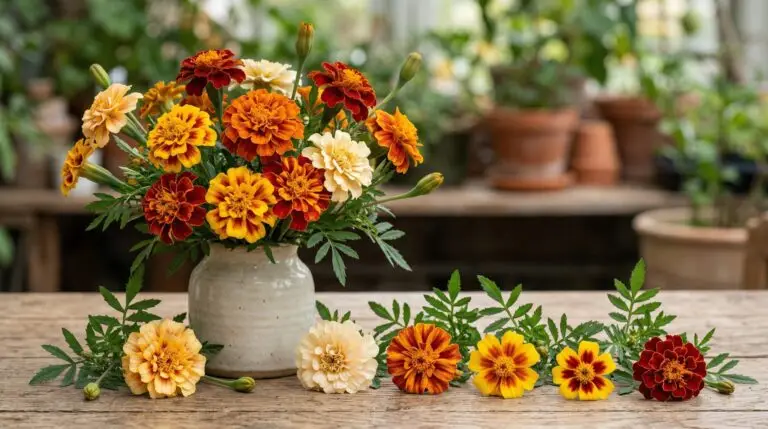
Best marigold varieties from tiny French Bonanza to towering African Antigua
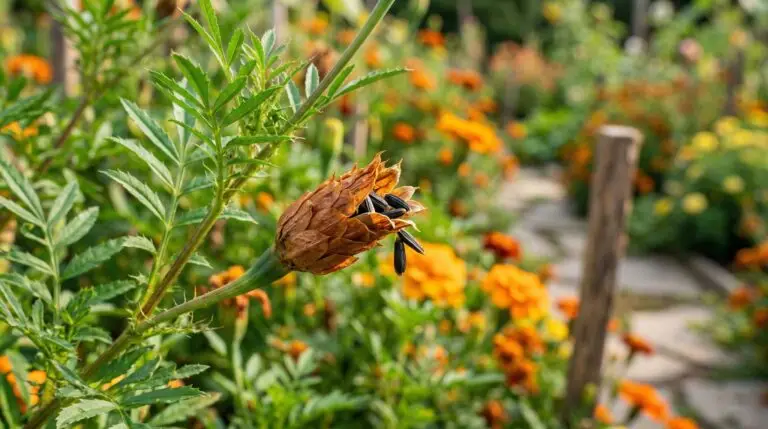
Growing marigolds from seed so easily that children can do it on their first try

Marigold meaning, from the sun and celebration to Victorian grief
Signet marigolds for edible flowers that taste like citrus in salads and cocktails
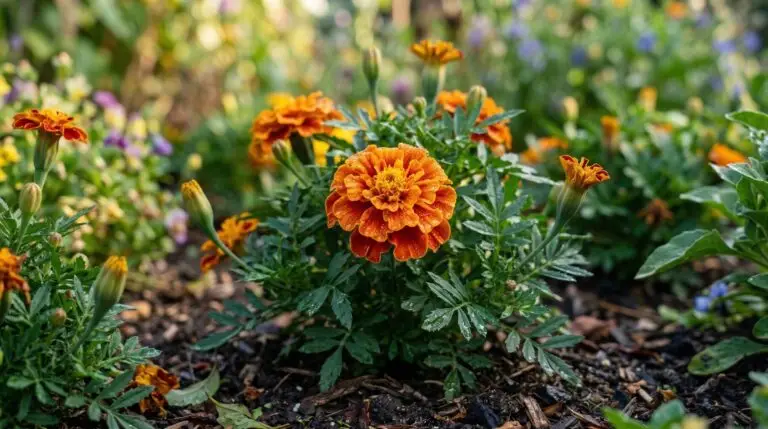
How to grow marigolds for bulletproof color from planting day to first frost

Marigold companion plants: what works, and what’s folklore
Marigolds in the vegetable garden and the pest-repelling companion planting tradition
Enjoying our flower guides? Add YourFlowersGuide as a preferred source on Google. It helps more readers find us.
Add to Preferred Sources