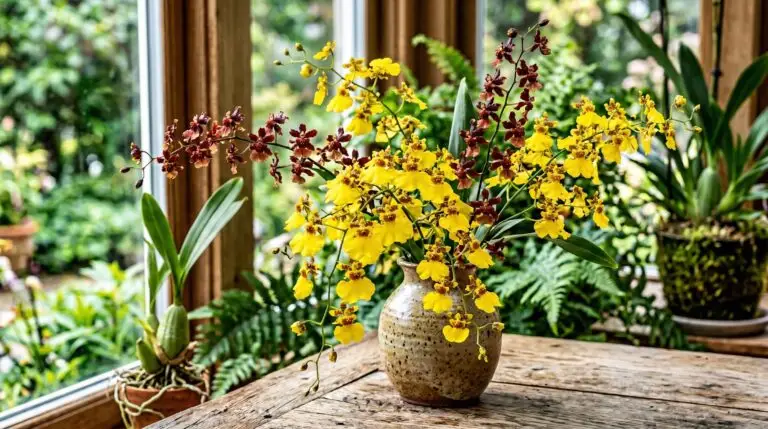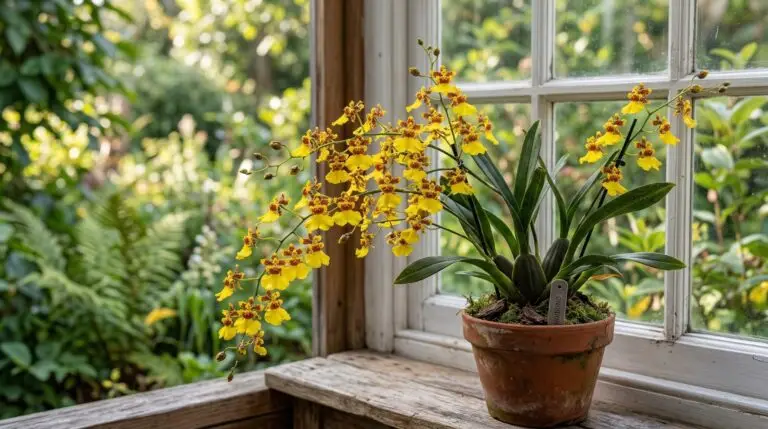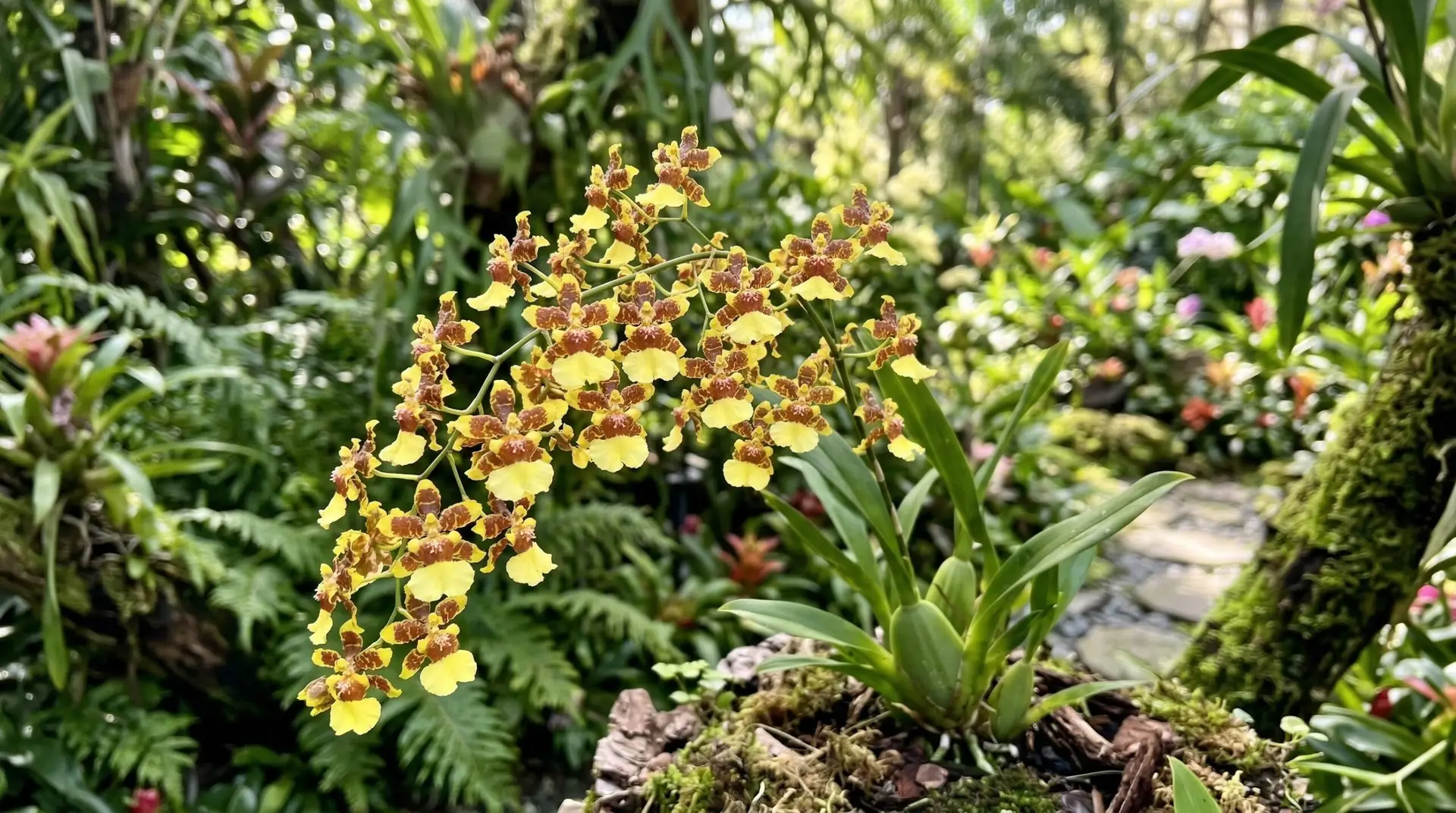
Morning light filtering through a dining room window catches a spray of yellow blooms, turning them into suspended drops of liquid gold. These are Oncidium orchids, and they command attention without demanding the heaviest vase in the cabinet. Hundreds of miniature yellow and brown speckled flowers populate a single, gracefully arching stem that reaches out over the edge of a simple glass cylinder. When a slight breeze from an open door catches the arrangement, the individual blossoms tremble and sway in a collective rhythm. It becomes immediately apparent why generations of growers have called them dancing ladies. The wide lower lip of each flower resembles a sweeping, ruffled skirt, while the smaller upper petals form the outstretched arms of a tiny dancer frozen in mid-twirl. Bringing an oncidium cut flower indoors transforms the atmosphere of a room entirely.
While potted orchids hold a permanent place in many sunrooms, severing those long, branched spikes for water-bound arrangements feels like a quiet luxury. Cut orchid stems often intimidate home floral enthusiasts who worry about the fragility of exotic blooms. Yet the Oncidium orchid possesses a rugged constitution beneath its delicate appearance. A freshly cut stem placed in clean water will outlast almost any standard garden perennial you might bring across the threshold.
The architecture of an exotic spray arrangement
Building a floral display around Oncidium orchids requires a different approach than arranging heavy-headed traditional flowers. The stems are wiry, branching out into a cloud of blossoms that take up significant visual space while remaining physically airy. You can drop a single, multi-branched spike into a tall, narrow vase and consider the work finished, as the natural curve of the stem provides all the necessary geometry. When mixing them into a larger vessel, these orchids act as the wild, untamed element that breaks up rigid symmetrical designs. Floral designers often use their arching spray architecture to establish the outer boundaries of an arrangement, letting the bright yellow or rust-colored tips spill over the rim. They create a canopy effect when positioned above a cluster of tightly furled roses, offering a sharp contrast in both form and texture. The sturdy roses anchor the base, while the orchids float above like a swarm of yellow butterflies.
Working with these branched stems requires a gentle hand and a bit of patience as you weave them through other floral elements. The tiny flowers can easily hook onto the leaves or petals of neighboring plants. When you slowly twist the main stem, the side branches lock into place among the foliage, securing the dancing lady orchid arrangement without the need for wire or tape. The goal is to let the orchid dictate the direction of the design rather than forcing it into an unnatural upright posture.
Achieving a three-week oncidium vase life
The true reward of working with cut Oncidiums reveals itself in their impressive longevity on the dining table or entryway console. While a garden-gathered bouquet might drop its petals by the weekend, a healthy oncidium vase life frequently stretches to three full weeks. The lower flowers on the spike open first, and the buds near the very tips will continue to unfurl long after the stem is separated from the mother plant. Achieving this extended display requires only a few basic acts of maintenance that quickly become a morning ritual. You must start with a scrupulously clean vase, washing it with hot soapy water before the flowers ever touch the glass. Bacteria multiplying in the water is the primary enemy of any cut flower, and orchids are particularly sensitive to cloudy, contaminated water. Changing the water every two days and rinsing the submerged portion of the stems keeps the hydration pathways open and flowing.
Cutting the stems correctly also dictates how long the dancing ladies will perform in your home. Use a sharp, sterilized blade rather than scissors, which can crush the delicate vascular tissue inside the wiry stem. Slicing the base at a sharp angle increases the surface area exposed to the water, allowing the orchid to drink freely. Keeping the vase away from direct afternoon sunlight, heating vents, and bowls of ripening fruit will prevent the tiny blooms from desiccating or dropping prematurely.
Designing dramatic wedding cascading bouquets
The natural drape of the Oncidium makes it a highly sought-after element for formal event floristry, particularly for brides seeking movement in their floral accessories. A cascading bouquet relies on gravity and the inherent flexibility of the stems to create a teardrop shape that flows downward against the gown. Oncidiums excel in this role, as their long, branching spikes can be wired gently to cascade gracefully toward the floor. The hundreds of small, bright blooms provide a textured backdrop that makes larger, focal flowers stand out in photographs. Designers frequently pair the fiery yellow and brown Oncidiums with the pristine, broad faces of a white moth orchid to create a layered, multi-dimensional tropical look. The contrast between the massive, flat petals of the moth orchid and the tiny, ruffled skirts of the dancing ladies gives the bouquet a sense of depth and wildness. The hardy nature of both varieties ensures the bouquet survives a long day of photographs, ceremonies, and receptions without wilting.
Even outside of bridal applications, you can replicate this cascading effect in a tall urn or pedestal vase in your own home. Let the longest stems trail down the sides of the container, pulling the eye downward and softening the hard edges of the vessel. Adding a few stems of a star-shaped lily near the center creates a solid visual anchor for the trailing orchids to radiate from. The resulting arrangement feels less like a traditional bouquet and more like a slice of a tropical canopy brought indoors.
Living with a vase of Oncidium orchids changes how you observe the passing of days in a room. You begin to notice the subtle shifts in the arrangement as the highest, tightest green buds slowly swell and pop open to reveal their ruffled yellow skirts. The lowest blooms eventually dry and fall, landing lightly on the table like discarded silk confetti. You can simply pinch off the spent flowers and let the rest of the stem continue its long, slow performance. Long after the companion flowers in the vase have been composted and replaced, the wiry green stems of the dancing ladies remain. The arrangement gradually thins out, becoming more minimalist and architectural with each passing week. The final few blossoms at the very tip of the spike hold on with quiet persistence, catching the morning light one last time before the stem finally rests.