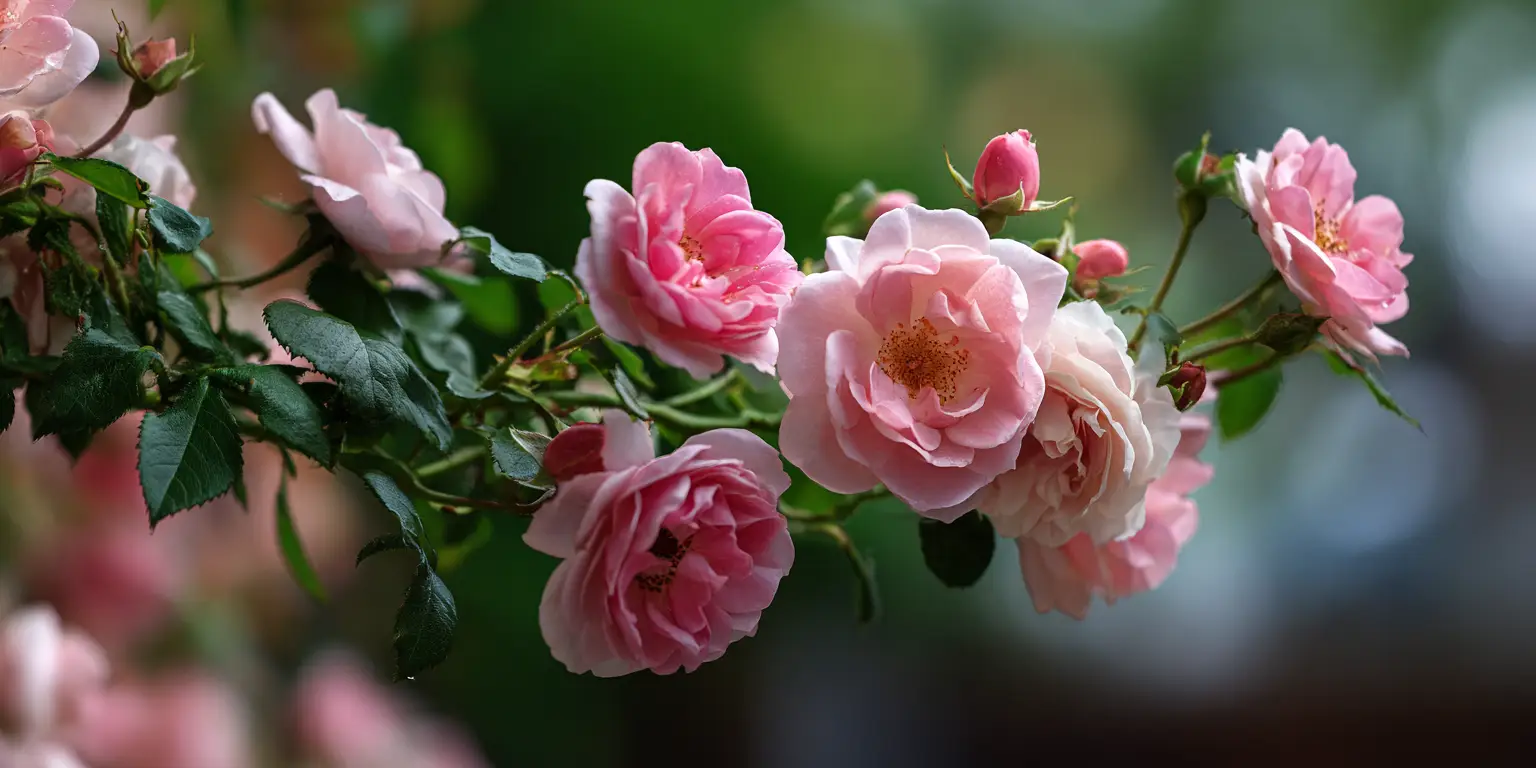
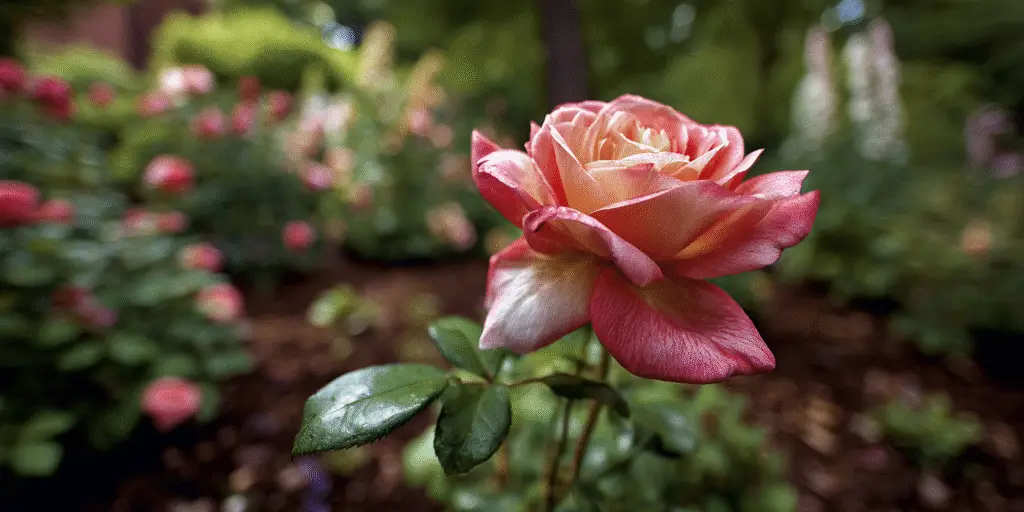
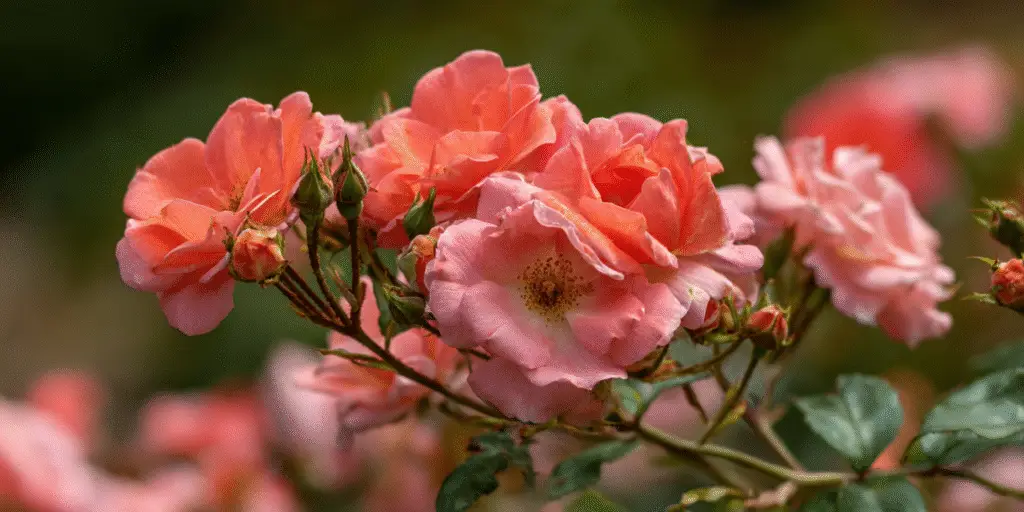
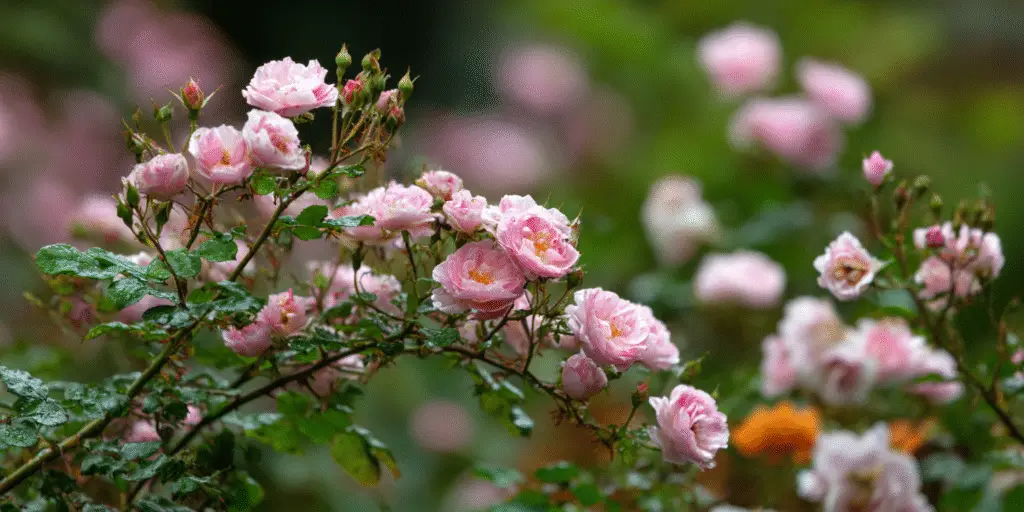
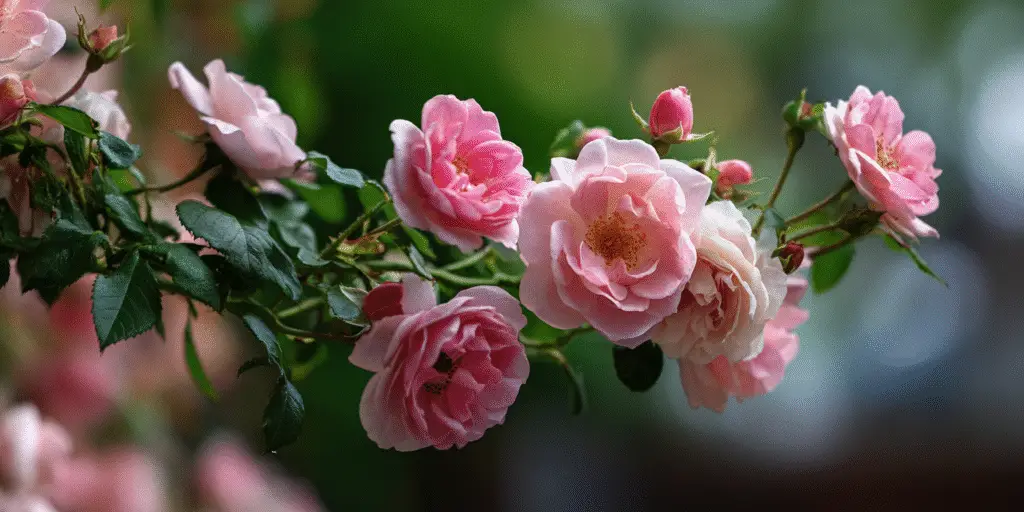
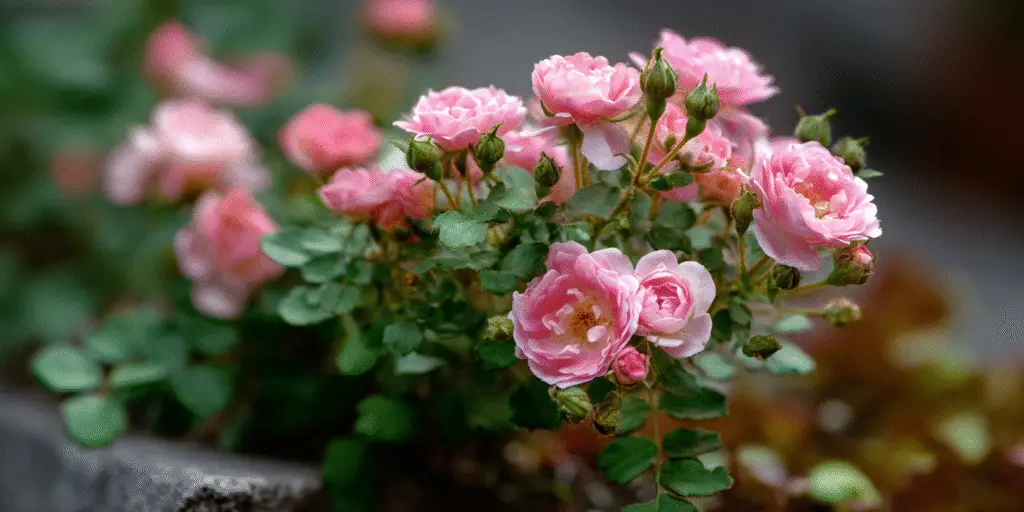
Climbing roses are vigorous roses trained on supports to display long canes and abundant flowers. They do not cling; they need tying and training to fences, arbors, or wires. Best performance comes in full sun with well drained soil across North America. Many cultivars are hardy in USDA Zones 5 to 9, with selection important at the cold edge. Bloom patterns vary: some flower once on old wood, while many repeat through the season. Training canes near horizontal encourages more flowering laterals.
At‑a‑glance
Group/Class: Climbing Rose
Height × spread: 8–15 ft × 4–8 ft (2.4–4.6 m × 1.2–2.4 m), trained length
Bloom window: late spring to fall on repeat types; once in early summer on old‑wood types
Color & flower form: variable; large‑flowered or clustered depending on cultivar
Fragrance: 2 noticeable (varies by cultivar)
USDA hardiness: zones 5 to 9 typical; choose hardy selections in colder sites
Breeder / Year / Origin: unknown; many climbers arise as sports or selections from other classes
Pet safety: safe
How it differs
Long canes trained to structures rather than self‑supporting shrubs
Flowering concentrated on lateral shoots from trained canes
Includes both repeat bloomers and once‑blooming forms
Many cultivars originated as climbing sports of bush roses
Strengths
Covers vertical spaces and frames entries
Spectacular seasonal displays on trained canes
Can produce ample cut stems on repeat types
Adds height without heavy structures when tied well
Care in one minute
Site: full sun with airflow; sturdy support in place before planting
Soil and pH: fertile, well drained soil at pH 6.5 to 7.0
Water: deep weekly watering while establishing; avoid wetting foliage
Feeding: balanced fertilizer in spring; light midsummer feed in long seasons
Pruning: tie new canes and fan them; prune once‑bloomers after flowering; lightly prune repeat types in late winter
Overwintering: in cold zones, lay and cover canes or wrap on supports to prevent winter injury
Watch‑outs
Requires regular tying and selective pruning for best bloom
Cane winter damage is possible in cold and windy exposures
Susceptible to common rose diseases without airflow
Best uses (tags)
arbors, trellises, fences, pergolas, screens
Provenance note
Many modern climbers are climbing sports of bush roses or selections that naturally produce long canes. Training stems near horizontal greatly increases bloom on laterals.
Written by: Your Flowers Guide editorial team We are a small independent group of flower lovers who research and review each guide using trusted horticultural and educational sources. Learn more about us